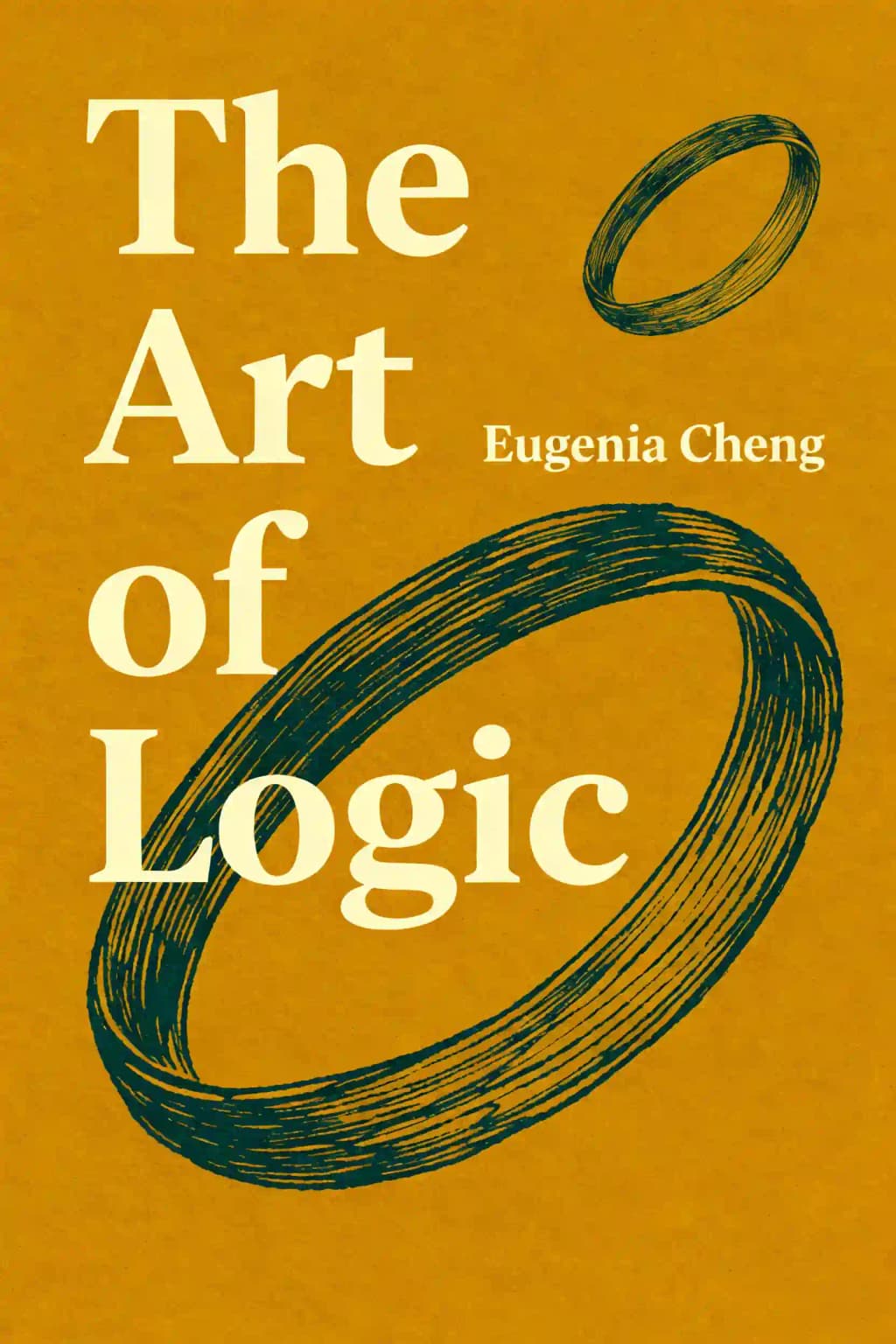
In "The Art of Logic," mathematician Eugenia Cheng brilliantly bridges emotion and reason in our post-truth world. Using examples from Bach to Black Lives Matter, she transforms complex logical principles into accessible tools that make you question everything - even why math class never felt this revolutionary.
著者の声を通じて本を感じる
知識を魅力的で例が豊富な洞察に変換
キーアイデアを瞬時にキャプチャして素早く学習
楽しく魅力的な方法で本を楽しむ
Have you ever noticed how the same facts can lead two intelligent people to completely opposite conclusions? Or how family dinners now feel like navigating a minefield of political hot takes? We live in an age where everyone has access to infinite information, yet we seem more confused than ever. The problem isn't that we lack data-it's that we've forgotten how to think clearly about it. Logic isn't some dusty academic tool reserved for mathematicians in ivory towers. It's the mental operating system that helps us separate signal from noise, truth from manipulation, and genuine insight from clever-sounding nonsense. But here's the catch: logic without understanding is like having a sports car without knowing how to drive. Think about why mathematicians worldwide agree that 2 + 2 = 4, yet economists can't agree on basic policy questions. The difference isn't intelligence-it's that mathematics operates within a clear logical framework where everyone plays by the same rules. Logic provides something radical: a system where different people consistently reach identical conclusions from identical starting points. This doesn't mean logic dictates what we should believe. Rather, it creates a structure for thinking clearly, like how chess rules don't tell you which moves to make but ensure everyone understands when checkmate occurs. The real power emerges when we enter the abstract world-temporarily stripping away messy details to focus on essential patterns. When we transform "one cookie plus one cookie" into "1 + 1," we remove distracting physical properties. Whether we're counting apples, bears, or opera singers, they all become "1 + 1" in abstract space. This reveals commonalities across seemingly different situations, letting us study shared properties efficiently before examining differences. Consider healthcare debates: people might disagree about whether everyone deserves healthcare or about implementation methods. Logic helps identify whether conflicts stem from different reasoning approaches or different foundational assumptions-a crucial distinction that changes how we engage with disagreement. Let's learn to use this powerful tool not to win arguments, but to actually understand the messy, complicated world we inhabit.
『The Art of Logic』の核心的なアイデアを分かりやすいポイントに分解し、革新的なチームがどのように創造、協力、成長するかを理解します。
『The Art of Logic』を素早い記憶のヒントに凝縮し、率直さ、チームワーク、創造的な回復力の主要原則を強調します。

鮮やかなストーリーテリングを通じて『The Art of Logic』を体験し、イノベーションのレッスンを記憶に残り、応用できる瞬間に変えます。
何でも質問し、声を選び、本当にあなたに響く洞察を一緒に作り出しましょう。

"Instead of endless scrolling, I just hit play on BeFreed. It saves me so much time."
"I never knew where to start with nonfiction—BeFreed’s book lists turned into podcasts gave me a clear path."
"Perfect balance between learning and entertainment. Finished ‘Thinking, Fast and Slow’ on my commute this week."
"Crazy how much I learned while walking the dog. BeFreed = small habits → big gains."
"Reading used to feel like a chore. Now it’s just part of my lifestyle."
"Feels effortless compared to reading. I’ve finished 6 books this month already."
"BeFreed turned my guilty doomscrolling into something that feels productive and inspiring."
"BeFreed turned my commute into learning time. 20-min podcasts are perfect for finishing books I never had time for."
"BeFreed replaced my podcast queue. Imagine Spotify for books — that’s it. 🙌"
"It is great for me to learn something from the book without reading it."
"The themed book list podcasts help me connect ideas across authors—like a guided audio journey."
"Makes me feel smarter every time before going to work"

The Art of Logicの要約をPDFまたはEPUBで無料でダウンロード。印刷やオフラインでいつでもお読みいただけます。