第1章
A Deadly Arrangement: When Marriage Becomes a Game of Secrets
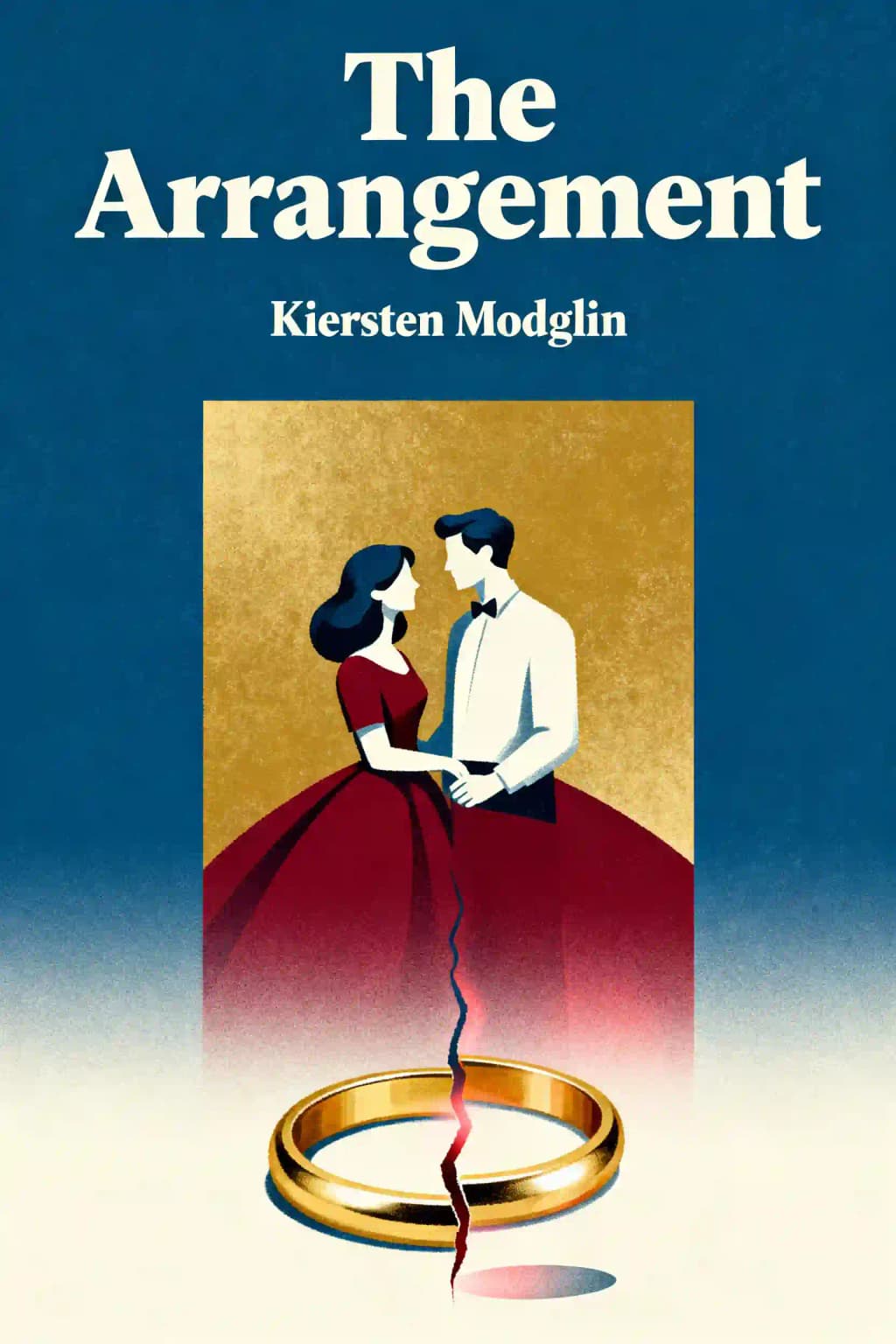
The Arrangement has captivated readers with its twisted psychological suspense since its release, earning Kiersten Modglin her reputation as "The Queen of Twists." This domestic thriller explores the dangerous territory of a marriage on the brink and the deadly consequences of desperate attempts to save it. The novel has developed a cult following among psychological thriller enthusiasts, with readers praising its unpredictable plot turns and complex character dynamics. Celebrity readers like Reese Witherspoon have highlighted similar domestic thrillers in their book clubs, noting how they expose the fragility of seemingly perfect relationships. The Arrangement asks a provocative question that resonates with many: How far would you go to save your marriage? For Peter and Ainsley, the answer will take them down a path of no return.
第2章
When Love Fades: The Birth of a Dangerous Arrangement
Peter and Ainsley's marriage has deteriorated into the cliche they once swore to avoid. After fourteen years together and three children - Emma (12), twins Jack and Sophie (8) - their once passionate relationship has become a hollow routine of parallel lives sharing a home. Their conversations revolve around logistics: soccer practice schedules, dentist appointments, and who's picking up groceries. The casual touches, lingering looks, and spontaneous date nights that once defined their relationship have vanished, replaced by separate Netflix queues and silent dinners punctuated only by children's chatter.
Ainsley, determined to save their marriage, proposes a radical solution during a late-night conversation after the kids are asleep: they'll each date other people while maintaining their family life together. The rules she presents are meticulously thought out but treacherous - no questions about what happens during their designated days apart, protection required, regular testing, fake names, and above all, their children must never know. They agree to limit dates to Thursday evenings and alternate Saturdays, maintaining plausible cover stories about work events and hobby groups.
For Ainsley, this arrangement represents a desperate attempt to recapture what they've lost. She's convinced that absence - and perhaps jealousy - will rekindle their desire for each other. As the branch manager at a local bank, she's accustomed to fixing problems methodically, and she approaches their marriage with the same pragmatic determination. Her office walls are lined with achievement awards, each one testament to her ability to turn failing situations around. Divorce isn't an option; both she and Peter grew up with stepparents and promised never to subject their children to that confusion. She still remembers the pain of splitting holidays and the awkward introductions to her mother's new boyfriends.
Peter reluctantly agrees to the arrangement, though his hesitation stems from more than just moral qualms. A successful architect known for his attention to detail, he worries more about who his beautiful wife might meet than his own opportunities. Creating dating profiles under their aliases - Annie Green and Pete Patterson - feels like stepping into alternate lives, shedding their identities as spouses and parents. For Peter, this separation from his established roles leaves him feeling unmoored, a sensation both terrifying and strangely liberating. He spends hours crafting his profile, choosing photos that make him look younger while avoiding anything his clients might recognize.
The arrangement begins with Ainsley's date with Stefan, a widowed Italian restaurant owner in his mid-forties. As she transforms herself for the evening - makeup perfect, auburn hair curled, silk red dress hugging her curves - the simple act of removing her wedding ring feels momentous. The pale band of skin where it usually sits serves as a reminder of what she's risking. Peter's stunned reaction to her appearance reveals the first hint that their plan might work: jealousy flickers across his face as she leaves for her date, suggesting dormant feelings still exist beneath their marital stalemate. Standing in their foyer, watching his wife prepare to meet another man, Peter realizes he hasn't truly looked at her in years.
第3章
Jealousy and Desire: The First Cracks Appear
While Ainsley is out with Stefan, Peter experiences an emotional storm of worry, jealousy, and regret. Unable to focus, he looks through old photos, tracing the gradual deterioration of their once-passionate relationship. He realizes that while Ainsley had repeatedly tried to save their marriage with date nights and romantic gestures, he had given up, allowing work and parenting to consume his attention. When Ainsley returns home after 1 AM looking happy and immediately heading for the shower, Peter assumes the worst-that she slept with Stefan-and feels devastated despite having agreed to the arrangement.
The next morning, Peter struggles with unasked questions about Ainsley's evening. His jealousy, rather than driving them further apart, creates an unexpected energy between them. Ainsley finds his possessiveness somewhat exciting, thinking it might motivate him to fight for their relationship. In reality, she hadn't slept with Stefan, feeling guilty not toward Peter but toward Stefan-knowing she was using him merely as a tool to repair her marriage.
When Peter's turn for a date arrives, he meets Mallory, a blonde massage therapist in her mid-twenties. Their encounter quickly escalates from dinner to an intense sexual experience at her apartment. Throughout this encounter, Peter is struck by how different it feels from being with Ainsley-the spontaneity, the raw passion, the complete abandonment of his usual calculated approach to life. Yet even with permission, he still feels the familiar guilt of infidelity washing over him when he returns home.
The arrangement produces an unexpected effect: after Peter's date, Ainsley approaches him with renewed desire. Their lovemaking that night has an intensity they haven't experienced in years. Peter notices a passion in her eyes he'd almost forgotten, making him wonder if perhaps their unconventional plan is working after all. For the first time in ages, he experiences complete mental presence with his wife-no distracting thoughts about work, children, or finances-just the two of them reconnecting on a primal level.
第4章
When Fantasy Meets Reality: Dangerous Complications
The fragile equilibrium of their arrangement shatters when Stefan messages Ainsley using her real name - something she never shared with him. This chilling discovery sends immediate shockwaves through their carefully constructed world of compartmentalized relationships. Her phone screen illuminates with messages revealing not just her name, but details about her children and workplace - information she had meticulously kept private. When Stefan appears uninvited at their home on a rain-slicked evening, demanding to see her, the situation escalates from unsettling to terrifying. His eyes are wild, his movements erratic, and when he reveals he has a gun and lunges toward Ainsley, Peter's protective instincts take over. Acting on pure adrenaline, he grabs his son's baseball bat from the hallway and strikes Stefan with devastating force, killing him with multiple blows to the head. Their horror multiplies exponentially when, hands shaking, they search his body and discover Stefan was wearing a tactical belt with handcuffs, pepper spray, and - most devastatingly - carried a police badge from the 47th precinct.
Faced with the reality of having killed a police officer, Peter and Ainsley make the desperate decision to hide the evidence rather than contact authorities. The choice feels impossible, but the alternative seems worse. Working through the night in terrified silence, they bury Stefan's body six feet under their porch, meticulously clean blood spatter from their walls and floor, and drive his truck to the long-term airport parking lot. As they frantically scrub away all traces of their crime, using bleach and luminol to ensure no trace remains, the weight of what they've done begins to sink in - they've crossed a line from which there's no return.
The aftermath transforms their relationship into something unrecognizable, yet inescapable. Their shared secret creates a twisted intimacy, binding them together in complicity more powerfully than any marriage vows. Every moment becomes infused with paranoia - obsessively checking for blood they might have missed, watching for suspicious neighbors, crafting consistent lies to tell their children about the bleach smell and missing lattice board. When news reports reveal Officer Stefan De Luca is missing and his wife Illiana is publicly pleading for help, their terror reaches new heights. Each news broadcast feels like a time bomb, each knock at the door a potential exposure.
Their marriage, which they had hoped to save through their arrangement, now hangs by the thread of their shared crime. The rules they established for dating others - no emotional attachments, complete honesty, separate phones - seem trivially naive compared to the unspoken rules of their new reality: maintain composure at all costs, keep stories meticulously straight, trust no one with the truth. Their children - Dylan (14), Riley (12), and Maisy (10) - move through the periphery of this nightmare, oblivious to the horror literally beneath their feet, while Peter and Ainsley perform the roles of normal parents with increasing strain. Every family dinner, every homework session, every bedtime story becomes an exercise in maintaining a facade that grows heavier by the day. The weight of their secret transforms ordinary moments into surreal performances, where they must simultaneously protect their children from the truth while protecting themselves from discovery.
第5章
Secrets Within Secrets: The Web of Deception
As Peter and Ainsley navigate their new reality as unwitting killers, other secrets begin to surface. Peter's friend Glennon confronts him about "telling Ainsley the truth," giving him an ultimatum: one week to come clean or she'll do it herself. This mysterious threat adds another layer of tension to Peter's already fragile state.
Meanwhile, Illiana De Luca, Stefan's wife, confronts Ainsley at her workplace, accusing her of sleeping with her husband. Illiana knows Stefan visited Ainsley the night he disappeared and threatens to involve detectives in the case. Cornered, Ainsley agrees to meet Illiana at her house to discuss what she knows, realizing with horror that Illiana has been watching her for some time.
When police officers visit their home, they reveal shocking information: Stefan De Luca is believed to be a serial rapist-they found women's underwear in his truck and rope matching ligature marks from multiple victims. Even more disturbing, they suspect Illiana may be involved in her husband's crimes. The officers warn that Ainsley was likely Stefan's next intended victim and advise them to be vigilant as the De Lucas have done extensive research on them.
This revelation should bring relief-it suggests Stefan's disappearance might be attributed to his criminal activities rather than Peter and Ainsley's actions. Instead, it only heightens their paranoia when news breaks that Illiana has also gone missing. Peter's anxiety spirals as he wonders if the police will return to question them further.
In this pressure cooker of fear and secrets, Peter finally confesses his own truth to Ainsley: he's been cheating on her with Seth, Glennon's husband. He explains he's not gay but bisexual, and that it was just a mistake, not an ongoing affair. This revelation stuns Ainsley, but before she can fully process it, she makes her own shocking confession-one that will redefine everything Peter thought he knew about their marriage and the murder they committed together.
第6章
The Ultimate Betrayal: Ainsley's Confession
In a devastating moment that shatters Peter's entire understanding of his marriage, Ainsley reveals the horrifying truth: she meticulously orchestrated Stefan's death from the very beginning. The confession unfolds in their kitchen - the same space where they've shared countless family meals - as Ainsley calmly explains how she had known about Peter's affairs for months, though she hadn't known about Seth specifically. What Peter had believed was a mutual agreement to open their marriage had actually been an elaborate trap, designed with surgical precision.
Her choice of Stefan wasn't random. She specifically targeted him because his position as a police officer would make the eventual crime more complicated and high-stakes. Over several months, she carefully cultivated a relationship with Stefan, feeding him a carefully constructed narrative about Peter's supposed abuse and manipulation. She orchestrated every detail, from the timing of their encounters to the specific night Stefan would come to their house, knowing Peter's patterns and triggers well enough to predict his violent reaction.
"I own your secret now, Peter. I own you," she declares with a bone-chilling calmness that makes the moment even more terrifying. Her voice carries no malice, only a matter-of-fact certainty as she explains her twisted logic. In her mind, this manufactured tragedy is a "gift" to their marriage - a terrible secret that would bind them together permanently. She describes it as the ultimate insurance policy against abandonment, ensuring Peter could never leave her as her father had left her mother years ago.
When Peter struggles to process this betrayal, suggesting their marriage cannot survive such a fundamental breach of trust, Ainsley's response reveals the true depth of her manipulation. She methodically lists the evidence she's preserved: the murder weapon's location, Stefan's body, carefully documented communications that paint Peter as the aggressor. With clinical precision, she explains how easily she could convince authorities of her version of events - the grieving widow who discovered her husband's violent nature too late.
Most disturbing is her ability to compartmentalize the horror of what she's confessing. Within moments of revealing her role in orchestrating a murder, she seamlessly shifts back to domestic normalcy. She kisses Peter's cheek, asks about dinner plans, and mentions checking on their youngest daughter Glennon's homework - as if she hadn't just admitted to orchestrating a man's death and trapping her husband in a web of complicity.
This revelation forces Peter to confront the terrifying reality that he never truly knew his wife of fourteen years. The woman who has nursed their children through illnesses, celebrated their anniversaries, and shared his bed suddenly appears as a stranger capable of unfathomable calculation and control. The mother of his children is revealed to be someone who could orchestrate a murder with the same careful planning she brings to organizing their family vacations. His options have narrowed to an impossible choice: kill her to protect himself, or remain trapped in this marriage forever, bound by their shared knowledge of Stefan's death. What began as an arrangement for dating other people has transformed into a life sentence, with Ainsley holding both the keys and the evidence to destroy him.
第7章
Secrets Beneath Secrets: The Final Twist
Six months later, Peter and Ainsley's life has settled into a new normal. They've waited until the investigation into Stefan and Illiana's disappearances died down before building a new concrete patio. The police believe the De Lucas crossed the border. Meanwhile, Peter and Ainsley are in counseling with a new philosophy: total honesty, no more secrets. Their marriage has become wild and free, with a passion they hadn't experienced in years.
As Peter completes the patio, Ainsley feels immense relief-they've survived, they've gotten through it. When Peter thanks her for "fixing" him and their marriage, she tells him fixing things is what she does, and he's her favorite thing to fix. They roll in the grass kissing like teenagers, with zero regrets.
But beneath this facade of reconciliation lies one final, devastating secret. After Ainsley goes inside, Peter accesses a hidden room behind the garage wall-a soundproofed lair he designed when building the house. Inside, he cleans blood from a freezer before retrieving Illiana's pearl bracelet. He opens a drawer containing his black duffel bag-the one he's had for seventeen years-where he's kept trophies from the fifteen women he's killed and buried in their woods. Illiana and Stefan are now buried under their new concrete patio.
When he unzips his bag to add Illiana's bracelet to his collection, he discovers it's empty except for a sealed envelope from Ainsley. Her note reads: "Sorry, honey. Rules are rules. No more secrets." His stomach twists as he realizes the ultimate truth-she's known about his serial killings all along and set up the confrontation with Stefan as part of a larger game of control and manipulation.
The arrangement that began as a desperate attempt to save their marriage reveals itself as something far more sinister-a chess match between two people harboring the darkest of secrets, each manipulating the other in a deadly game where the stakes are not just their relationship but life itself. In the end, the question isn't whether their marriage can be saved, but whether either of them deserved salvation to begin with.
第8章
The Psychology of Deception: Understanding The Arrangement
The Arrangement brilliantly explores the psychology of deception in intimate relationships, delving deep into the complex layers of human nature and the intricate web of lies we weave. Peter and Ainsley's marriage represents the ultimate facade - appearing normal to their children and friends while concealing layers of betrayal, manipulation, and even murder. Their initial "arrangement" to date other people while remaining married serves as a powerful metaphor for the compromises people make when trying to preserve a relationship that has fundamentally changed, highlighting how couples often create elaborate systems of rules and justifications to normalize their dysfunction.
What makes this story so compelling is how it meticulously examines the human capacity for self-deception. Peter convinces himself that his infidelities are isolated mistakes rather than patterns of behavior, compartmentalizing each affair as an aberration rather than acknowledging his systematic betrayal. Meanwhile, Ainsley believes her elaborate scheme to trap Peter is justified by his betrayals, constructing an entire narrative of righteousness around her actions. Both characters expertly compartmentalize their actions, separating their identities as loving parents from their secret lives - whether as adulterers, manipulators, or killers. This psychological splitting allows them to maintain their self-image while engaging in increasingly destructive behavior.
The novel masterfully explores how shared trauma can create powerful, albeit toxic, bonds between people. After killing Stefan, Peter and Ainsley experience a renewed intimacy born from their complicity - a dark mirror of their original courtship. The fear of discovery, the adrenaline of covering their tracks, and the relief of temporary safety create emotional highs that mimic the passion they've lost. Their relationship becomes more intense not despite their crime but because of it - a disturbing commentary on how crisis can temporarily revitalize a dying connection. This pattern repeats throughout their relationship, with each new secret or shared transgression pulling them closer together even as it corrupts their foundation.
Perhaps most chillingly, The Arrangement suggests that we never truly know the people closest to us, even after years of intimate connection. Peter's evolution into a serial killer and Ainsley's calculated manipulation reveal depths of darkness neither suspected in the other despite years of marriage. Their shared life - from family vacations to parent-teacher conferences - takes on a sinister double meaning when viewed through the lens of their true natures. This raises uncomfortable questions for readers: How well do we know our partners? What secrets might they harbor beneath their carefully constructed personas? And how much of ourselves do we consciously or unconsciously conceal from those who claim to love us? The novel forces readers to confront the unsettling possibility that our closest relationships may be built on carefully maintained illusions.
The story further examines how social expectations and appearances drive behavior, as both characters go to extraordinary lengths to maintain their facade of normalcy. Their suburban lifestyle, successful careers, and role as devoted parents serve as perfect camouflage for their darker impulses - suggesting that the most dangerous predators often hide in plain sight, protected by their very ordinariness.
第9章
When Trust Shatters: The Aftermath of Betrayal
The final twist of The Arrangement forces readers to reconsider everything that came before it with devastating clarity. Peter's hidden room of horrors - meticulously organized with trophies from previous victims and detailed journals spanning decades - reveals him as a predator far more dangerous than Stefan ever was. Meanwhile, Ainsley's carefully preserved note, written years before their marriage began to fracture, proves she's been orchestrating a longer, more complex game than Peter could have imagined. Their marriage isn't saved but transformed into a mutually assured destruction pact - each possessing enough evidence to destroy the other, creating a perverse balance of power that binds them together more tightly than love ever did.
This ending deliberately subverts conventional narratives about relationships and redemption. There is no healing here, no genuine reconciliation - only a new equilibrium based on mutual knowledge of unforgivable acts. Their renewed passion isn't born from love but from the intoxicating danger of their situation and the profound relief of being fully known, however terrible that knowledge might be. The intimacy they share now is darker and deeper than before, founded on shared crimes rather than shared dreams.
The children - Dylan, Riley, and Maisy - become unwitting hostages to this toxic arrangement, growing up in a home literally built over bodies, raised by parents whose relationship is cemented by murder. The facade of normalcy Peter and Ainsley maintain becomes increasingly elaborate: perfectly packed school lunches, attendance at every soccer game, family game nights that feel like performances of domesticity. These routines represent perhaps their only remaining moral act, though even this attempt at protecting their children's innocence is fundamentally dishonest and potentially damaging.
The novel's exploration of marriage's darker possibilities reaches its zenith in the final chapters, where seemingly small compromises have snowballed into unthinkable crimes. Peter and Ainsley's desperate attempts to preserve their marriage lead them down a path of escalating moral compromises - from lies to manipulation, from violence to murder - until they cross lines from which there's no return. Their story serves as a dark cautionary tale about the dangers of clinging to relationships that have fundamentally broken and the self-deception required to believe that extreme measures can restore what's been irreparably lost.
The author masterfully weaves themes of surveillance throughout the narrative - Peter watching his victims, Ainsley watching Peter, both of them watching their children for signs their facade is cracking. This creates layers of observation and deception that mirror the complexity of their relationship, where nothing is quite what it seems and every truth masks a deeper lie.