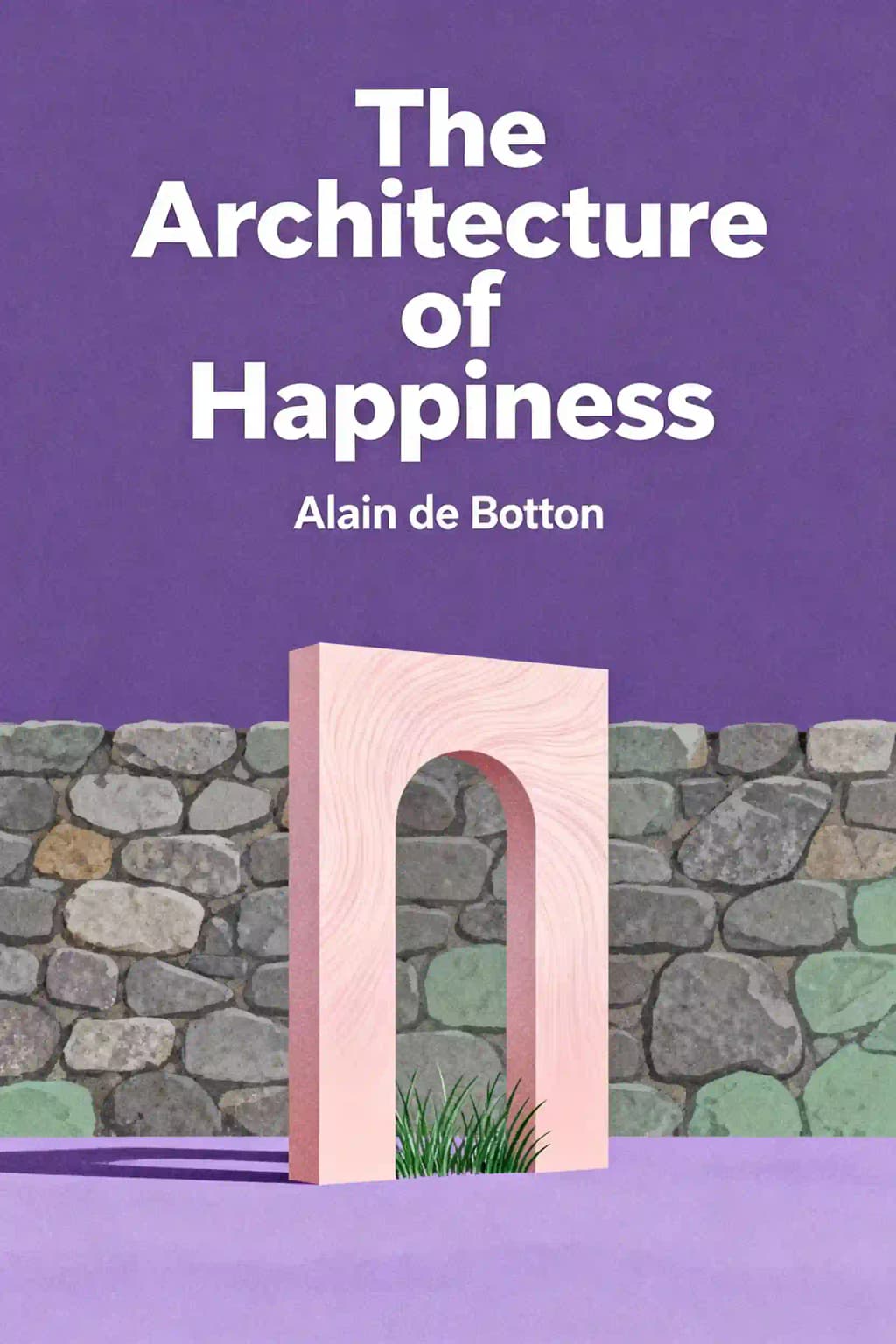
Why are our homes and buildings so crucial to our happiness? Alain de Botton's acclaimed philosophical journey - named one of 2006's best nonfiction books - reveals how architecture shapes our psychology, challenging us to see our surroundings as extensions of our ideal selves.
著者の声を通じて本を感じる
知識を魅力的で例が豊富な洞察に変換
キーアイデアを瞬時にキャプチャして素早く学習
楽しく魅力的な方法で本を楽しむ
Have you ever walked into a space and felt instantly lighter, as though the room itself was giving you permission to breathe? Perhaps it was a cathedral with soaring ceilings, or a friend's sunlit kitchen where conversation flowed effortlessly. Now think of the opposite - that fluorescent-lit waiting room or cramped apartment where you felt your spirit slowly deflating. These aren't random feelings. Our built environment doesn't just shelter our bodies; it shapes our emotional lives in ways we barely acknowledge. Buildings become silent witnesses to our existence, holding memories within their walls and influencing our moods through their proportions, materials, and light. A room with high ceilings and natural wood doesn't just look pleasant - it actively supports our better selves, while a badly designed space can confirm our worst suspicions about life's incompleteness. This isn't frivolous interior decoration; it's about understanding how profoundly our surroundings shape who we become. Throughout history, humanity has been caught in a strange contradiction. The Stoic philosopher Epictetus dismissed caring about "bits of stone and pretty rock" when your house burns down. Christian hermits like St. Alexandra sold their homes to live in tombs, while St. Bernard of Clairvaux traveled past Lake Geneva without noticing its beauty. Yet despite centuries of such teachings, humans have persistently carved decorations, embroidered textiles, and dreamed of ideal homes. Our sensitivity to surroundings stems from a troubling feature of human psychology: we harbor many different selves within us, not all of which feel equally authentic. We need our environments to embody and remind us of the moods and ideas we respect, to hold us like psychological molds to helpful visions of ourselves.
『The Architecture of Happiness』の核心的なアイデアを分かりやすいポイントに分解し、革新的なチームがどのように創造、協力、成長するかを理解します。
『The Architecture of Happiness』を素早い記憶のヒントに凝縮し、率直さ、チームワーク、創造的な回復力の主要原則を強調します。

鮮やかなストーリーテリングを通じて『The Architecture of Happiness』を体験し、イノベーションのレッスンを記憶に残り、応用できる瞬間に変えます。
何でも質問し、声を選び、本当にあなたに響く洞察を一緒に作り出しましょう。

"Instead of endless scrolling, I just hit play on BeFreed. It saves me so much time."
"I never knew where to start with nonfiction—BeFreed’s book lists turned into podcasts gave me a clear path."
"Perfect balance between learning and entertainment. Finished ‘Thinking, Fast and Slow’ on my commute this week."
"Crazy how much I learned while walking the dog. BeFreed = small habits → big gains."
"Reading used to feel like a chore. Now it’s just part of my lifestyle."
"Feels effortless compared to reading. I’ve finished 6 books this month already."
"BeFreed turned my guilty doomscrolling into something that feels productive and inspiring."
"BeFreed turned my commute into learning time. 20-min podcasts are perfect for finishing books I never had time for."
"BeFreed replaced my podcast queue. Imagine Spotify for books — that’s it. 🙌"
"It is great for me to learn something from the book without reading it."
"The themed book list podcasts help me connect ideas across authors—like a guided audio journey."
"Makes me feel smarter every time before going to work"

The Architecture of Happinessの要約をPDFまたはEPUBで無料でダウンロード。印刷やオフラインでいつでもお読みいただけます。