第1章
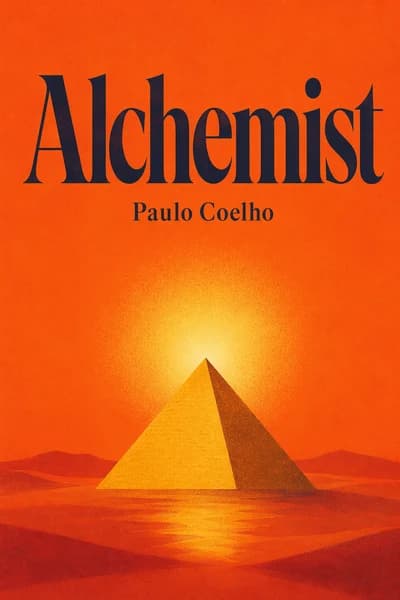
The Alchemist: A Magical Tale of Destiny and Dreams
Paulo Coelho's "The Alchemist" isn't just a book-it's a cultural phenomenon that has touched millions of lives across the globe. Originally published to little fanfare, this slim volume has since been translated into over 80 languages and sold more than 65 million copies worldwide. It's found its way into the hands of celebrities like Will Smith, who called it his favorite book, and Madonna, who claimed it changed her life. Even former U.S. President Bill Clinton was spotted with a copy. What makes this deceptively simple tale so powerful? Perhaps it's the way it speaks directly to our deepest desires-to find our purpose, to pursue our dreams despite obstacles, and to trust that the universe conspires in our favor when we follow our hearts. Or maybe it's because, at its core, "The Alchemist" reminds us that the journey itself-with all its detours and discoveries-is where the true treasure lies. Let's embark on this journey together and uncover the wisdom hidden within this modern classic.
第2章
Dreams That Demand to Be Followed
Santiago's story begins in the abandoned ruins of a church in Andalusia, Spain, where he tends his flock of sheep. Night after night, he experiences the same dream-a child leads him to the Egyptian pyramids with the promise of hidden treasure. But like most of us, Santiago initially dismisses this recurring vision as mere fantasy, a fleeting distraction from his comfortable routine.
What makes Santiago different, though, is his willingness to listen when the dream persists. There's something about this shepherd boy that sets him apart-a curiosity that won't be silenced, a restlessness that can't be soothed by the predictable rhythms of his pastoral life. Despite having achieved what many would consider success-ownership of his flock, freedom to travel the countryside, simple pleasures that satisfy his immediate needs-Santiago senses there's more waiting for him beyond the horizon.
Isn't this feeling universal? That nagging sensation that despite our achievements, we haven't yet become who we're truly meant to be? Santiago's father had given him ancient gold coins to purchase his flock, expecting his son to follow the traditional path. Yet even as Santiago enjoys his life as a shepherd, something within him yearns for more.
When he finally decides to consult a gypsy woman about his dream, we see the first real conflict between caution and courage. The gypsy's interpretation is deceptively simple: go to Egypt, find treasure. But simplicity doesn't mean ease. The journey ahead will demand everything of Santiago-his comfort, his security, his very identity.
This section of the story asks us a profound question: What dreams keep recurring in your life? What visions or ideas refuse to leave you alone, no matter how impractical they might seem? Perhaps, like Santiago, these persistent dreams aren't random mental wanderings but signposts pointing toward your true path. The treasure may not be literal gold, but something far more valuable-the fulfillment that comes from becoming who you were always meant to be.
第3章
Melchizedek: The Mysterious Mentor
Just when Santiago begins to doubt the gypsy's interpretation, fate intervenes in the form of a mysterious old man who introduces himself as Melchizedek, the King of Salem. This encounter transforms Santiago's understanding of his journey and introduces us to one of the book's central concepts: the Personal Legend.
Sitting in the marketplace of Tarifa, Melchizedek explains that everyone has a Personal Legend-the thing they've always wanted to accomplish, the dream that ignited their soul when they were young. "When you want something," he tells Santiago, "all the universe conspires in helping you to achieve it." What a revolutionary thought! That the world isn't working against us but is actually aligned with our deepest desires.
But Melchizedek also delivers a sobering truth: most people abandon their Personal Legends. They let them die, buried under responsibilities, fear, and the expectations of others. "There is a force that wants you to realize your Personal Legend," he says, "but it will prepare you to fight for it." This force isn't malevolent-it's testing your resolve, ensuring you want your dream badly enough to overcome obstacles.
The old king offers Santiago two stones-Urim and Thummim, one black and one white-to help him read omens when he's struggling to make decisions. But more importantly, he offers wisdom: "The secret of happiness is to see all the marvels of the world, and never to forget the drops of oil on the spoon." This cryptic statement references an earlier story about balance-being present in the world while maintaining focus on your purpose.
What makes this section so compelling is how it mirrors our own experiences with mentors and guides. Haven't we all encountered someone who saw something in us that we couldn't yet see in ourselves? Someone who pushed us beyond our self-imposed limitations? Melchizedek represents that voice-both external and internal-that calls us to something greater.
The price for this guidance? One-tenth of Santiago's sheep-a significant cost that represents the sacrifices we must make to pursue our dreams. Nothing worthwhile comes without giving something up. As you reflect on your own journey, consider: What price are you willing to pay for your Personal Legend? What comfort might you need to sacrifice to pursue what truly matters?
第4章
The Courage to Choose Adventure
Standing atop a castle wall overlooking the sea, Santiago faces his moment of decision. His flock of sheep grazes peacefully below-representing security, routine, and the known path. Ahead lies Africa, the desert, and uncertainty-the path toward his Personal Legend. This moment of choice is perhaps the most crucial in any hero's journey.
The winds of change-literally the levanter-blow around Santiago, carrying with them the scents of possibility. These same winds once brought the Moors to Spain, forever altering the course of history. Now they whisper to Santiago of transformation and adventure. What's most striking about this moment is Santiago's realization that nothing holds him back except himself-not his flock, not his family, not his past. The only real obstacle is his own fear.
Haven't we all stood at similar crossroads? Perhaps not with sheep and pyramids, but with choices between comfort and growth, between the life we know and the life that calls to us? These moments define us-not by their outcome, but by our willingness to choose at all.
Santiago sells his sheep, purchases a ticket to Tangier, and crosses the Strait of Gibraltar. The moment his feet touch African soil, he's thrust into a world utterly foreign to him-different language, different customs, different rules. The marketplace of Tangier overwhelms his senses with its colors, smells, and sounds. This sensory overload mirrors the internal disorientation that comes with any major life change.
In his vulnerability, Santiago makes a critical mistake-trusting too quickly. A young man who speaks Spanish offers to guide him through the city, only to disappear with Santiago's money. This betrayal leaves our hero destitute in a strange land, questioning his decision to follow his dream at all.
This setback illustrates a universal truth: the path to our Personal Legend is never smooth. Betrayals, failures, and losses aren't detours from the journey-they are the journey. They test our resolve and teach us necessary lessons. Santiago could have given up, could have cursed the old king and the gypsy woman for leading him astray. Instead, he chooses to see his situation differently-not as a victim, but as an adventurer facing a challenge.
What separates those who achieve their Personal Legends from those who don't isn't the absence of obstacles but the perspective they bring to those obstacles. When life strips you of everything familiar, how do you respond? Do you retreat to safety, or do you find the courage to continue?
第5章
Finding Treasure in Unexpected Places
Dawn breaks over an empty marketplace in Tangier, and Santiago finds himself at his lowest point-robbed, alone, and far from home. The weight of his decision to pursue his Personal Legend now feels crushing. Was this all a mistake? Should he have stayed with his sheep, content with the life he knew?
These questions haunt all of us when we face setbacks on our chosen paths. The voice of doubt whispers that we were foolish to dream at all. But Santiago remembers the stones in his pouch-Urim and Thummim-and the old king's words about omens. He begins to shift his perspective, choosing to see himself not as a victim of circumstance but as an adventurer on a quest.
This mental reframing is powerful. By changing how he views his situation, Santiago changes his relationship to it. He's no longer helpless but resourceful. He's no longer lost but exploring. This shift doesn't immediately solve his problems, but it gives him the clarity to see possibilities where before he saw only obstacles.
Wandering through the marketplace, Santiago notices a crystal merchant's shop. Despite the language barrier, he offers to clean the dusty crystal to attract customers. This simple act-this willingness to be useful even in his desperation-changes everything. The merchant hires him, and Santiago begins a year-long apprenticeship that transforms both their lives.
The crystal merchant is a fascinating character-a man who has his own dream (to journey to Mecca) but has never pursued it. "I'm afraid that if my dream is realized, I'll have no reason to go on living," he confesses. How many of us similarly protect ourselves from disappointment by never fully committing to our dreams?
Santiago brings innovation to the shop-selling tea in crystal glasses, moving the display case outside-and business flourishes. The merchant's hesitance gradually gives way to enthusiasm. Through Santiago's influence, he begins to see that dreams are meant to be pursued, not merely cherished from afar.
This unexpected detour teaches Santiago valuable lessons about commerce, about human nature, and about himself. He saves money, learns Arabic, and gains confidence in his ability to thrive in unfamiliar circumstances. What initially seemed like a devastating setback becomes an essential part of his journey.
Isn't this how life often works? The detours, the apparent failures, the unexpected twists-these are rarely just obstacles. They're opportunities for growth, for learning, for becoming the person we need to be to fulfill our Personal Legend. The treasure Santiago finds in Tangier isn't gold or jewels but something far more valuable-self-reliance, adaptability, and faith in his path.
第6章
The Desert's Silent Wisdom
With money saved and lessons learned from the crystal merchant, Santiago joins a caravan crossing the Sahara toward Al-Fayoum, where he hopes to find a guide to the pyramids. The caravan represents a microcosm of humanity-diverse individuals united by a common purpose, moving together across an inhospitable landscape.
The desert itself becomes a character in this section-vast, demanding, and filled with hidden wisdom. "The desert is a capricious lady," says the camel driver who befriends Santiago. "Sometimes she drives men crazy." This environment strips away pretenses and forces travelers to confront essential truths. There's nowhere to hide in the desert-not from the elements, not from others, and certainly not from oneself.
On the caravan, Santiago meets an Englishman studying alchemy-the mystical science of transforming lead into gold. The Englishman carries trunks full of books but has gained little practical knowledge. He seeks an alchemist rumored to be living at the oasis, hoping to learn the secrets of the Master Work. Through conversations with the Englishman, Santiago learns about alchemy's principles, particularly the idea of the Soul of the World-the belief that everything in the universe is connected.
"When you want something with all your heart," the Englishman explains, "that's when you are closest to the Soul of the World." This concept resonates deeply with Santiago, who recognizes it as similar to what Melchizedek called the "universal language"-the ability to understand the world beyond words, through signs and intuitions.
As they travel, Santiago begins to "read" the desert-noticing subtle changes in the wind, the behavior of animals, the patterns of stars. He's learning the language of the world not through books but through direct experience. This contrast between Santiago's intuitive learning and the Englishman's academic approach highlights a central theme: knowledge is valuable, but wisdom comes from engagement with life itself.
The journey across the desert also teaches Santiago about time. In the endless expanse of sand, hours and days blur together. "I've learned that the world has a soul, and that whoever understands that soul can also understand the language of things," Santiago reflects. This understanding doesn't come from rushing forward but from being fully present in each moment.
When war between tribes threatens the caravan's safety, they must stop at an oasis longer than planned. What initially seems like another delay reveals itself as destiny-for it's at this oasis that Santiago will meet both his great love and the alchemist who will guide the next phase of his journey.
The desert's lessons are paradoxical: in emptiness, find fullness; in silence, hear truth; in stillness, discover movement. These teachings prepare Santiago not just for finding external treasure but for recognizing the treasure within himself. What deserts have you crossed in your own life? What wisdom have you found in places of apparent emptiness?
第7章
Love That Sets You Free
In the midst of his quest for treasure, Santiago discovers something unexpected at the oasis-love. Meeting Fatima at the well, he experiences an immediate connection that transcends language and culture. "It was the pure Language of the World," he reflects. "It required no explanation, just as the universe needs none as it travels through endless time."
This encounter challenges Santiago's focus. Suddenly, the treasure at the pyramids seems less important than being near Fatima. Isn't this how love often enters our lives? Not according to our plans but according to its own timing, rearranging our priorities and questioning our paths.
What makes Fatima extraordinary isn't just her beauty but her understanding of Santiago's Personal Legend. When he confesses his need to continue his journey, she doesn't try to hold him back. "If I am really a part of your dream, you'll come back one day," she tells him. This is love at its most profound-not possession but freedom, not dependency but mutual support.
Fatima embodies the concept of "maktub"-it is written. She trusts that if their love is meant to be, it will endure separation. She understands that to ask Santiago to abandon his quest would diminish him, and eventually, their love as well. "The desert takes our men from us, and they don't always return," she acknowledges. "But we are used to that."
This perspective challenges our conventional notions of romance. We often think love means staying, compromising, putting relationships above individual dreams. But Fatima suggests a more expansive view-that true love honors each person's unique journey and trusts in their eventual reunion.
Santiago struggles with this idea. Part of him wants to settle at the oasis, marry Fatima, and forget about the pyramids. Wouldn't that be enough? But deep down, he knows that unfulfilled dreams become poisonous over time. The boy who abandons his Personal Legend will never be fully present in love because part of him will always wonder what might have been.
Through this dilemma, Coelho offers a profound insight: love shouldn't diminish us but expand us. It shouldn't limit our horizons but broaden them. Real love says, "Go become everything you're meant to be-I'll be here celebrating your journey."
As Santiago prepares to leave the oasis, Fatima's parting words resonate: "I'm a desert woman, and I'm proud of that. I want my husband to wander as free as the wind that shapes the dunes." What greater gift could there be than the blessing to pursue your destiny with the full support of those who love you?
This section invites us to examine our own relationships. Do they constrain us or liberate us? Do they honor our Personal Legends or ask us to abandon them? And are we willing to grant others the same freedom we desire for ourselves?
第8章
The Language of Omens and Intuition
While at the oasis, Santiago experiences a vision that changes everything. Meditating near a date palm, he sees an army invading the peaceful sanctuary-an omen of impending danger. Despite his foreigner status and the risk of being disbelieved, Santiago feels compelled to warn the tribal chieftains of what he's seen.
This moment represents a crucial test of Santiago's growing ability to read the language of the world. Will he trust his intuition enough to act on it, even when doing so might bring ridicule or worse? Will he have the courage to speak an uncomfortable truth?
When Santiago shares his vision with the tribal leaders, most dismiss him. But one-the alchemist-recognizes the authenticity of Santiago's vision. "When someone makes a decision, he is really diving into a strong current that will carry him to places he had never dreamed of when he first made the decision," the alchemist later explains. By choosing to trust his intuition, Santiago has opened himself to new possibilities.
The oasis is indeed attacked, but because of Santiago's warning, the people are prepared. Instead of being punished as a spy (as might have happened), Santiago is rewarded with gold and appointed as a counselor to the tribe. This turn of events illustrates another of the book's central themes: when you are on the path of your Personal Legend, unexpected allies appear, and apparent obstacles become opportunities.
The alchemist, impressed by Santiago's courage, offers to guide him across the desert to the pyramids. "Every search begins with beginner's luck," he tells Santiago. "And every search ends with the victor's being severely tested." The real test, he suggests, isn't finding the physical treasure but becoming the person capable of recognizing and claiming it.
As they journey together, the alchemist teaches Santiago to listen to his heart-not just his emotions but his deepest intuition. "Your heart is alive," the alchemist says. "Keep listening to what it has to say." This isn't always easy. Santiago's heart speaks of fears as well as dreams, of doubts as well as certainties. Learning to distinguish between fear-based thinking and genuine intuition becomes part of his growth.
One of the most powerful lessons comes when the alchemist tells Santiago to place his ear against the sand and listen to the desert. "It understands too that one day other men will return, looking for what was hidden," the alchemist explains. This connection to something larger than himself-this ability to perceive the patterns and purposes woven through existence-is the true alchemy Santiago is learning.
The language of omens isn't supernatural but natural-the world speaking to those attentive enough to listen. Haven't you experienced moments when something inside you knew what to do, even when logic suggested otherwise? Haven't you felt guided by coincidences too meaningful to be random? These are the omens Coelho describes-not mystical so much as deeply intuitive, available to anyone willing to pay attention.
第9章
Transforming Lead Into Gold
As Santiago and the alchemist journey toward the pyramids, they're captured by a warring tribe. To secure their release, the alchemist makes an extraordinary claim: Santiago can transform himself into the wind. He has three days to perform this miracle, or they'll both be killed.
This impossible challenge represents the culmination of Santiago's learning. To succeed, he must integrate everything he's discovered about the Soul of the World, about his own heart, about the language of omens. He must, in essence, become an alchemist himself-capable of transformation at the deepest level.
The first day, Santiago panics. How can anyone become the wind? The task seems impossible. But gradually, he remembers the alchemist's teachings about connecting with the Soul of the World. He speaks to the desert, asking for help, but the desert responds that it doesn't know how to turn a man into wind-he must ask the wind itself.
When Santiago questions the wind, he's directed to something even greater-the sun. The sun, in turn, points him toward the hand that wrote all things. In this sequence, Santiago moves from specific to universal, from material to spiritual, from the elements of nature to their ultimate source.
Finally, Santiago speaks directly to the Soul of the World, surrendering completely to something larger than himself. In this moment of perfect alignment with the universe, the miracle happens-Santiago becomes the wind, moving across the desert, shifting the location of a military camp. The tribesmen, witnessing this transformation, release Santiago and the alchemist immediately.
This episode isn't meant to be taken literally but symbolically. The true alchemy isn't turning lead into gold but transforming the base metal of our ordinary consciousness into the gold of spiritual awakening. Santiago doesn't physically become the wind-he transcends the limitations of his individual identity to connect with the forces that move through all things.
Later, at a monastery, the alchemist demonstrates literal alchemy, turning lead into gold and dividing it into four parts-one for the monastery, one for Santiago, one for himself, and one for the monastery to hold for Santiago if he ever needs it. This act shows that material transformation follows spiritual transformation, not the other way around.
Before they part ways, the alchemist shares a story about a Roman centurion who once sought out a famous wise man, only to discover the man was an ordinary carpenter named Jesus. Years later, the centurion witnessed this same carpenter dying on a cross, forgiving his executioners. Though the centurion didn't fully understand, he recognized something profound in this act and became a convert to the new faith.
The message is clear: we often don't recognize the significance of our encounters until much later. The treasure we seek might not appear in the form we expect. And sometimes, the most important transformations happen not in dramatic moments but in quiet acts of courage, compassion, and faith.
What lead in your own life awaits transformation into gold? What aspects of yourself-fears, limitations, old beliefs-are ready to be alchemized into wisdom, strength, and purpose?
第10章
The Treasure Returns Home
After parting with the alchemist, Santiago finally reaches the pyramids-the destination of his recurring dream. With trembling hands, he begins to dig where his tears fall, certain that he's about to uncover the treasure that has driven his entire journey. Hours pass as he digs deeper and deeper, but no treasure appears.
Suddenly, a group of refugees from the tribal wars appears. Seeing Santiago digging, they assume he's found gold and beat him severely, demanding he reveal its location. When they find nothing, their leader mocks Santiago, sharing his own recurring dream about a treasure buried under a sycamore tree in an abandoned church in Spain-the very place where Santiago's journey began.
This cruel irony breaks something open in Santiago. He begins to laugh, understanding at last the circular nature of his quest. The treasure wasn't at the pyramids after all but back home, where his journey started. All along, he had to travel away to discover what was waiting for him at the beginning.
Isn't this often how wisdom works? We search far and wide for answers that were available to us all along, but we needed the journey to become the person capable of recognizing them. As T.S. Eliot wrote, "We shall not cease from exploration, and the end of all our exploring will be to arrive where we started and know the place for the first time."
Santiago returns to Spain, to the abandoned church with its sycamore tree. Digging beneath it, he uncovers a chest filled with gold coins, precious stones, and golden masks-treasure left behind by a conquistador centuries ago. The physical wealth is substantial, but it's clear that the true treasure is what Santiago has become through his journey-wise, courageous, connected to the Soul of the World.
With the unearthed treasure, Santiago can now return to Fatima, not as a wandering shepherd but as a man who has fulfilled his Personal Legend. He has been tested and transformed. He has learned to read omens, to listen to his heart, to trust the language of the world. Most importantly, he has discovered that the journey itself-with all its detours, challenges, and unexpected gifts-was the real treasure.
The epilogue shows Santiago feeling the wind on his face-the levanter, blowing from Africa. In that breeze, he senses Fatima's kiss. "I'm coming, Fatima," he whispers. His circle is complete, but a new journey is just beginning.
This ending reminds us that fulfilling one Personal Legend often reveals another. Life isn't a single quest but a series of them, each building on the wisdom gained from the last. The treasure we seek may not be what we initially imagined, and the path to it rarely follows a straight line. But if we have the courage to follow our dreams, to learn from every experience, and to trust the omens along the way, we will find not just external rewards but the ultimate treasure-becoming fully ourselves.
第11章
The Alchemy of Everyday Life
"The Alchemist" isn't just a story about a shepherd boy's quest for treasure-it's a manual for living a meaningful life. The principles that guide Santiago's journey can transform our own everyday experiences, turning the lead of routine existence into the gold of purposeful living.
At its heart, alchemy is about transformation-seeing the extraordinary potential hidden within the ordinary. The true alchemist doesn't just change metals; they change perspective. They recognize that everything contains the seeds of something greater. This vision applies not just to ancient mystical practices but to how we approach our daily lives.
Consider the concept of Personal Legend. We all had dreams as children-pure, uncomplicated visions of who we might become. As we age, these dreams often fade under the weight of practicality, responsibility, and fear. But Coelho suggests that abandoning these dreams doesn't lead to security-it leads to a subtle form of suffering, a persistent sense that we've betrayed our true selves.
Reclaiming your Personal Legend doesn't necessarily mean dramatic change. It might simply mean reconnecting with forgotten passions, making space for creativity amid responsibility, or bringing more presence to ordinary moments. The alchemical transformation begins with awareness-recognizing the difference between the life you're living and the life that calls to you.
The language of omens, too, has practical applications. While we needn't look for mystical signs in everything, developing greater attunement to intuition can guide decision-making. Those gut feelings, unexpected coincidences, and persistent ideas that won't leave you alone-these are your personal omens, worth at least as much consideration as logical analysis.
Perhaps most importantly, "The Alchemist" teaches us about the relationship between journey and destination. Santiago ultimately finds his treasure, but it's the journey that transforms him. Each challenge, each relationship, each apparent detour shapes him into someone capable of claiming his destiny.
In our achievement-oriented culture, we often fixate on results while devaluing process. We want the promotion, the relationship, the recognition-but resist the growth required to truly deserve them. True alchemy happens in the crucible of experience, in the willingness to be transformed by both success and failure.
The book also offers wisdom about love-not as possession but as mutual freedom. Fatima doesn't demand that Santiago abandon his quest; she understands that unfulfilled dreams would eventually poison their relationship. This perspective challenges us to examine whether our connections with others expand or contract our sense of possibility.
Finally, "The Alchemist" reminds us that the treasure we seek is often closer than we imagine. Sometimes we must journey far from home to recognize what was available all along. This isn't a failure but a necessary circle-we leave as one person and return as another, newly able to see the value in what we previously overlooked.
The alchemy of everyday life doesn't require esoteric knowledge or mystical powers. It requires only attention, courage, and the willingness to believe that your life is more than random events-that it contains a purpose uniquely yours to fulfill. As the alchemist tells Santiago, "No matter what he does, every person on earth plays a central role in the history of the world. And normally he doesn't know it."
What role are you playing? What treasure awaits your discovery? The journey begins with a single step-the decision to listen to your heart and follow where it leads.