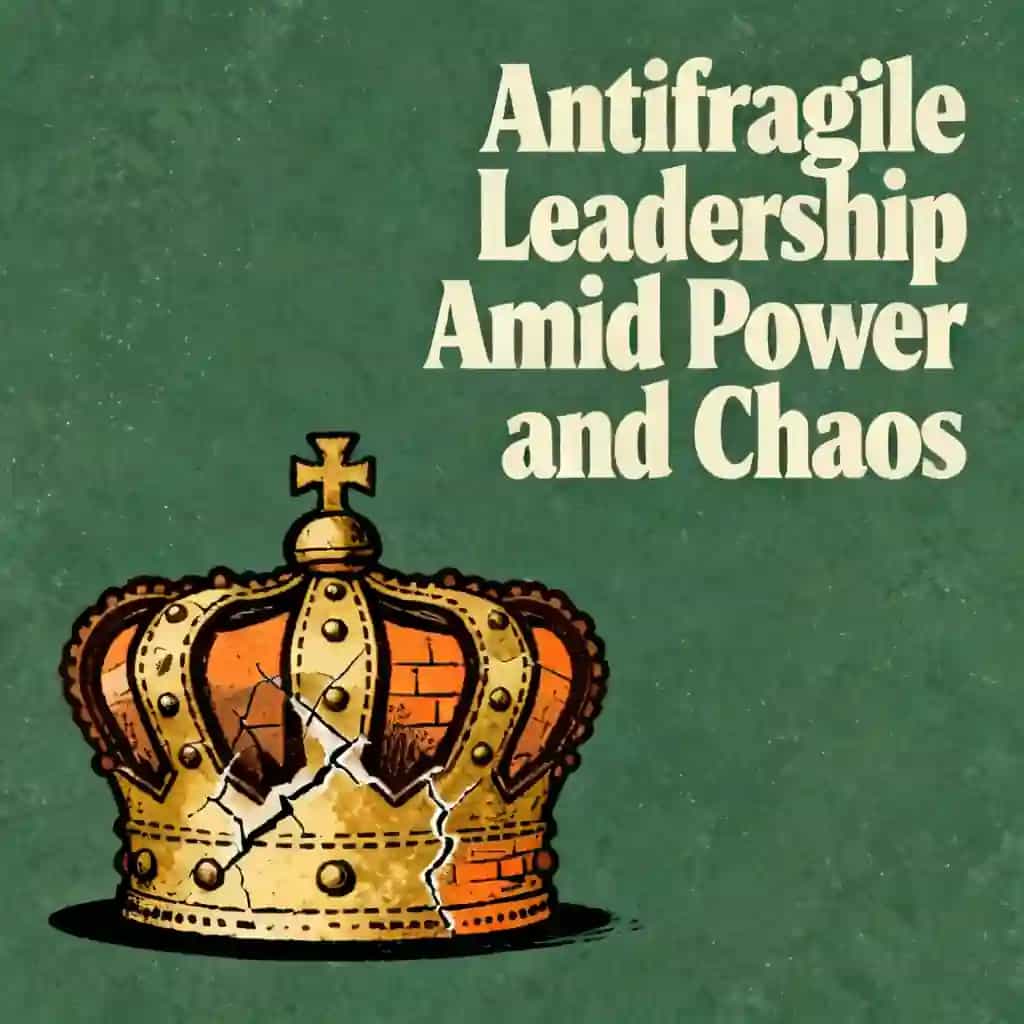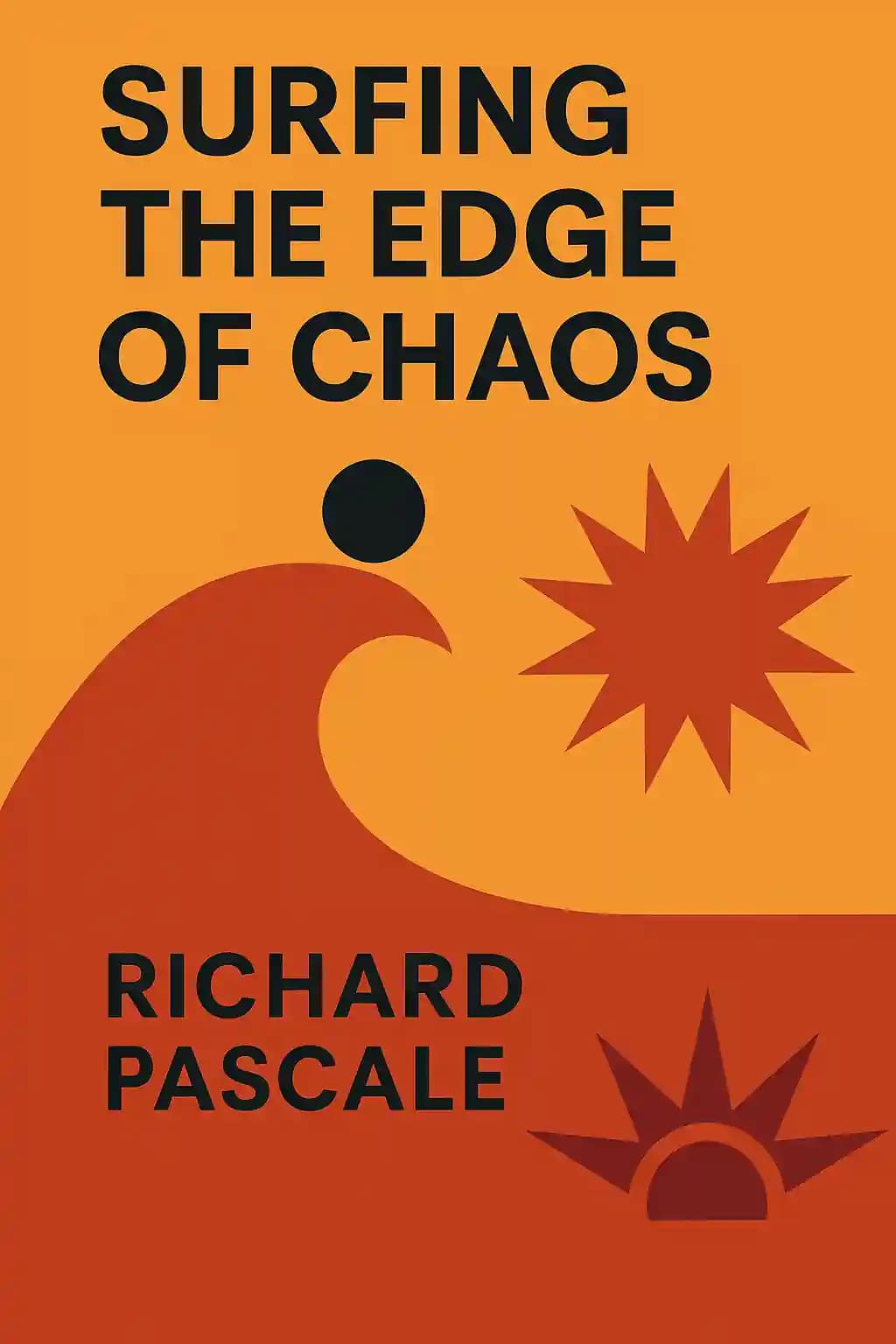
In "Surfing the Edge of Chaos," Pascale reveals how successful organizations thrive by embracing nature's principles rather than fighting them. NASA's adaptive leadership model draws from these concepts. Can your business evolve or will it become extinct in today's unpredictable landscape?
Richard Tanner Pascale, Linda Gioja, and Mark Milleman are the authors of Surfing the Edge of Chaos and pioneering thinkers in organizational strategy and complexity science.
Pascale (1938–2024), a Harvard MBA and Stanford Business School faculty member for two decades, was hailed by The Economist as one of the "leading management gurus of the past 50 years." His expertise in blending biological systems theory with business innovation stems from consulting Fortune 100 companies and his role as an Oxford Saïd Business School Associate Fellow. Co-author Mark Millemann contributed his systems-thinking acumen, while Linda Gioja brought fresh perspectives to their exploration of chaos theory’s applications to leadership.
Pascale’s seminal works, including The Art of Japanese Management (a foundational text on 1980s corporate strategy) and Managing on the Edge, established his reputation for challenging conventional management practices. Surfing the Edge of Chaos builds on his legacy, offering frameworks for thriving in volatile markets. Translated into multiple languages, the book remains a staple in business curricula and executive training programs worldwide.
Surfing the Edge of Chaos explores how businesses can thrive in turbulent environments by applying principles from complexity science. The book argues that organizations must balance structure and flexibility, operating at the "edge of chaos" to foster innovation and adaptability. Using case studies from companies like Monsanto and British Petroleum, it provides frameworks for managing change in dynamic markets.
This book is ideal for leaders, managers, and entrepreneurs navigating organizational transformation. It’s also valuable for students of management science seeking insights into complexity theory and real-world applications. Readers interested in systemic change, innovation strategies, or corporate resilience will find actionable guidance.
Yes, the book remains relevant for its pioneering synthesis of biological systems and business strategy. It offers timeless principles for adaptive leadership, supported by case studies and quotes from industry leaders like Warren Bennis. Its focus on balancing stability and agility makes it essential for modern organizational challenges.
The book was co-authored by Richard Tanner Pascale, a renowned management theorist and Stanford professor; Mark Millemann, a complexity science expert; and Linda Gioja, a consultant specializing in organizational change. Pascale, hailed by The Economist as a top management guru, also wrote The Art of Japanese Management.
The "edge of chaos" refers to a state where systems maintain enough structure to function cohesively but enough flexibility to evolve. In business, this means encouraging experimentation while preserving core stability—a concept illustrated through examples like BP’s adaptive response to market shifts.
The authors analyze companies like Monsanto and British Petroleum, showcasing how they embraced complexity principles to navigate disruption. For instance, BP’s decentralized approach during the 1990s oil crises exemplifies "self-organization," a key theme in the book.
Unlike The Art of Japanese Management (focused on static strategies), this book addresses dynamic, unpredictable markets. It builds on Pascale’s Managing on the Edge by integrating complexity science and biological metaphors, offering a more fluid framework for change.
As businesses face AI disruption, climate challenges, and geopolitical shifts, the book’s emphasis on adaptability remains critical. Its principles help organizations respond to hyper-turbulent environments, making it a staple for modern leadership and innovation strategies.
Leaders learn to foster environments where creativity and structure coexist. By embracing uncertainty and decentralizing authority, they can drive resilience—a approach endorsed by thought leaders like Gary Hamel, who called the book an “action plan” for revitalizing organizations.
著者の声を通じて本を感じる
知識を魅力的で例が豊富な洞察に変換
キーアイデアを瞬時にキャプチャして素早く学習
楽しく魅力的な方法で本を楽しむ
Equilibrium precedes death, making systems less responsive to change.
Living things move toward the edge of chaos when threatened.
Equilibrium often disguises itself as advantage.
Diversity provides crucial protection against threats.
Corporate “fringes” generate the most innovative ideas.
『Surfing the Edge of Chaos』の核心的なアイデアを分かりやすいポイントに分解し、革新的なチームがどのように創造、協力、成長するかを理解します。
『Surfing the Edge of Chaos』を素早い記憶のヒントに凝縮し、率直さ、チームワーク、創造的な回復力の主要原則を強調します。

鮮やかなストーリーテリングを通じて『Surfing the Edge of Chaos』を体験し、イノベーションのレッスンを記憶に残り、応用できる瞬間に変えます。
何でも質問し、声を選び、本当にあなたに響く洞察を一緒に作り出しましょう。

"Instead of endless scrolling, I just hit play on BeFreed. It saves me so much time."
"I never knew where to start with nonfiction—BeFreed’s book lists turned into podcasts gave me a clear path."
"Perfect balance between learning and entertainment. Finished ‘Thinking, Fast and Slow’ on my commute this week."
"Crazy how much I learned while walking the dog. BeFreed = small habits → big gains."
"Reading used to feel like a chore. Now it’s just part of my lifestyle."
"Feels effortless compared to reading. I’ve finished 6 books this month already."
"BeFreed turned my guilty doomscrolling into something that feels productive and inspiring."
"BeFreed turned my commute into learning time. 20-min podcasts are perfect for finishing books I never had time for."
"BeFreed replaced my podcast queue. Imagine Spotify for books — that’s it. 🙌"
"It is great for me to learn something from the book without reading it."
"The themed book list podcasts help me connect ideas across authors—like a guided audio journey."
"Makes me feel smarter every time before going to work"

Surfing the Edge of Chaosの要約をPDFまたはEPUBで無料でダウンロード。印刷やオフラインでいつでもお読みいただけます。
What if everything you learned about managing organizations is fundamentally wrong? Picture the dodo bird-flightless, defenseless, and perfectly adapted to an island paradise without predators. Then humans arrived, and within decades, the species vanished. Now consider IBM's strategic planners in the 1980s, who accurately predicted the shift to personal computers and open architecture. They saw the future clearly, yet their organization changed nothing. Instead, executives simply raised mainframe prices to cover declining margins, watching their empire crumble in slow motion. This isn't a story about ignorance-it's about something far more dangerous: organizational equilibrium masquerading as strength. The most haunting question in business isn't whether you can see threats coming. It's whether you can respond when everything in your culture screams to maintain the status quo. Fortune 500 companies show declining survival rates: 10% attrition from 1976-1985, jumping to 30% from 1986-1990, and 36% from 1991-1996. Most likely saw competitive threats coming but couldn't translate awareness into action.