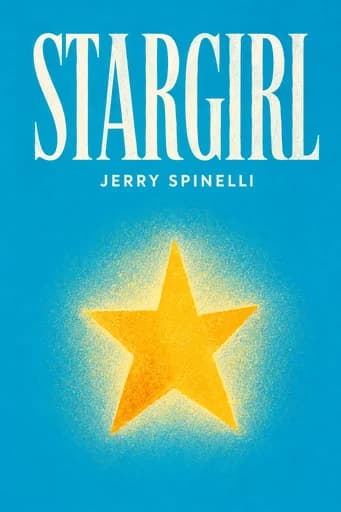
『スターガール』の概要
スピネッリによるニューヨーク・タイムズのベストセラー。一人の型破りなティーンエイジャーが、高校の社会構造を変貌させます。「ジョン・グリーン作品が登場する前のジョン・グリーン作品」と称賛されたこのペアレンツ・チョイス・ゴールド・アワード受賞作は、問いかけます。自分らしくあるために、あなたならどんな代償を払いますか?
スターガールの要約をダウンロード
スターガールの要約をPDFまたはEPUBで無料でダウンロード。印刷やオフラインでいつでもお読みいただけます。
スピネッリによるニューヨーク・タイムズのベストセラー。一人の型破りなティーンエイジャーが、高校の社会構造を変貌させます。「ジョン・グリーン作品が登場する前のジョン・グリーン作品」と称賛されたこのペアレンツ・チョイス・ゴールド・アワード受賞作は、問いかけます。自分らしくあるために、あなたならどんな代償を払いますか?
スターガールの要約をPDFまたはEPUBで無料でダウンロード。印刷やオフラインでいつでもお読みいただけます。
コロンビア大学卒業生がサンフランシスコで開発
"Instead of endless scrolling, I just hit play on BeFreed. It saves me so much time."


"I never knew where to start with nonfiction—BeFreed’s book lists turned into podcasts gave me a clear path."


"Perfect balance between learning and entertainment. Finished ‘Thinking, Fast and Slow’ on my commute this week."
"Crazy how much I learned while walking the dog. BeFreed = small habits → big gains."
"Reading used to feel like a chore. Now it’s just part of my lifestyle."

"Feels effortless compared to reading. I’ve finished 6 books this month already."
"BeFreed turned my guilty doomscrolling into something that feels productive and inspiring."

"BeFreed turned my commute into learning time. 20-min podcasts are perfect for finishing books I never had time for."
"BeFreed replaced my podcast queue. Imagine Spotify for books — that’s it. 🙌"

"It is great for me to learn something from the book without reading it."
"The themed book list podcasts help me connect ideas across authors—like a guided audio journey."
"Makes me feel smarter every time before going to work"
コロンビア大学卒業生がサンフランシスコで開発
"Instead of endless scrolling, I just hit play on BeFreed. It saves me so much time."
"I never knew where to start with nonfiction—BeFreed’s book lists turned into podcasts gave me a clear path."
"Perfect balance between learning and entertainment. Finished ‘Thinking, Fast and Slow’ on my commute this week."
"Crazy how much I learned while walking the dog. BeFreed = small habits → big gains."
"Reading used to feel like a chore. Now it’s just part of my lifestyle."
"Feels effortless compared to reading. I’ve finished 6 books this month already."
"BeFreed turned my guilty doomscrolling into something that feels productive and inspiring."
"BeFreed turned my commute into learning time. 20-min podcasts are perfect for finishing books I never had time for."
"BeFreed replaced my podcast queue. Imagine Spotify for books — that’s it. 🙌"
"It is great for me to learn something from the book without reading it."
"The themed book list podcasts help me connect ideas across authors—like a guided audio journey."
"Makes me feel smarter every time before going to work"
"Instead of endless scrolling, I just hit play on BeFreed. It saves me so much time."
"I never knew where to start with nonfiction—BeFreed’s book lists turned into podcasts gave me a clear path."
"Perfect balance between learning and entertainment. Finished ‘Thinking, Fast and Slow’ on my commute this week."
"Crazy how much I learned while walking the dog. BeFreed = small habits → big gains."
"Reading used to feel like a chore. Now it’s just part of my lifestyle."
"Feels effortless compared to reading. I’ve finished 6 books this month already."
"BeFreed turned my guilty doomscrolling into something that feels productive and inspiring."
"BeFreed turned my commute into learning time. 20-min podcasts are perfect for finishing books I never had time for."
"BeFreed replaced my podcast queue. Imagine Spotify for books — that’s it. 🙌"
"It is great for me to learn something from the book without reading it."
"The themed book list podcasts help me connect ideas across authors—like a guided audio journey."
"Makes me feel smarter every time before going to work"
"Instead of endless scrolling, I just hit play on BeFreed. It saves me so much time."
"I never knew where to start with nonfiction—BeFreed’s book lists turned into podcasts gave me a clear path."
"Perfect balance between learning and entertainment. Finished ‘Thinking, Fast and Slow’ on my commute this week."
"Crazy how much I learned while walking the dog. BeFreed = small habits → big gains."
"Reading used to feel like a chore. Now it’s just part of my lifestyle."
"Feels effortless compared to reading. I’ve finished 6 books this month already."
"BeFreed turned my guilty doomscrolling into something that feels productive and inspiring."
"BeFreed turned my commute into learning time. 20-min podcasts are perfect for finishing books I never had time for."
"BeFreed replaced my podcast queue. Imagine Spotify for books — that’s it. 🙌"
"It is great for me to learn something from the book without reading it."
"The themed book list podcasts help me connect ideas across authors—like a guided audio journey."
"Makes me feel smarter every time before going to work"


スターガールの同じアイデアを、あなたに合う声・深さ・ペースで学べます。いつでも切り替えられます。
Imagine a world where conformity is the norm, where blending in means survival, and where standing out is the greatest social crime. Now imagine a girl who defies all these rules without even trying. This is the world of "Stargirl" by Jerry Spinelli, a novel that has captivated readers since its publication in 2000. The book quickly became a modern classic, earning a place on countless school reading lists and winning the hearts of both young adults and their parents. Celebrities like Emma Watson have praised its message about authenticity, and teachers consistently rank it among the most impactful books for middle schoolers. What makes this seemingly simple story so powerful? Perhaps it's because we all, at some point, face the ultimate question that haunts its pages: Do we have the courage to be ourselves when the world demands conformity?
Mica High School in Arizona epitomizes the suffocating nature of teenage conformity. Located in the sun-bleached suburbs of Phoenix, it's a place where sameness doesn't just exist - it's cultivated with almost religious devotion. Students coordinate their wardrobes down to the smallest detail, from the acceptable brands of sneakers to the precise way to wear a backpack strap. They mirror each other's speech patterns, adopting the same slang and inflections, and even their opinions seem mass-produced. There's no official mandate for this uniformity; instead, it's an intricate social contract written in invisible ink. Leo Borlock, our thoughtful but cautious narrator, has become a master of social camouflage since moving from California years ago. He's perfected the art of being present but unremarkable - speaking enough to avoid being labeled antisocial, but never enough to draw attention. His careful navigation of the social waters has landed him squarely in the middle of the hierarchy, where he's neither celebrated nor scorned. His sole quirk is a collection of porcupine neckties, begun when his uncle gave him one as a welcome-to-Arizona gift. This small rebellion against complete conformity becomes his singular distinguishing feature, though he's careful to wear them only on special occasions. The collection takes on greater significance when the local newspaper mentions it in a human interest piece on Leo's fourteenth birthday. Shortly after, a mysterious package appears on his doorstep containing another porcupine tie - no note, no explanation. This seemingly minor incident, quickly buried under the daily routines of high school life, plants the first seed of mystery in the story. It suggests that someone in their carefully controlled world is paying attention to the details others miss, watching and waiting. The social structure at Mica High operates with the precision of a Swiss watch. At its center is Wayne Parr, whose name itself suggests the standard against which others measure themselves. Despite possessing no exceptional talents, achievements, or even personality, Wayne has somehow become "the grand marshal of our daily parade." His power lies in his very blandness - he's a blank canvas onto which others project their desires for acceptance. His girlfriend, Hillari Kimble, serves as the enforcer of their unwritten rules. With calculated cruelty and razor-sharp observations, she maintains the social order through a combination of verbal intimidation and strategic exclusion. Together, they form the nucleus of a system that values conformity above all else. This carefully maintained ecosystem, where everyone knows their place and stays within prescribed boundaries, is about to face its greatest challenge. The arrival of an unexpected force will test the foundations of their social order, forcing students to question whether the comfort of conformity is worth the price of losing their individuality. The stage is set for a confrontation that will reveal the true cost of belonging - and the courage required to stand apart.
『スターガール』の一語一語が音声に合わせてリアルタイムでハイライトされ、自然に読み進められます。
On the first day of eleventh grade, a whisper runs through the hallways of Mica High: "Have you seen her?" By lunchtime, everyone has. She appears like an apparition-a girl in an off-white floor-length dress, with honey-colored hair and a ukulele slung over her shoulder. Instead of a lunch tray, she carries a canvas bag with a painted sunflower. She sits alone, pulls out her ukulele, and begins singing "I'm Looking for a Four-Leaf Clover" before dancing between tables. This is Stargirl Caraway-or at least, that's what she calls herself. She carries a pet rat named Cinnamon in her pocket. She dances in the rain. She decorates her desk with a tablecloth and vase of flowers. She sings "Happy Birthday" to complete strangers in the cafeteria. Each day brings a new outfit more outlandish than the last-kimonos, pioneer dresses, 1920s flapper costumes. The students of Mica High don't know what to make of her. Hillari Kimble declares her a plant sent by the administration to boost school spirit. Others whisper that she must be homeschooled or from another planet. Leo and his best friend Kevin, who run the school's "Hot Seat" interview show, see her as their next big scoop. But as Leo observes her from a distance, he begins to realize something that others miss: Stargirl isn't putting on an act. There's no calculation behind her eccentricity, no desire for attention or rebellion. She simply is who she is-a realization both fascinating and terrifying in a world where everyone tries so hard to be like everyone else. One afternoon, Leo follows her after school. He watches as she leaves a colorful congratulations card in someone's mailbox, then continues into the desert, playing her ukulele with Cinnamon on her shoulder. As twilight falls and giant saguaro cacti cast long shadows, Leo panics and runs back toward the highway, but not before glimpsing something rare and beautiful-a person completely at peace with herself.
Stargirl's presence at Mica High creates ripples that soon become waves. When the football team struggles to attract spectators, she appears at halftime, dancing barefoot in a lemon-yellow dress around the marching band. She prances, twirls, pretends to play a flute, and even steals the football at the start of the second half, scoring a touchdown before running off the field. The crowd erupts in applause-the first time the cheerleaders have heard any sound from the bleachers. Word spreads quickly. At the next game, over a thousand spectators show up hoping to see another Stargirl spectacle. Though she doesn't appear that night, Mallory Stillwell, the cheerleading captain, soon invites her to join the squad. Two weeks later, Stargirl appears in uniform, though to everyone, she remains "Stargirl in disguise." Her popularity grows as students begin to appreciate her uniqueness. She continues her strange habits-the ukulele, the birthday songs, the pumpkin-shaped cookies at Halloween-but now people enjoy having her around. She's fun and gives everyone something to talk about. Yet there remains a distance; she's different, uncharted territory, potentially dangerous. The entire school waits with anticipation for one particular birthday-Hillari Kimble's. The day before, Hillari confronts Stargirl during lunch, warning her not to sing. "Tomorrow's my birthday," she announces in the suddenly silent cafeteria. "Don't you dare sing to me." Stargirl simply replies that she won't. The next day, tension fills the lunchroom as everyone awaits the showdown. Hillari arrives like an invading general, while Stargirl appears as calm as ever. After eating, Stargirl picks up her ukulele and begins to sing, approaching Hillari's table... but then walks past it, heading straight for Leo. She sings "Happy Birthday" to him, prompting thunderous applause as Hillari storms out in fury. When Kevin asks why she chose Leo, Stargirl simply answers, "Because he's cute," and pinches his ear before leaving. Leo is bewildered-it isn't even his birthday. But something has shifted inside him, something that will change everything.
A.H. (Archibald Hapwood) Brubaker, known as Archie to his students, lives in a house filled with fossil bones. A retired paleontologist, he has turned his home into an informal school where students gather on weekends for philosophical discussions. He calls them the "Loyal Order of the Stone Bone," giving each member a small fossil to wear around their neck. When Leo and Kevin visit Archie to ask about Stargirl, the old man isn't surprised. He reveals he's known her for five years, since her mother first brought her to him. Contrary to rumors, Archie insists Stargirl isn't an alien or a fake-she's "as genuine as Barney," the rodent skull he holds in his hand. He explains that she changes her name according to her whims: first Pocket Mouse, then Mudpie, then Hullygully, and now Stargirl. Leo learns that her mother works as a costume designer for films and her father at MicaTronics. Before they leave, Archie offers an enigmatic observation: "You'll know her more by your questions than by her answers. If you look at her long enough, you might see someone you know." This cryptic statement plants a seed in Leo's mind. Who is this girl who seems to operate by different rules than everyone else? And why does he find himself so drawn to her? Archie represents wisdom in the novel-a bridge between the adult world and the teenage one, between ancient history and present reality. His house, filled with fossils millions of years old, provides perspective on the temporary nature of high school social dynamics. When the basketball team loses an important game, Archie shows his students an Eocene skull and draws a philosophical parallel: that creature also "lost its game" after winning for ten million years because its opponents were "better, faster, smarter." In Archie's world, losing a basketball game-or even being socially ostracized-is just a brief moment in the vast timeline of existence.
Stargirl's popularity begins to wane when she commits an unforgivable sin in the eyes of her peers: during a basketball game where Mica is crushing their opponents 78-29, she leaves the gym because she feels too sorry for the other team. When questioned, she simply says she couldn't bear to cheer for such a massacre. The cheerleaders remind her that her job is only to cheer for Mica, but she just stares at them uncomprehendingly. The situation worsens when Mica faces Sun Valley in the district championship. When star player Ron Kovac from the opposing team breaks his ankle, Stargirl is the first to rush to comfort him, even following him when he's carried away in an ambulance. Without Kovac, Mica easily wins the game, but Stargirl's actions are seen as betrayal. The tension culminates when Stargirl appears on "Hot Seat," the school's television show where students are interviewed by Kevin and twelve "jurors" who ask impertinent but not offensive questions. The show is recorded after school and broadcast that evening on local cable, reaching about ten thousand homes. What begins as a standard interview quickly turns hostile. Mike Ebersole accuses her of not loving her country because she doesn't recite the pledge "the right way." Becca Rinaldi attacks her for cheering for opposing teams: "You're not 'a' cheerleader, you stupid goose, you're 'our' cheerleader." When Stargirl innocently responds, "But when the other team scores and you see how happy their fans are, aren't you happy too?" she's met with a barrage of criticism. The situation deteriorates as jurors stand up, shouting questions and accusations: "Why don't you act normal?" "Why do you want to be different?" Hillari Kimble is the most aggressive: "You're stupid. Crazy... Get out of my school!" Professor Robineau stops the recording, which will never be aired. The damage, however, is done. The next day, everyone knows what happened. That evening at the most important game of the year, Stargirl initially behaves like a normal cheerleader, but when the opposing team's star player is injured, she's the first to comfort him. Two nights later, when Mica loses to a clearly superior Glendale team, Stargirl continues to cheer fiercely until someone throws a tomato in her face. Leo rises, shouting "NOOOOOOO!" as she stands motionless, her eyes wide with shock amid the red pulp.
『スターガール』の一語一語が音声に合わせてリアルタイムでハイライトされ、自然に読み進められます。
The morning after the tomato incident, Leo finds a Valentine's card in his backpack signed with a drawing of a star and a little girl. His first thought is that Stargirl has given cards to everyone, but when he casually asks Kevin, he discovers she's only given them to classmates. At lunch, Stargirl appears downcast, without her ukulele or rat, but before leaving she approaches Leo and says hello. He panics and flees. For the rest of the day, Leo hides, goes straight home, and locks himself in his room, obsessively rereading the card and repeating "Hello, Leo" to himself. He drives toward her street but turns back at the last moment. For hours he lies awake, hearing her voice "from the night, from the light, from the stars." Eventually, Leo musters the courage to speak with Stargirl. When she approaches his table at lunch saying "You're welcome," he finally turns and thanks her for the card. Her smile strikes him deeply. After school, he seeks her out but can't find her. He hears some girls talking about her expulsion from the cheerleaders, and when they see him, they call him "Starboy." That evening, Leo walks to Stargirl's house, hiding behind a car in the driveway. She discovers him and begins a surreal conversation, as if it's perfectly normal to talk to someone hiding behind a car. She introduces him to Cinnamon, who climbs onto Leo's shoulder and cleans his ears. When Stargirl has to go inside, Leo wishes she wouldn't leave. As their relationship develops, Stargirl takes Leo into the desert and teaches him to "erase himself"-to become nothing in order to connect with the universe. She explains that one must eliminate thoughts, senses, even self-awareness to allow the world to "pour in like water into an empty cup." While she easily achieves this state of peace, Leo struggles but experiences a moment of connection when holding Cinnamon. At sunset, they walk hand in hand in the moonlit desert, in silence. In these moments away from school, Leo discovers a new world. Stargirl teaches him to see details he previously missed-a door painted in ever-changing colors, an elegant elderly man sitting on a bench, ants carrying enormous loads. She doesn't just see but deeply feels what she observes, responding with genuine emotion. Leo learns to laugh openly for the first time in his life and begins to notice the small daily miracles he once ignored.
At school, Leo and Stargirl seem to live in a universe of their own, sensing each other's presence even at a distance. But one day Leo notices something disturbing: no one speaks to them, no one looks at them, everyone moves away as they pass. Kevin reveals that Stargirl is the victim of the "silent treatment"-the entire school has excluded her, blaming her for the team's defeats after she cheered for opponents. Despite her past kindnesses, she has become an outcast. While Stargirl seems oblivious, Leo feels "ice forming on the back of his neck" as they walk through the deserted corridors. Seeking comfort, Leo visits Archie, who compares the situation to the shunning practiced by Pennsylvania Amish. When someone is excommunicated, the entire community completely ignores them-even family, wife, and children-as if they no longer exist. Archie defines Leo as a "dolphin caught in a tuna net" and offers a simple but impossible solution: stay away from Stargirl to solve the problem. During their conversation in the desert, Archie consults Senor Saguaro, an old cactus he considers a sort of oracle. The Senor poses a fundamental question to Leo: who does he care about more, Stargirl or his classmates? Leo understands the question perfectly but doesn't want to answer because the answer frightens him. The shunning extends to Leo, though in a less absolute form. At school, he notices glances that avoid him, shoulders that turn away, conversations that die when he approaches. He desperately seeks confirmation of his existence, gratified when someone responds to his greeting. He convinces himself that the shunning is more painful for him than for Stargirl, who seems too immersed in her own world to notice or suffer from it, continuing to decorate desks with flowers and distribute birthday serenades. One day Leo discovers a sheet on the school bulletin board with a huge red heart and the inscription "STARGIRL LOVES LEO." His first impulse is pride, the second horror. He feels exposed, in the spotlight. At lunch he avoids looking at her, but she greets him radiantly and blows him a kiss. Someone tears down the sheet. When she catches up with him after school, enthusiastic about her declaration, he can't share her enthusiasm. When she puts Cinnamon on his shoulder, he strikes the rat, making it fall. He leaves, refusing even to listen to her speech for the oratory competition.
After days of avoiding Stargirl, she forces Leo into a confrontation. He confesses that no one speaks to him anymore and asks why she doesn't care about others' opinions. She responds that she cares about him, Dori, Archie, her family, but doesn't understand why she should worry about "everyone." He reproaches her for cheering for the opposing team and comforting Kovac, the injured enemy player. She, confused, simply answers: "He was hurting." Leo tries to explain that she can't do whatever comes to mind, that she must conform. She keeps asking "why not?" to each of his explanations about social rules. He tells her one must be part of a group, behave like others. When he finally admits the problem is that "nobody likes her," she looks at him intensely asking: "Nobody?" He defends himself saying he likes her as she is, but they live in a world of "them." Two days later, Stargirl disappears. In her place appears Susan Julia Caraway-a normal girl with jeans, sandals, dark red nails and lips, made-up eyes, rings, and huge earrings. It's Stargirl transformed, perfectly normal. Leo is happy and proud to walk with her through the corridors. Finally, they can be a normal couple, but the shunning continues. Despite her attempts to conform-always wondering what "Evelyn Anybody" would do-classmates continue to ignore her. One day he finds her in the courtyard with a sign "TALK TO ME AND I'LL SCRATCH YOUR BACK," but no one approaches. Then Susan has a vision: she'll win the state oratory competition, and upon her return, she'll be triumphantly welcomed by the school. She does win, delivering a brilliant, improvised speech titled "I Might Have Heard a Moa" that captivates the audience and earns a standing ovation. Her silver plaque glitters amid camera flashes as she's interviewed by television crews and surrounded by admirers. At the hotel, everyone recognizes her, and anyone who looks at her smiles. They celebrate by dancing in the hotel's nightclub, while her face smiles from the television screen above the counter. But when they return to Mica, instead of the triumphant reception Susan expected, they find only three people waiting: two teachers and Dori Dilson, holding a huge congratulations sign. No confetti, no firecrackers, no applause. The silver plaque slips from Susan's knees as her parents take her away.
The Monday after the competition, Susan returns to being Stargirl: long skirt, ribbons in her hair, ukulele. She distributes cookies with smiley faces to everyone, but only Dori Dilson applauds her performance with Cinnamon. Other students ignore her, leaving the cookies untouched on the tables. Walking home, Leo asks if she's given up on being liked, on being normal. "Yes," she responds decisively, in good spirits. When he suggests she turn back, she reminds him that "we live in a world of them." After Stargirl's departure from Mica-her family moves to Minnesota-Leo visits Archie, who seems to have been expecting him. When Leo asks if he'll see her again, Archie shrugs: "Big country. Small world. Who knows?" He explains that Stargirl was a "star person," someone more primitive, closer to the stellar origins from which we all come. He reveals that she had given up herself for Leo, for love-an opportunity Leo had foolishly lost. The summer before leaving for college, Archie shows Leo Stargirl's "office" in the shed: it contains all the materials for her anonymous gifts, a map of Mica full of colored pins, a birthday calendar, and files on every person in town, including Leo. It was an incredible archive of personal information collected like a "spy," what Archie defined as a "pleasant betrayal." Fifteen years after graduation, Leo continues to visit Mica occasionally. He became a set designer, a profession he now understands was born the day Stargirl took him to her "enchanted place." During his last visit, Archie took him to the Maricopa mountains to bury Barney, the Paleocene skull, along with a slip of paper containing a single word he wouldn't reveal. At the next visit, Archie was gone, his house occupied by others, and Stargirl's "enchanted place" had been replaced by a new elementary school. Leo never attends class reunions, but Kevin tells him everyone still talks about Stargirl and wonders where she is. Some even try to recreate the "bunny hop." The high school now has an association called "The Sunflowers," whose members commit to performing a kind act every day. The Electrons band has a ukulele, and at basketball games, some fans applaud when opponents score their first basket. Leo continues to look for traces of Stargirl in newspapers across the country, reading about small acts of kindness: a man greeting commuters in Kansas City, a girl selling lemonade offering free back scratches. He doesn't despair of seeing her again one day. Last month, shortly before his birthday, he received a tie with a porcupine drawn on it in the mail-a reminder that someone is still watching, still noticing the small details that most people overlook. In the end, Stargirl's legacy lives on not just in Leo's memory but in the changed culture of Mica High and in the small acts of kindness that continue to ripple outward, touching lives she never knew. Her brief presence was like a stone thrown into still water-the ripples continue long after the stone has disappeared from sight.
100万人以上の学習者に愛用されています
“23日間、毎日使い続けています。今では日課の一部です。”
jayallen



The Only-Child's Guide to Self-Reliance
This guide is essential for individuals who grew up as only children and find themselves struggling with social integration or decision paralysis. It provides a roadmap for transforming solo-oriented habits into collaborative strengths and self-assured leadership.

The Rise and Fall of Glass Tires
This exploration into Goodyear's mid-century innovation is essential for automotive enthusiasts and material scientists interested in the intersection of design and safety. It provides a unique case study on why some revolutionary engineering concepts fail to transition from the lab to the open road.

The Art of Systemic Rebellion
This plan is designed for individuals feeling stifled by societal expectations and seeking a more authentic existence. It provides a philosophical and creative framework for those ready to trade hollow success for a life of deep, personal significance.

Faith Among the Stars
This plan is essential for explorers and thinkers seeking to reconcile the harsh realities of deep-space physics with profound spiritual questions. It is ideal for those who want to find divine purpose while navigating the technical and existential challenges of the universe.

The Glass Story: From Sand to Silicon
This plan offers a unique cross-disciplinary look at how a single material shaped human history, science, and global communication. It is ideal for history enthusiasts, science students, and curious minds interested in the intersection of craftsmanship and technology.

The Design Student's Social Playbook
This plan is essential for design students who want to bridge the gap between academic theory and real-world social influence. It benefits emerging creatives looking to build professional authority while remaining authentic to modern digital culture.

Read high-concept sci-fi exploring extremes
High-concept science fiction pushes the boundaries of imagination, challenging readers to confront radical ideas about humanity's future and the nature of reality itself. This learning plan is ideal for readers seeking to move beyond conventional sci-fi narratives into more intellectually demanding works that explore consciousness, technological transcendence, and the outer limits of speculative thought.

The Hero Within: Building Spider-Man Resilience
In an increasingly unpredictable world, the ability to maintain composure and purpose under pressure is essential. This plan is designed for aspiring leaders and individuals facing high-stakes challenges who want to transform stress into a superpower for social good.





