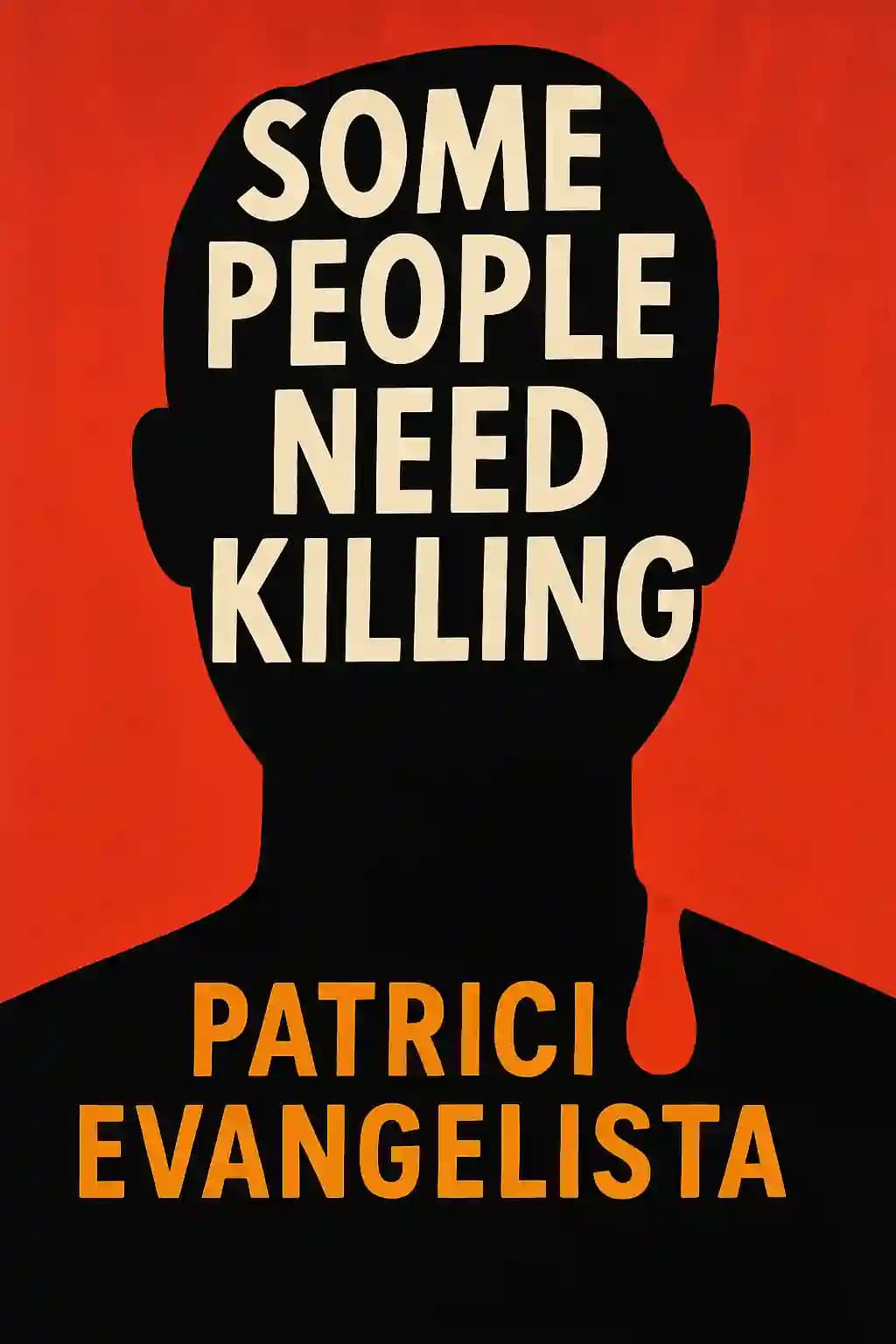
Patricia Evangelista's award-winning memoir exposes Duterte's brutal drug war through unflinching interviews with victims' families and killers themselves. Named among NYT's best books of 2023, this haunting chronicle asks: When does a nation normalize murder? "I'm not all bad. Some people need killing."
Patricia Chanco Evangelista is an acclaimed trauma journalist and the author of Some People Need Killing: A Memoir of Murder in My Country. She combines investigative rigor with frontline reporting to document political violence and human rights crises.
This memoir, blending narrative nonfiction with true crime analysis, draws from her nine years covering Rodrigo Duterte’s drug war for Rappler, where her award-winning “Impunity” series exposed systemic police collusion in extrajudicial killings.
A New America fellow and Yale Council on Southeast Asia Studies associate, Evangelista’s work has earned the Kate Webb Prize for dangerous-zone journalism and the 2024 Helen Bernstein Book Award for Excellence in Journalism. Her documentaries for ABS-CBN News Channel on disasters like Supertyphoon Haiyan received New York Festivals medals.
Some People Need Killing was named TIME’s #1 Nonfiction Book of 2023, a New York Times Top 10 pick, and longlisted for the Women’s Prize for Non-Fiction—solidifying its status as a defining account of state-sanctioned violence.
Some People Need Killing is a memoir and investigative report on Philippine President Rodrigo Duterte’s brutal anti-drug campaign, documenting state-sanctioned killings and vigilante violence from 2016-2022. Patricia Evangelista, a trauma journalist, immerses readers in the psychological and societal impact of extrajudicial murders, chronicling survivors’ stories and perpetrators’ twisted justifications. The title引用s a vigilante’s chilling rationale: “I’m not all bad. Some people need killing.”
This book is essential for readers interested in human rights, Southeast Asian politics, or investigative journalism. It appeals to true crime enthusiasts seeking gritty, real-world accounts and scholars studying authoritarianism’s erosion of democracy. The graphic content and ethical questions make it suited for mature audiences grappling with moral ambiguities in governance.
Yes—it’s a critically acclaimed “journalistic masterpiece” (The New Yorker) and one of TIME’s top nonfiction books of 2023. Its unflinching examination of state violence, combined with Evangelista’s lyrical prose, offers profound insights into fear, complicity, and resistance under tyranny.
The title引用s a vigilante’s defense of his actions during Duterte’s drug war, reflecting widespread desensitization to violence. This mantra rationalized murder as public service, exposing how dehumanizing rhetoric enabled ordinary citizens to justify atrocities.
As a trauma journalist and Rappler reporter, Evangelista spent six years embedding with killers, survivors, and activists. Her Pulitzer Center-supported investigations and awards like the Kate Webb Prize ground the narrative in rigor and empathy, blending reportage with intimate storytelling.
While praised for its bravery, some note the unrelenting brutality may overwhelm readers. Others highlight its narrow focus on Manila-centric accounts, though this intentional choice amplifies systemic patterns over isolated incidents.
Evangelista traces Duterte’s populist appeal to public frustration with crime and corruption, juxtaposing his “strongman” image with the human cost of his policies. She analyzes how media manipulation and disinformation fueled acceptance of state-sanctioned murder.
The book揭露s collusion between police and vigilante groups, who often carried out executions to bypass legal scrutiny. Evangelista documents how economic desperation and ideological indoctrination turned civilians into ruthless actors.
Through haunting interviews with victims’ families, Evangelista explores grief, guilt, and resilience. A mother’s account of bribing police to retrieve her son’s body exemplifies the erosion of trust in institutions.
The narrative connects Duterte’s policies to colonial legacies, poverty, and the Catholic Church’s influence. Evangelista argues the drug war exploited existing societal fractures to consolidate authoritarian control.
Evangelista employs novelistic pacing and vivid metaphors—describing bloodstains as “rosary beads”—to humanize statistics. This approach bridges investigative rigor with emotional resonance, immersing readers in survivors’ lived experiences.
As global authoritarianism surges, the book serves as a cautionary tale about dehumanizing rhetoric and the dangers of trading civil liberties for false security. Its lessons resonate with contemporary struggles for democracy worldwide.
著者の声を通じて本を感じる
知識を魅力的で例が豊富な洞察に変換
キーアイデアを瞬時にキャプチャして素早く学習
楽しく魅力的な方法で本を楽しむ
I am the death squad.
We are Duterte.
Fuck the bleeding hearts.
it was a soldier who shot Ninoy.
Don't shoot, she's only a child.
『Some People Need Killing』の核心的なアイデアを分かりやすいポイントに分解し、革新的なチームがどのように創造、協力、成長するかを理解します。
『Some People Need Killing』を素早い記憶のヒントに凝縮し、率直さ、チームワーク、創造的な回復力の主要原則を強調します。

鮮やかなストーリーテリングを通じて『Some People Need Killing』を体験し、イノベーションのレッスンを記憶に残り、応用できる瞬間に変えます。
何でも質問し、声を選び、本当にあなたに響く洞察を一緒に作り出しましょう。

"Instead of endless scrolling, I just hit play on BeFreed. It saves me so much time."
"I never knew where to start with nonfiction—BeFreed’s book lists turned into podcasts gave me a clear path."
"Perfect balance between learning and entertainment. Finished ‘Thinking, Fast and Slow’ on my commute this week."
"Crazy how much I learned while walking the dog. BeFreed = small habits → big gains."
"Reading used to feel like a chore. Now it’s just part of my lifestyle."
"Feels effortless compared to reading. I’ve finished 6 books this month already."
"BeFreed turned my guilty doomscrolling into something that feels productive and inspiring."
"BeFreed turned my commute into learning time. 20-min podcasts are perfect for finishing books I never had time for."
"BeFreed replaced my podcast queue. Imagine Spotify for books — that’s it. 🙌"
"It is great for me to learn something from the book without reading it."
"The themed book list podcasts help me connect ideas across authors—like a guided audio journey."
"Makes me feel smarter every time before going to work"

Some People Need Killingの要約をPDFまたはEPUBで無料でダウンロード。印刷やオフラインでいつでもお読みいただけます。
A five-year-old girl named Danica Mae died from a bullet meant for her grandfather. Fourteen-year-old Christine watched police force her father to kneel before shooting him at close range-she blamed herself for letting go when they threw her against the wall. A girl called Love-Love stood between masked gunmen and her mother, begging them to kill her instead. One gunman hesitated: "Don't shoot, she's only a child." Before pulling the trigger on her mother, he declared: "We are Duterte." This is what happens when a nation's leader promises salvation through violence and tells his police force, "It's your duty to kill." Between 2016 and 2022, the Philippines transformed into a laboratory for state-sanctioned murder, where democracy didn't collapse-it voted for its own executioner.