第1章
When Shame Goes Viral: The Digital Pillory
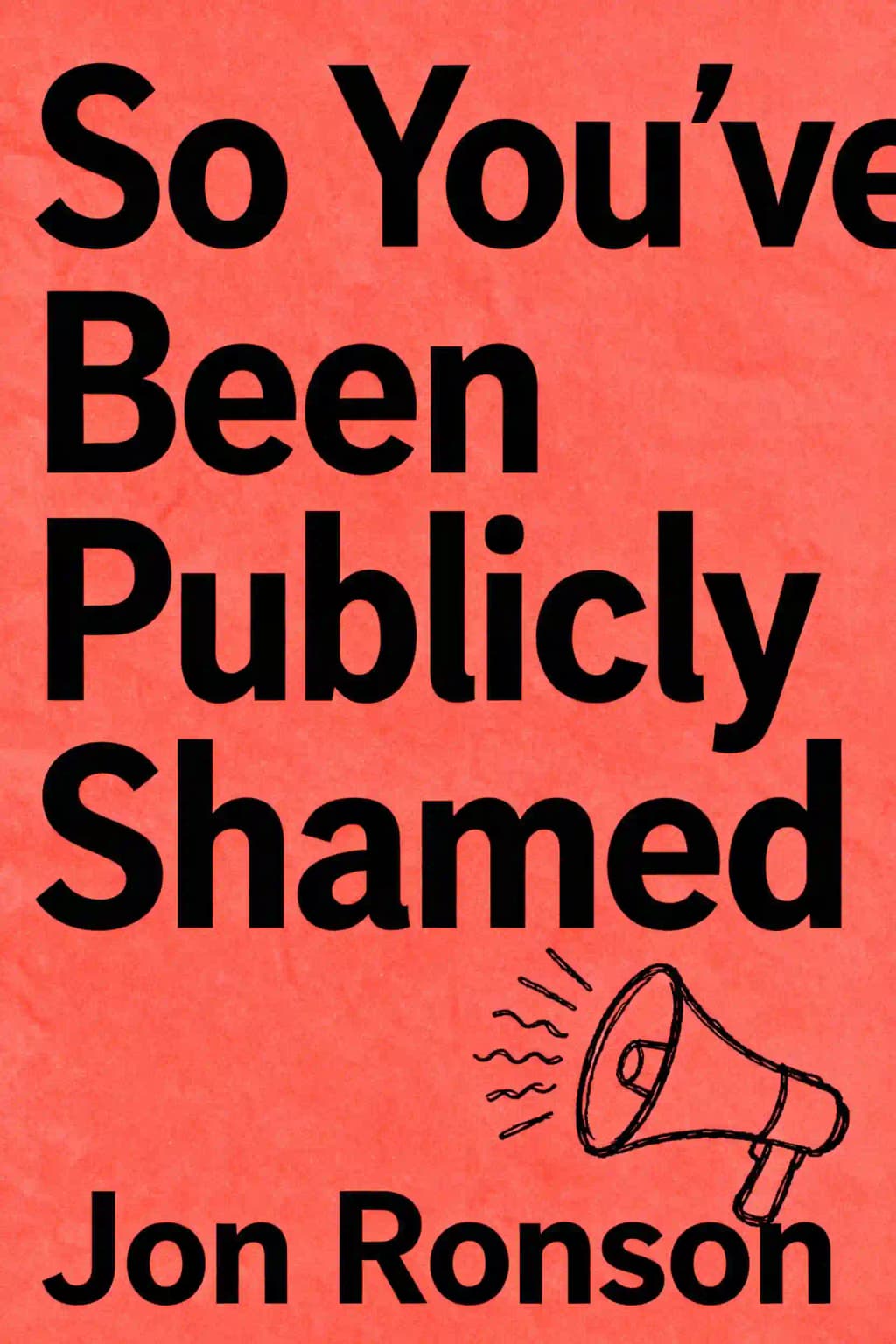
Have you ever had that nightmare where you're standing naked in a crowded room, exposed and vulnerable while everyone points and whispers? In our hyperconnected world, this nightmare has become a waking reality for many. Jon Ronson's "So You've Been Publicly Shamed" explores this modern phenomenon with the precision of an investigative journalist and the empathy of a fellow human being. Since its 2015 publication, this book has become required reading in journalism schools worldwide and counts among Barack Obama's recommended reads. Its cultural impact continues to grow as social media platforms evolve into increasingly powerful tools for both justice and destruction. Ronson, whose TED talk on this subject has garnered over 5 million views, takes us on a journey through the darkest corners of internet culture while maintaining his trademark compassionate curiosity.
第2章
The Spambot That Started It All
It began innocuously enough - Jon Ronson discovered someone impersonating him on Twitter. This doppelganger wasn't just using his name and photo but was tweeting bizarre statements about fusion cooking and dreams of "time and cock" - decidedly not Ronson's style. The bot posted multiple times per day, creating an unsettling digital shadow that followed Ronson's genuine online presence. The culprits? Three academics from Warwick University who had created what they called an "infomorph" of Ronson as part of an academic exercise examining online identity. They had developed an algorithm that attempted to replicate human personality through social media behavior, choosing Ronson as their unwitting test subject.
When confronted at their university office, the academics refused to remove the spambot, dismissing Ronson's concerns with academic hauteur. They suggested he was being overly protective of his "brand," as if his identity were merely a corporate asset rather than something deeply personal. During the tense exchange, they repeatedly cited academic freedom and algorithmic exploration, while completely dismissing the ethical implications of identity theft. The confrontation, which Ronson filmed, revealed a disturbing disconnect between their theoretical approach to online identity and the real-world impact of their experiment. One academic even suggested that Ronson should be "flattered" by their interest in his digital persona.
Ronson posted the footage online, and what happened next was remarkable. The public response was overwhelmingly supportive, with strangers worldwide rallying to his defense. Twitter users from London to Los Angeles shared his story, creating a viral moment that highlighted the issues of digital consent and identity theft. However, this support came with a troubling edge - some comments became disturbingly violent, with users threatening the academics' careers and personal safety, revealing the hair-trigger nature of online outrage. The incident demonstrated how quickly digital mob justice could escalate from righteous indignation to toxic harassment.
Within days, facing this tsunami of public pressure, the academics removed the spambot, though they attempted to save face by "retiring" it with academic fanfare while claiming their real aim had been highlighting algorithmic tyranny all along. They published a formal statement framing the entire incident as a planned experiment in digital ethics, though this seemed more like retroactive justification than original intent.
This victory through public shaming felt exhilarating to Ronson. There was something undeniably powerful about strangers uniting to right a perceived wrong. The experience showed how social media could mobilize rapid response to injustice, creating instant accountability where traditional channels might have failed. Yet this experience planted the seed for a deeper investigation: what happens when this powerful tool targets someone else? What are the consequences when the collective weight of internet judgment crashes down on an individual? The incident raised uncomfortable questions about proportionality, justice, and the thin line between correction and persecution in the digital age.
第3章
The Return of the Public Square
Ronson's experience with the spambot wasn't his first encounter with the power of collective online action. He had participated in several social media campaigns that felt righteous and effective: the Twitter response to Jan Moir's homophobic Daily Mail column about Stephen Gately's death that caused advertisers to withdraw within hours of the article's publication; the rallying against the Daily Mail's attack on a food bank charity that resulted in 39,000 pounds in donations within 24 hours; forcing LA Fitness to cancel the membership of a financially struggling couple who faced steep cancellation fees despite their circumstances.
These incidents revealed something profound: after nearly 180 years of dormancy, public shaming had returned as a powerful tool for social justice. The traditional pillory and stocks of colonial times had been replaced by Twitter threads and Facebook posts, but the fundamental dynamic remained the same - public exposure and collective condemnation of perceived wrongdoing. Where once crowds gathered in town squares to witness punishment, they now assembled virtually, armed with retweets and angry comments.
What made this modern incarnation different was its democratizing potential and unprecedented reach. Hierarchies were being leveled; the previously silenced were given voice. Corporations and powerful individuals suddenly found themselves accountable to the masses in ways that bypassed traditional channels of power. A single tweet could spark a movement, and hashtags became rallying cries for justice. The internet had created a new public square where anyone with a social media account could participate in enforcing social norms, from calling out corporate malpractice to addressing individual acts of racism or sexism.
This digital vigilantism carried both promise and peril. While it enabled swift action against genuine wrongdoing, it also raised questions about proportionality and due process. The speed and scale of online shaming meant that accusations could go viral before facts were verified, and the punishment could far exceed the crime. The permanence of digital records meant that the shame could follow someone indefinitely, unlike historical public shaming which was typically time-limited.
This realization inspired Ronson to chronicle the phenomenon systematically. He decided to investigate major public shamings, speaking with both the shamers and the shamed, to understand the psychological and social dynamics at play. He examined cases ranging from inappropriate tweets that destroyed careers to corporate missteps that triggered massive backlash. What began as curiosity about a fascinating social trend soon evolved into something more profound - an examination of our collective humanity and the thin line between justice and cruelty in an age where anyone could become both judge and executioner with a single click.
第4章
The Fabricator: Jonah Lehrer's Fall from Grace
On July 4, 2012, Michael C. Moynihan, a struggling 37-year-old journalist in Brooklyn, was hunting for story ideas while stressed about a temporary blogging gig with The Washington Post. He downloaded Jonah Lehrer's bestseller "Imagine: How Creativity Works" and began reading about Bob Dylan's creative process. As a Dylan enthusiast, Moynihan noticed suspicious quotes that didn't ring true - statements like "It's just this sense that you got something to say" and "I'm glad I'm not that" attributed to Dylan but sounding inauthentic.
What followed was a journalistic investigation that would destroy Lehrer's career. Moynihan discovered that Lehrer had fabricated Dylan quotes and lied about having access to rare interview transcripts. When confronted, Lehrer's response revealed the desperate panic of someone watching their carefully constructed life crumble. He called Moynihan twenty-five times in one night. His powerful literary agent, Andrew Wylie, intervened. But the truth was inescapable.
For $2,200, Moynihan published his findings in Tablet magazine, setting off a chain reaction that would obliterate Lehrer's reputation. The experience left Moynihan conflicted - proud of his journalistic integrity yet troubled by the human cost. In their final conversation, Lehrer coldly told him, "I really regret ever responding to your email."
The aftermath revealed the complex emotions surrounding public shamings. Moynihan initially imagined Lehrer as a fellow struggling journalist in "a little house" until discovering an LA Times article about Lehrer purchasing the Julius Shulman house for $2.25 million. "It's unfair... but it made things a bit different," Moynihan admitted, highlighting how we calibrate our empathy based on perceived privilege.
At a London party, when Ronson shared this story, a theater director shivered and said, "It's about the terror, isn't it? The terror of being found out." This observation cuts to the heart of why public shamings resonate so deeply - they tap into our universal fear of exposure, of having our worst moments or secrets revealed to the world.
第5章
The Shame Machine: How Outrage Spreads
What transforms an individual's mistake into a viral phenomenon that destroys lives? Ronson explores the mechanics of modern shame storms, revealing how social media platforms are architecturally designed to amplify outrage. Twitter's character limits encourage simplification of complex situations. Facebook's algorithms promote content that generates strong emotional reactions. The result is a perfect environment for shame to flourish.
Consider Justine Sacco, who in 2013 tweeted before boarding an international flight: "Going to Africa. Hope I don't get AIDS. Just kidding. I'm white!" By the time her plane landed, she had become the number one worldwide trend on Twitter, her name synonymous with racism. What many didn't know was that Sacco intended the tweet as a satirical comment on white privilege - a joke mocking the ignorance of Americans about Africa. Context collapsed, nuance evaporated, and a person became a symbol.
The psychology behind these pile-ons is fascinating. Research shows that moral outrage serves a social signaling function - by publicly condemning wrongdoing, we demonstrate our own moral virtue. This "virtue signaling" creates a powerful incentive structure where the most extreme expressions of outrage are rewarded with likes, shares, and social capital. As Jon Ronson puts it, "The snowflake needs to feel responsible for the avalanche."
There's also a disturbing pleasure element to public shaming. The dopamine hit of righteousness combined with the safety of anonymity creates what psychologists call "moral license" - permission to engage in cruelty because we believe we're on the right side. This explains why shamings often escalate to death threats, rape threats, and doxxing, far exceeding any reasonable proportion to the original offense.
Most troublingly, these shame storms often target relatively powerless individuals rather than systems or truly powerful entities. It's easier to destroy a random person who made an offensive joke than to confront institutional racism or corporate malfeasance. The democratization of shame hasn't necessarily made society more just - it's simply redistributed who gets to inflict punishment, often without accountability or proportion.
第6章
Lives in Ruins: The Aftermath of Public Shaming
What happens after the internet moves on to its next target? For those who've been publicly shamed, the aftermath is often devastating and enduring. Justine Sacco lost her job and spent a year in emotional isolation, afraid to date or socialize. Lindsey Stone, shamed for posting a joke photo at Arlington National Cemetery, developed insomnia, PTSD, and rarely left home for a year. Jonah Lehrer's speaking engagements dried up, his books were pulled, and his identity as a respected thinker was permanently shattered.
The psychological impact is profound. Shame researcher Brene Brown distinguishes between guilt ("I did something bad") and shame ("I am bad"). Public shaming typically induces the latter - a total identity collapse where the person feels fundamentally defective. This shame becomes particularly toxic when it's inescapable and public, creating what psychologists call "social death."
The practical consequences are equally severe. In an age where employers Google prospective employees, being publicly shamed creates a permanent digital scarlet letter. Jobs disappear, relationships fracture, and financial security evaporates. Ronson interviewed Max Mosley, who successfully sued News of the World for privacy violations after they exposed his participation in a private sex party, who explained: "When you take away a man's reputation, you take away his life."
Perhaps most disturbing is how these consequences are distributed unequally. Research shows that women and minorities face harsher judgment for similar transgressions. When men make sexual jokes, they're often dismissed as harmless humor; when women do the same, they're branded as unprofessional or immoral. This creates a paradoxical situation where social media shaming, ostensibly a tool for social justice, often reinforces existing power structures.
Recovery, when it happens, takes different forms. Some, like Justine Sacco, eventually find new jobs and rebuild their lives quietly. Others, like Jonah Lehrer, attempt public apologies with mixed results. A few, like Max Mosley, fight back through legal channels. But all carry permanent scars, and most report a lingering fear that shapes their behavior - a chilling effect that extends far beyond the individuals directly targeted.
第7章
The Shame-Industrial Complex: Profiting from Humiliation
One of Ronson's most disturbing discoveries was the emergence of an entire industry built around public shaming - companies that profit from both creating and mitigating online reputation crises. This "shame-industrial complex" includes tabloid media that generates clicks through exposes, reputation management firms charging thousands to suppress negative search results, and social media platforms whose business models depend on engagement driven by outrage. The ecosystem has grown so sophisticated that some firms even monitor social media trends to predict the next viral outrage, positioning themselves to capitalize on both the downfall and potential redemption of their targets.
Consider the case of Lindsey Stone, whose joke photo at Arlington National Cemetery went viral. While she lost her job and suffered severe depression, websites hosting her image generated millions of page views and thousands in advertising revenue. The photo appeared on hundreds of news sites, each generating ad revenue from her humiliation. When she finally found help through a reputation management firm, it cost $10,000 to suppress the negative search results - creating a system where those with financial resources can potentially escape consequences that permanently mark those without means. The firm employed sophisticated SEO techniques, creating positive content and manipulating search algorithms - techniques unavailable to most victims of public shaming.
This commercialization of shame creates perverse incentives throughout the digital ecosystem. Media outlets have financial motivation to amplify outrage rather than provide context, often racing to be first rather than most accurate. Tech platforms profit from engagement algorithms that promote divisive content, with studies showing that angry reactions spread 6 times faster than other emotions on social media. Even well-intentioned social justice advocates can build personal brands and careers around calling out transgressions, creating subtle pressure to find new targets. Some have amassed hundreds of thousands of followers specifically by identifying and amplifying controversial statements or behaviors.
The shame economy extends to apology rituals as well. Jonah Lehrer was paid $20,000 for a public apology speech while a Twitter wall behind him displayed real-time criticism - turning contrition itself into a bizarre form of entertainment. This commodification of apology strips it of authenticity, transforming what should be a genuine human process into performance art. Similar examples include celebrity apology tours, carefully crafted by PR teams, and sponsored content masquerading as genuine remorse.
Perhaps most insidiously, this system creates what Ronson calls "shame prospectors" - individuals and organizations constantly mining for offensive content that can generate outrage and thus engagement. Old tweets, yearbook photos, and decades-old comments become ammunition, divorced from context and growth. Some organizations employ teams specifically to dig through digital archives searching for controversial material. The result is a culture of perpetual anxiety where anyone could be next, and where genuine dialogue about complex issues becomes increasingly risky. This has led to what some researchers call "self-censorship spirals," where people become increasingly afraid to engage in public discourse for fear of permanent digital marking.
第8章
Shame Resilience: Strategies for Survival
How do some people weather public shaming while others are destroyed by it? Ronson's investigations revealed fascinating patterns in shame resilience - psychological and practical strategies that help people survive the digital pillory.
One key factor is what psychologists call "shame-proneness" - how susceptible someone is to internalizing public criticism as a fundamental judgment of their worth. Those with strong internal validation systems and clear personal values often fare better than those who rely heavily on external approval. As shame researcher Brene Brown explains, "If you don't own your story, it owns you."
Practical approaches to surviving shame storms vary widely. Some, like former New Jersey governor Jim McGreevey (who resigned after a sex scandal), embrace radical transparency - acknowledging wrongdoing and using it as a catalyst for personal transformation. Others, like Max Mosley, fight back through legal channels, refusing to accept the public's right to judge their private behavior.
Ronson discovered that some of the most effective shame survivors share a surprising quality: they refuse to accept the shame that others try to impose. When Ronson interviewed Ted Poe, a Texas judge famous for creative "shame punishments" like making shoplifters stand outside stores with signs declaring their crimes, he was struck by how many offenders simply didn't feel ashamed. "Some people just don't embarrass," Poe admitted with frustration.
This points to a profound truth: shame requires our participation. While we can't control public attacks, we can sometimes control our response to them. Psychologist Gershen Kaufman suggests that the antidote to toxic shame is developing a "shame-free zone" within ourselves - a core identity that remains intact regardless of external judgment.
For those currently facing public shaming, Ronson offers practical advice gleaned from survivors: limit exposure to attacks, seek professional support, connect with others who've experienced similar situations, document everything for potential legal action, and remember that internet outrage inevitably moves on to new targets. Most importantly, distinguish between legitimate criticism that offers growth and dehumanizing attacks that only seek to destroy.
第9章
Reclaiming Humanity: Toward a More Nuanced Discourse
As Ronson's journey through the world of public shaming concludes, he grapples with a fundamental question: How can we harness the positive power of collective accountability while avoiding its destructive excesses? The answer lies in reclaiming our full humanity - both for ourselves and those we criticize.
The first step is recognizing that humans are complex, contradictory beings who cannot be reduced to their worst moments or statements. When we flatten people into caricatures based on single actions, we participate in what philosopher Martin Buber called "I-It" relationships - treating humans as objects rather than subjects with inner lives as rich as our own. Genuine understanding requires "I-Thou" engagement - seeing others in their full humanity.
This doesn't mean abandoning accountability. Rather, it means pursuing proportional responses that leave room for context, growth, and redemption. It means asking whether our goal is positive change or simply punishment. As Bryan Stevenson, founder of the Equal Justice Initiative, puts it: "Each of us is more than the worst thing we've ever done."
Practical steps toward a more humane discourse include:
1. Distinguishing between punching up versus punching down - challenging power rather than targeting vulnerability
2. Considering proportionality - whether the response matches the offense
3. Allowing for context and intent alongside impact
4. Creating pathways for genuine apology and growth
5. Recognizing our own fallibility and the universality of making mistakes
Some platforms are experimenting with structural solutions. Twitter has tested features that encourage users to read articles before sharing them. Instagram has implemented anti-bullying AI that asks users "Are you sure you want to post this?" when their comment might be harmful. These technical approaches acknowledge that platform architecture shapes behavior.
Perhaps most importantly, we need to cultivate what philosopher Martha Nussbaum calls "compassionate imagination" - the ability to truly see others across differences and disagreements. This doesn't mean abandoning our values or excusing genuine harm. Rather, it means approaching judgment with humility, recognizing that the line between judge and judged is thinner than we might like to believe.
第10章
The Delicate Balance: Justice Without Destruction
What began with a spambot impersonating Jon Ronson culminated in a profound exploration of how we navigate justice, punishment, and redemption in the digital age. The power to shame has been democratized, but wisdom about how to use that power remains unevenly distributed. We find ourselves wielding tools of unprecedented reach without fully understanding their impact.
Public shaming can indeed be a powerful corrective to abuses of power. When directed at genuine wrongdoing by powerful institutions or individuals who are otherwise unaccountable, it serves an important function in maintaining social norms and justice. The #MeToo movement demonstrated how collective voice can break through institutional barriers that protected serial abusers for decades.
Yet this same power, when wielded indiscriminately or disproportionately, creates destruction that serves neither justice nor growth. The temporary satisfaction of righteous outrage can blind us to the permanent damage we inflict. As Ronson observes, "We are defining the boundaries of normality by tearing apart the people outside it."
Perhaps the most valuable insight from Ronson's exploration is that shame is a blunt instrument in an age that requires surgical precision. Complex social problems rarely yield to simple solutions, and the human capacity for change and growth deserves space that permanent digital condemnation doesn't allow.
The challenge before us is to develop new social technologies that match our digital ones - ways of holding each other accountable that preserve dignity, allow for context, and create pathways to redemption. This requires slowing down our reactions, embracing complexity, and remembering that behind every profile picture or headline is a full human being.
As we navigate this new landscape, we might do well to remember the wisdom of Aleksandr Solzhenitsyn: "The line dividing good and evil cuts through the heart of every human being." In recognizing this truth, we find both the humility to judge others more carefully and the courage to face our own imperfections more honestly. This balance - between accountability and compassion, between justice and mercy - may be the most important work of our digital age.