第1章
Race in America: A Conversation We Can't Avoid
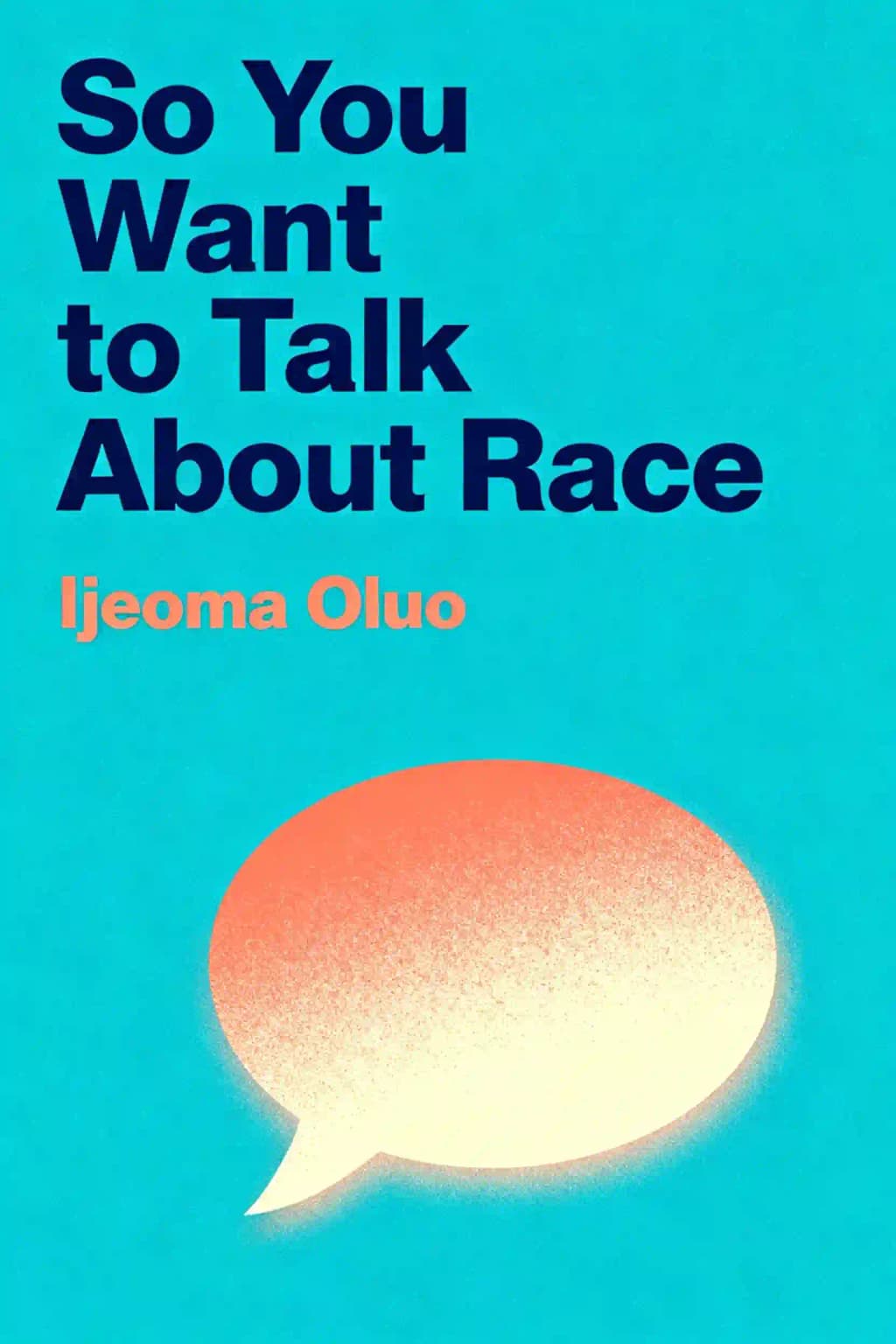
"So You Want to Talk About Race" isn't just another book about racial issues-it's a survival guide for America's most uncomfortable yet necessary conversation. When Ijeoma Oluo's book was published in 2018, it quickly became a New York Times bestseller and cultural touchstone, with celebrities from Reese Witherspoon to Trevor Noah recommending it as essential reading. What makes this book extraordinary isn't just its unflinching examination of systemic racism, but Oluo's remarkable ability to balance brutal honesty with compassion and even humor. As a Black woman navigating predominantly white spaces, Oluo transforms her lived experience into a roadmap for conversations that most Americans desperately want to have but don't know how to begin. In a country where racial tensions continue to simmer beneath the surface of everyday interactions, this book arrived precisely when we needed it most-not to comfort us, but to challenge us toward meaningful change.
第2章
The Personal Reality of Race in America
As a Black woman, race has always been a prominent part of Ijeoma Oluo's life. She's never been able to escape being Black in a white supremacist country-it shapes everything from how she dresses to where she feels comfortable going. Race has brought pain: the constant questioning of her dark skin while her mom was white, store clerks following her, bosses calling her "too loud," and wage disparities despite equal work. But race has also brought joy: the marvel of Black history, evenings of music and dance, cookouts with soul food, the magic of Black literature, and the unspoken nod to another Black stranger that says, "I see you fam."
For years, Oluo tried to survive by working harder, dressing impeccably, being overpolite, and laughing off racist jokes. But as she achieved success, something shifted. She couldn't stay quiet anymore. She started questioning, resisting, and demanding explanations for microaggressions. She began writing about her frustrations and heartbreak, which cost her white friendships but connected her with others who felt heard by her words.
The gap in experiences between white Americans and people of color isn't just a gap-it's a chasm you could drop entire solar systems into. Race in America was created to justify slavery and genocide, designating certain people as less than human. Later, racism functioned to divide lower classes while maintaining white elite supremacy. Though race is a social construct with no scientific basis, it has become alive in our society like money-woven into every aspect of our lives.
Racism exists to exclude people of color from opportunity, built on the promise that "you will get more because they exist to get less." This promise permeates politics, education, and infrastructure-anywhere resources are limited. Class oppression affects everyone, but racial oppression creates different barriers for different groups. Even in labor movements, the promise of racism persists, promoting "trickle-down social justice" that prioritizes the majority while treating marginalized concerns as divisive.
第3章
Is It Really About Race? Understanding When Race Matters
Determining whether an issue involves race can be complex and emotionally charged, but Oluo provides three fundamental rules to help navigate these challenging waters:
1. It is about race if a person of color thinks it is about race - their lived experience and perspective must be respected and considered valid.
2. It is about race if it disproportionately or differently affects people of color - from healthcare outcomes to lending practices to educational opportunities.
3. It is about race if it fits into a broader pattern of events that disproportionately or differently affect people of color - such as housing discrimination, police interactions, or workplace advancement.
Being a person of color in white-dominated society often feels like being in an abusive relationship, where gaslighting and minimization are common experiences. Each day brings microaggressions, subtle dismissals, and small dehumanizations that accumulate like invisible scars. These might include being followed in stores, having your name consistently mispronounced, or being mistaken for service staff. When people of color speak up, others frequently focus only on the newest, smallest hurt: "Look how minor this is!" while deliberately or unconsciously ignoring the broader pattern of discrimination and bias. It's comparable to being repeatedly punched in the arm by random strangers - even if some punches are accidental or seem minor in isolation, the cumulative effect creates real, lasting pain that must be acknowledged and addressed.
Race touches almost every aspect of our lives - not just through systems of oppression but also through rich cultural traditions, historical legacy, and community bonds. For instance, Blackness provides strength through shared experiences, beauty through cultural expression and art forms, and community through shared understanding and mutual support. While almost everything can involve race - from medical treatment to job interviews to housing applications - nothing is completely about race alone. Intersectionality matters significantly - class, gender, sexuality, disability status, and other factors interact with race in complex ways that shape individual experiences.
If you're white, you cannot fully understand racial experiences through your own lived experience, just as men cannot fully understand women's experiences of sexism. However, this limitation raises an important question: if your interpretations of your experiences are considered valid, why wouldn't people of color's interpretations be equally valid? When a person of color identifies racial dynamics in a situation, they're drawing on a lifetime of experience navigating racism and racial dynamics. People of color deserve to be heard and believed, not just in obvious cases of discrimination but in subtle, everyday situations where racial dynamics may be at play. Their expertise in recognizing racial patterns comes from lived experience that white people simply don't have.
The bottom line remains clear: if people of color think it's about race, we need to listen. Their perspectives aren't just valid - they're essential for understanding and addressing racial issues in our society.
第4章
Defining Racism: Beyond Individual Prejudice
For her book, Oluo defines racism as prejudice based on race when reinforced by systems of power. This definition helps address the systemic harm done to people of color rather than focusing solely on individual acts of prejudice.
Without white supremacist systems, we'd just have people yelling at each other on an even playing field. But 400+ years of systemic oppression have created profound power imbalances. If a Black person calls a white person a "cracker," they might ruin their day. If a white person sees a Black person as a "nigger," they can potentially get them fired, arrested, or killed in a system that shares their view.
Looking at racism as just "any racial prejudice" commits us to winning over individual hearts rather than fighting the system itself. Getting your neighbor to love people of color won't address police brutality, income inequality, or the prison industrial complex. The system runs whether we pull the levers or not, and simply letting it be makes us responsible for what it produces.
We must remember that racism was designed to support an economic system benefiting rich white men. The oppression of people of color was a means to wealth and power. When discussing "reverse racism" claims, ask: "What measurable impact will being called 'cracker' have on your life? On your ability to walk safely? To get a job?" Tying individual racist incidents to their systemic causes helps others understand the difference between systemic racism and anti-white bigotry.
第5章
Navigating Difficult Conversations About Race
You're going to make mistakes in conversations about race. More than once. It's not a question of if, but when. These missteps might include using outdated terminology, making unconscious assumptions, or speaking from a place of unexamined privilege. But avoiding these conversations entirely only perpetuates the problem. Oluo provides detailed guidance for handling these challenging moments:
1) When you hurt someone, apologize sincerely and specifically. Don't say "I'm sorry if you were offended," but rather "I'm sorry I said/did X. I understand now why that was harmful."
2) Resist the urge to reframe the conversation as a story about your victimhood ("that time you got yelled at for trying"). This centers your feelings rather than the actual harm done and the legitimate pain of others.
3) Good intentions don't negate harmful impact. Saying "but I didn't mean to" or "I was trying to help" minimizes the real consequences of your words or actions. Impact matters more than intent.
4) While guilt is a natural response, don't let it paralyze you or make the situation about your emotional processing. Use it as motivation to learn and do better, then move forward constructively.
5) Remember that the temporary discomfort of making mistakes is far outweighed by the importance of having these conversations. Commit to trying again with humility and openness.
These conversations are inherently emotional because they deal with lived experiences, generational trauma, and core identities. For white people, feeling temporary discomfort during these discussions is minimal compared to the constant burden of experiencing racism. If you're white and avoid these conversations to stay comfortable, you're essentially asking people of color to shoulder the entire weight of addressing racism alone.
Create spaces for intraracial conversations too. White people need to challenge racism in spaces where they have unique access and influence - in their families, social circles, and workplaces where people of color might not be present. Similarly, people of color need safe spaces to process experiences, heal from internalized racism, and build solidarity without the burden of educating others.
When engaging in these conversations:
• Do your homework first - don't rely on others to explain basic concepts
• Listen more than you speak
• Accept that discomfort is part of the process
• Stay focused on learning rather than defending yourself
• Recognize that trust must be earned through consistent action
While these discussions will never be completely comfortable, they become more manageable with practice and commitment. They may never be entirely free of pain, but they help prevent greater harm in the future. Though they carry risks - of saying the wrong thing, of damaging relationships, of facing criticism - the potential for positive change makes them essential. The path to racial justice requires sustained dialogue, even when it's difficult.
第6章
Privilege: Understanding Unearned Advantage
"Check your privilege" might be the most maligned phrase in social justice language, often dismissed as an ineffective weapon meant only to win arguments. But few people actually understand what privilege is, which is crucial for addressing racial issues. The concept, when properly understood, serves as a vital tool for understanding systemic inequalities and creating meaningful change.
Privilege isn't "good stuff you should feel bad about having." It's simply an advantage or set of advantages you have that others don't. These advantages aren't solely due to your efforts, and their benefits are disproportionately large compared to what the privilege is for. For example, being able-bodied isn't something anyone earns, yet it provides countless daily advantages that many take for granted, from easy navigation of public spaces to broader employment opportunities.
Consider a college degree. While earning one requires hard work, many privileges might help someone succeed: having college-educated parents who understand the application process, being neurotypical in an education system designed for neurotypical minds, having access to free education in a good school district, living in a country with college grants, and being a documented citizen eligible for financial aid. Even factors like having a quiet place to study at home or not needing to work while in school represent significant privileges. The benefits received from that degree include some that aren't fully earned-like eligibility for management positions while more talented coworkers without degrees are disqualified, or access to professional networks that often favor those from similar educational backgrounds.
When we accept unexamined privilege, we perpetuate systems of inequality. Checking privilege means pausing to consider how advantages have shaped our opinions and actions, and how lack of disadvantages keeps us from understanding others' struggles. This includes examining assumptions about "normal" experiences - like assuming everyone has reliable internet access or can take unpaid internships to advance their careers.
This self-examination helps us identify where we have power to change oppressive systems. We can leverage our privilege in daily interactions-asking why there are no disabled people in management meetings, supporting public school funding, advocating for employer-funded childcare, or speaking up when witnessing discrimination. Even simple actions like ensuring events are accessible to all or challenging exclusive hiring practices can make a difference. These small actions, when multiplied across society, can help dismantle systems of oppression.
Understanding privilege also means recognizing its intersectional nature - someone might have racial privilege while lacking economic privilege, or gender privilege while facing disability-related challenges. This complexity doesn't diminish the importance of examining privilege; rather, it helps us understand how different forms of advantage and disadvantage interact in people's lives.
第7章
Intersectionality: The Crucial Framework for Understanding Oppression
Intersectionality, coined by race theorist Kimberle Crenshaw in 1989, describes how race and gender uniquely impact Black women and women of color. The concept was quickly adopted by Black feminists and expanded to include class, ability, and sexuality.
For Black women like Oluo, identity as a Black woman leaves them vulnerable from multiple angles. White women praise feminist writing but dismiss them as "divisive" when they mention race. Black men follow anti-racism work but may attack when issues of sexism within the Black community are raised. Nobody marches when Black women are harmed, despite Black women founding movements like Black Lives Matter.
Social justice movements often resist intersectionality because it slows progress, forces people to confront their privilege, decentralizes those accustomed to being the focus, and requires interaction with unfamiliar perspectives. Despite these challenges, embracing intersectionality prevents us from becoming oppressors while fighting oppression.
To increase intersectionality in race discussions, ask yourself: How might different identities impact this subject? Could identity differences contribute to our disagreements? Does my racial justice work represent diverse identities? Am I listening to different perspectives, seeking what I don't know, shifting focus away from the privileged, and creating safe spaces for marginalized voices?
When advocating for intersectionality, remember that most people don't know what the term means, so start with real-life examples rather than terminology. Present intersectionality as an opportunity to improve rather than focusing on failures. Intersectionality applies to all aspects of life-from company meetings to voting choices to school curricula-making us better people with better lives.
第8章
Police Brutality and Racial Disparities in Justice
Few subjects reveal America's racial divide more starkly than police brutality. Gallup polls show whites are twice as likely as Blacks to have confidence in police, view them as honest and ethical, or believe police treat racial minorities fairly.
The statistics speak volumes: Black drivers are 23% more likely to be pulled over than white drivers, 1.5-5 times more likely to be searched despite being less likely to have contraband, and face 3.5-4 times higher probability of being killed by police.
Our police forces weren't created to protect Americans of color, but to control them. Throughout American history, police maintained a contentious relationship with communities of color, with many officers in the South doubling as Ku Klux Klan members. This historical foundation explains why white families could respect the same officers who terrorized Black families.
This generational trauma persists because the brutality continues. While today's officers rarely join lynch mobs, the organizational structures and cultural narratives that promoted terrorizing Black Americans in the past still protect harassment and brutality in the present. Even officers of color can exhibit implicit bias against civilians of color-these unconscious beliefs become deadly in high-stress situations.
Communities of color desperately want effective policing, but they need different policing-not more policing. The solution requires addressing the specific history and structure of police interactions with communities of color. People of color aren't asking white Americans to fear police as they do, but to join them in demanding their right to trust police as white Americans do.
第9章
The School-to-Prison Pipeline: How Education Fails Children of Color
The school-to-prison pipeline funnels Black and brown children from schools into our prison system, contributing to devastating mass incarceration that leads to one in three Black men and one in six Latino men going to prison. This pipeline begins with disproportionate suspensions and expulsions, which destroy children's trust in education and damage self-esteem. Suspended students are more likely to repeat grades or drop out entirely. Those arrested at school are more likely to be arrested again.
Black students make up only 16% of school populations yet account for 31% of suspensions and 40% of expulsions. They're 3.5 times more likely to be suspended than white students, and 70% of students arrested in school are Black. In 2011-2012 alone, 92,000 students were arrested.
Major contributors include racial bias of administrators, teacher bias, cultural insensitivity, pathologizing Black children, zero-tolerance policies, and increased police presence in schools. Studies show race is a deciding factor in discipline, with punishment severity correlating with how many Black children attend a school. Teachers more often look for trouble in Black and brown children and view their play as aggression.
To address the school-to-prison pipeline, we must include it in broader discussions of racial inequality, talk to schools and school boards about disciplinary procedures, recognize everyday achievements of Black and brown children, normalize Black and brown childhood in our mental images and media, challenge language that stereotypes youth of color, discuss deeper causes of behavioral issues, include disabled Black and brown youth in our advocacy, and challenge white-centered education.
The greatest tragedy of the school-to-prison pipeline isn't just the outcomes-high drop-out rates, poverty, or incarceration-but the loss of childhood joy. Black and brown children don't get to be rambunctious, exuberant, rebellious, or defiant. They don't get to make mistakes like other kids do. We must save our children's childhoods now, because we cannot give back what's already been lost.
第10章
Words Matter: The Power of Language in Racial Discourse
Words carry more than dictionary definitions-they carry history, trauma, and generational pain. The word "nigger" evolved from the Latin word niger (black) into a slur used to dehumanize Black slaves. It was shouted during whippings, lynchings, and cross burnings, echoing through auction blocks, cotton fields, and Jim Crow streets. It's a word soaked in centuries of violence and hatred, serving as a verbal weapon to reinforce white supremacy and racial hierarchies.
Not all words carry equal weight or historical burden. "Cracker" doesn't invoke mass lynchings or segregated lunch counters because white people haven't experienced systematic racial oppression. Throughout American history, words have been weaponized to separate, dehumanize, and oppress people of color-from explicit slurs to coded language like "ghetto," "nappy," and "thug." These terms often masquerade as neutral descriptors while carrying deeply racist undertones. Even seemingly innocuous phrases like "urban," "inner city," and "welfare queen" became racially charged dog whistles, deliberately crafted to maintain social hierarchies while providing plausible deniability.
People of color have inherited the generational trauma and pain of these words while white people have inherited the privilege these words helped create and maintain. This linguistic inheritance plays out in everyday interactions, media representation, and institutional policies. Even "reclaimed" words remain harmful when used by white people who still benefit from the systems these words helped build. The context of power and privilege cannot be separated from language use.
The desire to use racially charged language often comes from wanting to skip ahead to racial harmony without doing the necessary work of addressing systemic racism. But words only lose their power when their impact is no longer felt in society's structures and institutions-not the other way around. Yes, this means people of color can say words that white people cannot. That's not unfair or "reverse racism"-the real unfairness lies in the centuries of oppression these words helped create and perpetuate. You can't "get over" something that's still happening and actively shaping lives today.
Understanding the weight of words requires acknowledging how language has been used as a tool of oppression throughout history. Modern racial discourse demands awareness of these linguistic legacies and how they continue to shape power dynamics, social interactions, and systemic inequalities in contemporary society.
第11章
Beyond Talk: Taking Action Against Racism
Many people hide from what they really fear-action-by endlessly talking about race. From virtue signaling on social media to lengthy emails about how racial oppression makes them feel, people become addicted to the satisfaction of saying the right things and having "deep conversations" while missing the point entirely. Words matter and help us interpret our world, but understanding alone will never equal action.
If you're looking for concrete steps to take, consider: vote in local elections, get involved in schools, bear witness when people of color are harassed, speak up in unions, support POC-owned businesses, boycott predatory banks, donate to racial justice organizations, support art by people of color, push for police reform, demand college diversity, and vote for diverse representatives.
When you're called racist, listen without defensiveness. Set your intentions aside, as they don't erase impact. Try to understand the harm caused. Remember you don't have all the pieces as a non-POC. Nobody owes you a debate or relationship. Apologize sincerely if you see your error. Even if you believe there's been a misunderstanding, don't invalidate someone's pain. Fear unexamined racism, not those who bring it to light.
If you live in this system of White Supremacy, you are either fighting it or complicit-there is no neutrality toward systems of injustice. If you believe in justice and equality, we are in this together, whether you like each other or not. The system of racial oppression seems huge, but it's not insurmountable if we take action together. Until we dismantle White Supremacy, we need to talk about it, but we must also act because people are dying now in this unjust system.