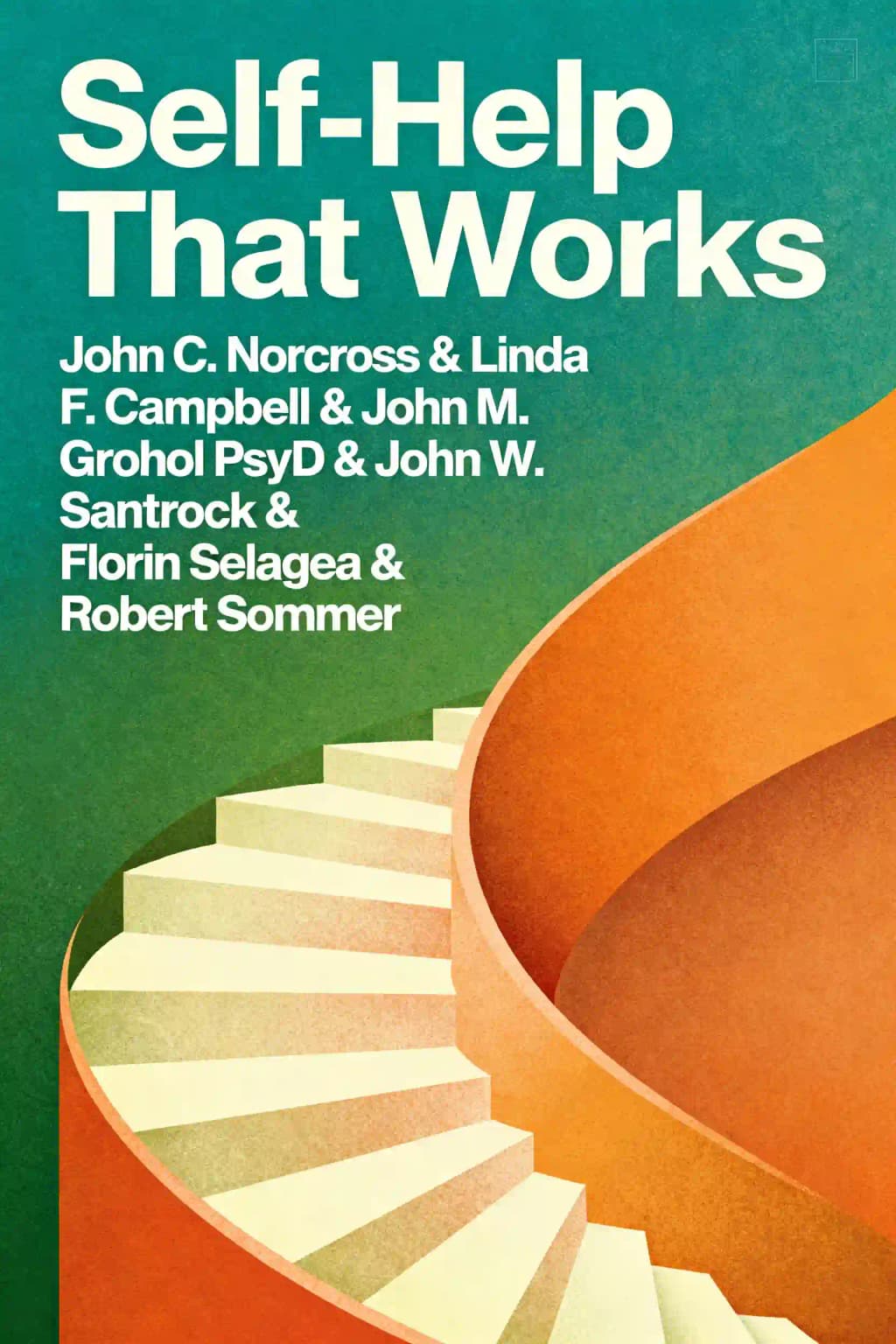
Self-Help That Works
Resources to Improve Emotional Health and Strengthen Relationships
『Self-Help That Works』の概要
In a field flooded with unproven advice, "Self-Help That Works" evaluates over 2,000 resources backed by 5,000 mental health professionals. Featured on Today Show and CBS Sunday Morning, Norcross's evidence-based approach is transforming how we pursue genuine personal growth.
『Self-Help That Works』の主要テーマ
- evidence-based self-help
- resource evaluation
- bibliotherapy effectiveness
- mental health literacy
- clinical recommendation standards
『Self-Help That Works』の名言
Self-help is not just feel-good fluff.
Sometimes, the most productive thing we can do is simply be present in the moment.
Small moments are the building blocks of a strong relationship.
Small, consistent changes can lead to remarkable results over time.
Change is possible, but it rarely happens overnight.
『Self-Help That Works』の登場人物
- John C. NorcrossLead author and psychologist evaluating resources
- Edmund BourneAuthor of The Anxiety and Phobia Workbook
- Jon Kabat-ZinnMindfulness expert and author
- James ClearAuthor focused on habit formation and productivity
Self-Help That Worksの要約をダウンロード
Self-Help That Worksの要約をPDFまたはEPUBで無料でダウンロード。印刷やオフラインでいつでもお読みいただけます。
この本に関するよくある質問
Self-Help That Works is an evidence-based guide to selecting effective self-help strategies for mental health, wellness, and personal growth. It evaluates over 2,000 resources—books, films, online programs, and support groups—across 41 behavioral disorders and life challenges, emphasizing scientifically validated approaches like cognitive-behavioral therapy and mindfulness.
This book is ideal for individuals seeking reliable self-help recommendations and mental health professionals integrating evidence-based strategies into treatment. It helps readers navigate overcrowded self-help markets by offering research-backed insights and practical steps for issues like stress management, relationship building, and nonchemical addictions.
Yes, it’s a critical resource for avoiding ineffective or harmful self-help trends. The authors combine 5,000+ mental health professionals’ expertise with 12 national studies, providing actionable frameworks for tailoring strategies to individual needs, such as goal-setting and boundary management.
Key concepts include evidence-based strategy selection, balancing cognitive-behavioral techniques with mindfulness, and prioritizing community support. The book structures self-help into three phases: understanding basics, applying scientific principles, and implementing personalized plans through real-life examples.
It outlines criteria for evaluating resources, such as alignment with peer-reviewed research and adaptability to individual challenges. The authors contrast proven methods (e.g., stress-reduction exercises) with common pitfalls like unscientific “quick fixes”.
The book critiques misleading claims in popular self-help media, emphasizing risks of unvalidated advice. It advocates for transparency in resource selection and warns against overreliance on self-diagnosis without professional guidance.
It provides tailored recommendations for conditions like chronic pain, autism, and bullying, integrating clinical insights with structured self-care practices. Strategies include:
- Boundary-setting
- Nurturing relationships
- Prioritizing physical health through sleep and nutrition
Yes, it offers step-by-step guidance for applying techniques like mindfulness meditation, stress management, and goal-setting. Real-world examples illustrate how users overcome setbacks through disciplined practice and community engagement.
Unlike anecdotal guides, it relies on empirical research and expert consensus. The revised edition expands coverage of modern issues like LGBTQ+ challenges and digital addiction, differentiating it from classics like Atomic Habits.
New chapters address autism, bullying, chronic pain, happiness, and nonchemical addictions. Updated evaluations include online programs and apps, reflecting 2025’s digital self-help landscape.
Prioritize scientifically validated methods, tailor strategies to personal needs, and embrace ongoing learning. Emphasize skill-building (e.g., mindfulness) over temporary fixes, and leverage community support for sustained growth.
It synthesizes clinical studies and meta-analyses to rank self-help resources by efficacy. For example, mindfulness and cognitive-behavioral techniques are highlighted for reducing anxiety, while unproven fads are critically examined.


