第1章
When the Sea Swallowed History
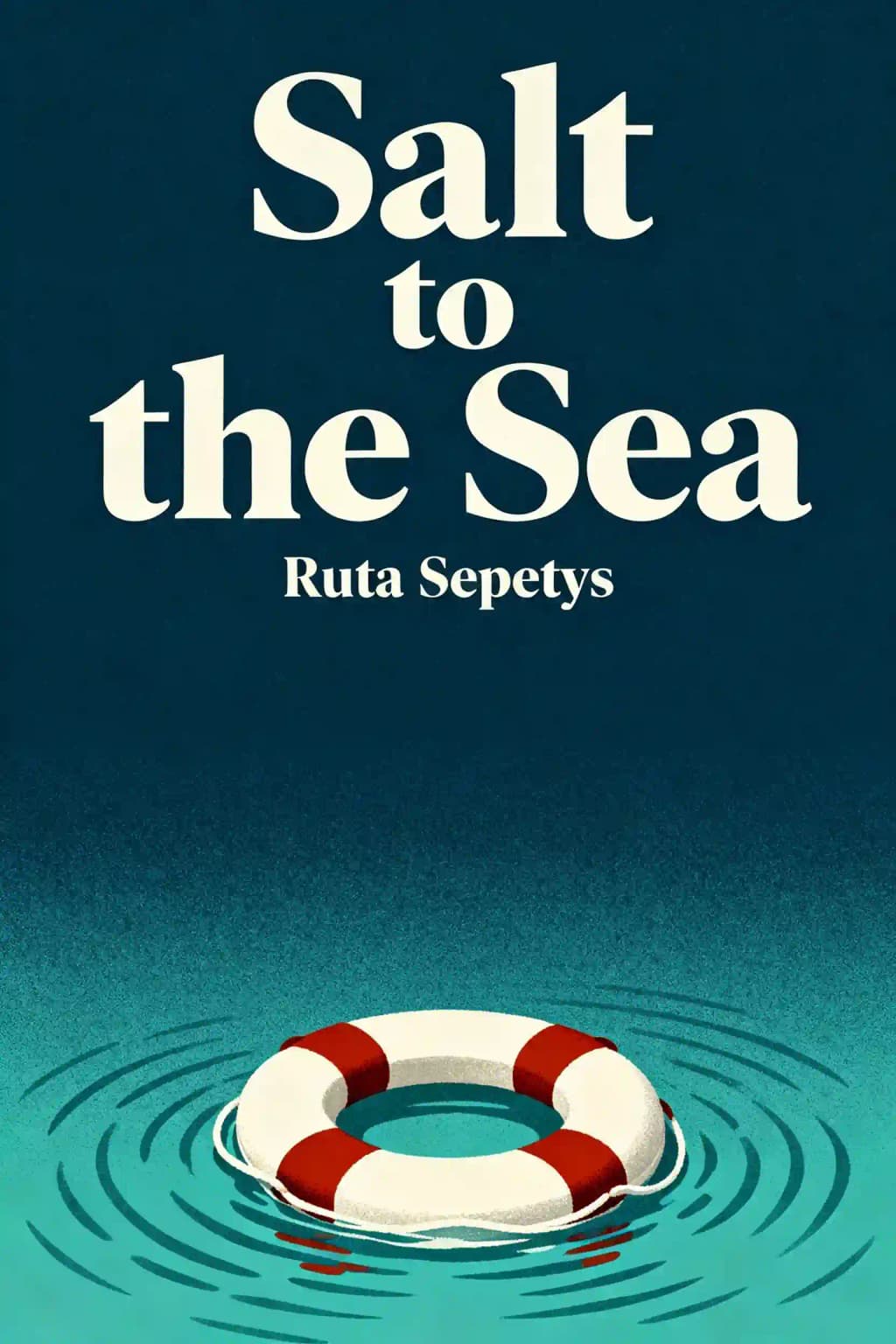
In January 1945, as Soviet forces advanced through East Prussia, the Wilhelm Gustloff set sail from Gotenhafen harbor carrying over 10,000 desperate refugees. Minutes later, three Soviet torpedoes struck the overcrowded vessel, sending it to the bottom of the Baltic Sea in less than an hour. The death toll-over 9,000 people, including 5,000 children-makes it the deadliest maritime disaster in history, yet few know this story. Ruta Sepetys' "Salt to the Sea" brings this forgotten tragedy to light through four young narrators whose lives intersect during the evacuation. The novel became an instant New York Times bestseller and won the Carnegie Medal, with critics praising how Sepetys "masterfully humanizes a brutal moment in history." Through meticulous research spanning six countries and interviews with survivors, Sepetys crafts a haunting narrative that reminds us why we must preserve the stories that history textbooks often neglect.
第2章
Four Voices, Four Hunters
"Guilt is a hunter." With these haunting words, we meet Joana, a young Lithuanian nurse fleeing the advancing Soviet army. She's joined by Florian, a mysterious Prussian carrying dangerous secrets: "Fate is a hunter." Then Emilia, a fifteen-year-old Polish girl hiding a devastating trauma: "Shame is a hunter." And finally Alfred, a delusional young Nazi sailor: "Fear is a hunter." These four narrators-each hunted by their own demons-form the backbone of this powerful narrative.
Joana Vilkas is a Lithuanian refugee with medical training who fled when Stalin occupied her homeland in 1941. Though she was able to repatriate to Germany through her mother's German heritage, she carries crushing guilt for unknowingly causing her cousin's family to be deported to Siberia. Despite her inner turmoil, Joana's compassion shines through as she tends to the wounded and vulnerable. Her medical skills make her invaluable to the group, but it's her humanity that truly sustains them.
Florian Beck is a young Prussian art restorer carrying stolen Nazi treasure-the amber swan from Hitler's prized Amber Room. After discovering his museum director was looting rather than preserving Europe's treasures, Florian stole this priceless artifact as revenge against both the director and Hitler himself. His father was executed for assisting in a plot against Hitler, and now Florian navigates a treacherous path with forged papers and a gunshot wound, trusting no one until circumstances force him to rely on others.
Emilia Stozek is a fifteen-year-old Polish girl, pregnant and traumatized. Sent by her father to work on a German family's farm for safety, she was brutally assaulted by Russian soldiers when the German woman offered her to them to protect her own daughter. Despite her suffering, Emilia maintains a poetic inner life filled with memories of her mother and home in Poland, clinging to her pink woolen hat as a symbol of her lost childhood.
Alfred Frick is a low-ranking German sailor stationed at the port, who composes grandiose mental letters to a girl named Hannelore back home. Delusional and cowardly, he imagines himself a hero while revealing his disturbing Nazi ideologies. His letters gradually expose his true nature-he reported Hannelore's Jewish father to authorities, yet still believes she should have chosen him over her family.
These four distinct voices create a kaleidoscopic view of the war's final desperate months, each character revealing different facets of humanity under extreme pressure.
第3章
The Journey Begins: Survival in a Frozen Wasteland
The story opens in January 1945 in East Prussia, as millions flee westward ahead of the advancing Soviet army. Rumors of Russian atrocities drive civilians to abandon their homes despite the bitter winter. We first encounter Joana leading a small band of refugees through snow-covered fields, including a blind girl named Ingrid and an elderly shoemaker known as "the shoe poet" for his belief that "the shoes always tell the story." They're soon joined by a wandering six-year-old boy whose grandmother died in the forest.
Meanwhile, Florian rescues Emilia from a Russian soldier attempting to assault her, killing him in a potato cellar where both had sought shelter. Though Florian tries to abandon Emilia afterward, her determination to follow him and her subsequent act of saving his life when another soldier attacks creates an unwilling bond between them.
The groups converge at an abandoned barn where Joana treats Florian's infected wound. Despite his initial distrust, their attraction grows as they share a cigarette in the darkened barn. By morning, Florian has disappeared, taking something from Joana's suitcase-a drawing she made. Emilia follows him, refusing to be left behind.
The refugees continue their journey, eventually reaching a grand Prussian estate. What should be salvation becomes another horror when they discover the family dead in their beds-the grandfather, dressed in his Great War uniform, had killed them all before taking his own life rather than face the advancing Russians. This grim discovery underscores the desperation permeating East Prussia as the Third Reich collapses.
The group's dynamics are complex and shifting. Eva, a large German woman, resents Emilia's presence as a Pole. The shoe poet offers wisdom and kindness to all. Ingrid, despite her blindness, possesses remarkable perception about others. And the wandering boy, Klaus, clings to his one-eared stuffed rabbit, the only remnant of his former life.
As they approach the frozen Vistula lagoon that separates them from the ports where evacuation ships await, Germany finally issues official evacuation orders. The roads become clogged with thousands of refugees-the elderly on carts, children dragging sleds, the wealthy in carriages-all desperate to reach safety before the Russians arrive.
第4章
Crossing the Ice: When Hope Freezes Over
The crossing of the frozen Vistula lagoon marks one of the novel's most harrowing sequences. Soldiers direct groups to stay fifty meters apart to prevent stressing the ice. Ingrid, the blind girl, insists on going first alone, claiming she can better feel the ice with her bandaged eyes. When Russian planes appear overhead, strafing the ice with bullets, Ingrid falls through a hole in the ice. Despite Joana's desperate attempts to save her, Florian pulls her back as Ingrid's hand disappears beneath the freezing water, leaving only her blue scarf floating on the surface.
This devastating loss fractures the group emotionally. Joana blames Florian for preventing her from saving Ingrid, while he insists she would have died too. The shoe poet reveals he stopped both Joana and Emilia from attempting rescue, knowing it would mean certain death. The wandering boy Klaus cries inconsolably, having grown attached to Ingrid during their journey.
After hours of waiting, they cross at a different section of ice, with the shoe poet leading and tapping his stick on the groaning surface. "Arthritic but no fractures yet," he assures them. The crossing symbolizes their precarious position-suspended between death behind them and uncertain salvation ahead.
Upon reaching the other side, they must decide between Pillau and Gotenhafen ports. They choose Gotenhafen, believing the voyage from there would be shorter. A soldier, impressed by Florian's forged papers bearing Nazi leader Erich Koch's signature, provides them a boat.
The journey across the lagoon serves as a microcosm of the larger refugee crisis-some survive by chance, others perish despite their caution, and the decisions made in moments of crisis reveal character in stark relief. Emilia's increasing physical discomfort foreshadows her approaching labor, while Florian's protective instincts toward the group conflict with his mission to escape with the stolen amber swan.
第5章
Gotenhafen Harbor: Desperation at the Gateway to Safety
Arriving at Gotenhafen harbor, the group encounters a scene of overwhelming chaos-thirty thousand desperate refugees crowding the port, abandoned animals roaming streets, and crates and luggage lining the quays. People search frantically for lost children and beg for passage on any available vessel.
The harbor represents both salvation and another level of hell. Nazi officials maintain rigid order despite the chaos, prioritizing military personnel, Party officials, and their families for boarding. Single young men like Florian won't be allowed passage at all unless they can prove they're wounded or on special assignment.
Here, Alfred Frick becomes pivotal to the group's survival. Despite his delusions and cowardice, his position as a sailor on the Wilhelm Gustloff gives him influence. When he encounters Joana, he's impressed by her medical credentials and brings her to the ship's doctor, who immediately recruits her to help with wounded soldiers arriving by train. Florian manipulates Alfred's Nazi fanaticism, presenting himself as on a secret mission for the Fuhrer and convincing Alfred to help secure boarding passes for the others.
The registration process reveals the brutal calculus of who lives and who dies. When Emilia's false Latvian papers are scrutinized, she creates a distraction by faking labor pains. Meanwhile, a woman with a dead baby is exposed by Alfred, who callously announces, "She's not sleeping. She's dead!" As the grieving mother begs not to have her child taken away, the shoe poet whispers to Emilia, "I wept because I had no shoes, until I met a man who had no feet"-reminding her that others suffer even more.
Joana works with Dr. Richter, sorting through trainloads of wounded soldiers to select only those certain to survive the voyage. The condition of these men-dying of typhus, dysentery, pneumonia, with missing limbs and gunshot wounds-speaks clearly of Germany's imminent defeat.
As boarding begins, the group separates. Eva decides to wait for her cart containing her mother's silver, boarding the ship Hansa instead. Florian hides in the movie house projection booth, forging a boarding pass while the shoe poet and Klaus wait under the harbor clock. Joana helps prepare the ship's maternity ward, while Emilia's labor begins in earnest.
第6章
Birth Amid Death: New Life on a Doomed Ship
The Wilhelm Gustloff, originally built as a pleasure cruise ship for Hitler's "Strength Through Joy" program, has been converted for war-painted gray, fitted with anti-aircraft guns, and stripped of its luxury furnishings to accommodate as many refugees as possible. Though designed for 1,463 passengers, it now holds over 10,000 desperate souls.
As the ship prepares to depart, Emilia's labor intensifies. In her pain and fear, she finally reveals the truth: "There is no August"-the German farmer's son she'd spoken of lovingly was a fiction she created to cope with her trauma. When Russian soldiers attacked the East Prussian farm where she worked, the German woman, Frau Kleist, had offered Emilia to them to save her own daughter Else.
Joana delivers Emilia's baby girl as Alfred watches in a trance-like state. This birth amid the chaos of war represents a rare moment of hope and renewal. Despite her initial reluctance to hold her child-born of violence-Emilia eventually embraces her daughter after Florian tells her: "She is you, she is your mother, your father, your country. She is Poland."
Meanwhile, Florian hides in the ship's chimney, aided by Alfred who believes he's helping a hero on a secret mission. The shoe poet and Klaus board with Florian's forged papers, while Joana works in the maternity ward. As the ship departs, those left behind on the dock scream and try to throw their children aboard, knowing they face death if left behind.
The overcrowded ship moves slowly through the Baltic Sea in a fierce snowstorm. Hitler's anniversary broadcast plays through the speakers with the chilling words: "When was the helpless goose ever not eaten by the fox?" This ominous statement foreshadows the disaster to come, as Russian submarines prowl the waters.
The characters find brief moments of connection despite the circumstances. Florian and Joana share a kiss, confessing their darkest secrets to each other. The shoe poet cares for Klaus like his own grandson. Emilia begins to bond with her newborn daughter, whom she names Halinka after her mother.
第7章
Torpedoes in the Night: The Sinking of the Wilhelm Gustloff
At 9:15 p.m. on January 30, 1945-Hitler's twelfth anniversary in power-three Soviet torpedoes strike the Wilhelm Gustloff. The massive ship shudders with thunderous explosions, plunging into darkness as it begins to list forward. The emergency lights reveal a terrifying reality-the ship is sinking.
What follows is chaos and horror as over 10,000 passengers fight to reach the upper decks through narrow stairwells. People trample each other in the darkness, children are crushed, and the ship's tilt makes movement increasingly difficult. The freezing Baltic winter compounds the tragedy-the temperature is minus ten Celsius, with howling winds and snow.
On the top deck, passengers face another grim reality-the Wilhelm Gustloff has only twelve lifeboats, enough for a fraction of those aboard. Some boats overturn when lowered incorrectly, spilling passengers into the black water. The anti-aircraft weaponry breaks loose, crashing through the rail onto a lifeboat below, instantly sinking it with all passengers.
The characters' responses reveal their true natures in this moment of crisis. Emilia, recognizing the danger immediately, wraps her baby and urges everyone to move quickly to the upper decks. Alfred steals a coat from a struggling woman and abandons others to save himself. Florian carries Klaus while searching desperately for Joana and Emilia. The shoe poet remains calm, guiding others despite his age.
As one of the few remaining lifeboats is lowered, Joana descends first. Florian takes Emilia's baby and follows. With room for only one more person, Emilia makes a heartbreaking choice-instead of saving herself, she pushes Klaus into the boat. The ropes snap, dropping them into the water while Emilia remains on the sinking ship.
The ship's final moments are horrifying-people trapped behind glass in the sundeck bang desperate fists as water rises inside, others jump or fall from the tilting deck, and thousands are pulled down as the massive vessel sinks. In less than an hour, the Wilhelm Gustloff disappears beneath the waves, taking thousands to their deaths in the freezing Baltic.
第8章
Adrift on the Baltic: Survivors in a Sea of Death
The aftermath of the sinking presents an apocalyptic scene-thousands of bodies float in life vests, many of them children flipped upside down with their heads in the water and feet in the air. The sea temperature of four degrees Celsius means death within minutes for those in the water.
Joana, Florian, baby Halinka, and Klaus float in a lifeboat with about fifty others. The shoe poet, having given his life vest to Florian earlier, jumps from the ship but doesn't resurface-the sack of coins tied to his belt pulling him down. His sacrifice allows Florian to survive and protect the children.
Emilia finds herself on a steel raft with Alfred, who becomes increasingly unhinged. When he discovers she's Polish, not Latvian as she claimed, he attacks her, chanting his hateful Nazi litany: "Poles, Prostitutes, Russians, Serbs, Socialists..." In the struggle, Alfred falls and hits his head before tumbling into the freezing sea, leaving Emilia alone with Florian's pack.
The survivors face a new battle against hypothermia as they drift in the Baltic darkness. Florian and Joana huddle together with the baby and Klaus between them for warmth. Water slowly seeps through a crack in their boat. Five passengers in their lifeboat die of cold during the night. Florian begins telling Joana personal details about his life, believing they won't survive until morning.
The scenes in the lifeboats and on the raft represent the war's brutal arithmetic-who lives, who dies, and the random nature of survival. The characters contemplate what they've lost and what little remains. For Florian, the amber swan and his revenge seem meaningless now. For Joana, thoughts turn to her mother waiting for news. For Emilia, alone on her raft, memories of Poland sustain her as she grows increasingly drowsy from the cold.
第9章
Rescue and Redemption: The Cost of Survival
As dawn approaches, a rescue ship appears-the German torpedo boat T-36. Searchlights scan the water for survivors as sailors unfurl knotted nets down the ship's side. The baby is taken up first, followed by Klaus and other survivors. When Joana climbs the net, her foot slips near the top, and she kicks back, causing Florian to lose his grip and fall into the freezing sea.
In the water, disoriented and in pain from a separated shoulder, Florian hears Joana's voice telling him to kick his feet. Though she's actually on the deck above, her voice seems to come from beside him, guiding him to the surface where sailors pull him onto a raft.
Meanwhile, Emilia sees a light approaching her raft. The narrative shifts to a dreamlike sequence where she stands in a sun-filled kitchen preparing doughnuts with rose petal jam. Her daughter Halinka runs to tell her the storks have returned, and Emilia's mother appears walking through the grass with Emilia's baby brother. "My war had been so long, my winters so cold. But I had finally made it home. And for the first time in a long time, I was not afraid." This beautiful vision suggests Emilia has died, finding peace at last.
On the rescue ship, Joana tends to Florian's injuries as they learn they're headed to Sassnitz on the German island of Rugen. With Klaus asleep under Florian's arm and Joana cradling baby Halinka, they contemplate their futures. Florian, who has spent the journey questioning who he is, now wonders: Who does he want to be?
An epilogue reveals that Florian and Joana survived and built a life together. Twenty years later, Florian receives a letter "from across the ocean" containing answers he's long sought-perhaps about his sister Anni or the fate of the amber swan.
第10章
The Forgotten Tragedy: History's Silent Witnesses
In her author's note, Sepetys reveals the historical foundations of her novel. The Wilhelm Gustloff disaster claimed approximately 9,000 lives, including 5,000 children-six times more than the Titanic-yet remains largely unknown. The three Soviet torpedoes that struck the ship were marked "For the Motherland," "For the Soviet People," and "For Leningrad." A fourth torpedo, "For Stalin," failed to launch.
Operation Hannibal successfully evacuated over two million people from the advancing Russian troops, though several other ships were also sunk, with over 25,000 people losing their lives in the Baltic Sea in 1945 alone. The Amber Room, once called the Eighth Wonder of the World, disappeared during the war and remains one of World War II's enduring mysteries.
The novel's title-"Salt to the Sea"-comes from Joana's reflection as she faces possible death: "Joana Vilkas, your daughter, your sister. She is salt to the sea." This poignant metaphor captures how individual lives dissolve into the vastness of historical tragedy, becoming indistinguishable parts of a larger catastrophe unless their stories are preserved.
Through meticulous research across six countries and interviews with survivors and their families, Sepetys gives voice to this forgotten chapter of history. Her narrative reminds us that war redefines the meaning of home for millions-Emilia's birthplace in Poland is now part of Ukraine, Florian's East Prussian hometown is now in Russia, and Joana's Lithuania was occupied by the Soviet Union for over fifty years.
The novel stands as a testament to those who experienced this tragedy and a call to remember their stories. As Sepetys writes, "When the survivors are gone, we must not let the truth disappear with them. Please, give them a voice." Through her powerful storytelling, she ensures that the victims of the Wilhelm Gustloff will not remain salt to the sea-dissolved and forgotten-but will live on in our collective memory.
第11章
Echoes Across Time: The Legacy of Untold Stories
"Salt to the Sea" ultimately explores how war fractures identity, homeland, and history itself. Each character carries pieces of a broken world: Joana, the guilt-ridden healer; Florian, the art restorer seeking justice; Emilia, the Polish girl whose body and nation were violated; and Alfred, the delusional Nazi whose beliefs lead to his destruction.
The novel's structure-short chapters alternating between narrators-creates a mosaic effect that mirrors the fragmented experience of war. No single perspective captures the full truth; only together do they form a complete picture. This narrative approach reflects how history itself is constructed from multiple voices, some loud, some whispered, some silenced entirely.
The recurring motif of shoes-introduced by the shoe poet's insistence that "the shoes always tell the story"-symbolizes both individual journeys and the paths nations take through history. When the shoe poet sacrifices himself to save others, his wisdom lives on through those he protected. Similarly, Emilia's pink hat represents her lost childhood and homeland, passed to her daughter as a connection to her Polish heritage.
Through these deeply human stories set against an epic historical backdrop, Sepetys accomplishes something remarkable-she makes us feel the weight of thousands of lives lost while never letting us forget that each number was a person with dreams, fears, and their own unique story. By recovering this forgotten maritime disaster from historical obscurity, she reminds us that history's silences often hide its greatest tragedies.
In the end, "Salt to the Sea" is not just about remembering a specific historical event, but about understanding how we construct memory itself-what we choose to preserve, what we allow to dissolve like salt in water, and how the stories we tell shape our understanding of both past and present. As the characters discover, survival carries its own burden, but in remembering those who were lost, we honor their lives and ensure that even the most forgotten corners of history can still speak to us across time.