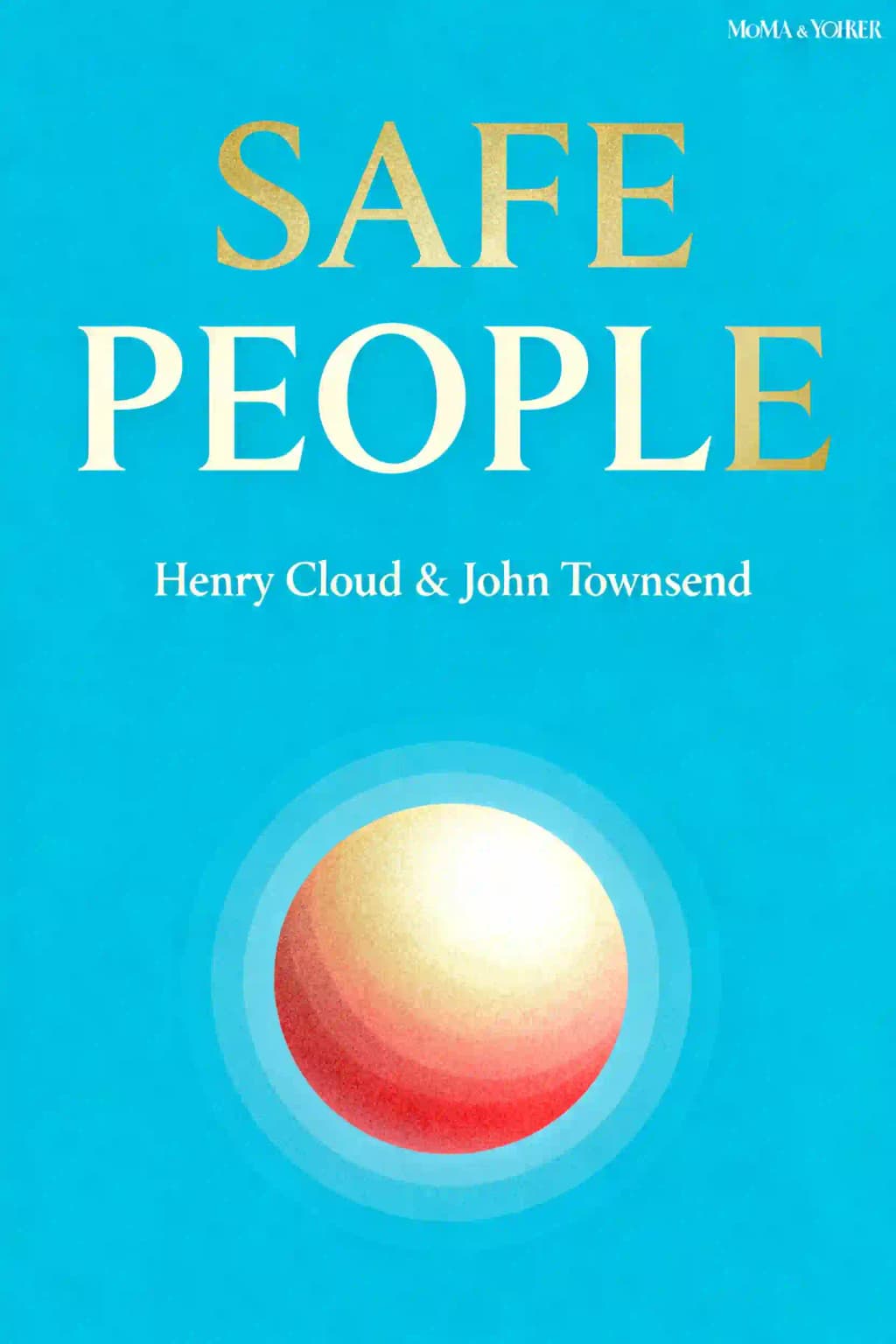
In "Safe People," Cloud and Townsend reveal the hidden patterns destroying your relationships. Financial expert Patrice Washington credits this guide for redefining her wealth beyond money. Ever wonder why you attract toxic people? Discover how to identify red flags before they break your heart.
Henry Cloud and John Townsend are clinical psychologists and bestselling authors of Safe People, renowned for their expertise in relationship dynamics and personal growth. They are co-founders of Cloud-Townsend Resources.
They blend psychological insights with faith-based principles, drawing from decades of clinical practice in Newport Beach, California. Their seminal work, Boundaries: When to Say Yes, How to Say No, revolutionized Christian self-help literature, selling over 5 million copies and spawning a five-book series.
Both hold PhDs in clinical psychology—Cloud from Biola University and Townsend from Fuller Theological Seminary—and have authored influential titles like Boundaries in Dating, Trust, and Changes That Heal.
Their collaborative works emphasize emotional health, assertiveness, and navigating toxic relationships, resonating with readers seeking practical tools for spiritual and psychological well-being. The Boundaries series remains a staple in counseling and church communities, translated into multiple languages and featured on the New York Times bestseller list for over a decade.
Safe People by Drs. Henry Cloud and John Townsend teaches readers to identify toxic individuals (“unsafe people”) and build relationships with those who foster trust and growth. It outlines 20 traits of harmful individuals, such as abandonment tendencies, criticism, and irresponsibility, while emphasizing biblical principles and practical steps to cultivate healthy connections.
This book is ideal for anyone struggling with recurring toxic relationships, Christians seeking faith-aligned friendships, or individuals aiming to improve relational boundaries. It’s also valuable for those recovering from manipulation, loneliness, or emotional abuse.
Yes—Safe People provides actionable advice for breaking destructive relationship patterns, backed by psychological insights and biblical wisdom. Its focus on self-awareness and boundary-setting makes it a standout guide for personal and spiritual growth.
Unsafe people are often judgmental, unreliable, self-centered, or resistant to accountability. They may manipulate, gaslight, or fail to respect boundaries, leading to emotional harm.
The book advocates for mutual trust, vulnerability, and clear communication. It stresses setting boundaries, addressing conflicts healthily, and prioritizing relationships where both parties encourage accountability and growth.
Unsafe behaviors often stem from childhood trauma, lack of emotional maturity, or unresolved insecurities. The authors link these patterns to poor role models or unmet developmental needs.
Safe people offer empathy, honesty, and consistency, while unsafe people drain energy through criticism, unpredictability, or exploitation. Safe relationships foster security; unsafe ones perpetuate dysfunction.
Some readers find its heavy reliance on Christian theology limiting for secular audiences. Others note it focuses more on identification than actionable recovery strategies.
Both books by Cloud and Townsend address relational health, but Boundaries focuses on personal limits, while Safe People targets how to evaluate others’ trustworthiness.
Yes—its principles apply to professional settings, helping readers identify toxic colleagues, set work-life boundaries, and collaborate with supportive peers.
“Isolation keeps us from getting what we need most: relationships with safe people.” This highlights the danger of self-protective withdrawal and the need for intentional connection.
Practice active listening, respect others’ boundaries, and take responsibility for mistakes. The authors emphasize self-reflection and seeking feedback to build relational safety.
著者の声を通じて本を感じる
知識を魅力的で例が豊富な洞察に変換
キーアイデアを瞬時にキャプチャして素早く学習
楽しく魅力的な方法で本を楽しむ
The problem isn't our need for connection—that's God-ordained.
Self-righteousness creates an 'I'm better than you' dynamic.
Forgiveness is the glue of love.
No relationship can truly flourish when built on deception.
Beware those who exclusively praise you.
『Safe People』の核心的なアイデアを分かりやすいポイントに分解し、革新的なチームがどのように創造、協力、成長するかを理解します。
『Safe People』を素早い記憶のヒントに凝縮し、率直さ、チームワーク、創造的な回復力の主要原則を強調します。

鮮やかなストーリーテリングを通じて『Safe People』を体験し、イノベーションのレッスンを記憶に残り、応用できる瞬間に変えます。
何でも質問し、声を選び、本当にあなたに響く洞察を一緒に作り出しましょう。

"Instead of endless scrolling, I just hit play on BeFreed. It saves me so much time."
"I never knew where to start with nonfiction—BeFreed’s book lists turned into podcasts gave me a clear path."
"Perfect balance between learning and entertainment. Finished ‘Thinking, Fast and Slow’ on my commute this week."
"Crazy how much I learned while walking the dog. BeFreed = small habits → big gains."
"Reading used to feel like a chore. Now it’s just part of my lifestyle."
"Feels effortless compared to reading. I’ve finished 6 books this month already."
"BeFreed turned my guilty doomscrolling into something that feels productive and inspiring."
"BeFreed turned my commute into learning time. 20-min podcasts are perfect for finishing books I never had time for."
"BeFreed replaced my podcast queue. Imagine Spotify for books — that’s it. 🙌"
"It is great for me to learn something from the book without reading it."
"The themed book list podcasts help me connect ideas across authors—like a guided audio journey."
"Makes me feel smarter every time before going to work"

Safe Peopleの要約をPDFまたはEPUBで無料でダウンロード。印刷やオフラインでいつでもお読みいただけます。
Imagine discovering that the person you've trusted most has been secretly undermining your confidence for years. This scenario isn't rare-it's distressingly common. In "Safe People," psychologists Henry Cloud and John Townsend reveal why we repeatedly find ourselves in relationships that leave us feeling drained, betrayed, or worse than before. The book has become a cornerstone text in relationship psychology for good reason: it addresses a fundamental skill many of us lack-character discernment. While we're taught how to choose careers, homes, and even coffee, we rarely learn how to identify who deserves our trust and who doesn't. This relationship blindspot costs us dearly in emotional and spiritual health. Consider John and Karen's college romance. She seemed perfect-attractive, intelligent, spiritually committed. But warning signs emerged: mysterious absences, ignored knocks at her door, emotional unavailability. Reality crashed when John caught her kissing another man. Instead of apologizing, she casually mentioned she'd "been meaning to tell him" about her new relationship. The emotional devastation lingered for months. This pattern repeats because most of us choose relationships based on superficial qualities rather than examining how people actually treat others. We focus on what people say instead of how they behave.