第1章
The Science of Why We're Captivated: From Jokes to Religion
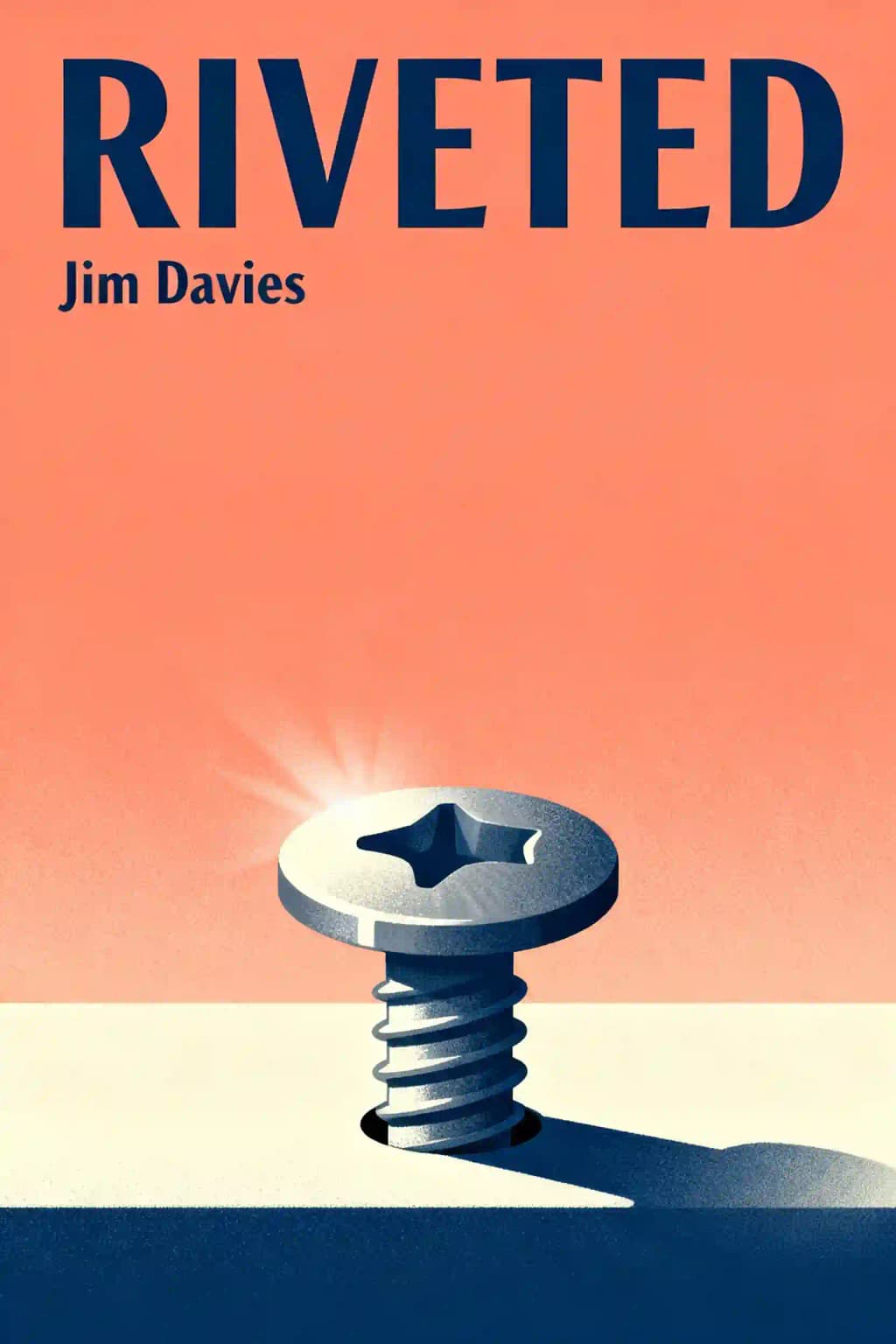
Have you ever wondered why certain things grab your attention so powerfully? Why a mountain view takes your breath away, a joke makes you laugh uncontrollably, or why billions find meaning in religious experiences? Jim Davies, a cognitive scientist, had the same questions. After trying to impress a date with the "irresistible" qualities of acid jazz (and failing), he began investigating what makes things compelling. His book "Riveted" presents a groundbreaking theory connecting seemingly unrelated captivating experiences-from sports to religion, jokes to music-through common psychological foundations. The book has garnered attention from both scientific communities and popular media for its accessible approach to complex cognitive science. Davies' work has been featured in publications like Scientific American and Psychology Today, with his insights on human attention increasingly relevant in our distraction-filled digital age. As Davies himself discovered when his childhood belief in psychic powers was dispelled in college, understanding why we find things compelling can transform how we see the world.
第2章
The Ancient and Modern Brain: Our Dual Processing System
Understanding what rivets us requires knowledge of how our brains evolved. We possess two distinct systems: an "old brain" near the brain stem that we share with other animals-a collection of specialized mechanisms that evolved haphazardly for survival-and a "new brain" in the frontal areas that functions as a general-purpose reasoning machine attempting to control our old brain's impulses.
These systems frequently disagree. Consider the famous trolley problem in ethics: the logical new brain might approve switching tracks to save five people at the cost of one, while the emotionally-driven old brain recoils at physically pushing someone to achieve the same outcome. Similarly, your new brain knows cupcakes are unhealthy while your old brain insists they're delicious and should be devoured immediately.
The old brain works intuitively while the new brain thinks logically. This creates internal conflicts where we might feel something strongly but struggle to explain why-what moral psychologist Jonathan Haidt calls "moral dumbfounding." Our old brain's evaluations often make us prefer certain ideas and experiences, generating judgments that bubble up to consciousness fully formed as intuition.
These unconscious processes are black boxes-we're aware of their outputs but can't see how they work. This opacity can make intuitive insights feel like divine intervention or psychic ability. Should we trust intuition? These unconscious processes evolved or were learned for specific reasons that may not apply to current situations. When we justify intuitive feelings with reasons, we're often confabulating explanations rather than accessing true causes.
Research shows people who trust their hunches are more likely to have "ideas of reference"-beliefs that random events relate directly to them-which are common symptoms in mental illnesses. This doesn't mean intuition is always wrong, but it should be evaluated critically, especially when making important decisions.
第3章
Our Social Nature: Why We're Drawn to People and Their Stories
Our minds are fundamentally social, which explains why we're captivated by stories about people and their relationships. Gossip isn't just idle chatter-it comprises 80 percent of casual conversations across all cultures and serves important functions like forming social bonds and preventing selfish behavior. We're drawn to secret information because knowledge of others' private affairs confers social advantage and helps predict changes in social hierarchies.
This social orientation explains why compelling stories often involve infidelity and secrets. People struggle to keep secrets, with 60 percent admitting to sharing their best friends' confidences. While we enjoy hearing gossip, we distrust gossipers-perhaps because disapproving of gossip signals trustworthiness.
Modern news functions as technological gossip, with profit-driven organizations prioritizing interesting stories over important ones. News items are called "stories" because they feature characters people care about-even financial markets respond more to articles with photos of people. Paradoxically, we feel more sympathy for individual tragedies than mass casualties.
Sports captivate us through the social conflicts they represent, functioning as symbolic competitions similar to those found throughout nature. Different cultures have different symbolic competitions for resources, with success signaling culturally valued qualities like strength, intelligence, or social power.
Our social nature makes us susceptible to conspiracy theories which combine two compelling elements: human relationships and secrets. This preference for social explanations extends to pseudoscientific beliefs like astrology, which "dramatizes the sky" by connecting celestial bodies to human personalities.
We prefer explanations involving agents with beliefs and desires, seeing purpose where none exists-children naturally prefer teleological explanations, and creationists outnumber evolutionists partly because we evolved to perceive design. Our social thinking makes alien abduction narratives compelling, especially since "grey" aliens resemble how newborn babies see human faces (large eyes, minimal features, grayscale vision).
Our "theory of mind"-the ability to reason about others' thoughts-becomes overactive, attributing minds to non-sentient things and mistaking inanimate objects for animate ones, but rarely the reverse. This explains why religious beliefs involving supernatural agents appear across cultures.
第4章
Fiction and Reality: Why We Respond to Things That Aren't Real
People naturally desire to comprehend the world. Our emotional responses to fiction seem absurd when examined closely-crying over animated fish in Finding Nemo or feeling terror from horror movies we know aren't real. This reveals how our psychological mechanisms respond deeply to representations that aren't real.
Our ancestors rarely encountered things that weren't what they appeared to be, but modern life constantly exposes us to representations. A sense's "proper domain" is what evolution designed it to understand, while the "actual domain" includes anything that triggers it. Like optical illusions that trick our visual system despite our conscious knowledge, our old brain often responds to representations as though they're real, while our new brain knows better.
Fiction's power is particularly mysterious with literature, where mere words can stir powerful emotions. Storytelling likely evolved to communicate wisdom without dangerous firsthand experience-"low-cost, low-risk surrogate experience." Studies show we don't naturally watch for falsehoods, and may believe parts of stories just in case they contain useful information, even when we consciously know they're fictional.
Despite criticism for shallow characterization, science fiction and fantasy remain enduringly popular because they create compelling alternative worlds with consistent internal rules. While traditional literature tends to be character-driven with deep psychological motivations, plot-driven genres like sci-fi, fantasy and mysteries focus on world-building and complex scenarios.
This preference correlates with autism-spectrum traits-people with higher autism quotient scores (more common among computer professionals, mathematicians, and scientists) often prefer stories emphasizing plot and world-building over character development. This aligns with gender differences too, as women buy 80% of fiction and show greater interest in people-focused narratives from infancy, while men tend to prefer thing-focused content.
Interactive narratives like computer games and role-playing games allow audiences to experience stories as characters rather than observers. Despite not yet being widely accepted as art, computer games already dominate financially, with Americans spending more time playing them than watching movies. Games require massive artistic production teams and typically demand 40+ hours of engagement compared to films' 2-3 hours.
第5章
The Pattern Recognition Pleasure System
We find immense pleasure in detecting patterns, both obvious and hidden. Psychologist Alison Gopnik compares this pleasure to orgasm. Patterns are crucial for survival-spatial patterns help us identify surfaces, while temporal patterns enable predictions. We evolved as hypersensitive pattern detectors because missing a pattern (like a predator) is costlier than seeing one that isn't there, what Michael Shermer calls "patternicity."
As we become familiar with subjects like languages, music genres, or art styles, we develop a vocabulary of patterns that allows us to make finer distinctions. What once seemed indistinguishable (like raindrops on a window or faces of unfamiliar ethnic groups) becomes recognizably varied. Experts can detect more patterns than novices, which explains why they prefer more complex, original, or abstract stimuli-they've already mastered the basics.
Symmetry, particularly bilateral symmetry, strongly predicts beauty judgments in shapes and patterns. Our preference for bilateral symmetry may stem from its association with living things, especially those facing toward or away from us. Interestingly, dyslexics, who struggle with letter reversals like b and d, show enhanced symmetry detection and can read upside-down more easily than others-suggesting we must partially unlearn symmetry detection to read properly.
The perceptual fluency hypothesis reveals that we tend to like and believe things we find easy to process. Stimuli requiring less cognitive processing are perceived as more familiar, pleasant, attractive, and truthful. Statements in unfamiliar accents or difficult-to-read fonts are believed less. This explains why people prefer simple explanations and solutions-and why American presidents tend to have lower IQs (around 119) than British prime ministers (15 points higher), as the latter are elected by more intelligent MPs rather than the general population.
Familiarity makes things easier to process and more attractive. Research shows people rate familiar statements as truer, even when initially told they were false. While exposure increases positive feelings, we eventually get bored-though we might later return to those things. Our minds evolved to reward pattern discovery with pleasure because detecting regularities is crucial for survival, helping with classification, understanding causality, and learning appropriate actions in specific situations.
第6章
The Sweet Spot Between Order and Chaos
Incongruity generates a desire to comprehend, leveraging our species' intellectual curiosity. Our evolutionary dominance stems from outsmarting competitors, with brain size and intelligence exploding during our history. Rather than being hardwired with knowledge, humans evolved as highly altricious beings with general-purpose learning systems, allowing adaptation to diverse environments.
Even science fiction must balance novelty with familiarity-William Gibson noted that a 1977 pitch accurately predicting 2007's complex reality would have seemed too outlandish to publishers. Films use continuity editing techniques like "match on action" to maintain comprehensibility, though Soviet filmmaker Sergei Eisenstein preferred challenging audiences intellectually.
Our tolerance for incongruity varies with personality (those high in "openness to experience" prefer more dissonant art) and mental state (when insecure or sad, we prefer familiar images). The sweet spot between order and chaos shifts-sometimes we crave accessibility, sometimes challenge. Personally discovering patterns rather than having them presented outright creates deeper engagement, though paradoxically, studies show maintaining some mystery often produces more lasting pleasure than complete resolution.
Play represents our response to incongruity through interactive entertainment in make-believe worlds. While not uniquely human (birds and mammals play to develop survival skills), our play extends to intellectual challenges. Computer games, played by 90% of Western children, improve response times without sacrificing accuracy, enhance creativity, vision, and strategic thinking. Surprisingly, violent first-person shooters prove more beneficial for visual abilities and scientific reasoning than puzzle games.
Our innate curiosity drives "exploratory movement"-we're drawn to spaces that promise hidden information, which explains why museums use connected rooms rather than branches off hallways, and parks feature winding paths rather than straight ones. Similarly, art that suggests hidden places or presents impossible scenarios (like Escher's work) captivates us through the challenge of resolution.
Western musical notes organized into keys create stability, with outside notes providing interest like accent colors. Music ignoring key structure sounds dissonant but effectively conveys darkness. Minor keys generally sound tense or sad across cultures, though with some historical exceptions like Spanish happy music in minor keys. The saddest music combines minor modes, low pitch, slow tempo, and dissonance, with some cross-cultural consistency in these associations.
第7章
The Harder We Work, The More We Value It
The harder we work to understand something, the more we value it. This "idea effort justification" happens for five reasons: First, we experience pleasure when figuring out something difficult. Second, we resolve cognitive dissonance by convincing ourselves our mental effort was worthwhile. Third, we prefer ideas we perceive as our own-therapists use this in nondirective therapy. Fourth, when interpreting ambiguous information, we choose meanings that resonate with our existing beliefs. Fifth, self-generated interpretations are better remembered due to the "generation effect," as they connect to our reasoning processes.
This explains why obscure writing can be compelling-readers invest effort finding meaning, then value that meaning precisely because they worked for it. When meaning is ambiguous and readers respect the author, they'll find interpretations they already believe true, making the text seem profound.
Scientific writing differs from postmodern writing in a crucial way: while both can be jargon-laden, scientific text aims for experts to reach a single interpretation, whereas postmodern writing deliberately invites multiple interpretations. This makes obscure philosophical works like Kant's function more like art than science-providing endless opportunities for interpretation rather than clarity.
Poetry exemplifies idea effort justification-it becomes more compelling when we work to interpret it. Davies' own experience at a writer's circle showed how putting effort into understanding poems transformed his appreciation. This explains why poetry read on paper (allowing review and interpretation) might be more appreciated than poetry heard once. AI can create convincing poetry more easily than novels precisely because poetry's value comes partly from the reader's interpretive work.
Religious texts function similarly to poetry-they benefit from metaphorical interpretation and idea effort justification. The time and mental energy devoted to interpreting religious texts creates strong attachments to those interpretations. As science advances, religions increasingly adopt unfalsifiable beliefs that cannot be disproven. Most personal religious experiences involve "minor miracles" (events that could be interpreted naturally) rather than "major miracles" (clear violations of natural order). This pattern helps religions survive, as claims of major miracles are more easily falsified.
Religious people often reinterpret rather than reject their beliefs when faced with contradictory evidence. Confusing religious concepts like the Holy Trinity remain compelling precisely because they're incomprehensible and trigger feelings of awe through their vastness and inability to fit within existing mental frameworks. Studies show that analytical thinking tends to decrease religiosity, as religion thrives on mystery rather than clarity.
第8章
How Our Bodies Shape What Captivates Us
Our physical senses constrain what we find compelling. Art forms primarily target vision and hearing, our most important senses, rather than touch or smell. We perceive only parts of the world relevant to our ancestors' survival, missing the rest except through measurement instruments.
Our sense of body position, proprioception, contributes to dance appreciation. When observing others' movements, our brain's motor regions activate in sympathetic response. Mirror neurons fire both when performing and witnessing intentional actions, including dance and music experiences. While watching dance engages proprioception indirectly, participatory dance like square dancing directly stimulates this sense.
Our abstract concepts connect metaphorically to bodily experiences. We understand time through spatial metaphors (future ahead, past behind), though cultures vary in directional associations. Body positions affect emotions-standing upright suggests health and positivity while being bent over suggests depression or illness. This explains why proprioceptive art like the "Exhaustion" exercise (getting on hands and knees with head hung) can evoke specific feelings.
The metaphorical association of "up" with goodness and "down" with badness appears across cultures. This affects everything from language ("feeling up," "downward spiral") to religious concepts (heaven above, hell below). The association likely stems from evolutionary factors-standing people are typically healthy and alive, while those on the ground may be sick or dead. Studies show this affects behavior: people are more charitable after riding up an escalator than down.
Smell remains largely ignored in artistic works because it's relatively weak compared to vision and hearing. Humans gather limited information from smell daily, and those who can't smell rarely face significant difficulties. Additionally, smells are technically challenging to reproduce and clear from environments. Unlike light or sound waves, smell involves numerous chemicals that must be manufactured or collected.
Vision dominates our senses, with hearing as runner-up. Our biological constraints shape what we can perceive-from volume thresholds in hearing to the limited color spectrum visible to humans. While humans can distinguish one-twelfth of an octave in music (second only to bats), we perceive only a tiny slice of the electromagnetic spectrum through three types of color-detecting cones. Some creatures have richer sensory experiences-birds, fish, and spiders often have four cones, and rare tetrachromat women may have four different cone types, while mantis shrimp have eleven cones.
第9章
The Psychological Foundations of Belief and Disbelief
We evolved to survive and flourish in our environment, developing mental tricks or "biases" that help us navigate the world. These biases work best in environments similar to our evolutionary history but can cause problems in modern contexts. Artists and marketers exploit these psychological tendencies to captivate our attention and influence our perceptions.
We judge how common or probable something is based on how easily it comes to mind. This works well for direct experiences but becomes problematic with mass media. When we see frequent news reports about certain dangers, we vastly overestimate their likelihood. Media organizations, competing for attention, prioritize compelling stories featuring fear, novelty, and human drama over representative or important information. This creates a skewed perception of reality where anomalous events seem common.
Color associations profoundly impact our emotions and perceptions. Light versus dark is the most fundamental color distinction across all cultures. Darkness universally evokes fear and evil associations because it limits our vision, while lightness suggests goodness and safety. Red emerges as the third most important color cross-culturally, evoking strong emotional reactions related to violence, danger, dominance, and sexuality. Red enhances performance on detail-oriented tasks but impairs cognitive performance on tests, while blue improves creative thinking.
Nothing rivets our attention like human beauty-a powerful evolutionary force that transcends cultural boundaries. Even newborn infants prefer attractive faces, and we can judge attractiveness in as little as 13 milliseconds. While popular conception suggests men value physical beauty and women value social status, research reveals complexities. Both genders report these stereotypical preferences across dozens of cultures, yet speed-dating studies show no gender differences in actual attraction patterns.
Attractive features include facial symmetry and averageness, which may signal genetic fitness. Women's preferences shift conditionally-preferring masculine faces (indicating high testosterone) for short-term relationships and more feminine faces (suggesting better parenting skills) for long-term partners. Height signals social dominance, with men preferring women of lower socioeconomic status. People are attracted to partners who share physical characteristics like nose breadth, earlobe length, and finger length-supporting the selfish gene theory.
第10章
The Compelling Power of Religious Experience
Religious ideas succeed in the marketplace of ideas because they leverage understanding systems our minds already possess. Gods depicted with fangs and predator-prey relationships make intuitive sense, while quantum physics fights against our common sense. Every culture has religion, typically featuring counterfactual beliefs in supernatural agents, costly material commitments, focus on existential anxieties, and ritualized communion.
Our tendency toward anthropomorphism explains why religious explanations often personify impersonal forces-they resonate with our social minds. People with lower autism spectrum quotients may be more likely to believe in supernatural beings because they think more in terms of people and relationships.
Our hope that death isn't final makes us receptive to afterlife beliefs. Religious experiences often involve specific brain states: quieting certain brain areas can produce feelings of oneness with the universe. While drugs and devices can induce experiences interpreted as religious, finding the brain areas associated with such experiences doesn't invalidate supernatural interpretations, just as understanding visual processing doesn't disprove what we see.
Religious experiences tell us something about ourselves rather than the universe-people interpret strange experiences according to their existing beliefs and culture, as seen in near-death experiences that vary by culture. Mental disorders like schizophrenia, OCD, and temporal-lobe epilepsy may have influenced religious history, with figures like Saint Paul, Muhammad, and Joan of Arc possibly experiencing hallucinations that shaped their religious visions.
Religions spread through either "doctrinal" or "imagistic" means. Doctrinal religions like Christianity rely on sacred texts, logical structures, and frequent rituals. Imagistic religions feature infrequent but emotionally powerful rites that may involve pain, isolation, or terror, creating profound personal experiences that resist verbalization. While doctrinal religions spread more effectively because texts maintain consistency, they risk becoming boring, leading to occasional charismatic outbursts.
Popular religions evolve to exclude geography-limiting factors that would hinder their spread. Religions tied to specific locations, plants, or animals can't spread beyond their original environment. The most successful religions have fewer location-specific requirements, with Islam's pilgrimage to Mecca being a notable exception with practical accommodations.
Religious structures evolve predictably as societies develop. Hunter-gatherer societies typically have part-time shamans rather than priests, with beliefs in animism and animal spirits. As societies begin farming, they shift to communal religious phases with calendrical rites addressing agricultural anxieties. Larger societies develop polytheistic religions with professional priests often allied with political leaders. Monotheism emerges in literate societies with intensive agriculture, with the "monotheistic great leap forward" only occurring since 600 BCE.
第11章
The Evolutionary Value of Being Riveted
The foundations of compellingness theory explain what humans find riveting, though we must be careful not to overvalue evolutionary explanations, which people tend to find immutable and natural. Evolution's influence on human behavior is nuanced-culture can affect genes, as when northern Europeans developed the ability to digest milk into adulthood. While art consumption can be explained as a byproduct of other adaptations, art creation requires explanation for its expense of time, resources and energy.
Art creation may serve as a fitness indicator, similar to a peacock's tail, signaling intelligence and resource access to potential mates. Artistic ability correlates with intelligence (up to an IQ of 120). Art might also be an "extended phenotype" like a beaver dam, or as anthropologist Ellen Dissanayake suggests, an instinct to increase group cohesion through communal creation.
Our fascination with celebrities stems from several factors: appreciation of rare virtuosity, finding inspiration in those who embody our ideal selves, evolutionary advantages of imitating successful people (especially important for youth), pleasure in imagining ourselves performing amazing feats, and positive contagion (believing greatness will "rub off" on us).
News agencies exploit our desire to know about other people in narrative form, putting "human faces" on stories and portraying even stock market changes as having agency. While some activities are inherently rewarding or pay off with future happiness, news consumption offers neither-causing anxiety, giving a warped sense of reality, and rarely leading to action. People watch news because its sensational nature makes it feel important when it's not.
Is rationality always beneficial? Sometimes irrationality serves us better. People with "depressive realism" have accurate self-assessments but suffer for it, while those who deceive themselves about their abilities often perform better. Supernatural beliefs can be adaptive-Mayan forest spirits protected ecosystems, good luck charms improve performance by 50%, and prayer reduces stress and blood pressure.
Religious people experience less anxiety when making errors and tend to be happier, though this effect disappears in societies where religion isn't highly valued. People compartmentalize religious thinking from everyday reasoning-a biochemist can believe in transubstantiation while remaining rigorous in the lab.
Religious people often question how atheists can have morality, but evidence shows people's morality likely has a genetic component. People tend to choose religions that align with their pre-existing values or remain in religious groups while disagreeing with some moral positions. Research by Nicholas Epley demonstrates that people attribute their own moral beliefs to God rather than the reverse-when subjects' beliefs were manipulated in experiments, their ideas about what God believed changed too!
Understanding what rivets us doesn't diminish its power-it enhances our appreciation of human experience and helps us navigate a world filled with compelling ideas, some true and some false. By recognizing the psychological foundations of compellingness, we can better understand ourselves and make more informed choices about what deserves our precious attention.