第1章
The Silent Alarm That's Screaming for Your Attention
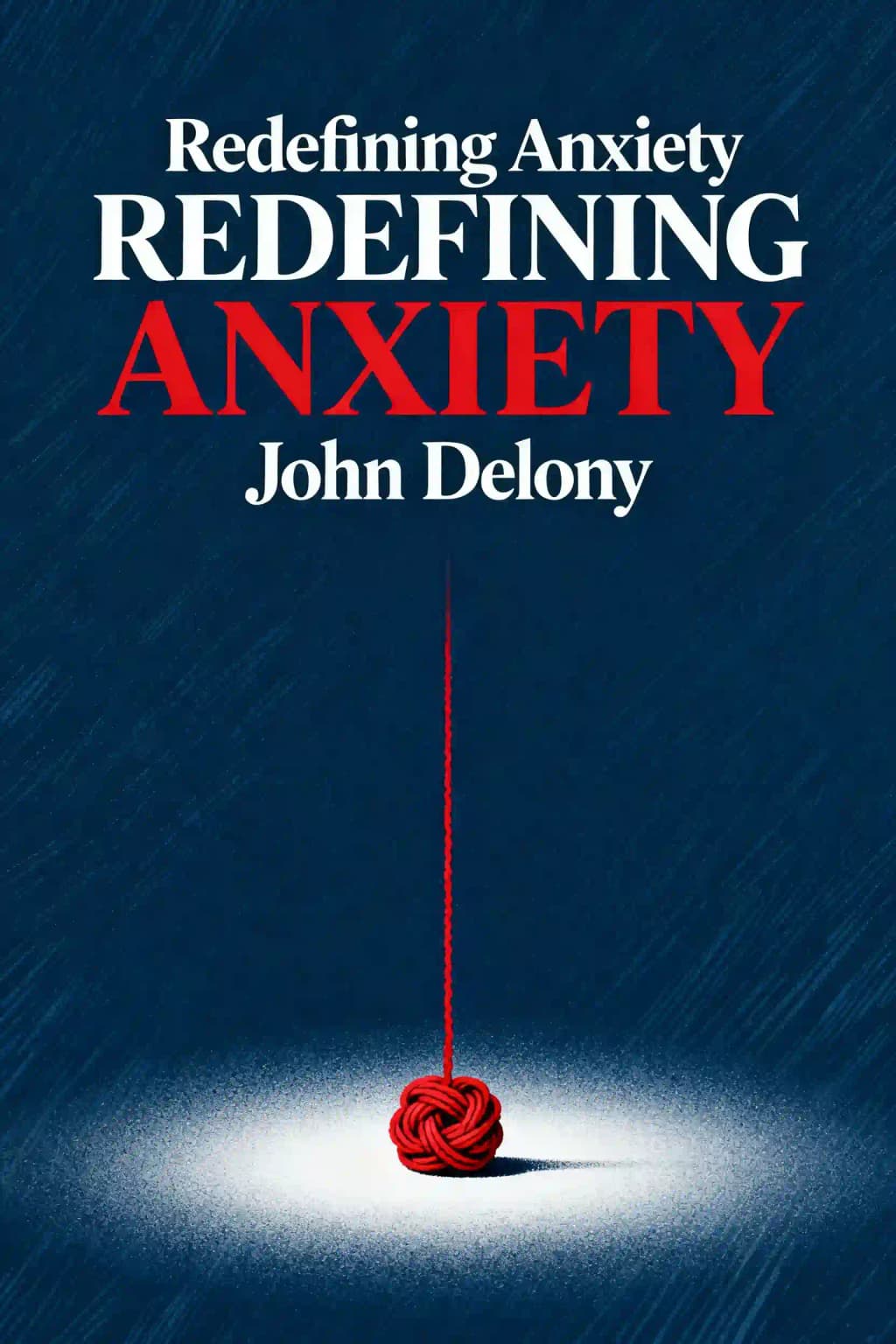
Have you ever jolted awake at 3 AM, heart racing, mind spinning with worries that seem insurmountable in the darkness? You're far from alone. Dr. John Delony's "Redefining Anxiety" has become a lifeline for millions facing similar struggles. This book has garnered praise from celebrities like Dax Shepard, who credited it with transforming his approach to panic attacks on his "Armchair Expert" podcast. Since its publication, it has consistently ranked among Amazon's top psychology titles, with readers reporting profound shifts in their relationship with anxiety. What makes Delony's approach revolutionary is his rejection of the standard medical model that treats anxiety as merely a disease to be medicated. Instead, he offers something more profound: a complete reframing of what anxiety actually is and how we can respond to it. His background as both a crisis responder and academic gives him a unique perspective that bridges practical experience with deep research. Let's explore how this groundbreaking work might change everything you thought you knew about the anxiety that keeps you up at night.
第2章
Anxiety: The Misunderstood Messenger
Imagine your home's smoke detector blaring at 2 AM. Would you simply remove the batteries and go back to sleep? Of course not-you'd search for the fire. Yet when it comes to anxiety, that's exactly what we've been doing: trying to silence the alarm without addressing what triggered it.
Anxiety isn't a disease, an identity, or a permanent condition. It's a sophisticated alarm system-nothing more, nothing less. When your body floods with adrenaline, when your thoughts race uncontrollably, when your stomach churns with dread, these aren't malfunctions. They're your body's notification system working exactly as designed, alerting you that something in your life requires attention.
The conventional medical establishment has largely missed this crucial distinction. The Diagnostic and Statistical Manual (DSM) defines anxiety disorders through specific criteria: excessive worry lasting at least six months, plus symptoms like restlessness, fatigue, concentration problems, irritability, muscle tension, sleep disturbance, and intrusive thoughts. While these descriptions are accurate, they focus entirely on the symptoms rather than the underlying causes.
This misunderstanding has created a culture where we pathologize normal human responses to abnormal situations. When we feel disconnected from others, when we're chronically sleep-deprived, when we're living in environments that feel unsafe-our bodies respond appropriately with anxiety. The problem isn't the anxiety itself but the conditions triggering it.
Think about it: anxiety rates have skyrocketed despite unprecedented access to anti-anxiety medications. Over forty million American adults now suffer from anxiety disorders, with numbers steadily climbing year after year. If our current approach worked, wouldn't these numbers be decreasing?
What if we've been asking the wrong questions all along? Instead of "How do I get rid of this anxiety?" what if we asked, "What is my anxiety trying to tell me?" This shift in perspective-from seeing anxiety as the enemy to recognizing it as a messenger-changes everything. It moves us from passive victims of our biology to active participants in our healing. It transforms anxiety from a life sentence to a temporary visitor with important information to share.
When we listen to anxiety rather than trying to silence it, we open the door to genuine healing-not just symptom management. This distinction isn't just semantic; it's the difference between a lifetime of struggling against anxiety and finally finding peace.
第3章
The Great Anxiety Myths: What We Get Wrong
Sarah, a mother I once counseled during college move-in day, experienced a full-blown panic attack while saying goodbye to her freshman daughter. As she calmed down in my office, her racing thoughts revealed deeper issues: worries about her daughter's preparedness, fears about returning to an empty home, and anxiety about confronting her struggling marriage. Rather than dismissing her with platitudes like "everything will be fine," I acknowledged her physical symptoms, honored her feelings, and recommended counseling for the significant life transitions she was facing.
This approach stands in stark contrast to our culture's tendency to offer superficial advice about anxiety. From Instagram infographics promising "5 Steps to Beat Anxiety Forever" to well-meaning friends who suggest "just don't worry so much," misinformation abounds. With over 331 million Google results for "anxiety," it's no wonder we're confused about what's true.
Let's dismantle four particularly harmful myths that keep us trapped in cycles of anxiety:
First, anxiety is not simply a disease or genetic condition. While genetics can influence your susceptibility to anxiety, they don't determine your destiny. As Brene Brown eloquently puts it, "Genetics loads the gun and the environment pulls the trigger." Your experiences and environments play the starring role in your anxiety story, not your genes. This is actually empowering news-it means healing is possible regardless of your family history.
We've made a critical error by reducing the complexity of human experience to mechanical metaphors. We treat doctor visits like taking our car to the shop: "Fix this part and I'll be good to go." But humans aren't machines to be fixed or computers to be rewired-we're relational beings affected by countless interconnected factors. There's little meaningful difference between "heart health," "gut health," "mental health," and "skin health"-you are all these things simultaneously. While anxiety alarms are indeed biological phenomena happening in your body, they're triggered by your relationships, work, thoughts, environment, and actions.
Second, medication isn't the only (or even primary) solution for anxiety. When we reduce anxiety to a medical disease, the logical next step is to ask: "Is there a pill for that?" This approach is appealing because it means we don't have to examine our relationships, our dreams versus realities, our lack of self-care, or our past traumas. Despite billions spent on anxiety medications, anxiety rates continue to climb. No country is seeing a reduction in diagnoses despite increased medication use.
I took anxiety medication for a season a decade ago when my alarms became overwhelming. It helped turn down my body's signals so I could do the real work: meeting with mentors, restoring my marriage, working with mental health professionals, changing my sleep and diet, examining my relationships, and making necessary life changes. Medication didn't fix my life-I had to be vulnerable and work hard. Medication can temporarily tone down the alarms, giving you space to catch your breath and do deeper work. But remember, all anxiety medications can do is dial down the alarms; they don't fix the underlying problems.
Third, anxiety is not your identity or destiny. If you visit a doctor with anxiety symptoms, you might leave with a diagnostic label. Unlike physical conditions like strep or cancer that can be confirmed with tests, mental health diagnoses are usually based on self-reported questionnaires. While a diagnosis can help "name the dragon" and identify appropriate resources, these labels can sink into our subconscious and become our identity.
Just because someone names the dragon doesn't mean it gets to move in and become part of who you are. If you believe anxiety is your identity, you might fall into thinking it's your destiny-that you'll always be anxious. This is false. Anxiety typically comes and goes in seasons; it doesn't have to be forever.
Finally, the myth that you can have and do it all simultaneously without trade-offs is particularly damaging. We've grown up with harmful lies like "you can be anything you want" and "if you want it bad enough, you can accomplish anything." These unrealistic expectations create horrible consequences for our wellbeing as we chase impossible standards.
Everything has a cost-you cannot be everything to everyone simultaneously. From pressuring seven-year-olds about college plans to expecting women to excel professionally while maintaining perfect motherhood, these expectations keep our anxiety alarms constantly ringing. The hard truth is that we must make choices about what we actually want and what trades we're willing to make.
第4章
Your Body's Warning System: Understanding the Alarm
Your body is an incredibly sophisticated warning system, constantly scanning your environment for threats. This system evolved over millions of years to keep us safe from predators and physical dangers. The problem? It doesn't distinguish between a saber-toothed tiger and a looming work deadline-both trigger the same physiological response.
When your brain detects a potential threat, it activates your sympathetic nervous system-the "fight, flight, or freeze" response. Your heart races to pump more blood to your muscles. Your breathing quickens to increase oxygen intake. Your digestive system slows down (explaining that churning stomach feeling). Your pupils dilate to take in more visual information. Stress hormones like cortisol and adrenaline flood your system, preparing you for immediate action.
This response is perfect for acute physical dangers-it's saved countless human lives throughout evolutionary history. But it's terribly matched to modern stressors that are often chronic, psychological, and not solvable through physical action. When your boss criticizes your work, your body prepares you to either fight or run away-neither of which is appropriate in a professional setting.
What's fascinating is that your body responds to perceived threats before you're consciously aware of them. This explains why you might suddenly feel anxious without knowing why. Your amygdala-the brain's threat detection center-processes information about 80 milliseconds faster than your conscious mind. You feel the physical symptoms of anxiety before you've had time to identify what triggered them.
Modern life bombards us with hundreds of small threats daily-from workplace conflicts to social media pressures-creating constant low-grade stress that builds over time. The breakneck pace of technological and cultural change overwhelms our ancient alarm systems, leaving us overstimulated and burned out.
Consider Mike, a law student whose ecosystem was in chaos. He was sleeping only four hours nightly, surviving on energy drinks and fast food, fighting with his parents about career choices, and experiencing marital problems. His anxiety alarms were blaring constantly because his entire ecosystem was unhealthy. By addressing what he could control-improving sleep, nutrition, setting boundaries with his parents, and working on his marriage-he gradually quieted the alarms.
Your ecosystem encompasses everything about your life-family history, community interactions, cultural expectations, past traumas, physical health, thoughts, and actions. When anxiety alarms constantly sound, threats exist in this ecosystem. By recognizing what's wrong and making necessary changes, you can create an environment where your alarm system can finally rest.
What makes anxiety particularly challenging is that it creates a feedback loop. The physical symptoms of anxiety (racing heart, shallow breathing) can themselves trigger more anxiety ("Why is my heart racing? Is something wrong with me?"). Breaking this cycle requires understanding that these physical sensations, while uncomfortable, aren't dangerous. They're just your body doing exactly what it evolved to do-protect you.
第5章
Immediate Relief: First Aid for Anxiety Attacks
When anxiety strikes with full force-heart racing, breathing shallow, thoughts spiraling-you need immediate strategies to regain your footing. These techniques won't solve the underlying issues, but they'll help you weather the storm until you can address the root causes.
First, remember that anxiety attacks won't kill you. They feel terrible-even terrifying-but they're not physically dangerous. Your body is doing exactly what it's designed to do in response to a perceived threat. This knowledge alone can reduce the "fear of fear" that often compounds anxiety.
Box breathing is a powerful technique used by Navy SEALs and first responders to regain control during high-stress situations. Inhale slowly for four counts, hold for four counts, exhale for four counts, and hold again for four counts. Repeat this pattern for 3-5 minutes. This deliberate breathing pattern activates your parasympathetic nervous system-the "rest and digest" response that counteracts anxiety's "fight or flight" mode.
Grounding exercises help reconnect you to the present moment when anxiety pulls you into worries about the future or past. The 5-4-3-2-1 technique engages all five senses: identify five things you can see, four things you can touch, three things you can hear, two things you can smell, and one thing you can taste. This forces your brain to focus on immediate sensory input rather than anxious thoughts.
Physical movement processes the stress hormones flooding your system. Even a brief walk, jumping jacks, or stretching can help metabolize the adrenaline and cortisol that anxiety produces. Remember, your body is preparing you for action-giving it some action helps complete the stress response cycle.
Cold exposure can shock your system out of an anxiety spiral. Splash cold water on your face, hold an ice cube, or take a cold shower. This triggers the mammalian dive reflex, which immediately slows your heart rate and redirects blood flow from your limbs to your vital organs.
Naming your anxiety-literally saying "I'm feeling anxious right now"-creates psychological distance between you and the feeling. Research from UCLA found that putting feelings into words reduces amygdala activity and activates the prefrontal cortex, helping you regain rational thinking.
Write down your anxious thoughts to externalize them. Often, seeing worries on paper helps you recognize catastrophic or irrational thinking patterns. Ask yourself: "Is this thought a fact or an interpretation? What evidence supports or contradicts this thought? What would I tell a friend who had this thought?"
Remember that anxiety attacks are temporary-they always pass. The average panic attack peaks within 10 minutes and subsides within 30 minutes. Reminding yourself of this time-limited nature can provide comfort during intense moments.
These immediate interventions create breathing room so you can implement the deeper, more sustainable changes needed for long-term anxiety management. They're like first aid-not a cure, but essential for stabilizing the immediate situation so healing can begin.
第6章
The Body-Mind Connection: Physical Foundations of Emotional Health
The artificial separation between "physical health" and "mental health" has done us a tremendous disservice. Your body and mind are not separate entities-they're an integrated system where each profoundly influences the other. This connection explains why anxiety has such powerful physical manifestations and why physical interventions can dramatically reduce anxiety symptoms.
Sleep deprivation severely impacts anxiety levels-perhaps more than any other physical factor. Studies show that after just one night of insufficient sleep, the brain's emotional centers become hyperactive while the prefrontal cortex (which helps regulate emotions) becomes less effective. This creates the perfect neurological conditions for anxiety to flourish. As sleep researcher Dr. Matthew Walker says, "The best bridge between despair and hope is a good night of sleep."
Most adults need 7-9 hours of quality sleep nightly. Prioritize sleep hygiene: maintain consistent sleep-wake times, create a cool, dark sleeping environment, avoid screens before bedtime, limit caffeine after noon, and establish a calming bedtime routine. If racing thoughts keep you awake, try a "worry journal" before bed to externalize concerns.
Nutrition directly impacts anxiety levels-"mood follows food" is more than just a catchy phrase. Your gut produces about 95% of your body's serotonin, a neurotransmitter that regulates mood and anxiety. The gut-brain connection means that what you eat significantly affects how you feel emotionally.
Certain foods and substances are particularly problematic for anxiety. Caffeine mimics anxiety symptoms by increasing heart rate, blood pressure, and stress hormone production. Sugar causes blood glucose spikes and crashes that can trigger anxiety. Alcohol initially relaxes by suppressing the central nervous system but creates rebound anxiety as it metabolizes. Highly processed foods promote inflammation, which is increasingly linked to anxiety and depression.
Instead, focus on whole foods rich in anxiety-reducing nutrients: complex carbohydrates (oats, sweet potatoes) stabilize blood sugar; omega-3 fatty acids (fatty fish, flaxseeds) reduce inflammation; magnesium (dark leafy greens, nuts) regulates stress response; probiotics (yogurt, fermented foods) support gut health; antioxidants (colorful fruits and vegetables) combat oxidative stress that contributes to anxiety.
Regular physical activity is perhaps the most underutilized anxiety treatment. Exercise metabolizes stress hormones, releases endorphins (natural mood elevators), improves sleep quality, reduces muscle tension, and increases brain-derived neurotrophic factor (BDNF), which helps grow new neural connections. You don't need intense workouts-even a 20-minute walk produces anxiety-reducing benefits.
Breathing practices directly counter anxiety's shallow, rapid breathing pattern. Beyond the box breathing mentioned earlier, diaphragmatic breathing (belly breathing) activates the vagus nerve, which runs from your brain to your abdomen and regulates your parasympathetic nervous system. Practice by placing one hand on your chest and another on your stomach, then breathe so that only your stomach hand rises and falls.
These physical foundations aren't secondary to psychological approaches-they're prerequisites. Without adequate sleep, proper nutrition, regular movement, and healthy breathing patterns, even the best psychological strategies will have limited effectiveness. Your body creates the conditions in which your mind operates. When you care for your physical health, you're directly addressing anxiety at its biological roots.
第7章
The Thought Revolution: Mastering Your Mental Landscape
Our thoughts determine our emotions and actions, which then reinforce our thought patterns in a continuous cycle. While you can't prevent thoughts from appearing, you can control which ones you give attention to and how you respond to them. This is the essence of cognitive restructuring-a powerful approach for managing anxiety.
The human mind generates thousands of thoughts daily-many of them automatic and beneath conscious awareness. For people prone to anxiety, these automatic thoughts often catastrophize ("This headache must be a brain tumor"), overgeneralize ("I always mess up important presentations"), or predict disaster ("If I speak up in this meeting, everyone will think I'm incompetent").
These thinking patterns aren't character flaws-they're habits developed over time, often as protective mechanisms. The anxious brain is hypervigilant, constantly scanning for threats and preparing for worst-case scenarios. This vigilance may have been adaptive in certain past situations but becomes problematic when it persists in safer environments.
Challenging distorted thoughts is essential for anxiety management. When anxious thoughts arise, ask yourself: "What's the evidence for and against this thought? Am I confusing possibility with probability? What would I tell a friend who had this thought? What's the most realistic outcome of this situation?"
Don't let mild disappointments cascade into catastrophic conclusions. When something goes wrong, notice if your thoughts follow a pattern like: "My boss didn't like my presentation" -> "I'm terrible at my job" -> "I'll probably get fired" -> "I'll never find another job" -> "I'll end up homeless." This catastrophizing creates anxiety out of proportion to the actual situation.
Mindfulness practices help build a new relationship with your thoughts. Rather than being swept away by the content of thoughts, mindfulness teaches you to observe them with curiosity and distance. Thoughts become passing mental events rather than absolute truths. Try noticing thoughts as if they were clouds passing through the sky or leaves floating down a stream-acknowledging their presence without getting caught up in them.
Making lists distinguishing what you can control from what you can't provides clarity during anxious times. You can control your thoughts, actions, boundaries, and responses-but not other people's behaviors, economic conditions, or past events. Focusing energy on controllable factors reduces the helplessness that feeds anxiety.
Processing past trauma is crucial for thought management because unresolved trauma creates hypervigilance. The brain, having experienced danger before, remains on high alert to prevent similar harm. Acknowledging trauma doesn't mean dwelling on it or making it your identity-it means recognizing its impact on your thought patterns and working with appropriate support to establish new neural pathways.
Language matters tremendously in anxiety management. Notice how you speak to yourself-is your internal dialogue harsh and critical or compassionate and encouraging? Would you speak to someone you love the way you speak to yourself? Practice self-talk that acknowledges difficulties while affirming your capacity to handle them: "This is challenging, but I've faced hard things before and found my way through."
The goal isn't to eliminate all negative thoughts-that's neither possible nor desirable. Instead, aim for a balanced thought life that acknowledges challenges while maintaining perspective. With practice, cognitive restructuring becomes more automatic, creating a virtuous cycle where healthier thoughts lead to reduced anxiety, which reinforces healthier thinking patterns.
第8章
The Healing Power of Connection: Relationships as Medicine
Perhaps the most important truth about anxiety is this: you need other people. Connection heals anxiety. We're living in an era of unprecedented disconnection and fragmentation, leading to an epidemic of loneliness-the chief enemy of our mental wellbeing. When we're lonely, we create stories of abandonment and unworthiness that trigger anxiety alarms throughout our bodies.
The biochemical impact of chronic loneliness is devastating. Research shows it produces inflammation comparable to smoking fifteen cigarettes daily and increases mortality risk more than obesity. Our bodies interpret social isolation as a fundamental threat because, throughout human evolution, being separated from the tribe meant almost certain death.
Relationships function as the emergency fund for our lives, providing security and grounding when trouble strikes. Having people who truly know you-your struggles, your strengths, your history-creates a safety net that allows you to face life's challenges with resilience rather than anxiety.
Modern life has eroded natural community structures. We move frequently for education and career opportunities, work longer hours, commute farther distances, and substitute digital connection for in-person interaction. The average American has fewer close confidants today than in previous generations, with many reporting no one they can talk to about important matters.
Finding connection requires intentionality in our disconnected world. Join communities organized around shared interests or values-religious congregations, volunteer organizations, hobby groups, or sports teams. These structured communities provide regular contact and shared purpose that builds relationships naturally over time.
Be vulnerable with trusted people. Anxiety thrives in isolation and secrecy but diminishes when brought into the light of supportive relationships. Sharing your struggles doesn't burden others-it invites authentic connection. Start small by revealing minor concerns before sharing deeper vulnerabilities as trust builds.
Connect in person whenever possible. While digital communication maintains existing relationships, face-to-face interaction provides neurobiological benefits that screens cannot replicate. Eye contact, physical touch, and shared physical space trigger oxytocin release-a hormone that reduces anxiety and promotes bonding.
Simply invite people into your existing routines-walking together, sharing meals, running errands, or working side by side. These everyday activities create natural contexts for meaningful conversation without the pressure of formal "deep talks."
Reciprocity strengthens relationships. Being willing to both give and receive support creates balanced connections. Many anxious people excel at caring for others but struggle to accept help themselves. Practice receiving support graciously, recognizing that allowing others to help you strengthens rather than burdens the relationship.
Healthy boundaries paradoxically enable deeper connection. Clear boundaries communicate your needs and limits, preventing the resentment and burnout that destroy relationships. Learning to say "no" to what drains you creates space to say "yes" to what nourishes you.
Your life will improve when your relationships do. No medication, meditation technique, or self-help strategy can replace the healing power of genuine human connection. We are fundamentally social creatures, wired to regulate our nervous systems through interaction with others. When you invest in meaningful relationships, you're not just enhancing your life-you're addressing anxiety at its very root.
第9章
Grief and Anxiety: The Connection We Overlook
Grief and anxiety are intimately connected-unresolved grief becomes a breeding ground for persistent anxiety. Yet our culture rarely acknowledges this relationship, leaving many people struggling with anxiety that's actually rooted in unprocessed loss.
Grieving means acknowledging, processing, and putting down the bricks of pain, regret, unmet expectations, or significant changes. Unfortunately, our culture doesn't teach us how to grieve properly. We're allowed to laugh, be angry, or appear happy, but we lack cultural space for silence, mourning, or processing difficult seasons. Instead, we seek quick fixes and immediate solutions.
We tend to recognize grief only for major losses like death, divorce, or job loss. But we experience countless smaller losses that also require grieving: the end of a friendship, a move to a new city, children growing up and leaving home, health changes, unfulfilled dreams, or even positive transitions that still involve saying goodbye to what was. When these losses accumulate without acknowledgment, anxiety often results.
The grief-anxiety connection works in several ways. Unprocessed grief creates a backlog of emotional material that demands energy to suppress, leaving fewer resources for managing daily stressors. Grief often involves uncertainty about the future, triggering anxiety's tendency to catastrophize. Grief can shatter our assumptions about how the world works, creating hypervigilance as we try to prevent further losses.
Learning to grieve well involves several practices. First, name your losses specifically rather than minimizing them. Acknowledge both the tangible losses (a person, job, home) and the intangible ones (security, identity, dreams, certainty).
Give yourself permission to feel the full range of grief emotions-not just sadness, but also anger, relief, confusion, and even moments of unexpected joy. These emotions aren't linear but come in waves that may surprise you with their timing and intensity.
Avoid comparing your grief to others'. Comparing grief only minimizes your pain or judges others, neither of which helps anyone heal. Your grief is valid because your loss is real to you, regardless of how it might appear on some imaginary scale of suffering.
Create rituals to honor transitions and losses. Humans have always used ceremonies to mark significant changes-they help us integrate experiences into our life stories. These can be as simple as planting a tree, writing a letter (even one you never send), or gathering friends to share memories.
Work through grief with trusted people rather than in isolation. Community provides witness to your pain, offers perspective when you're lost in emotion, and reminds you that you're not alone in your suffering. Professional support from grief counselors or therapists can be invaluable, especially for complex or traumatic losses.
Finally, recognize that healing from grief doesn't mean forgetting or "getting over" losses. It means integrating them into your life story in a way that allows you to move forward while honoring what came before. As you process grief, anxiety often naturally diminishes-not because the loss disappears, but because you're no longer using precious energy to avoid feeling it.
第10章
The Journey Forward: From Anxiety to Wholeness
The path from chronic anxiety to genuine wellbeing isn't a straight line-it's a winding journey with progress and setbacks. This journey requires patience, self-compassion, and consistent effort across multiple dimensions of life. But with each step, the anxiety alarms quiet a little more, making space for peace and joy to grow.
I reflect on the day I drove to a different town and asked my friend for help-being vulnerable about my anxiety for the first time. Years later, I live in a different state with two children, no longer work at a university, and have a better marriage than ever. I've developed healthy practices: a daily gratitude routine, eight hours of sleep, regular exercise, limited social media, and working with my hands.
I still feel deeply and tend toward anxiety, but I've learned to understand my alarms and change what I can. Some changes took days, others years, and some tendencies will always be with me. I'm not special-I'm just like you. I was tired of letting anxiety control my life, so I took back control by letting things go.
The journey forward involves several key principles. First, progress isn't linear-expect good days and difficult ones. Recovery from anxiety isn't about never feeling anxious again; it's about developing a new relationship with anxiety where it informs rather than controls you.
Second, small changes compound over time. Consistent daily practices-quality sleep, nutritious food, physical movement, connection with others, thought awareness-create profound shifts when maintained over months and years. Don't underestimate the power of tiny improvements consistently applied.
Third, professional support accelerates healing. A good therapist can transform how you talk to yourself and interact with others. They help you develop self-awareness, recognize distorted thinking patterns, process trauma, and learn new skills for thinking and acting. Therapy isn't about eliminating all problems but learning you have the ability to face and grow through them.
Fourth, your environment shapes your experience. Sometimes reducing anxiety requires changing jobs, ending unhealthy relationships, moving to a different location, or establishing boundaries with family members. These changes aren't selfish-they're necessary for creating an ecosystem where you can thrive.
Fifth, meaning and purpose reduce anxiety. Contributing to something larger than yourself-whether through work, volunteering, parenting, creating art, or building community-provides context that helps keep daily stressors in perspective. Purpose doesn't eliminate difficulties but makes them worthwhile.
Finally, self-compassion is essential throughout the journey. Treating yourself with the same kindness you'd offer a good friend-especially during setbacks-creates psychological safety that allows for growth and healing. Self-criticism only activates the threat system, perpetuating the very anxiety you're working to address.
You are worth being well, worth a full night's sleep, worth loving and being loved. There is healing, hope, and wellness for you on the other side of anxiety. The journey may not be easy, but it leads to a life where anxiety no longer defines you-it simply informs you, like any other sensation. And in that space of freedom, you can build a life of meaning, connection, and joy that anxiety once made seem impossible.