第1章
Russia's Enigmatic Dance: Putinism and the Future of a Former Superpower
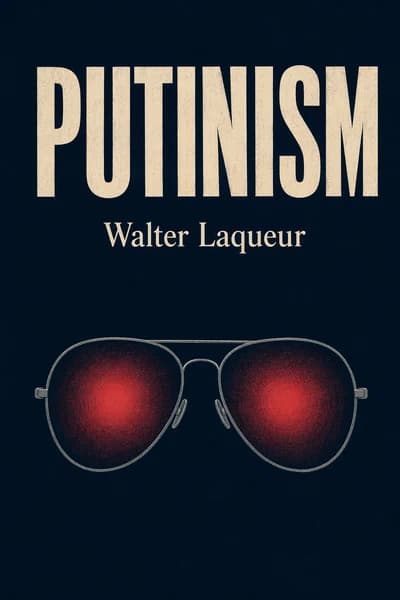
When Vladimir Putin first rose to power on December 31, 1999, few could have predicted his transformation from an obscure KGB operative to the architect of modern Russia. Yet his emergence wasn't truly accidental-it represented the natural culmination of Russian historical forces seeking a return to authoritarian nationalism after the chaotic Yeltsin years. "Putinism" has since become required reading for diplomats, intelligence analysts, and business leaders navigating Russia's complex landscape. The book has earned praise from Henry Kissinger and Zbigniew Brzezinski, who called Laqueur "our most distinguished scholar of twentieth-century history." What makes this work particularly prescient is how it anticipated Russia's trajectory years before the 2014 Ukraine crisis, identifying the ideological shifts that would transform Russia from aspiring democracy to nationalist autocracy with imperial ambitions. As Russia continues to challenge the Western-led global order, understanding the foundations of Putinism has never been more essential.
第2章
The End of Soviet Dreams and Yeltsin's Chaotic Interregnum
The Soviet experiment began with revolutionary fervor captured in "The Internationale" but gradually lost its dynamism. By the 1970s, despite becoming a military superpower, the USSR faced mounting economic stagnation, environmental degradation, and declining quality of life. The Brezhnev era became known as zastoi (stagnation), with unsustainable military spending draining resources from the civilian economy.
When Mikhail Gorbachev unexpectedly became general secretary in 1985, he recognized the need for radical reform. Unlike earlier Communist leaders from urban backgrounds, Gorbachev had peasant origins and rose through party ranks to become a Politburo member by 1980. His crucial meeting with Alexander Yakovlev in Canada in 1983 united two men who independently concluded the USSR needed fundamental change. Yakovlev, more radical in his critique, considered Marxism-Leninism "a religion of hatred" with no scientific basis.
Gorbachev's foreign policy reforms proved equally significant. He appointed Eduard Shevardnadze as foreign minister and built a team committed to reducing the crushing defense budget. The Afghan war represented a "bleeding wound" that Gorbachev resolved to heal, with Soviet withdrawal completed by February 1989 despite military opposition. His breakthrough Malta summit with Bush in 1989 announced the superpowers no longer considered themselves enemies.
As the Warsaw Pact dissolved and the Berlin Wall fell, Gorbachev grew frustrated by insufficient Western financial support. By 1991, with the Soviet economy collapsing and republics declaring independence, his position weakened dramatically. After surviving an August coup attempt, Gorbachev resigned in December 1991 as the Soviet Union ceased to exist.
The post-Gorbachev years brought tremendous turbulence. As central control weakened, independence movements spread throughout the republics. Yeltsin attempted to maintain ties with former Soviet republics through a looser federation, but with limited success. Russia faced serious internal challenges, particularly in Chechnya, which resisted integration. The First Chechen War (1994-1996) went poorly for Russia, while the Second Chechen War (1999-2009) proved more successful but left lasting instability.
Domestically, Yeltsin battled the Communist-dominated Supreme Soviet while implementing painful economic reforms. Despite 3% approval ratings, he won reelection in 1996 through oligarch support and campaign promises. By 1998, Russia faced economic crisis as oil prices fell. Yeltsin appointed the little-known KGB operative Vladimir Putin as prime minister before resigning on December 31, 1999, leaving a complex legacy of democratic aspirations undermined by economic chaos and corruption.
第3章
The Power Behind the Throne: Oligarchs and Siloviki
The question of who truly rules Russia has been debated for decades. During Soviet times, the nomenklatura enjoyed special privileges-housing, cars with drivers, exclusive services, and at the highest levels, possession of a vertushka (special telephone) signifying one's position. After the Soviet collapse, this system evolved into a competition between newly-wealthy oligarchs and security service veterans known as siloviki.
The oligarchs' meteoric rise forms a fascinating chapter in post-Soviet Russia. They amassed enormous wealth through acquiring state assets at nominal prices during privatization. Some were former officials like Vagit Alekperov (now Russia's eighth-richest person), while others simply had close connections to power. Most oligarchs who flourished under Yeltsin fell under Putin, their fundamental mistake being political ambition. Boris Berezovsky, despite helping install Putin as Yeltsin's successor, lost everything when he criticized the new president's handling of the Kursk submarine disaster. Forced into exile in London after corruption charges, Berezovsky eventually committed suicide in 2013. Similarly, Mikhail Khodorkovsky, once Russia's richest man through Yukos oil company, spent eight years in prison for challenging Putin publicly.
The siloviki completely outmaneuvered the oligarchs in the struggle for power. While oligarchs competed against each other without forming a united front, the siloviki shared the common bond of KGB service and a deeply ingrained sense of mission. As Nikolai Patrushev declared in 2002 after succeeding Putin as FSB head, the secret service had become "the new nobility," motivated by duty and patriotism rather than money.
About one-third of Putin's inner circle comes from KGB backgrounds. Their indoctrination taught them they were Russia's elite-"the sword and shield" protecting the nation from enemies. Despite the KGB's checkered history, the persecution mindset took deep root. To improve their image, the KGB invested heavily in propaganda like the immensely popular Stirlitz TV series "Seventeen Moments of Spring," which portrayed a brilliant Soviet spy infiltrating Nazi high command-pure fiction that nevertheless became a cultural touchstone still aired regularly on Russian television.
In post-Soviet Russia, former KGB figures emerged as influential political players. Putin's unofficial "Politburo" includes numerous security officials alongside oligarchs and political allies, forming a power structure resembling an authoritarian elite rather than democratic leadership. The rehabilitation of the KGB accelerated under Putin, with December 20th celebrated as "Chekist Day" and the Orthodox Church even participating in the glorification of security services through "spiritual defense" initiatives.
第4章
The Orthodox Revival and Russia's Search for Identity
The Orthodox Church has always been central to the Russian idea, from its Byzantine origins to its current revival. Though severely persecuted in early Soviet years, the church made a partial comeback during World War II when Stalin sought its support. However, this accommodation came at a steep price-the church leadership was thoroughly infiltrated by state security, with even patriarchs serving as KGB agents.
Despite this compromise, the church ultimately outlasted the Soviet system. In post-Soviet Russia, the church often embraced extreme nationalism, even tolerating anti-Semitic publications like the notorious "Protocols of the Elders of Zion," which were published with the blessing of high church officials.
The church has maintained a hostile stance toward other faiths, particularly Catholicism, seeking a religious monopoly in Russia. Despite the reopening of thousands of churches and ordination of many priests, genuine religious practice remains limited-polls show only 2-3% attend services regularly, though most Russians identify as Orthodox. The church has failed to attract intellectuals, unlike in pre-revolutionary times when religious thinkers like Solovyov and Berdyaev had significant influence.
Today's Orthodox Church functions primarily as a political tool of the government, with Patriarch Kirill echoing Putin's attacks against the "godless West" and defending "traditional values." The division between church and state has virtually disappeared, with church pronouncements often indistinguishable from those of government ministries.
With Soviet ideology collapsed and Tsarist Russia's final phase unappealing except to monarchists, Russian intellectuals searching for a new national doctrine looked deeper into history. The tension between Westernizers and Slavophiles that defined 19th century Russian thought resurfaced. Pyotr Chaadayev's famous "philosophical letter" lamented Russia's isolation: "We don't belong to any of the great families of the human race... we have given nothing to the world." In contrast, Slavophiles like Ivan Aksakov argued Russians sought spiritual rather than political freedom, leaving worldly governance to the state while pursuing inner spiritual life.
Later thinkers like Konstantin Leontiev and Nikolay Danilevsky moved beyond traditional Slavophilism toward anti-liberalism and anti-Westernism. Danilevsky anticipated a long struggle with a decaying West, from which Russia would emerge victorious, believing Russians were "the only God-fearing people" destined to save the world.
In 2013, Putin sent three philosophical works to governors and senior politicians: Vladimir Solovyov's "The Justification of the Good," Nikolai Berdyaev's "The Philosophy of Inequality," and most significantly, Ivan Ilyin's "Our Tasks." Ilyin, once prominent among Russian emigres before being forgotten, has become Putin's philosophical touchstone. What attracts Putin to Ilyin is his vision for post-Communist Russia: a strong central authority with limited rights for non-Russian regions. Ilyin advocated monarchist autocracy and a form of solidarism that reached Russia through exiled organizations. Putin personally arranged for Ilyin's remains to be returned to Moscow in 2005, signaling the philosopher's central importance to his worldview.
第5章
Eurasianism and Russia's Geopolitical Vision
Eurasianism emerged as the single most important component of the new Russian doctrine. Originally appearing among Russian emigres in the 1920s with the collection "Exodus to the East," it posited an unbridgeable divide between Russia and the West. The movement peaked in the 1920s before fragmenting, with some members becoming pro-Soviet and often meeting tragic fates.
Neo-Eurasianism differs significantly from its original form. While early Eurasians were concerned about "Europeanization," contemporary proponents fear "Americanization." They envision a future Eurasia stretching from Dublin to Vladivostok, seeing Russia as the natural successor to the Mongol empire, destined to restore a "timeless steppe empire" in opposition to the "Romano-Germanic" West.
Despite claims of Russia's Asian heritage, historical evidence shows Russia's origins were European, not Asian. Russian colonial expansion eastward into Siberia began in the sixteenth century but major settlement only occurred in the nineteenth century as part of imperial expansion. The fascination with the East often reflected cultural fashions among Russian intellectuals-borrowed largely from Europe-rather than genuine Asian influence. Even the most ardent Eurasians rarely visited Asia or studied its languages and cultures, revealing their conception of the East as largely imaginary.
Neo-Eurasianism emerged in the 1990s as a political movement rather than just a cultural trend, with Alexander Dugin as its primary ideologue. Born in 1962 to a military intelligence general, Dugin began in SS-imitating groups before joining Pamyat, Russia's foremost anti-Semitic organization. His career evolved dramatically-from national Bolshevik to founding the Evrazia party, becoming a Moscow State University sociology professor, and serving as adviser to the Russian parliament president.
Dugin's thought is characterized by contradictions and rapid ideological shifts. He introduced Russians to European neo-fascist thinkers while incorporating Russian anti-Western theorists. His ideology consistently features anti-globalism, anti-liberalism, anti-Americanism, occultism, and Eurasianism-the belief that Russia must embrace its Eastern destiny and reject Western influences.
The concept faces practical difficulties as a geopolitical strategy. While Russia envisions itself leading a Eurasian coalition, its demographic and economic position relative to potential Asian partners is weak. The movement requires an enemy to unite against, traditionally the West, but with Europe weakening and America pivoting to the Pacific, this becomes increasingly difficult to sustain. Despite the Kremlin's rhetorical emphasis on Eurasianism, actual efforts to strengthen ties with Siberia and Asia have been limited, leading to resentment in regions beyond the Urals.
第6章
Putin's Rise and the Emergence of Putinism
Born in 1952 in Leningrad to a poor family, Putin graduated from Leningrad State University's Law Department in 1975 and joined the KGB that same year. After serving in counterintelligence in Leningrad and Dresden (1985-90), he returned to St. Petersburg in 1991, resigned from the KGB as lieutenant colonel, and began working in the city administration.
When Putin became president, Russia was in dire economic trouble. His early cabinets included reformist figures like Prime Minister Mikhail Kasyanov and liberal economists German Gref and Alexei Kudrin. Despite early disasters like the Kursk submarine tragedy and the 2002 Moscow theater hostage crisis, Putin's popularity remained high. His greatest fortune was the dramatic rise in oil prices-from $16 per barrel under Yeltsin to $91 by 2008-allowing Russia's economy to grow 7% annually between 2001-2007, doubling the GDP and enabling debt repayment while improving living standards.
Putin established "vertical power," centralizing authority and surrounding himself with trusted colleagues from St. Petersburg and the KGB. He crushed oligarchs who challenged him politically while allowing loyal ones to prosper. His conservative, nationalist approach gradually hardened, particularly during his third presidency. Despite occasional protests from the middle class and intelligentsia, his approval ratings soared to 80% as Russians, disillusioned with 1990s "democracy," embraced his strongman image and nationalist policies.
Putinism emerged as Russia's governing ideology, blending authoritarian rule with nationalist rhetoric. Vladislav Surkov, Putin's chief of staff from 2004-2011, became the regime's ideological architect, developing concepts like "sovereign democracy" to justify limited political freedoms. Though talented, Putin kept Surkov at a distance because he lacked a security services background.
Putinism defies simple definition-it combines state capitalism with selective economic liberalism and heavy state intervention on important matters. It maintains democratic facades (parliament, constitution, press) while limiting their actual power. The system's core ideology centers on nationalism and anti-Westernism, with the security apparatus justifying its enormous size by portraying Russia as constantly threatened by external enemies.
A Putin personality cult emerged featuring products named after him-vodka, milkshakes, even a frost-resistant tomato. His successor will likely come from the security services "nobility" and must be capable but not too brilliant, loyal but not threatening to Putin's legacy.
第7章
Russia's Demographic Challenge and the Islamic Question
Any meaningful discussion about Russia's future must begin with demographics. Russia's population has faced dramatic challenges-from 125 million in the 1897 census to 142 million today, despite nationalist claims that without wars, civil strife, and Communist rule, the population might have reached 600 million. The country's extremely low population density (8.6 people per square kilometer compared to the EU's 112) raises questions about Russia's ability to maintain its vast territory.
Current projections show Russia's population shrinking by nearly 20% from one generation to the next without immigration. Russian men survive to just 65 years on average (compared to 77 in Germany), with alcoholism being the primary factor in their shorter lifespans. The pool of Russian women entering childbearing age is rapidly shrinking due to the 1990s baby crash, and the current reproduction rate of 1.7% is insufficient for population maintenance.
These demographic challenges create immediate political consequences: military recruitment difficulties, declining numbers of college graduates, and reduced global educational influence. While Putin's pro-natalist policies have slightly increased birthrates, by 2040 the number of Russians aged 20-29 will still be half of today's figure. Immigration, primarily from Central Asia and the Caucasus, has prevented more severe depopulation, with approximately 12 million foreign workers contributing 8% to Russia's GDP. However, this has created social tensions in a country where "Russia for the Russians" remains a popular sentiment.
Islam is "Russia's fate," according to expert Alexey Malashenko-a statement that gained attention during conflicts in the Caucasus. Russia's relationship with Islam spans centuries, predating even its encounter with Christianity, yet Muslims have long been regarded as alien.
Russia now hosts approximately 20 million Muslims, concentrated in three regions-the Caucasus, Moscow, and the middle Volga. This figure is inexact due to millions of illegal "guest workers" from Central Asian republics. When the Soviet Union collapsed, the Central Asian republics seceded while smaller autonomous republics within Russia remained dependent on Moscow. Chechnya was subdued through two protracted wars, with the Kadyrov clan maintaining power under Russian overlordship while implementing sharia law.
While the Caucasus remained tense, Tatarstan and Bashkortostan initially appeared stable, benefiting from oil and gas wealth and strong traditional Islamic establishments. This comforting narrative shattered on July 19, 2012, when an assassination attempt targeted Ildus Faizov, the supreme mufti of the region. The subsequent investigation revealed a thirteen-year "undeclared war" of systematic infiltration by Salafi preachers from Arab countries. As Alexey Malashenko observed, "previously docile parts of Russia" were becoming radicalized, with some viewing the situation as "the beginning of the Caucasization of the Volga region."
第8章
Oil, Gas, and Russia's Foreign Policy Ambitions
The energy sector forms the backbone of Russian domestic and foreign policy, with oil and gas exports rising from about 7 percent to approximately 50 percent of the economy over the last century. Russia has rightfully earned the label "petrostate" as attempts to diversify the economy have consistently failed, with little prospect for change in the near future.
Russia's foreign policy transformation came gradually under Putin, not through spiritual awakening but through the prosaic reality of rising oil and gas prices that dramatically improved Russia's economic position. Western observers had shown unwarranted optimism about Russia's democratic trajectory, failing to recognize that most Russians, like Germans after 1918, wanted not just prosperity but to be part of a great power.
Russian leaders had been clear about their grievances: they believed the West failed to reciprocate Soviet concessions in the 1990s and viewed NATO expansion as provocation. "Zapadophobia" (fear of the West) grew rapidly, with a deep-seated conviction that Western initiatives must be harmful to Russia. Despite Western financial bailouts that prevented Russian bankruptcy in the 1990s, the Russian leadership increasingly positioned itself against "unipolarity"-most clearly in Putin's confrontational 2007 Munich Security Conference speech.
The Kremlin's foreign policy documents (2010-2013) emphasized an international power shift from West to East, prioritizing relations with China and India over NATO engagement. However, Russia's pivot eastward carried risks-it could end up as China's junior partner, a reality Russian emotions often obscured. Similarly questionable was Russia's emphasis on BRIC partnerships, which offered limited strategic benefits despite flowery diplomatic language.
Russia's approach to Europe underwent a strategic shift as its economic position strengthened. The Kremlin cultivated relationships with Europe's far-right parties, abandoning its historical alliance with the European left. As Sergey Baburin, Vice Speaker of the Russian Duma, bluntly stated in an interview titled "Our Fifth Column in Europe," Russia now counted on the extreme Right as strong potential allies. The old slogan "Workers of the world, unite" had been replaced by "Nationalists of all countries, unite."
This alliance wasn't merely opportunistic. Russia had moved significantly rightward, embracing a blend of populism, nationalism and religious conservatism that naturally aligned with Europe's ultranationalists. The French National Front even received Russian loans to finance its campaign. These European Putin admirers were attracted by his religious inclinations, anti-Western stance on issues like homosexuality, and anti-Americanism.
Russian-Chinese relations have become increasingly crucial to Russia's foreign policy, improving considerably over the past twenty years with most immediate border disputes resolved. Yet a stark contrast exists between the grandiose rhetoric of partnership and limited practical cooperation. The power balance has shifted dramatically. Fifty years ago, Russia was unquestionably stronger; today, China's population is ten times larger and its economy four times bigger-a remarkable reversal from 1993 when their economies were roughly equal.
第9章
Whither Russia? Contemplating an Uncertain Future
Russian sentiment has undergone a dramatic transformation from post-Soviet pessimism to renewed nationalist confidence, with polling showing over 75% of citizens now viewing their country as a global superpower despite persistent economic challenges and stagnating living standards. The prevailing narrative among Russian commentators and state media holds that the West is in strategic retreat, having systematically failed to respect Russian dignity and legitimate security interests. They particularly emphasize NATO's eastward expansion as a betrayal of alleged promises made during German reunification (though Western diplomatic archives and even Gorbachev's own statements show these security guarantees were never formally made). This sense of betrayal is compounded by what many Russians perceive as patronizing Western treatment of their country as a defeated power, despite Russia never accepting this status following the USSR's dissolution.
More cautious voices within Russian policy circles, including some economic advisers and diplomatic veterans, acknowledge Russia may be approaching or already at its zenith of relative power. They point to serious demographic challenges, including a shrinking workforce and brain drain, alongside structural economic weaknesses like over-dependence on natural resources and technological backwardness. These moderates advocate maintaining pressure on Ukraine through political and economic means while keeping diplomatic channels with the West open. In contrast, an increasingly vocal "war party" comprising military leaders and nationalist ideologues argues that current Western disunity presents a historic opportunity. They advocate testing NATO's resolve through limited provocations, particularly in areas with significant Russian populations like Estonia's Narva region or Latvia's Latgale.
The younger generation of Russians presents a complex picture that troubles both reformers and traditionalists. Unlike their Soviet predecessors or the early post-Soviet generation, today's Russian youth show little interest in revolutionary idealism or political transformation. Surveys indicate they're remarkably materialistic, with 80% prioritizing financial success over political ideals. While they show high approval ratings for Putin personally (often exceeding 70%), they express deep distrust in most government institutions. This generation is notably conformist, focusing on individual success rather than collective political action. Alarmingly, youth suicide rates in Russia are triple the European average, suggesting deep underlying social distress despite surface stability.
Looking ahead, Russia's future trajectory remains uncertain despite its military resurgence, which has seen defense spending double while NATO countries reduced theirs. The nationalist turn under Putin faces significant long-term challenges: Russia remains technologically dependent on Western imports, particularly in critical sectors like electronics and machinery. Its financial system remains vulnerable to Western sanctions, as demonstrated by recent economic turbulence. Perhaps most concerning is the persistence of what scholars call the "siege mentality" - a psychological complex combining conspiracy theories, persecution narratives, and extreme nationalist ideologies that have gained unprecedented legitimacy under Putin's rule.
The prospects for democratic transition appear dim, as the ruling elite fears potential prosecution for corruption and abuse of power if they lose control. Surveys show that many Russians remain ambivalent about democracy, with a surprising 47% expressing some positive views of Stalin's leadership. As Gogol metaphorically captured in his famous troika passage from "Dead Souls," Russia continues its historic pattern of charging forward with uncertain direction, leaving both its citizens and the world anxious about where this journey leads and at what cost to global stability.