第1章
The Raw Truth Behind the Poverty Safari
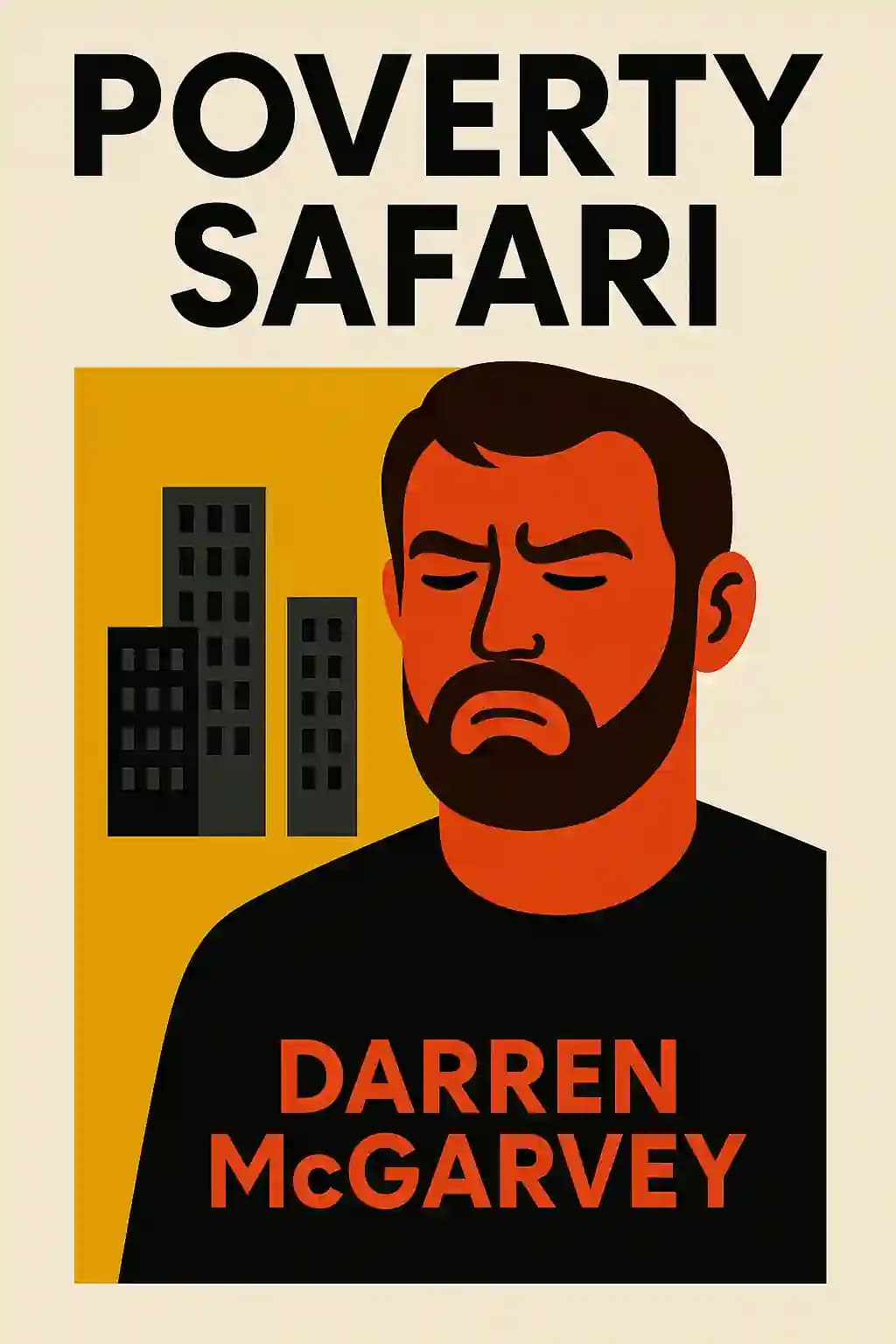
Imagine growing up in a place where violence is as common as breakfast, where your mother's alcoholism shapes your every waking moment, and where the world outside your neighborhood seems like a foreign country. This is the reality Darren McGarvey lays bare in his unflinching memoir "Poverty Safari." The book, which won the prestigious Orwell Prize in 2018 and became a Sunday Times bestseller, has been embraced by readers across the political spectrum. Even celebrities like Russell Brand and J.K. Rowling have praised its brutal honesty. What makes this book so powerful is McGarvey's dual perspective - he's both a respected cultural commentator and someone who has lived through addiction, homelessness, and family dysfunction. When the Grenfell Tower fire killed 72 people in London, McGarvey recognized a familiar pattern: marginalized voices ignored until tragedy strikes, then briefly acknowledged before being forgotten again. His safari through poverty isn't just a journey through Glasgow's housing schemes - it's a map of the invisible barriers that divide our society.
第2章
Growing Up Under Constant Threat
At ten years old, McGarvey had already developed the hypervigilance of a soldier in combat. His childhood in Pollok, a disadvantaged suburb of Glasgow, wasn't just difficult - it was a masterclass in survival. Living in one of Scotland's most deprived areas, where violence erupted without warning and poverty was endemic, shaped his every waking moment. His mother, an alcoholic with violent tendencies, considered fear a weakness and responded to threats with escalating aggression. She would often confront potential attackers head-on, sometimes wielding weapons, teaching young McGarvey that retreat wasn't an option. Paradoxically, it was her fearlessness that helped McGarvey overcome his own fear of bullies, though at a considerable psychological cost.
"The constant state of hypervigilance consumed most of my mental energy," he writes. While other children could focus on learning and play, McGarvey was perpetually scanning for threats, calculating escape routes, and preparing defenses. He developed an intricate mental map of safe houses, dangerous corners, and potential escape routes throughout the neighborhood. Every stranger was a potential threat; every unusual sound demanded immediate attention. This survival mechanism, though necessary in his environment, would later become a burden, making normal social interactions nearly impossible without the numbing effects of alcohol. The constant adrenaline rush left him exhausted yet unable to relax, a state that would follow him into adulthood.
In the violent ecosystem of Pollok, the fear of humiliation governed behavior more powerfully than physical pain. McGarvey noticed that in fights, his opponents were often more concerned with "saving face" than actual injury - a mindset similar to his mother's. This preoccupation with social standing created an environment where authentic self-expression became dangerous. Young men would rather suffer broken bones than appear weak, and showing vulnerability was considered an unforgivable transgression. The neighborhood operated on an intricate honor code where respect was currency and reputation meant survival.
He recounts a pivotal moment on the school bus when he complimented a girl's hair, saying "They're fucking beautiful!" The use of the word "beautiful" - rather than a more acceptable term like "nice" - violated the neighborhood's unspoken code. His peers immediately labeled him "gay," not because of any sexual connotation, but because expressing genuine appreciation broke the rules of their social environment. This incident crystallized the rigid social constraints of his world. In places like Pollok, McGarvey explains, acknowledging simple beauty could be seen as a radical political act, and displaying intelligence often invited violence rather than respect. The community's suspicion of anything perceived as pretentious or "above one's station" created an atmosphere where cultural and intellectual aspirations had to be carefully hidden or risk violent repercussions.
第3章
The Invisible Walls of Class Division
McGarvey's rare glimpses into middle-class life left him with a profound sense of alienation and resentment. During his teenage years, he would occasionally venture beyond Pollok to visit a psychologist in Glasgow's affluent West End. The contrast was jarring - streets without the constant threat of violence, people who seemed relaxed in public spaces, and an atmosphere of calm possibility that felt utterly foreign. Even the simple act of walking down these streets felt like navigating an alien landscape, where every shop window and manicured garden seemed to reinforce his outsider status.
These brief crossings between social worlds weren't bridges but reminders of the gulf between his reality and that of the middle class. Each unsuccessful attempt to navigate these more privileged spaces reinforced his growing resentment toward anyone he perceived as wealthy. This wasn't a sudden development but a gradual process during his late teens, as personal experience merged with the class consciousness that permeated his community. The differences manifested in countless subtle ways - from how people spoke and carried themselves to their assumptions about what constituted normal daily life.
"Being angry was almost cultural where I grew up," McGarvey explains. "Not being angry was almost taboo." This collective anger inevitably sought targets, and the middle class became the perfect enemy - visible yet distant, influential yet seemingly oblivious to the struggles of communities like Pollok. The anger wasn't just about material differences but about dignity, respect, and the feeling of being perpetually judged by those who couldn't comprehend their reality.
What's particularly revealing is McGarvey's admission that this prejudice persists even now, despite his own social mobility and success. He describes feeling irritated by opinions, accents, or clothing that suggest privilege, noting how these triggers can instantly activate his class-based resentment. Whether it's the precise pronunciation of certain words, the casual mention of private education, or even specific brands of clothing, these markers of class difference can still provoke an visceral emotional response. The rawness of this admission shows how deeply class divisions can become internalized, creating emotional responses that outlast even significant personal transformation.
This perspective helps explain why policy solutions designed by well-meaning middle-class professionals often fail to connect with the communities they're meant to help. The gulf isn't just economic - it's a profound difference in worldview, language, and trust that can't be bridged by good intentions alone. Even well-designed programs can falter when they don't account for the deep-seated mistrust and cultural differences that exist between social classes. Simple things like the language used in communications, the location of services, or the assumptions about what constitutes "normal" family life can create invisible barriers that reinforce rather than reduce these divisions.
These class divisions manifest in everyday interactions - from healthcare appointments to school meetings - where different cultural expectations and communication styles can lead to misunderstandings and missed opportunities for genuine connection. McGarvey's experiences highlight how these divisions are maintained not just through economic inequality, but through a complex web of social, cultural, and psychological factors that shape how different classes perceive and interact with each other.
第4章
Housing Schemes: Failed Utopias in the Sky
The tower blocks of Glasgow stand as concrete monuments to failed social engineering. These "streets in the sky," designed with socialist principles and utopian ambitions, were conceived without consulting the people who would actually live in them. Within twenty years, many of these cutting-edge buildings were being demolished or extensively renovated, while thousands of families endured devastating physical, psychological, and emotional strain.
McGarvey describes how the local economy adapted to provide temporary relief - liquor stores, betting shops, drug dealers - which quickly morphed into vices that further damaged public health. As conditions deteriorated, residents lost faith in institutions and the possibility of meaningful change.
In May 2016, McGarvey stood in persistent rain watching the controlled demolition of the last tower of Norfolk Court in Gorbals, a building once promoted as a New York-style skyscraper that would revolutionize public housing standards. The demolition evoked mixed feelings: for some residents, it marked the end of an era; for others, the beginning of new development; for many, simply a rare spectacle.
As the structure, hollowed from within, crumbled and collapsed to audience applause, a dense cloud of dust advanced toward the spectators. McGarvey understood why so many people, repeatedly seeing their homes reduced to rubble, had internalized the idea that their neighborhood was a dumping ground destined never to change.
He noted the profound disconnect between those who conceive of these areas as "projects" or "problems to solve" and those who live there daily, unable to abstract themselves from their reality to view the neighborhood in the broader context of social progress. This disconnect explains why so many well-intentioned housing projects fail - they're designed for theoretical residents rather than real people with complex needs and established community patterns.
第5章
The Trauma That Shapes a Life
McGarvey's mother died when he was seventeen, culminating years of alcoholism, abuse, and family dysfunction. He recalls her death with disturbing clarity: his sister's agonizing scream at the news, his own unsettling calmness, and the relief he felt that the "ongoing soap opera" of his mother's life had finally ended. At her funeral, while entertaining guests with jokes, he was caught off guard by the arrival of the hearse - the moment when he finally broke down in tears.
During the reception after the ceremony, someone offered him a beer despite his being underage - a gesture he perceived as acknowledgment of his adulthood. As he drank, he felt that the "alcohol-generated nightmare" they had all endured was finally over. In the weeks that followed, his grandmother gave him Co-Proxamol, a powerful painkiller, to help him sleep - an unintentional introduction to substance dependence that would shape his coming years.
McGarvey's relationship with his mother had been profoundly traumatic. He describes how she "dabbled with fire" and how one day, after severely injuring his thumb while playing, he found her drunk in a neighbor's apartment, completely indifferent to his pain. He recalls how frightening events - men threatening his mother, hemorrhages, children tied to chairs, even witnessing her having sex - seemed strangely "normal" in his daily experience.
To cope with the social stigma in disadvantaged areas, where "gossip is currency," McGarvey adopted a survival strategy: preempting bullies by making jokes about his own dysfunctional family. This transformation allowed him to "embrace the problem," using trauma as creative fuel and transforming painful experiences into material for his writing, which became a way to purify himself by "vomiting everything onto whoever would listen."
This pattern of transforming trauma into creative expression would eventually lead to his career as a rapper and writer, but not before he followed his mother's path into addiction.
第6章
The Safari Industry: Poverty as a Career
McGarvey describes his rise as a voice of poverty and the disillusionment that followed. Initially welcomed by the BBC and charitable organizations as an example of a young person turning his life around, he soon found himself trapped in a "schizophrenic" existence: homeless with addiction issues one day, respected radio presenter the next.
He noticed that his audience wanted to hear only certain aspects of his story - the traumatic parts about his childhood - but showed disinterest when he began developing deeper critiques about the structural causes of poverty. "It was as if the only thing that validated my arguments was the fact that I had been poor." He realized that the "poverty industry" saw him as a useful tool as long as he followed the expected script.
When he began questioning power structures, he was labeled as "pseudo-intellectual," "arrogant," and "dangerous." McGarvey concludes that poverty has become a political game of mutual accusations, too complex to be solved by politicians interested only in simplifications that absolve their voters of any responsibility.
This critique extends to how poverty is managed by well-meaning organizations. He observes how external organizations impose their values on poor communities, treating them as "primitive cultures" that need modernizing, ignoring that residents have their own ideas. He denounces how most interventions in poor neighborhoods end up creating greater dependence on external resources instead of promoting self-sufficiency.
McGarvey compares this approach to a "poverty safari," where students, academics, and professionals descend into poor communities, extract data and stories useful for their purposes, and then return to their enclaves. He highlights how beloved local organizations like The Barn in Gorbals must constantly redefine their mission based on political moods while competing with behemoth institutions that have no idea what they're doing.
第7章
The Physical and Mental Toll of Inequality
The stark reality of inequality becomes visible in the smallest interactions. McGarvey describes a revealing episode in the public library where he observes two ten-year-old girls from opposite social backgrounds. The first, poorly made-up and from a difficult environment, spontaneously confides that her violent father is in prison. She shows signs of trauma, reacts with fear to loud noises, and tends to isolate herself. The second, from Bearsden (a wealthy neighborhood), cries because she misses her mother, who has been absent for only twenty minutes.
McGarvey reflects on how these different reactions reveal opposite expectations: one expects danger, the other safety. Citing physician Gabor Mate, the author explains how early trauma distorts perception of the world, creating self-fulfilling prophecies. He observes how the lives of these two girls will continue to diverge, shaping differences in health, education, opportunities, and even life expectancy.
He concludes that, if they met as adults, they would belong to such different parallel cultures that any attempt at communication would likely lead to misunderstandings and hostility, pushing them to retreat into their respective social classes.
This inequality manifests physically as well. McGarvey examines how Scottish food culture changed dramatically in a single generation, creating sugar addictions before real awareness of the risks developed. He describes his childhood immersed in unhealthy eating: sugary breakfasts, white bread with butter snacks, condensed milk drunk straight from the can, and frequent visits to "Scottish cafes" - characteristic establishments with Italian owners and plenty of fried foods.
The physical toll of poverty is measurable in years of life lost. In some Glasgow neighborhoods, male life expectancy drops to just 54 years - worse than war-torn countries. Chronic stress, poor nutrition, and substance abuse combine to create health outcomes that reflect and reinforce social divisions.
第8章
Breaking the Cycle of Addiction and Blame
McGarvey's journey through addiction reveals how substances became a desperate escape route from his tormented mind, which was constantly plagued by anxiety and crushing insecurity. The hypervigilance that had served as a survival mechanism during his turbulent childhood had evolved into an unbearable burden in adulthood. Drugs offered immediate relief from this perpetual state of alertness, creating a chemical sanctuary that made the prospect of living without substances seem not just difficult, but genuinely impossible.
He vividly describes the shocking speed of his descent into addiction. Just one week after his first experience with ecstasy at a nightclub, he found himself willing to take extraordinary risks to secure more drugs. The immediate euphoria and sense of connection he felt became an obsession, leading him to prioritize the next high above all else. He explains how drugs fundamentally altered his self-perception and worldview, creating temporary windows of peace and clarity that would inevitably shatter, leaving him more isolated than before. This cycle pushed him deeper into a social circle exclusively composed of other heavy drinkers and drug users, further reinforcing his destructive patterns.
McGarvey's narrative is punctuated with haunting episodes that illustrate the depths of his addiction. He recounts how he unknowingly brought drugs into a prison where he worked counseling troubled youth, his hands shaking as he passed through security. He describes hiding vodka bottles in office bathroom ceiling tiles and taking strategic "breaks" to maintain his buzz while at work. Perhaps most painfully, he shares the story of missing his grandmother's final moments because leaving his apartment would have meant interrupting his drinking for an hour - a choice that continues to haunt him years later.
Through brutal self-reflection, McGarvey identifies that at the core of his addiction lay not just the pain of childhood trauma, but a profound selfishness that had grown like a cancer. His inability to see beyond his personal suffering had created a self-reinforcing cycle of victimhood and substance abuse. This crucial realization marked the beginning of his recovery journey - the understanding that while systemic forces and circumstances significantly shape our lives, our responses to them remain within our sphere of responsibility.
McGarvey directly challenges the left-wing orthodoxy that had previously defined his worldview. He acknowledges that during his years of alcoholism, he weaponized his mental health struggles as a justification for continued drinking, while simultaneously failing to recognize how the very society he criticized had provided him with essential support through medical care, housing assistance, and welfare benefits. He concludes with the powerful observation that in leftist circles, he had absorbed the dangerous notion that "everything must change, except ourselves" - an ideological comfort blanket that ultimately prolonged his suffering by absolving him of personal responsibility.
第9章
The Personal Revolution
The birth of his son Daniel represented a fundamental turning point, forcing McGarvey to transform himself. He concludes that the real problem in his life wasn't so much poverty as the false beliefs he adopted to survive it. Personal change becomes for him the most authentic form of radicalism in the twenty-first century: "You are not useful to any family, any community, any cause, until you are first able to manage the machine of your own life."
This personal revolution required McGarvey to question his deepest beliefs. He reflects on how we become attached to our convictions, often inherited rather than constructed, using them as medals to distinguish ourselves from others. He observes how we tend to dismiss anything that challenges our ideas, using derogatory labels to belittle opponents.
He then explores what happens when we reconsider our opinions due to new information or life experiences. In his case, stopping drinking and understanding the roots of his unhappiness was a transformative experience that changed the course of his life, distancing him from people he once considered friends.
McGarvey honestly admits that his left-wing ideas were inherited like a religion, and that if he had been born in a different environment, he would probably have adopted another ideology. He recognizes that behind his declared socialism was not true altruism, but the personal desire to no longer be poor and excluded.
While McGarvey maintains that we must fight against systemic injustices, he also acknowledges that this same system offers freedom and resources even to those who would overthrow it. He emphasizes the importance of critically examining one's own beliefs and motivations, not just those of others. True social transformation begins from within - a process that, unlike other solutions, is free and can begin immediately.
第10章
Finding Hope in the Margins
Despite the bleakness of poverty, McGarvey finds unexpected hope in the resilience and ingenuity of marginalized communities. Food banks, while undeniably symbols of shameful necessity in a prosperous country, have evolved beyond mere emergency resource centers to become vital nuclei around which communities organize, share information, and build support networks. In Castlemilk, a Glasgow neighborhood once synonymous with crime, violence, and social decay, local resident Cathy Milligan founded the grassroots movement Castlemilk Against Austerity (CAA). Her effectiveness stems precisely from not being a conventional "politician," but rather a trusted community member who intimately understands the neighborhood's language, customs, and daily struggles.
"The main cause of racism is austerity," Cathy argues, drawing from decades of firsthand observation. "It triggers a war among the poor, turning neighbor against neighbor in the fight for scarce resources." CAA adopts a comprehensive, ground-up approach to local problems, orchestrating food solidarity programs, anti-racism campaigns, and bullying workshops in schools. They deliberately ignore the strategies of traditional political parties, which often impose top-down solutions without understanding local dynamics. For this community, heated national debates about Trump, Brexit, or partisan politics are mere distractions from the immediate challenges of survival - paying bills, feeding children, and maintaining dignity.
CAA's approach is distinctive in its rejection of pure victimhood narratives while encouraging honest community self-reflection. They recognize that while systemic forces create poverty, community apathy partly stems from the habit of exclusively blaming external factors. Local figures like Robert Fullerton, a respected poet and activist, exemplify this balanced perspective through powerful, visceral rhetoric that resonates far more deeply than traditional political discourse. "The problem with politics is that none of us are doing it," he states in community meetings. "It's not enough to get fired up on social media or complain at the pub - you have to act, organize, and build."
These community leaders become the new gravitational centers of fragmented neighborhoods, fighting extremist ideologies and social dissolution through practical action rather than online activism. They organize tenant associations, create informal childcare networks, and establish community gardens - small but tangible improvements that build confidence and capability.
McGarvey's personal journey from addiction to activism, from reflexive blame to embracing responsibility, offers a nuanced roadmap for genuine social change. By acknowledging both systemic injustice and personal agency, he creates space for a new kind of politics - one that honors lived experience while refusing to be defined by victimhood. His poverty safari ultimately leads not to despair but to a hard-won wisdom: that meaningful transformation begins within communities themselves, through the daily choices and actions of individuals who refuse to surrender to circumstances. This bottom-up approach, while slower than top-down policy changes, creates more sustainable and authentic social change by building on existing community strengths and relationships.