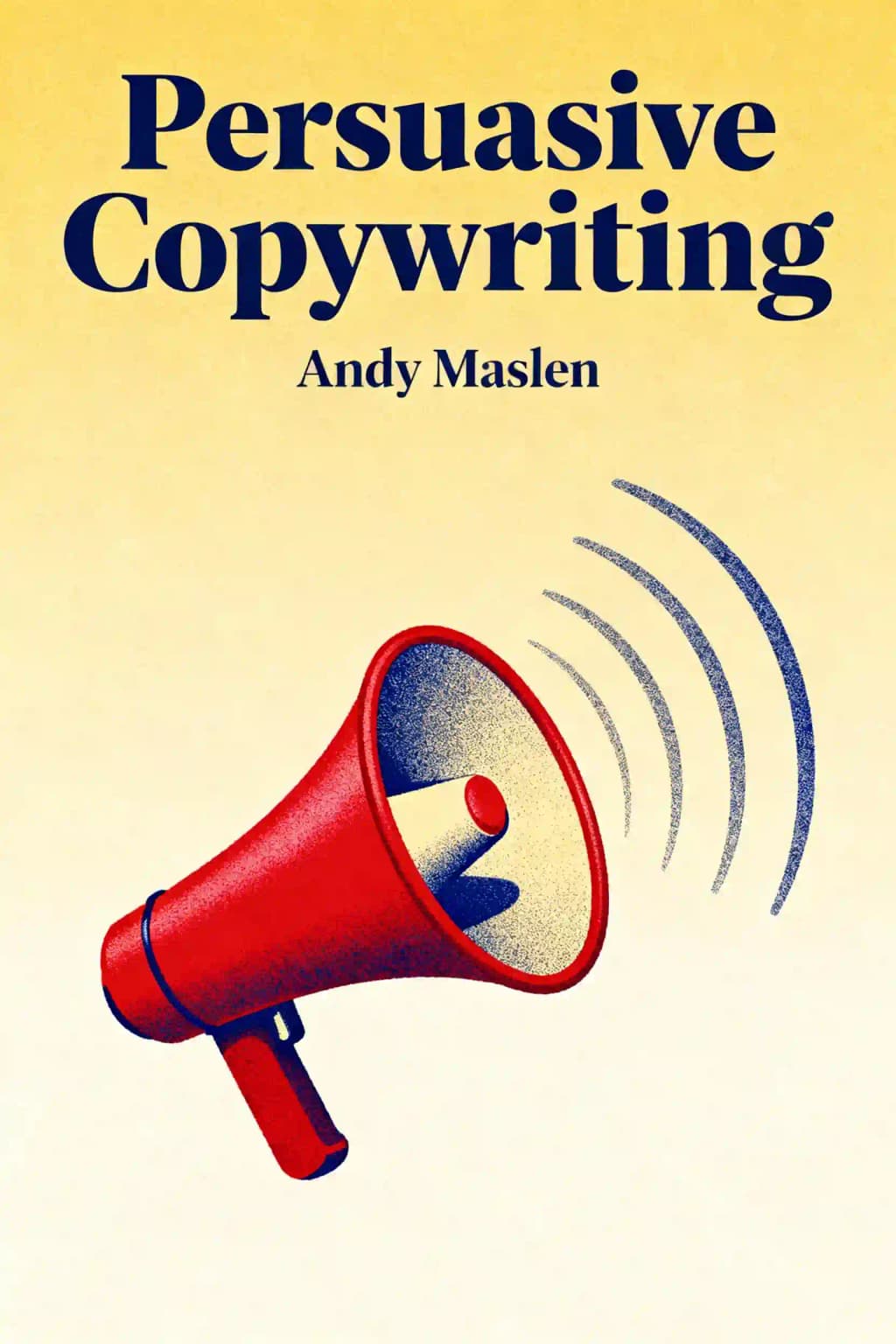
Master the psychology of persuasion with Andy Maslen's game-changing guide that transforms writers into influencers. Praised for its emotional engagement techniques over logical arguments, this 2015 bestseller reveals why top marketers focus on limbic triggers - not just facts - to drive action.
Andy Maslen, the bestselling author of Persuasive Copywriting and a globally recognized copywriting expert, combines decades of hands-on marketing experience with psychological insights to craft compelling narratives. Born in Nottingham, UK, Maslen founded Sunfish, a writing agency serving clients like The Economist, BBC Worldwide, and the NHS, while also leading the Andy Maslen Copywriting Academy.
His nonfiction works, including The Copywriting Sourcebook and Write to Sell, distill practical frameworks for digital and print campaigns, reflecting his certification as a Fellow of the Institute of Direct and Digital Marketing.
Maslen extends his expertise into fiction through thriller series like Gabriel Wolfe and Detective Kat Ballantyne, blending suspense with sharp dialogue. A co-founder of the Copy Cabana conference, his actionable strategies are taught in marketing courses worldwide. Persuasive Copywriting has become a staple in corporate training programs, translated into 12 languages and adopted by Fortune 500 teams to refine brand messaging.
Persuasive Copywriting by Andy Maslen teaches science-backed techniques to craft emotionally engaging copy that drives action. It combines psychological principles, like Aristotle’s ethos-pathos-logos framework, with practical exercises for social media, email, and ads. Key strategies include the TIPS method (Tempt, Influence, Persuade, Sell) and using storytelling to create relatable messages.
Marketing professionals, copywriters, and entrepreneurs seeking to improve conversion rates will benefit most. The book offers actionable advice for novices and advanced writers, with techniques applicable to digital platforms like SEO-driven blogs.
Yes—readers praise its blend of psychological insights and hands-on exercises. Reviewers highlight its emphasis on emotional engagement over logic and its adaptability to modern marketing channels like social media.
The TIPS method is a four-step framework:
Emotional copywriting involves triggering specific feelings (e.g., desire, fear) to motivate decisions. Maslen provides "emotion maps" to align messaging with audience mindsets and recommends sensory language to create vivid mental imagery.
Aristotle’s ethos (credibility), pathos (emotion), and logos (logic) form the foundation of persuasive writing. Maslen advises balancing these elements—starting with emotion to engage, then logic to justify, and ethos to build trust.
Stories make messages relatable and memorable. Maslen advises using dramatization to “show, not tell” benefits—for example, placing products in real-life scenarios instead of listing features.
While not exclusively an SEO guide, it includes tips like structuring content for readability (e.g., short sentences, active voice) and prioritizing key information early—practices that improve search rankings.
Maslen cites how emotional decision-making stems from brain chemistry, such as dopamine-driven rewards. Techniques like urgency creation and sensory language tap into these neurological triggers.
Some advanced writers may find basic sections repetitive, but the actionable exercises and adaptability to digital trends (e.g., social media) ensure value for most audiences.
Its focus on emotional engagement and multi-platform adaptability (e.g., AI-generated content, voice search) keeps it applicable. Updated editions integrate modern examples, ensuring techniques align with evolving SEO and social media algorithms.
著者の声を通じて本を感じる
知識を魅力的で例が豊富な洞察に変換
キーアイデアを瞬時にキャプチャして素早く学習
楽しく魅力的な方法で本を楽しむ
Our decisions are fundamentally emotional, not rational.
Effective headlines arrest readers in the act of turning away.
The emotional appeal comes first; the specifications merely justify the desire already created.
A secret is inherently valuable-rare, precious, and powerful.
『Persuasive Copywriting』の核心的なアイデアを分かりやすいポイントに分解し、革新的なチームがどのように創造、協力、成長するかを理解します。
『Persuasive Copywriting』を素早い記憶のヒントに凝縮し、率直さ、チームワーク、創造的な回復力の主要原則を強調します。

鮮やかなストーリーテリングを通じて『Persuasive Copywriting』を体験し、イノベーションのレッスンを記憶に残り、応用できる瞬間に変えます。
何でも質問し、声を選び、本当にあなたに響く洞察を一緒に作り出しましょう。

"Instead of endless scrolling, I just hit play on BeFreed. It saves me so much time."
"I never knew where to start with nonfiction—BeFreed’s book lists turned into podcasts gave me a clear path."
"Perfect balance between learning and entertainment. Finished ‘Thinking, Fast and Slow’ on my commute this week."
"Crazy how much I learned while walking the dog. BeFreed = small habits → big gains."
"Reading used to feel like a chore. Now it’s just part of my lifestyle."
"Feels effortless compared to reading. I’ve finished 6 books this month already."
"BeFreed turned my guilty doomscrolling into something that feels productive and inspiring."
"BeFreed turned my commute into learning time. 20-min podcasts are perfect for finishing books I never had time for."
"BeFreed replaced my podcast queue. Imagine Spotify for books — that’s it. 🙌"
"It is great for me to learn something from the book without reading it."
"The themed book list podcasts help me connect ideas across authors—like a guided audio journey."
"Makes me feel smarter every time before going to work"

Persuasive Copywritingの要約をPDFまたはEPUBで無料でダウンロード。印刷やオフラインでいつでもお読みいただけます。
Why did you buy that last thing you didn't really need? That impulse purchase at checkout, that upgrade you couldn't resist, that subscription you just had to have? The answer isn't what you think. We like to believe we're rational creatures who weigh options carefully and make logical decisions. But here's the uncomfortable truth: your brain is lying to you. Every purchase you've ever made was driven by emotion first, rationalized by logic later. This isn't a character flaw-it's how we're wired. The limbic system, our ancient emotional brain, makes decisions before our rational mind even gets a chance to weigh in. Understanding this mechanism is the difference between copy that informs and copy that compels, between words that are read and words that sell. Consider patients with damage to their emotional processing centers. They can logically explain every option available to them, list pros and cons with perfect clarity, yet they cannot decide what to have for lunch. Without emotional guidance, decision-making becomes paralyzed. This reveals something profound: emotions aren't obstacles to good decisions-they're the engine that makes decisions possible. Antonio Damasio's research on somatic markers shows that bodily feelings create shortcuts in our minds, guiding us toward choices that feel right before we consciously understand why. When you see an iPhone ad, Apple isn't selling you megapixels and processor speeds. They're selling the feeling of being connected, creative, part of something meaningful. The specifications come later, serving only to justify the desire already planted.