In Seneca's 1,900-year-old masterpiece, time isn't just money - it's life itself. While we chase distractions, this ancient Stoic reveals why most people "die before they've truly lived." Modern thought leaders still quote this Roman's surprisingly relevant wake-up call.
Lucius Annaeus Seneca, the influential Roman Stoic philosopher and statesman, authored On the Shortness of Life, a timeless exploration of living purposefully amid life’s fleeting nature. Born in Corduba (modern Córdoba, Spain) around 4 BCE, Seneca rose to prominence as an advisor to Emperor Nero, blending his political acumen with Stoic principles advocating virtue, resilience, and rational self-mastery.
His essays and letters, including Letters from a Stoic and Natural Questions, dissect ethics, mortality, and societal critique, cementing his legacy in Western philosophy. Seneca’s works, marked by accessible prose and practical wisdom, resonate in modern self-help and leadership discourse.
His tragedies, such as Medea and Phaedra, further showcase his literary versatility. Exiled under Emperor Claudius and later forced to suicide by Nero, Seneca’s life mirrored his philosophical resolve. On the Shortness of Life remains a cornerstone of Stoic thought, urging readers to prioritize meaningful pursuits over trivial distractions. Translated into dozens of languages, Seneca’s writings continue to inspire leaders, thinkers, and seekers of intentional living worldwide.
On the Shortness of Life argues that life feels short because we waste time on trivial pursuits, not due to its inherent brevity. Seneca critiques how ambition, vice, and distractions steal our time, urging readers to embrace philosophy, purposeful goals, and mindful living to reclaim control. The essay blends Stoic wisdom with practical advice on valuing time as a non-renewable resource.
This book is ideal for seekers of Stoic philosophy, anyone grappling with time management, or readers interested in classical self-help. It resonates with those feeling overwhelmed by modern busyness or seeking deeper meaning beyond material success. Seneca’s insights are particularly relevant for leaders and thinkers prioritizing intentional living.
Yes—it’s a timeless, concise guide (under 100 pages) to reframing time’s value. Seneca’s critique of superficial pursuits remains startlingly modern, and his call to “live immediately” offers actionable clarity. Its Stoic principles align with mindfulness and minimalism trends, making it a perennial favorite.
Seneca equates a meaningful life with self-awareness, intellectual growth, and freedom from others’ demands. True living means using time to cultivate virtue, not chasing transient pleasures or status. He states, “Life is long if you know how to use it”.
The essay emphasizes rationality, self-control, and aligning actions with nature—core Stoic tenets. Seneca argues that philosophy (not wealth or power) frees us from anxiety, enabling resilience against adversity. It also critiques emotional attachments to externals, urging focus on inner virtue.
Some modern readers find Seneca’s dismissal of public service contradictory, given his political career. Others note his audience was elite Romans, raising questions about applicability to broader socioeconomic contexts. However, his core message about intentional time use remains widely praised.
Both are Stoic classics, but Meditations focuses on self-discipline and duty, while Seneca’s essay prioritizes time stewardship. Marcus wrote for himself; Seneca addresses a friend, making his tone more direct and prescriptive.
Yes—Seneca condemns sacrificing personal growth for professional ambition. He advises auditing how you allocate time, avoiding “perpetual busyness,” and protecting leisure for reflection. His ideas prefigure modern critiques of hustle culture.
In an age of digital distraction and burnout, Seneca’s warnings about fragmented attention and meaningless labor feel prophetic. His solutions—mindfulness, reduced consumption, and philosophical grounding—align with trends toward intentional living and mental health awareness.
Seneca compares life to a “grain supply” to stress careful resource management. He also likens distracted individuals to sailors adrift, never reaching port—symbolizing the peril of lacking purpose. These metaphors simplify complex ideas about time’s value.
著者の声を通じて本を感じる
知識を魅力的で例が豊富な洞察に変換
キーアイデアを瞬時にキャプチャして素早く学習
楽しく魅力的な方法で本を楽しむ
Putting things off is the biggest waste of life: it snatches away each day as it comes, and denies us the present by promising the future.
The part of life we really live is small.
Life is very short and anxious for those who forget the past, neglect the present, and fear the future.
So it is inevitable that life will be not just very short but very miserable for those who acquire by great toil what they must guard by even greater toil.
『On The Shortness Of Life』の核心的なアイデアを分かりやすいポイントに分解し、革新的なチームがどのように創造、協力、成長するかを理解します。
『On The Shortness Of Life』を素早い記憶のヒントに凝縮し、率直さ、チームワーク、創造的な回復力の主要原則を強調します。

鮮やかなストーリーテリングを通じて『On The Shortness Of Life』を体験し、イノベーションのレッスンを記憶に残り、応用できる瞬間に変えます。
何でも質問し、声を選び、本当にあなたに響く洞察を一緒に作り出しましょう。

"Instead of endless scrolling, I just hit play on BeFreed. It saves me so much time."
"I never knew where to start with nonfiction—BeFreed’s book lists turned into podcasts gave me a clear path."
"Perfect balance between learning and entertainment. Finished ‘Thinking, Fast and Slow’ on my commute this week."
"Crazy how much I learned while walking the dog. BeFreed = small habits → big gains."
"Reading used to feel like a chore. Now it’s just part of my lifestyle."
"Feels effortless compared to reading. I’ve finished 6 books this month already."
"BeFreed turned my guilty doomscrolling into something that feels productive and inspiring."
"BeFreed turned my commute into learning time. 20-min podcasts are perfect for finishing books I never had time for."
"BeFreed replaced my podcast queue. Imagine Spotify for books — that’s it. 🙌"
"It is great for me to learn something from the book without reading it."
"The themed book list podcasts help me connect ideas across authors—like a guided audio journey."
"Makes me feel smarter every time before going to work"

On The Shortness Of Lifeの要約をPDFまたはEPUBで無料でダウンロード。印刷やオフラインでいつでもお読みいただけます。
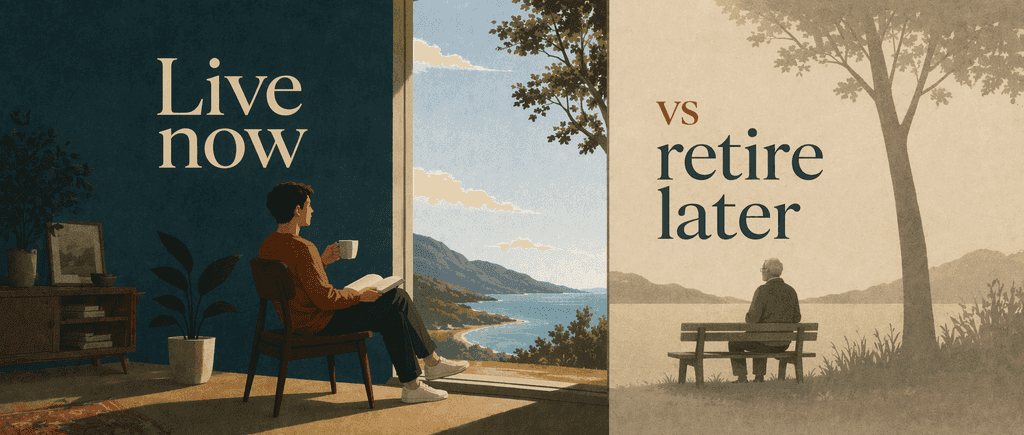
What if you discovered that most people never truly live at all? They breathe, move, consume-but never actually inhabit their own lives. Two thousand years ago, a Roman philosopher named Seneca penned an observation so piercing it still cuts through our modern illusions: life isn't short; we just waste most of it. While we obsessively protect our money, property, and possessions, we give away our most irreplaceable resource-time-to anyone who asks. We live as if we'll exist forever, yet panic about mortality. We postpone meaningful living until retirement, saving wisdom for when our minds may be too dim to use it. Even Augustus Caesar, master of the known world, spent his reign longing for the leisure he never claimed. The uncomfortable question haunts us: are you truly living, or merely postponing life until some imagined future that may never arrive?