第1章
Behind the Darkness: A Window into North Korea's Hidden World
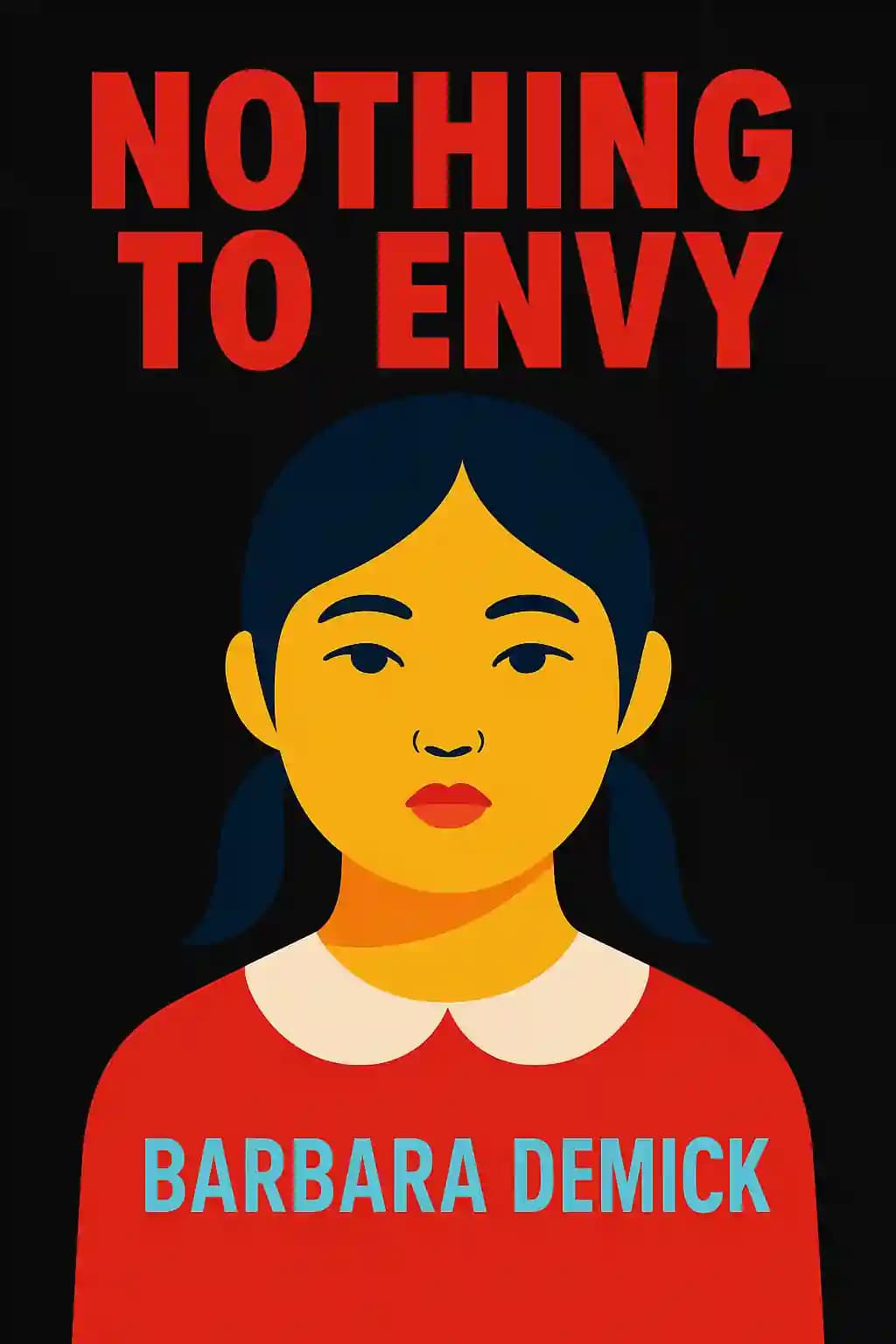
Have you ever wondered what it's like to fall in love in a country where electricity is so scarce that darkness becomes your closest companion? Or how people survive when an entire nation's economy collapses overnight? "Nothing to Envy" by Barbara Demick offers a rare glimpse into the most secretive country on Earth through the intertwined lives of six ordinary North Koreans from the northeastern city of Chongjin. The book became an instant classic upon its 2009 release, winning the BBC Samuel Johnson Prize for Non-Fiction and being named one of the best books of the year by more than a dozen publications. Even Barack Obama included it on his summer reading list. What makes this account so compelling is Demick's ability to humanize a country often reduced to political caricature, revealing the deeply personal stories behind the headlines about nuclear threats and famine.
第2章
A Nation Shrouded in Darkness
From space, North Korea appears as an enigmatic black hole between the glittering lights of South Korea and China. This darkness isn't natural-it's the result of a catastrophic economic collapse that began in the early 1990s when the Soviet Union fell, taking with it the subsidized fuel that had powered North Korea's economy. The country literally faded to black as power stations rusted, copper wire was stolen for food money, and entire villages disappeared into darkness each night.
Unlike undeveloped regions that never had electricity, North Korea experienced something far more painful-regression from development back to pre-industrial conditions. The skeletal wires of the electrical grid still hang overhead along major roads, painful reminders to older North Koreans who remember when their country actually had more electricity than South Korea. Most blame American sanctions for the darkness that prevents them from reading, watching television, or enjoying cultural activities after sunset.
Yet this darkness offers something precious in a surveillance state: privacy. When adults retire early without electricity to power televisions or lights, teenagers can slip out unnoticed, wrapped in the invisibility of night. For Mi-ran and Jun-sang, two young people from different social classes whose relationship would be forbidden in daylight, darkness became their sanctuary. They would meet after sunset and walk to an abandoned hot springs resort where ginkgo trees shed delicate yellow leaves like Oriental fans. Under North Korea's brilliant, unpolluted night sky, they could talk for hours about their families, classmates, and books they had read.
This love story doesn't appear in satellite photographs. The analysts studying North Korea from afar, focusing on nuclear facilities and military movements, often forget that in this bleak country where millions have starved, there is also love, friendship, and the universal human desire for connection. The darkness that represents the country's economic failure paradoxically created spaces for human intimacy impossible under the harsh light of constant surveillance.
第3章
The Caste System: Blood and Destiny
North Korea's society operates under a rigid classification system that would make medieval feudalism seem flexible. Called songbun, this system divides all citizens into fifty-one categories within three broad classes: core, wavering, and hostile. Your classification depends not just on your own actions but on your family's history going back to your grandparents and even second cousins. This system combines the worst elements of Confucian hierarchy with Stalinist purges, creating a social pyramid that determines every aspect of life-where you can live, what job you can hold, what education you can receive, and even whom you can marry.
Mi-ran's father, Tae-woo, carried a dangerous secret that poisoned his family's prospects. Born in what later became South Korea, he had been captured as a soldier during the Korean War and sent to work in North Korea's mines. Though he assimilated into North Korean life, married, and raised a family, his South Korean origin placed him and his children at the bottom of the social hierarchy. The family lived in a cramped "harmonica" house where gender inequality was stark-Mi-ran's brother ate rice at a separate table while the females ate cheaper cornmeal.
Despite her father's tainted background, Mi-ran rebelled against restrictions placed on girls. When North Korea periodically banned females from riding bicycles as "unsightly and sexually suggestive," eleven-year-old Mi-ran ignored the rule, taking her family's used Japanese bicycle on the arduous three-hour ride to Chongjin. Men would curse her audacity, and teenage boys would try to knock her off, but she would scream back and keep pedaling.
Jun-sang, meanwhile, came from a family of ethnic Koreans who had moved from Japan, bringing enough money to enjoy luxuries most North Koreans couldn't imagine-a freestanding house with a garden, five substantial wardrobes filled with quality Japanese goods, and appliances including a fan, television, sewing machine, tape player, camera, and even a refrigerator. Despite these comforts, Japanese Koreans occupied a lowly position in North Korea's hierarchy, classified among the "hostile class" simply for having outside connections.
This caste system created an impossible situation for Mi-ran and Jun-sang. Their attraction was immediate when Jun-sang spotted Mi-ran at a movie theater showing "Birth of a New Government." She looked almost foreign with her long features, high-bridged nose, and well-defined cheekbones. Her flashing eyes revealed a spirited impatience that hadn't been beaten down by life in North Korea. But Jun-sang knew a relationship with someone of Mi-ran's status could damage his prospects, as his parents' hopes rested on him attending university in Pyongyang and joining the Workers' Party to overcome their tainted background.
The cruel irony of North Korea's songbun system is that it created a society where love itself became dangerous, where young people had to weigh their hearts against their futures, and where families lived in constant fear that their hidden histories might be exposed.
第4章
The True Believers: Faith in the System
Song Hee-suk embodied the model North Korean citizen-a factory worker and mother of four who embraced the regime's ideology without question. Born on August 15, 1945, the last day of World War II, she grew up near Chongjin's railroad station where her father worked as a mechanic. When the Korean War erupted, American bombing targeted the station, and Mrs. Song's father was killed in an air raid, earning her the pedigree of being the child of a "martyr of the Fatherland Liberation War" and instilling in her a deep anti-Americanism.
Her impeccable Communist credentials led to her marriage to Chang-bo, a Kim Il-sung University graduate headed for a prestigious journalism career. Though qualified to live in Pyongyang, the couple was assigned to Chongjin to bolster the ranks of loyal party members there. Despite having four children and working full-time at the Chosun Clothing factory, Mrs. Song maintained unwavering dedication to the regime. Her life was grueling-working eight-hour shifts followed by mandatory ideological training, returning home at 10:30 PM to do housework before rising before dawn. She attended Socialist Women's Federation meetings on Wednesdays and self-criticism sessions on Fridays, where she sincerely worried she wasn't working hard enough.
Kim Il-sung's philosophical system, juche, combined Marxist class struggle with extreme Korean nationalism. He rejected Communist internationalism, instead promoting Korean exceptionalism and self-reliance while denouncing South Korea's dependence on America. Unlike other dictators, Kim harnessed the power of faith, appropriating Christian imagery after closing churches and banning Bibles. State media portrayed both Kim Il-sung and his son with supernatural powers-calming storms, causing trees to bloom, and being heralded by rainbows and heavenly birds.
In 1972, citizens were required to wear Kim Il-sung lapel pins over their hearts. Every home displayed his portrait on an otherwise bare wall, cleaned regularly with a special cloth. Inspectors from the Public Standards Police checked the portraits' cleanliness monthly. Mrs. Song diligently maintained hers, once horrified when caught without her pin by a teenage vigilante. She peppered conversations with Kim's aphorisms and ensured her children celebrated the Kims' birthdays instead of their own.
Yet even in this family of true believers, cracks appeared. Mrs. Song's oldest daughter Oak-hee inherited her mother's appearance but none of her compliance. After cleverly cheating the night soil collection system, Oak-hee confirmed her mother's fears that she was an individualist lacking collective spirit. Meanwhile, Chang-bo nearly destroyed the family's standing when he sarcastically questioned a television report about boot production. His remark was reported by a neighbor to state security, leading to a three-day interrogation. Though released without charges thanks to his party membership and good background, the experience crystallized Chang-bo's growing doubts about the regime. As a journalist who sanitized foreign news for domestic consumption, he knew the economic "triumphs" he reported were fabrications.
The tragedy of Mrs. Song's unwavering faith would become apparent only years later, when the system she believed in utterly failed to protect her family from starvation and death.
第5章
The Slow-Motion Collapse
As 1990 began, communism was collapsing worldwide-the Berlin Wall had fallen, the Soviet Union was disintegrating, and statues of Lenin were being toppled. Yet within North Korea's hermit kingdom, life continued unchanged. The regime's censors carefully filtered news of communism's demise, spinning these events as failures of weaker peoples who had deviated from true socialism. According to North Korean propaganda, these countries simply lacked a genius leader like Kim Il-sung to guide them properly.
The first signs of system failure appeared gradually-electricity became sporadic, running water stopped, and transportation deteriorated with electric trams running infrequently and overcrowded. Mrs. Song's clothing factory in Chongjin began experiencing fabric shortages by 1988. Without materials, the seamstresses spent their days cleaning and were sent on "special projects"-scavenging for dog excrement for fertilizer or collecting scrap metal from the beach. Despite receiving almost no pay, workers couldn't quit without losing their food coupons.
In theory, North Koreans didn't need to shop because the government provided everything-two sets of clothing yearly, standard-issue Vinalon uniforms in limited colors, and nominal salaries that functioned more like allowances. Mrs. Song earned just 64 North Korean won monthly-officially $28 but in reality not enough to buy a single sweater. The public distribution system supplied carefully calibrated food rations according to rank and occupation-miners received 900 grams of grain daily, while factory workers like Mrs. Song got 700 grams.
This system began failing imperceptibly-first with lighter bags, then reduced rations (25 days' worth instead of 30), then substituting corn and barley for rice. The government offered absurd explanations, claiming food was being stockpiled for South Korean reunification or blaming American blockades. Propaganda urged citizens to patriotically endure hunger with slogans like "Let's Eat Two Meals a Day" while insisting to the outside world that "all people live a happy life without any worries about food."
With distribution centers empty and factories closed, Chongjin residents desperately sought alternative food sources. The concrete urban landscape offered few options. Families hiked to orchards in Kyongsong county, often disguising food-gathering trips as recreational outings to maintain dignity. Children, whose school lunches had disappeared, became particularly adept at slipping through fences to gather fallen Korean pears from collective orchards.
For many, these years marked their first experiences with true hunger-like medical resident Kim Ji-eun, who precisely remembered September 9, 1993, as the first day she went entirely without food. The crisis descended gradually, with most unable to pinpoint exactly when their world had irreversibly changed.
第6章
Secret Love in a Forbidden Land
As the food crisis deepened, Mi-ran noticed city people coming to the countryside to scavenge for food, despite her assumption that Chongjin residents were better off than those in her village of Kyongsong. Meanwhile, Jun-sang had achieved the remarkable feat of being accepted to a prestigious science university in Pyongyang, a tremendous accomplishment for someone from North Hamgyong province that would spare him military service and potentially raise his family's songbun.
After years of hesitation, Jun-sang finally approached Mi-ran with his sister Mi-sook's help. Despite his nervousness, he confessed his long-standing attraction. Mi-ran, though secretly thrilled by the attention from this handsome college boy in his impressive green uniform, played hard to get, eventually accepting his proposition through a formal letter. Their relationship developed through correspondence, with Jun-sang writing eloquent love letters on proper paper with his ballpoint pen. They kept their relationship secret, both aware that Mi-ran's tainted songbun could damage Jun-sang's career prospects and party membership chances.
North Korea lacks a dating culture, with many marriages arranged by families or party officials. Public displays of affection are considered inappropriate, and premarital sex is strictly taboo. This prudishness stems from traditional Korean culture reinforced by Kim Il-sung, who discouraged early marriages by instructing men to marry at twenty and women at twenty-eight. Women must adopt "traditional hairstyles" and cannot wear skirts above the knee or sleeveless shirts.
Jun-sang and Mi-ran's relationship flourished in North Korea's absolute darkness-a world without streetlights, headlights, or ambient light. After dinner, Jun-sang would invent excuses to leave home, walking thirty minutes to wait silently near Mi-ran's house. With no electricity for movie theaters, closed restaurants, and strict travel regulations, long walks became their only option for dates. They walked briskly past propaganda billboards and slogans until reaching the outskirts where they could relax in the darkness. The road led to Onpho hot springs resort, with its alkaline waters and nearby villa reserved for Kim Il-sung. Walking and talking was all they did-Jun-sang didn't dare hold Mi-ran's hand until they'd been dating for three years.
Inspired by Jun-sang's encouragement that "things can change," Mi-ran renewed her academic efforts despite her poor family background. Surprisingly, she was accepted to Kim Jong-suk Teachers' College in Chongjin. The apparent opportunity soon revealed its harsh reality-unheated dormitories where towels froze from breath moisture overnight, bathrooms where menstrual rags froze solid, and cafeterias serving only thin turnip leaf soup.
Jun-sang's university life in Pyongyang was considerably better, with heated dormitories, electricity for studying, and three meals daily. He lived for vacations when he could return home to see Mi-ran. Once, desperate to surprise her during his sister's wedding, he hitched a ride on a coal train when no passenger tickets were available. He arrived at Mi-ran's door covered in coal dust, unrecognizable to her mother.
Despite close calls with parents, they enjoyed the secrecy of their relationship-it injected excitement into their constrained lives and created a shared private space in a society where privacy didn't exist. Years later, they would look back on these difficult times as some of their happiest moments together.
第7章
When the Great Leader Dies
In July 1994, Mi-ran was completing her final exams at teachers' college when she learned of Kim Il-sung's death from a kindergartner. The child insisted she had seen the news on television, and though initially skeptical, Mi-ran and other teachers followed her to an apartment where they confirmed the unthinkable. Mi-ran was numb with shock-if the Great Marshal could die, anything seemed possible.
All North Koreans can recall with extraordinary clarity where they were when they learned of Kim Il-sung's death-a moment when time seemed frozen by shock. Mrs. Song was at home making lunch when her husband noticed the television anchorman wearing mourning clothes. As the announcement came, she felt an electric jolt through her body, screaming "How are we going to live? What are we going to do without our marshal?" while her neighbors wailed and banged their heads on the pavement.
Oak-hee, her daughter, initially felt nothing-just hunger-earning her husband's rebuke: "You're not human." Only later, hearing that Kim Jong-il would succeed his father, did she cry tears of self-pity, thinking, "Now we're really fucked."
Twelve-year-old Kim Hyuck initially celebrated being sent home from school, but his joy vanished when he found the marketplace deserted and people crying. Jun-sang, a university student, was shocked to discover he felt nothing when the announcement came. Surrounded by thousands of sobbing classmates, he realized with terror that his survival depended on his ability to cry convincingly. He forced himself to stare until his eyes burned with tears, eventually finding himself genuinely sobbing like everyone around him.
Within hours of the announcement, North Koreans converged on the country's estimated 34,000 statues of Kim Il-sung to pay respects. In Chongjin, half a million residents streamed toward the single twenty-five-foot bronze statue at Pohang Square, filling the vast plaza and spilling onto surrounding streets. Hysteria swept through the crowds as people surged forward, trampling others and flattening hedges. The weather alternated between downpours and searing heat, with no hats or parasols allowed. Mourners organized by work units brought chrysanthemums, falling to their knees before the statue, wailing "Abogi, Abogi" and competing in displays of grief.
What began as spontaneous mourning became obligatory, with the inminban (neighborhood watch) tracking attendance. Some faked tears, including children who dampened their faces with saliva, while others suffered genuine heart attacks or committed suicide from distress.
As Kim Il-sung died, Chongjin's hospitals struggled without gasoline for ambulances, forcing patients to arrive by wooden cart or piggyback. Dr. Kim Ji-eun's district hospital near Pohang Square received numerous patients who collapsed during mourning ceremonies, with children suffering dehydration from crying in the hot sun.
By 1995, North Korea's economy had died alongside its Great Leader. Per capita income plummeted from $2,460 in 1991 to $719 in 1995, with exports dropping from $2 billion to $800 million. In Chongjin, the factories became a "wall of rust" with only a few smokestacks occasionally active. Factory gates were padlocked, machinery stolen, and the port empty of foreign freighters. Even propaganda signs faded from red to pink without maintenance.
第8章
The Famine's Cruel Logic
As Mi-ran graduated in fall 1994 after Kim Il-sung's death delayed her final exams, she began teaching at a kindergarten near the Saenggiryong mines. Unlike her previous pupils in Chongjin who were children of factory workers and bureaucrats, these mining children appeared visibly malnourished-tiny bodies with fists "as small as walnuts." With mines mostly closed, families received reduced rations, and Mi-ran suspected some children came mainly for the thin soup served at lunch.
During her journey to Nampo to trade pottery for salt to fund glass windows for a Kim Jong-il shrine, Mi-ran witnessed disturbing signs of North Korea's deteriorating conditions. She saw ragged children begging at train stations and, most disturbingly, watched as a dead young man-emaciated to skeletal thinness-was loaded onto an ox cart outside Nampo's train station. Back at her kindergarten, Mi-ran began noticing similar signs of malnutrition in her students: swollen stomachs, copper-toned hair, and extreme weakness. Enrollment at her kindergarten dropped from fifty students to fifteen over three years, as children followed the same progression-first unable to bring firewood, then lunches, then sleeping through class, and finally disappearing entirely.
Mi-ran's favorite student was Hye-ryung, a beautiful six-year-old with extraordinarily long eyelashes who had once been lively and attentive. As malnutrition took hold, the girl became lethargic, her eyes narrowing to sunken slits, her hair turning brittle. When Hye-ryung stopped coming to school, Mi-ran couldn't bring herself to visit the family, knowing there was nothing she could do to help.
North Koreans didn't passively accept starvation when the public distribution system failed. They devised ingenious traps for animals, draped nets to catch sparrows, and educated themselves about edible plants. They tapped ancestral knowledge-stripping pine bark for flour and pounding acorns into paste. They swallowed pride and picked undigested corn from animal excrement, scraped cargo holds for food particles, and collected shellfish and seaweed from beaches. Women exchanged survival recipes: grind entire corn plants together, boil noodles longer to make them appear bigger, add grass to soup for appearance. But ultimately, all this ingenuity wasn't enough.
Famine doesn't just kill the weak-it follows a cruel pattern. After children under five and the elderly, it targets those in their prime. Men typically die before women due to lower body fat, and the athletic are especially vulnerable due to higher metabolisms. Most cruelly, as Mrs. Song observed, "simple and kindhearted people who did what they were told" died first-those who wouldn't steal food or break rules to survive. This phenomenon parallels what Primo Levi noted about Auschwitz survivors-they all had done something shameful to stay alive.
Between 1996 and 1998, an estimated 600,000 to 2 million North Koreans-up to 10 percent of the population-died from the famine, with Chongjin possibly losing 20 percent of its residents. Despite accepting $2.4 billion in food aid over a decade, the regime restricted foreign aid workers, concealed the neediest people, and diverted supplies to the military or black market. By late 1998, the worst had passed-not from improvement, but as Mrs. Song observed, because "everybody who was going to die was already dead."
第9章
Capitalism's Reluctant Pioneers
After losing her mother-in-law, husband, and son in three consecutive years, Mrs. Song collapsed into grief and malnourishment. Her daughters found her delirious in the weeds, bathed her emaciated body, and nursed her back to health with noodles. Upon returning to her shack, she found it ransacked-even the glass from the Kim portraits had been stolen. With nothing left to lose, instead of giving up, Mrs. Song made a surprising choice: she started another business.
The famine paradoxically birthed a new spirit of enterprise. With the socialist food distribution system collapsed, private vendors became essential for survival. Despite Kim Jong-il's hardline stance against markets-declaring "even the food problem should be solved in a socialist way"-people faced a stark choice: risk punishment for "economic crimes" or certain death from starvation. Mrs. Song, having learned from her rice-trading failure, decided to make cookies-they required minimal firewood and offered quick meals for hungry people on the move. Working fourteen-hour days with her daughter Yong-hee, she perfected her recipe through trial and error, earning just enough each day to buy ingredients for the next batch.
Thousands of middle-aged women like Mrs. Song were reinventing free-market economics through necessity, unlearning a lifetime of propaganda against private enterprise. People bartered skills and goods: young people gathered firewood to trade for cookies; those with ladders collected copper wire from defunct electric lines; abandoned factories were dismantled for parts. Everything had to be handmade-from baking sheets to wheelbarrows-as factories stood idle. Even professionals found alternative income sources: doctors wrote medical notes excusing workers from jobs that no longer paid, or performed abortions; a coal miner taught himself to identify medicinal herbs; Mi-ran's mother operated a hand-powered mill where people ground their corn.
The old farmers' markets, once restricted to selling only homegrown supplementary foods, exploded with goods. Secret gardens carved into mountainsides produced vegetables while collective farms languished. Foreign aid rice appeared in sacks bearing UN and US logos, diverted from humanitarian shipments by the military. Exotic fruits like oranges, pineapples, and bananas-which Mrs. Song had never even tasted-appeared alongside Chinese imports: shampoos, batteries, stationery, and colorful clothing unlike anything manufactured in North Korea.
Markets spawned ancillary businesses-porters with wooden carts, mobile hairdressers, and makeshift restaurants with plank tables and bucket seats. Women dominated this new economy, as men remained trapped in unpaying state jobs. Kim Jong-il tacitly allowed women to work privately, relieving pressure that might otherwise have sparked revolution. This created a subtle power shift, with women becoming breadwinners while men remained tethered to the failing system. As the ajummas whispered among themselves: "Men aren't worth as much as the dog that guards the house." Though patriarchal culture remained, women gained unprecedented economic independence in a topsy-turvy world where those who never cared about the fatherland were making money while loyal Workers' Party members starved.
第10章
The Awakening: Truth Penetrates the Darkness
Jun-sang's return visits home from Pyongyang's privileged university environment revealed North Korea's collapse. His childhood haunts-restaurants and movie theaters-were closed, with electricity available only on leaders' birthdays. At home, his parents complained in darkness, sharing news of deaths-his former teachers, high school classmates, even soldiers who supposedly received priority food rations.
After graduating, Jun-sang stayed at the university in a research position and moved into a private room with elderly landlords whose poor hearing and vision made them perfect for his purposes. Using his grandfather's money, he bought a Sony television and cleverly circumvented the government restrictions by using a sewing needle to push buttons beneath the official seal and constructing a hidden antenna. Late at night, he crouched with his ear to the speaker, listening to South Korean broadcasts at barely audible volume, always alert for inspections.
Through South Korean television, he learned shocking truths about his own country: that two million North Koreans had died of starvation, that America was providing humanitarian aid, and that 200,000 people were confined to prison camps. He even heard Kim Jong-il's actual voice for the first time, sounding "old, tinny, and distinctly human"-shattering the mystique of the Dear Leader.
Jun-sang's train rides home revealed North Korea's collapse-overcrowded cars where men urinated out windows, homeless children begging alongside tracks, and frequent breakdowns leaving passengers stranded in freezing conditions. During one delay in 1998, he watches a homeless seven-year-old boy singing the propaganda song "We Have Nothing to Envy" while clearly starving. This moment pushes Jun-sang "over the edge" into complete disbelief in the regime-an atheist-like revelation that makes him feel isolated yet unchanged in daily routine. At mandatory ideological lectures, he suddenly realizes the blank expressions on his fellow students' faces likely mask the same disbelief he feels: "They know! They all know!" Yet no one can speak openly, as any resistance would mean punishment extending to one's entire family for three generations.
Information spread through North Korea primarily by word of mouth. Stories circulated about South Korean and Chinese prosperity-some true, some exaggerated. Small revelations sparked doubts about the regime: a soldier marveling at an American nail clipper wondered how North Korea could compete with American weapons; a student noticed a "oppressed" South Korean worker in propaganda wore a zippered jacket and had a ballpoint pen; a maritime official heard a South Korean radio program about women fighting over parking spaces and realized South Koreans must own many cars. These seemingly minor encounters with outside reality led many to eventually defect.
When Jun-sang returns to Chongjin for winter vacation, he learns Mi-ran and her family have disappeared, rumored to have fled to South Korea. Visiting her old neighborhood, he discovers another family living in her house. He realizes with bitter regret that he had been indecisive, wanting to ask her to run away with him but lacking the courage. While he thought himself the sophisticated one in their relationship, she had proven braver than him.
第11章
Escape and Reinvention
Mi-ran's defection in October 1998 was rare-only 923 North Koreans had fled to South Korea in the nearly half-century since the Korean War. Most defectors had been diplomats or officials traveling abroad, as the regime took extraordinary measures to keep citizens locked in, including holding family members hostage when people traveled on official business. But by the late 1990s, the famine and glimpses of Chinese prosperity motivated more escapes.
A year after her father's death, Mi-ran's family decides to defect to South Korea. They travel to Musan near the Chinese border dressed in layers of clothing and carrying dried seafood for bribes at checkpoints. The family crosses separately to minimize suspicion-if caught alone, one could claim to have wandered over from hunger, while a family crossing would be judged as premeditated defection with severe punishment. Mi-ran follows her guide's instructions to "keep walking straight" through a cornfield toward the river. After a terrifying journey through the darkness, climbing over a retaining wall and wading through the freezing knee-deep water, she reaches the Chinese side feeling utterly alone and contemplates returning to North Korea. Just as she considers turning back, she hears her brother calling "Nuna" (older sister) from the trees. Taking his hand, she leaves North Korea forever.
Dr. Kim discovered she was under surveillance despite her perfect record. A Bowibu security agent visited her at the hospital, warning her not to defect and inadvertently planting the idea in her mind. Her life had become unbearable-divorced with limited access to her son, unable to practice medicine meaningfully, and starving below 80 pounds. Using her late father's list of Chinese relatives, she crossed the frozen Tumen River alone in March 1999, wading through waist-deep icy water. In China, her final illusion shattered when she discovered dog food there contained white rice and meat-better than what doctors ate in North Korea.
Mrs. Song's journey to defection came through her daughter Oak-hee, who had escaped to China and later South Korea. When Oak-hee arranged for her mother to visit her near the Chinese border, Mrs. Song discovered she would need to cross into China herself. Upon arrival, she discovered Oak-hee wasn't there either but actually in South Korea ("Hanguk"). Mrs. Song was furious at this betrayal, initially refusing to speak with her daughter who had defected to "the enemy." While staying with her hosts, Mrs. Song watched South Korean television, including the 2002 World Cup coverage that showed millions of Koreans celebrating in Seoul's streets. Though initially suspicious these images were propaganda, she couldn't deny what she saw in China-abundant food, appliances, and technology like an automatic rice cooker that fascinated her. Reflecting on her late husband and son, she questioned her wasted life in North Korea.
In August 2002, Mrs. Song boarded an Asiana Airlines flight from Dalian to Incheon, traveling under a false passport. Disguised in capri jeans, white sneakers, and a new short perm-styled to look like a South Korean tourist rather than a North Korean refugee-she sat perfectly still during the eighty-minute flight. Despite the circumstances, she felt serene, certain she was making the right decision.
第12章
New Lives in a New World
North Korean defectors face profound challenges in South Korea, lacking the qualities most prized there: height, fair skin, affluence, education credentials, and English fluency. South Koreans view them with a mix of pity, fear, guilt and embarrassment, reminded of their own impoverished past. Despite official rhetoric about reunification, many South Koreans dread the potential economic burden of absorbing 23 million North Koreans, with estimates ranging from $300 billion to $1.8 trillion.
Mrs. Song was disoriented stepping off the plane into Incheon's massive $5.5 billion glass and steel airport. Following her smuggler's instructions, she hid in the ladies' room until he cleared immigration, then approached a janitor saying, "I have come from North Korea. I am requesting asylum here." She was taken to intelligence officials who interrogated her for nearly a month, verifying she wasn't a spy or fraud. With afternoon naps and television, plus small comforts like refrigerated juice boxes, Mrs. Song later recalled this period as the first real vacation of her life.
By 2004, two years after defection, Mrs. Song had transformed into a confident, well-dressed woman. She took a housekeeping job, rented her own apartment in Suwon, and lived frugally enough to afford travel throughout South Korea, back to China as a tourist, and even to Poland for a human rights conference. She embraced new foods like mangoes and kiwis, made friends, and even dated. Though she missed certain aspects of North Korea-the neighborly camaraderie and once-functional healthcare-she relished her freedom.
Mi-ran's father's South Korean heritage, once a liability in North Korea, became her family's greatest asset after defection. After crossing into China in 1998, Mi-ran's brother wrote to their father's sisters in South Korea, who initially requested DNA tests but recognized their family resemblance immediately upon meeting. In South Korea, Mi-ran achieved the Korean dream-a handsome husband, baby boy, graduate degree, and an apartment in Suwon. Despite her outward success, she remained haunted by guilt over her sisters who were arrested after her defection and presumably sent to labor camps.
Jun-sang had actually been in South Korea for almost a year before reconnecting with Mi-ran. After arriving in October 2004, one of his first questions to the National Intelligence Service was how to contact Mi-ran. When told she was married, he was astounded-it hadn't crossed his mind she wouldn't be single after six years. When they finally met, Mi-ran drove up in her car, shattering his Hollywood-inspired fantasy of their reunion. Their meeting was bittersweet as they discussed her abrupt departure and his delayed defection, with Mi-ran crying over what might have been. As months passed, their relationship lost its magic-the instant communication of modern South Korea lacked the romantic intensity of their secret North Korean courtship.
Despite their new lives and relative prosperity in South Korea, all the defectors carry the weight of what they left behind-family members imprisoned for their escape, memories of those who starved, and the strange guilt of having survived when so many perished. They live with the knowledge that North Korea continues its brutal policies while the outside world largely looks away, unable or unwilling to help the millions still trapped in darkness.