Osho's "Meditation" transcends traditional mindfulness, challenging conventional practices while inspiring millions worldwide. Beyond mere technique, it offers a radical path to inner awareness that has influenced countless seekers, business leaders, and spiritual explorers seeking liberation from the mind's chaos.
Osho (Chandra Mohan Jain, 1931–1990) was a revolutionary spiritual teacher and the author of Meditation by Osho, who redefined modern mindfulness practices through his innovative fusion of Eastern philosophy and Western psychology.
A former philosophy professor and All-India Debating Champion, Osho’s work bridges self-help and spiritual genres, focusing on meditation as a tool for emotional liberation and self-discovery. His seminal Dynamic Meditation technique—featured in this book—has been adopted by therapists, educators, and wellness practitioners globally, with clinical studies demonstrating its stress-reduction benefits.
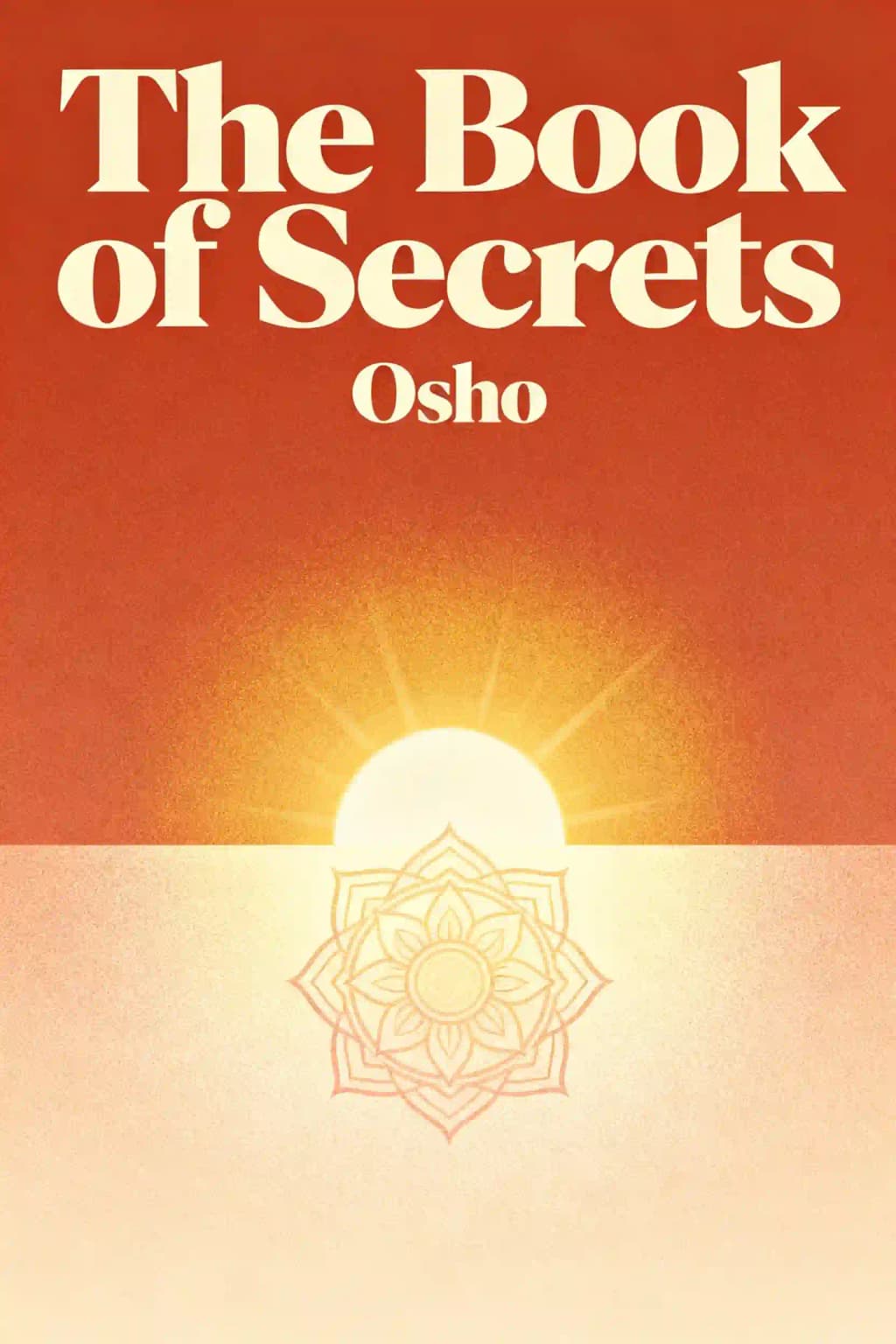
As the founder of the OSHO International Meditation Resort in Pune, he authored over 600 books translated into more than 55 languages, including bestsellers like The Book of Secrets and Courage: The Joy of Living Dangerously. His talks, archived across more than 10,000 hours of audio and video, continue inspiring millions through platforms like the OSHO.com meditation resource hub.
Meditation by Osho remains a cornerstone text in contemporary mindfulness literature, cited in academic studies and integrated into corporate wellness programs worldwide.
Meditation by Osho explores meditation as a joyful, non-goal-oriented practice emphasizing awareness and inner peace. Osho reframes meditation as a celebration of the present, blending ancient techniques with modern psychology. The book provides practical methods like Dynamic Meditation and discusses the science behind reduced stress, improved focus, and emotional balance.
This book suits stressed professionals, spiritual seekers, and psychology enthusiasts. Osho’s adaptable methods cater to beginners and seasoned meditators, particularly those seeking non-religious, science-backed approaches to mindfulness. It’s ideal for readers wanting to integrate meditation into daily life without rigid rituals.
Yes, for its unique fusion of Eastern spirituality and Western psychology. Osho’s emphasis on playful awareness over forced silence makes meditation accessible. Critics note its occasional abstract metaphors, but the actionable frameworks (e.g., “choiceless awareness”) offer transformative insights for modern lifestyles.
Osho advocates Dynamic Meditation, a three-stage practice starting with vigorous movement and catharsis, followed by stillness and witnessing. Other methods include breath awareness, mantra repetition, and “choiceless awareness”—observing thoughts without judgment.
Traditional methods prioritize stillness, while Osho’s Dynamic Meditation begins with physical release (dancing, shaking) to purge modern stress. He views meditation as a festive, everyday practice rather than a secluded ritual, making it more adaptable to busy lives.
Choiceless awareness involves observing thoughts, emotions, and sensations without attachment. Osho contrasts this with focused concentration, arguing that non-judgmental witnessing cultivates inner freedom and dissolves ego-driven patterns.
Yes, Osho explains how meditation reduces amygdala activity (linked to stress) and enhances prefrontal cortex function (decision-making). He cites benefits like lowered blood pressure, improved immunity, and heightened creativity, aligning with modern neuroscience.
These emphasize meditation as a joyful observer-perspective rather than a task.
Osho links emotional blockages to physical ailments, advocating meditation to harmonize energy centers (chakras). Techniques like Nadabrahma Meditation use humming and hand movements to balance the body’s subtle energies.
Yes. Osho’s Dynamic Meditation releases pent-up tension, while witnessing practices reduce overidentification with anxious thoughts. The book teaches how to detach from mental chatter, fostering calm and clarity.
Some find Osho’s abstract language challenging for beginners. Critics argue his techniques require guidance to avoid misinterpretation. However, supporters praise its innovative blend of spirituality and pragmatic psychology.
Its focus on stress management and digital-age distractions resonates today. The book’s adaptable methods, like micro-meditations for busy schedules, align with contemporary wellness trends seeking holistic, non-dogmatic solutions.
著者の声を通じて本を感じる
知識を魅力的で例が豊富な洞察に変換
キーアイデアを瞬時にキャプチャして素早く学習
楽しく魅力的な方法で本を楽しむ
The mind is a beautiful servant, but a dangerous master.
Be realistic: Plan for a miracle.
Nobody is superior, nobody is inferior, but nobody is equal either. People are simply unique, incomparable.
Meditation isn't merely an Indian method; it's a natural flowering.
You are not the doer, but the watcher.
『The Book of Secrets』の核心的なアイデアを分かりやすいポイントに分解し、革新的なチームがどのように創造、協力、成長するかを理解します。
鮮やかなストーリーテリングを通じて『The Book of Secrets』を体験し、イノベーションのレッスンを記憶に残り、応用できる瞬間に変えます。
何でも質問し、学習スタイルを選び、自分に本当に響くインサイトを一緒に作れます。

"Instead of endless scrolling, I just hit play on BeFreed. It saves me so much time."
"I never knew where to start with nonfiction—BeFreed’s book lists turned into podcasts gave me a clear path."
"Perfect balance between learning and entertainment. Finished ‘Thinking, Fast and Slow’ on my commute this week."
"Crazy how much I learned while walking the dog. BeFreed = small habits → big gains."
"Reading used to feel like a chore. Now it’s just part of my lifestyle."
"Feels effortless compared to reading. I’ve finished 6 books this month already."
"BeFreed turned my guilty doomscrolling into something that feels productive and inspiring."
"BeFreed turned my commute into learning time. 20-min podcasts are perfect for finishing books I never had time for."
"BeFreed replaced my podcast queue. Imagine Spotify for books — that’s it. 🙌"
"It is great for me to learn something from the book without reading it."
"The themed book list podcasts help me connect ideas across authors—like a guided audio journey."
"Makes me feel smarter every time before going to work"

The Book of Secretsの要約をPDFまたはEPUBで無料でダウンロード。印刷やオフラインでいつでもお読みいただけます。
What if everything you've been taught about finding peace is backward? We chase happiness in achievements, relationships, possessions-always looking outward, always doing more. Yet here's a radical truth: the deepest joy you'll ever experience comes not from gaining something new, but from simply stopping. Meditation isn't another self-improvement project to add to your endless to-do list. It's the art of doing absolutely nothing-and discovering that in this nothingness lies everything. This isn't about sitting cross-legged chanting mantras while incense burns. Meditation is far simpler and more profound than any ritual. It's the moment when all activity ceases-physical, mental, emotional-and you touch the core of your own being. In that stillness, something extraordinary happens: joy arises without cause. Not the fleeting happiness that depends on getting what you want, but an uncaused delight that wells up from within because existence itself is fundamentally joyful. The secret lies in witnessing. Imagine watching clouds drift across the sky-you observe them without getting involved, without trying to change them. Apply this same quality to your inner world. Watch your thoughts, emotions, and sensations without identification. You're not trying to stop thinking or control your mind. You're simply becoming aware of everything without jumping in. This witnessing consciousness isn't something you practice or perfect through effort. You can only understand it, and in that understanding, it happens.
Meditation isn't a skill you acquire - it's a complete transformation that grows from your totality, like love, not something artificially attached. True silence overflows with unfamiliar music, fragrance, and inner light. At your center exists a space untouched by surrounding chaos, like the still eye of a hurricane. This silence isn't something you possess - you are it. It's so profound that even "you" aren't there; your presence would disturb it. From this silence flow truth, love, and blessings you never knew existed. What emerges is extraordinary sensitivity and belonging to existence. You're not a foreigner but the world's very heart. This awakened sensitivity creates new friendships with trees, birds, mountains, rivers - everything becomes alive with meaning. Even the smallest blade of grass holds immense importance, as unique as the biggest star. When you recognize this interconnection, how can you harm what you recognize as yourself?
Meditation transforms love from needy grasping into compassion - giving for the sheer joy of it, seeking nothing in return. This represents the highest possibility for human consciousness. Ordinary joy depends on external causes: meeting someone attractive, getting promoted, acquiring something desired. Such happiness inevitably fades. Meditation brings causeless joy, undisturbed by circumstances. When asked why you're joyous, you cannot answer - it simply is. Intelligence flourishes through meditation as you learn to respond freshly to life's ever-changing situations rather than relying on ready-made answers. Society conditions your thinking, building walls around your mind. Through meditation - watching the mind as witness - you destroy this conditioning, becoming truly free and authentic. Most profoundly, meditation reveals the bliss of aloneness. Not loneliness (the pain of disconnection), but aloneness - the joy of being complete in yourself, free from dependence on others. This aloneness remains constant because it wells up from within as your very nature. When you celebrate this pure inner space, a great song of awareness arises in your heart.
Meditation techniques are scientific shortcuts from millennia of consciousness experimentation. Without them, you might wander for lifetimes; with proper techniques, growth can explode within moments. All techniques begin as effort but become effortless when successful. The mind cannot initially grasp effortlessness, so effort serves as a necessary bridge. Even Zen masters emphasizing "just sitting" recognize beginners must first try. These methods' simplicity makes them unappealing to the ego, which craves difficulty. Yet spiritual growth requires simplicity-these techniques are so simple you can achieve all that's possible for human consciousness the moment you truly decide. When you find the right method, it clicks immediately-something explodes within you. Approach techniques playfully rather than seriously, as the mind opens during play. Try a method for three days; if it creates well-being, stick with it exclusively for three months. With the right method, even three minutes can bring miracles.
For beginners, creating the right conditions enhances meditation significantly. Set aside undisturbed time - silence your phone, post door notices, leave preoccupations behind. Take just one hour from twenty-four for meditation, and you'll discover this single hour was the only real part of your life. Find a place that enhances meditation. Natural settings where life flows through trees and mountains work beautifully. Trees exist in constant, unconscious meditation; awakened consciousness shares their greenness but with awareness. If unavailable, create a special corner in your home exclusively for meditation. This space absorbs your meditative vibrations and reflects them back. Choose a posture that lets you forget your body completely. Comfort means body-forgetfulness. Physical discomfort blocks access to deeper bliss. Never start with just sitting - begin with catharsis where release is easier. Silent sitting immediately confronts you with your insane mind, creating depression and frustration. Through active, chaotic methods, inner stillness emerges against the backdrop of outer movement. Allow accumulated anger, violence, and suppressed emotions to be thrown out first. Be angry without targets, weep without causes, laugh without reasons. This cleansing unburdens you of lifetimes of suppression. Only then can sitting meditation happen authentically.
Active meditations combine intense physical activity with silence, designed for those who struggle to sit still. Through vigorous movement, you exhaust bodily restlessness until stillness emerges naturally. Dynamic Meditation is a powerful one-hour technique with five stages: chaotic breathing to destroy old patterns; total catharsis through screaming and dancing; jumping while shouting to direct energy upward; complete stillness as witness; and celebration through dance. Meditation extends beyond formal practice into conscious awareness during any activity. In early morning runs, the runner disappears and only running remains, releasing inner ecstasy. The key is using your whole body naturally, breathing deeply from the belly. Even laughter becomes meditation when thinking stops. Each morning before opening your eyes, stretch like a cat, then laugh for five minutes. Though initially forced, this transforms your entire day. Transform habits into meditation by bringing awareness to unconscious activities. If you smoke, move slowly through each step with full awareness-taking out the packet, removing the cigarette, lighting it, inhaling deeply. Consciousness reveals the habit's stupidity from your total being, not just intellectually.
The heart is the gateway to reality. Our fundamental problem is being trapped in the head; the solution is moving into the heart where problems dissolve while mysteries remain. Practice being headless-visualize yourself without a head while walking or sitting. Though initially strange, this exercise shifts your center from head to heart. Being more loving activates the heart center. Unlike the mind which analyzes and divides, the heart synthesizes and unifies. In a powerful compassion practice, breathe in all the miseries and suffering of all beings. The heart transforms incoming suffering into blissfulness. Breathe out your joy to others. A Sufi mystic remained joyful his entire life, even laughing on his deathbed. His secret: each morning upon waking, he consciously chose between misery and blissfulness. "And it happens that I always choose blissfulness." This simple choice, made consistently each morning, transformed his entire life. Meditation offers something radical: you don't need fixing, you need remembering. Remembering who you were before society told you who to be. Start with one conscious breath. One moment of witnessing. One choice toward blissfulness. The journey begins not with a step, but with stopping-and discovering you've already arrived.