第1章
The Silent Battle: Unmasking the Passive-Aggressive Man
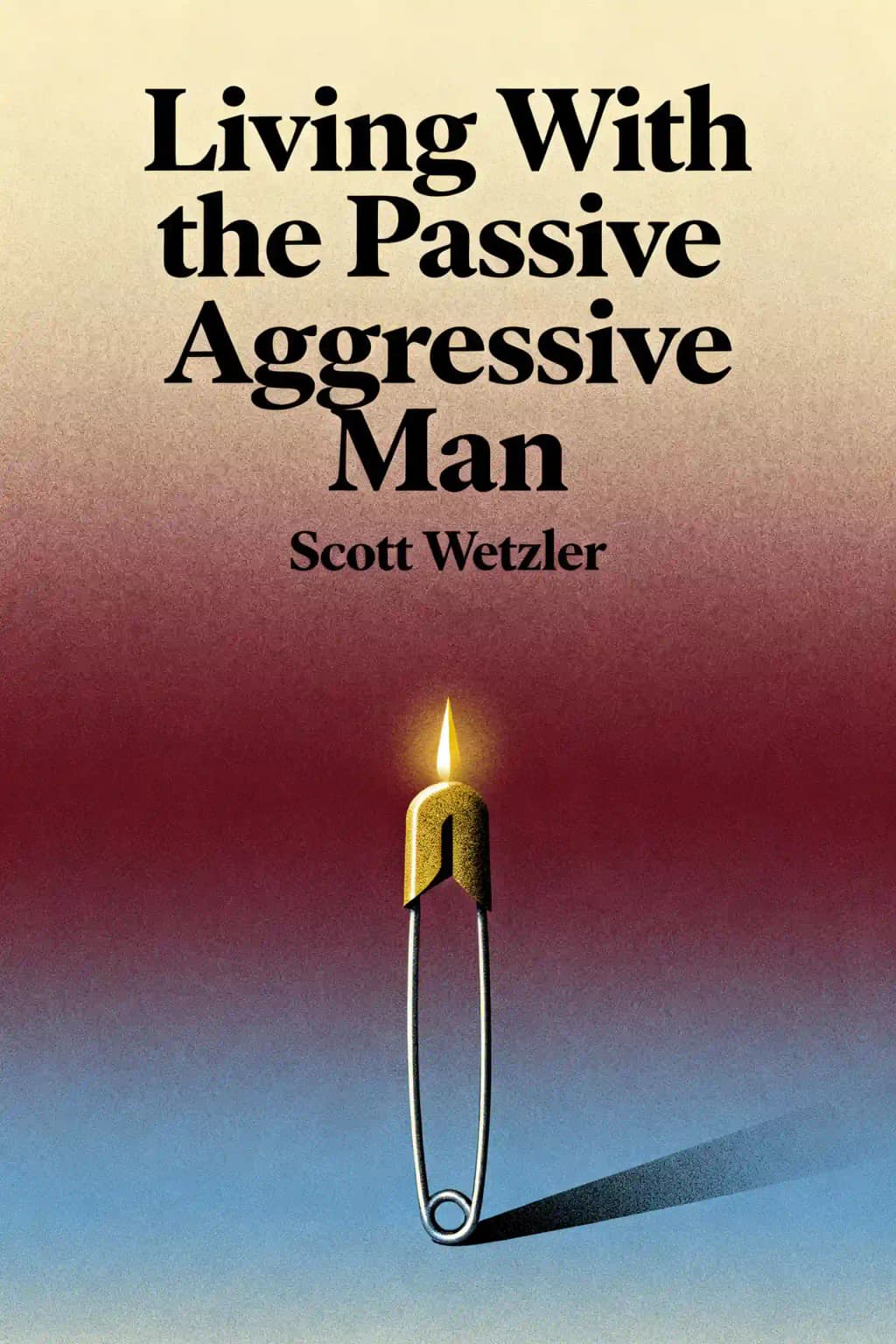
Have you ever felt like you're fighting a ghost? That's the experience of dealing with a passive-aggressive man. Scott Wetzler's groundbreaking book "Living with the Passive-Aggressive Man" has become a relationship survival guide since its publication, selling over a million copies and appearing on countless psychology course syllabi. The book struck such a chord that it's been referenced in popular shows from "Sex and the City" to "Modern Family," with celebrities like Jennifer Aniston reportedly recommending it to friends dealing with difficult partners. What makes this work so compelling is its ability to name a pattern many women experience but struggle to identify: the maddening dynamic of loving someone who says "yes" while meaning "no," who promises connection while creating distance, and who turns every interaction into a power struggle while claiming innocence.
第2章
Decoding the Passive-Aggressive Personality
Passive-aggression isn't simply alternating between passive and aggressive behaviors. It's a simultaneous blend where aggression is expressed through passivity-the passive-aggressive man renounces his hostility even as he delivers it. He creates constant mixed messages, blurring the line between how he pretends to be and how he actually behaves.
His communication style resembles double-speak: "I can't live without you" while thinking "Why are you around all the time?" or promising special projects at work that mysteriously never materialize. This isn't inadvertent behavior-he's driven to appear above suspicion, guiltless and guileless. He'll break promises repeatedly rather than simply say no, creating the same arguments year after year.
What distinguishes the passive-aggressive man from someone who's merely passive is the element of control. Passivity used as a power play can provoke as much anger as active hostility. While purely passive personalities might be frustrating but not infuriating, the passive-aggressive man delivers small doses of hostility just large enough to irritate while maintaining plausible deniability.
His profile includes several characteristic traits: fear of dependency (fighting his needs by trying to control you), fear of intimacy (creating distance through conflict), obstructionism (deliberately slow compliance), fostering chaos (leaving tasks incomplete), chronic lateness, ambiguous communication, and sulking when confronted. He's not typically a brutal tyrant, but neither is he a "good guy"-he's a frustrating partner who squanders time, talent and feelings while making you feel sabotaged and devalued.
Think of Richard Nixon-a classic example of someone who functioned successfully in his career while harboring profound insecurity beneath his competence. Behind the "Mr. Nice Guy" facade lies an angry man afraid of his own anger, simmering with resentment and fear.
第3章
The Emotional Seesaw: How He Makes You Doubt Yourself
Have you ever questioned your own sanity in a relationship? The passive-aggressive man expertly engineers self-doubt in others. Like a milder version of gaslighting, he twists facts and denies the obvious, provoking otherwise rational women into irrational rage.
Consider Susan, whose husband left window frames half-painted for years. When confronted, he deflected blame onto her, claiming she was demanding, unappreciative, or overbearing. These seemingly small issues accumulate: what he forgets, denies, won't hear, won't do, and how casually he lies.
He plays on your empathy-if he's withdrawn, he'll signal for sympathy but be annoyed when you respond. When he wounds you, he'll deny intent and turn tables: "Why are you so sensitive?" Once you doubt yourself, he seizes the upper hand. He rarely offers sincere apologies, claiming any harm was inadvertent despite his unerring aim at your weak spots.
Your emotional reactions-irritation, feeling let down-are your best warning signals. The blurring of boundaries in close relationships makes this manipulation especially effective, as his projected anger becomes indistinguishable from your legitimate response.
Many women inadvertently enable this behavior. Early in relationships, you might excuse evasiveness as shyness or typical male reticence. When a man like Neal responds to personal revelations with unrelated anecdotes, you might overlook this intimacy-blocking tactic. By accepting these behaviors, you teach him he needn't be vulnerable.
Protecting yourself requires setting clear boundaries. Be specific about problematic behaviors, communicate your needs directly, and explain consequences. Focus on actions rather than character ("your behavior is counterproductive" rather than "you're a monster"). Maintain a non-vindictive tone-remember that beneath his aggression lies fear that you can empathize with while still protecting yourself.
第4章
Who Falls for the Passive-Aggressive Man?
Every relationship has two players, and your role is as crucial as the passive-aggressive man's. Without you, he's just a man with personality problems; with you, he exercises emotional power. Three common patterns emerge among women who find themselves repeatedly involved with passive-aggressive men:
The Victim operates from poor self-worth, collecting abuse from men who give it. Though sensitive, Victims hesitate to communicate feelings, often apologizing for having them. They give generously but set themselves up to lose, connecting with men who never reciprocate.
Jane's case illustrates this pattern-engaged three times to essentially interchangeable self-involved men who made her feel unworthy. She discovered she associated love with humiliation and empty promises, patterns learned from her passive-aggressive mother. Growing up with deprivation, Jane believed others would give love only when they chose, not when she needed it.
The Manager cannot take no for an answer. While claiming to want open communication, she actually fears true intimacy and turns to control instead. When her partner attempts to assert himself or say no, she interrupts, disapproves, or pushes until he becomes sullen or capitulates with resentment.
Audrey exemplifies this pattern with her husband Frank. Though she complains about his evasiveness, she often refuses to listen when he does speak. Their destructive pattern began early: she would demand something, he would refuse, she would insult him until he stopped responding altogether. For Managers like Audrey, the solution requires acknowledging how they slip into controlling others due to fear of abandonment.
The Rescuer acts as a custodian but with a less strident approach than the Manager. She appears as Earth Mother, the woman behind the man, the fixer who saves the passive-aggressive man from disaster. She cleans up his messes, takes over his responsibilities, and protects him excessively. This maternal approach desexualizes the relationship, replacing equality and passion with overprotection.
By recognizing these patterns in yourself, you can understand why you might be drawn to passive-aggressive men and begin breaking the cycle.
第5章
The Making of a Passive-Aggressive Man
Rarely can one isolated incident be singled out as causing passive-aggressive behavior. What shapes the passive-aggressive personality is a complex interplay between temperament (genetic factors) and adaptive character (environmental influences). Research suggests that some individuals may be born with a heightened sensitivity to emotional stimuli, making them more susceptible to developing passive-aggressive coping mechanisms when exposed to challenging family dynamics.
The passive-aggressive man's childhood often features a complicated and contradictory dynamic with both parents. Dan's story illustrates how his mother literally "pinned him down" until age five, maintaining excessive physical control while simultaneously providing nurturing care. Meanwhile, his father remained emotionally distant, offering neither protection nor intervention. This created a confusing pattern where Dan learned to associate intimate relationships with women as both comforting and entrapping, leading to his current struggles with commitment and emotional expression.
By middle childhood (ages eight to nine), the passive-aggressive boy typically witnessed various forms of parental conflict, whether through open warfare, cold detente, or subtle manipulation. Many grew up in households with alcoholic parents, where unpredictable behavior and emotional volatility created an atmosphere of constant tension and emotional distance. These boys often lacked suitable male role models during crucial developmental stages. If mother openly devalued father, identifying with him meant accepting a contemptible role. Yet aligning with mother created intense guilt and gender identity confusion. This double bind often results in the development of indirect communication patterns and suppressed anger.
Some parents effectively weaponized their children, communicating only through their son or discussing him as if he weren't present, making him an unwitting mediator in their conflicts. Bill's story powerfully illustrates how a mother's manipulation of competition with his father created lasting psychological damage. His mother constantly orchestrated contests between them, sending academic tests home and expecting Bill to outperform his father, creating an impossible emotional situation. This early experience created a deep-seated pattern of self-sabotage in his career, where turning down promotions became another way of avoiding competition with his internalized image of his "loser" father.
Adolescence intensifies the natural conflict between autonomy and dependency, making it a particularly crucial period in the development of passive-aggressive patterns. For the passive-aggressive teen, testing against his father's authority often involves being manipulated as a pawn in his parents' marriage. This triangulation creates lasting confusion about personal agency and responsibility, fostering a belief that he's not responsible for his behavior-that someone else pushed him into it and he had no choice. This learned helplessness often carries into adult relationships.
By late adolescence, the passive-aggressive man's personality structure is fully formed, though emotional growth and healing remain possible throughout life. The patterns established in childhood and adolescence become deeply ingrained ways of managing conflict, expressing anger, and navigating intimate relationships. Understanding these developmental roots is crucial for both recognition and treatment of passive-aggressive behavior patterns.
第6章
Riding the Dependency Treadmill
Dependency issues fuel the passive side of the passive-aggressive man's personality. He's caught in a conflict-fearing dependency while simultaneously feeling needy and helpless, which makes him angry and resentful.
The passive-aggressive man remains stuck in his conflict over separation and individuation. Whether at age four or forty, he feels scared and insecure without constant contact with someone important to him. Yet he hasn't accepted the healthy aspect of mutual dependency-where people willingly care for each other without emotional survival depending on the relationship. Instead, he runs from dependency, seeing it as weakness, incompetence, and neediness.
He subconsciously puts others in the role of authority figures, placing himself in a "one down" powerless position-which makes him angry. To regain control, he acts out through procrastination, lying, withholding commitment, or sabotage.
Any request feels like a reminder of his inadequacy, and cooperation feels like submission. He creates power struggles where either he or the other person must be in control-never both. This creates a cycle where he puts someone in control, rebels against them ("Don't think you can push me around!"), then uses passive-aggressive tactics to regain control.
This paradox of dependency and hostility manifests in "sins of omission"-when he refuses to provide what you need (attention, affection, assistance). He's characteristically "an hour late, a dollar short or a block away" when needed most, backing away at crucial moments. What makes this behavior particularly insidious is how easily he can claim innocence-he "meant to help" but circumstances prevented it.
To help a passive-aggressive man change his dependency patterns, remind him he has options and choices rather than dictating what he must do. Emphasize his autonomy and capacity for success while acknowledging his freedom to make decisions. When he feels powerless, point out specific areas where he maintains control. Avoid mothering him or making decisions on his behalf, as this reinforces his dependency and sets you up for criticism.
第7章
Facing the Dragon: Anger and the Passive-Aggressive Man
Dealing with a passive-aggressive man's anger is particularly challenging because he rarely acknowledges it directly. His anger forms the core of his passive-aggression, yet he disguises it while simultaneously drawing attention to it-creating what psychologists call "anger with a hook."
The passive-aggressive man communicates hostility through subtle behaviors-putting you on hold during calls, making backhanded compliments about your appearance, arriving late to important events, or attributing criticism to others while claiming neutrality himself.
His fighting style resembles the Tar Baby from Uncle Remus stories-absorbing your emotional energy without engaging directly. When confronted about his behavior, he deflects responsibility, often positioning himself as the victim. This strategy makes you feel guilty for expressing legitimate grievances.
What makes this pattern so frustrating is that he experiences his own hostility only through others' reactions to it, which he then perceives as unfair criticism. This self-involvement traps him in a childish bind where he remains unaware of his own motivations while feeling perpetually misunderstood.
The key to handling submerged hostility is bringing it into the open by convincing the passive-aggressive man that it's acceptable to feel angry. Using a "feelings report" approach-describing your emotional state rather than attacking him-works better than retaliation or sarcasm, which only escalates problems.
Effective confrontation addresses specific behaviors rather than criticizing his character. Don't protect him from your feelings or apologize for having grievances. Instead of saying "I'm sorry to bring this up when you're so busy," which gives him an easy escape, try "You've always been fair and I could count on you. I'm worried about what's happening between us."
Remember that anger is inevitable in intimate relationships-the closer you are to someone, the more vulnerable you become. Healthy relationships don't avoid anger; they establish ground rules for expressing it constructively.
第8章
Intimacy and Commitment: The Ultimate Challenge
For the passive-aggressive man, intimacy and commitment present the most challenging relationship hurdles. His fundamental issues involve getting close, trusting others, facing rejection fears, and maintaining long-term connections. Some lack the emotional language to communicate feelings, while others use low-level hostility to create distance.
Intimacy involves honest emotional expression, mutual dependence, affectionate gestures, shared secrets, and verbal affirmations. It requires clear communication rather than suggestions or withheld information.
While many theories explain men's intimacy problems as biological urges for sexual conquest, passive-aggression is actually the primary cause of men's fear of commitment. When relationships intensify, the passive-aggressive man retreats, feeling burdened by the expectations of full partnership. He finds it difficult to satisfy others' needs, yet his emotional inaccessibility makes it equally hard for others to satisfy him.
This behavior undermines communication-forcing others to guess what he wants while he refuses to acknowledge the correct answers. Like a chess knight moving two squares forward and one to the side, the passive-aggressive man approaches then sidesteps intimacy, making it impossible for both partners to occupy the same emotional space.
Passive-aggressive men exhibit commitment issues in two distinct patterns. The "free-floater" maintains you as his primary interest while secretly dating others, telling transparent lies about his whereabouts. The "heavyweight" remains physically present but emotionally unavailable-he expects you to meet his needs while finding your needs burdensome.
Trust issues plague the passive-aggressive man who believes his needs conflict with yours. Convinced you'll take advantage of him, he refuses vulnerability. His perspective stems from betrayals-real or imagined-that leave him perpetually guarded.
The passive-aggressive man operates from a scarcity mindset about love. Unlike those raised with abundant affection who understand love isn't depleted when shared, he believes he never received enough and still doesn't-justifying his emotional withholding. His peculiar selfishness feels righteous: "If I don't get what I want, why should I give others what they want?"
第9章
Sex and the Passive-Aggressive Man
Sex with a passive-aggressive man reveals his core conflicts about intimacy, dependency, and control. In the bedroom, his fears intensify as physical vulnerability threatens his carefully maintained defenses. He corrupts what should be a mutually pleasurable experience by turning it into a power struggle where someone must win and someone must lose.
The passive-aggressive man brings his fundamental fears into the bedroom. Sex triggers his anxieties about intimacy, dependency, and competition. He obsesses over physical inadequacies and performance pressure, turning pleasure into conquest. Though capable of emotional response, he dreads moments when passion might place him "at the mercy of a woman."
Passive-aggressive men express their sexual conflicts through distinct patterns that protect them from vulnerability while maintaining control. The tease draws women in with charm and flirtation, only to withdraw when intimacy becomes possible. The passive partner prefers sexually assertive women, enjoying the passivity they fight against outside the bedroom. The womanizer pursues conquest obsessively, seeking validation through multiple sexual partners.
Sexual refusal becomes a powerful weapon for the resentful passive-aggressive man. He creates transparent excuses-exhaustion, stress, illness-to withhold intimacy as punishment. This abstinence serves as revenge for perceived slights, leaving his partner questioning her attractiveness and desirability.
Not all passive-aggressive men experience sexual dysfunction, but when they do, it often manifests as erectile difficulties or premature ejaculation. These problems reveal underlying anxiety, anger, and fear. For men like Ronald, impotence connects to deep-seated fears about masculinity and aggression. Having grown up with an overbearing mother who discouraged expressions of anger, Ron came to view his sexuality as potentially dangerous-even interpreting his penis as a "weapon" that could harm women.
Sexual incompatibility almost always signals broader relationship problems-communication difficulties, unresolved anger, dependency fears, and performance anxiety. Improving the relationship will improve sexuality, and vice versa.
第10章
Marriage, Parenthood and the Passive-Aggressive Man
For the passive-aggressive man, marriage represents both an opportunity for intimate support and a battleground for his unresolved issues. While marriage offers him the comfort of no longer living solely for himself, it also presents a choice: he can either continue his game-playing and emotional withdrawal or finally confront his behavior for the sake of those he loves.
Living with a passive-aggressive man can insidiously lead you to adopt his approach-speaking around issues and relating through misunderstandings. You might begin using his tactics to keep peace rather than as defense. This pattern erodes trust in marriage.
The passive-aggressive husband often misinterprets his wife's support as criticism and control. When she reaches her limit and criticizes him, he perceives her as transforming from Rescuer to Jailer. This misinterpretation can lead him to sabotage himself just to thwart what he perceives as her demands.
Passive-aggressive husbands often refuse to accept responsibility for their actions. Linda's husband Rick repeatedly broke promises to do dishes, chronically arrived late for appointments, and lost her credit card without apology-even suggesting he'd done her a favor by preventing her from spending money.
Alcoholism frequently accompanies severe passive-aggression, worsening the accountability problem. The passive-aggressive drinker uses alcohol as a ready excuse: "I was drunk." Though he may apologize after episodes of poor behavior or even violence, his remorse isn't genuine because he doesn't truly accept responsibility.
Fatherhood doesn't fundamentally change the passive-aggressive man. He may compete with his infant for his wife's attention and resist parental demands as strongly as he resists other obligations. His conflicts about fatherhood often mirror problems with his own father.
Disciplining children proves most challenging for passive-aggressive fathers. Though they may establish rules, they avoid being "enforcers," preferring to let their wives handle discipline. This procrastination keeps them safe from children's anger, though children crave such authority figures.
第11章
The Passive-Aggressive Man at Work
The passive-aggressive man at work excels at intrigue and control, being resourceful yet devious. He manipulates colleagues like pawns while appearing to support them. Since passive-aggression fundamentally concerns power and control, workplace power struggles are inevitable.
The passive-aggressive man's workplace behavior reflects his deep conflict over competition. Competition stirs aggressive impulses that he fears will provoke retaliation or cause guilt. He confuses assertion, aggression, action and anger into a single threatening concept, leading him to compete indirectly rather than confrontationally.
These men often sabotage their own success, avoiding the spotlight while resenting others who have it. They're uncomfortable both taking charge and following orders. Caught between these "evils," he withdraws from competition altogether. This inertia prevents him from acknowledging his true feelings or developing guilt-free assertiveness and ambition.
The passive-aggressive man constantly explains his failures through elaborate excuse-making, never accepting fault himself. His excuses can be inventive and convincing-car breakdowns, household emergencies-but you'll hear variations of them repeatedly.
In collaborative environments, the passive-aggressive man often covertly sabotages projects, even at the cost of his own productivity. His paradoxical style-unwilling to lead yet refusing to relinquish control-makes partnership nearly impossible. Despite appearing passive, he's as controlling as openly domineering personalities.
Women executives report experiencing more passive-aggression from male subordinates than their male counterparts. This stems from the passive-aggressive man's psychological makeup-his memory of a controlling mother and weak/absent father makes him easily threatened by powerful women while finding reassurance in strong male figures.
Unlike in personal relationships, passive-aggression receives less tolerance in workplace settings where money, property and others' livelihoods are at stake. Companies tend to be less forgiving than spouses or friends when passive-aggressive behavior crosses boundaries.
第12章
Finding a Path Forward
Understanding a passive-aggressive man doesn't make you responsible for his problems or for changing him. While empathy is valuable, maintaining healthy boundaries remains essential. For relationships that show genuine potential for growth, gently encouraging professional help is the most constructive approach when personal limits are reached. Therapy can help passive-aggressive men understand how to assert themselves without hostility, overcome deep-seated fears, and stop reflexively saying "no" to discover their authentic feelings and needs.
The path to change requires the man's genuine internal motivation - a clear recognition of his behavioral patterns and their devastating costs to relationships, career, and personal well-being. External pressure or ultimatums rarely produce lasting transformation. Through sustained commitment to therapy, a passive-aggressive man can learn to acknowledge and express emotions directly, free himself from childhood wounds and past trauma, recognize self-defeating patterns, and develop the emotional intelligence needed for fulfilling relationships and professional success.
Individual counseling often works best initially, as it provides a safe space to explore vulnerable feelings without relationship dynamics interfering. Some men may benefit from group therapy, where they can witness others struggling with similar issues. Couples counseling can be valuable later in the process, helping both partners develop healthier communication patterns and rebuild trust.
The most important thing to remember is that both parties have freedom of choice and responsibility for their own growth. You can choose whether to stay in a relationship with a passive-aggressive man, set clear boundaries, or move on if needed. He can choose to embrace personal growth or remain stuck in denial and destructive patterns. By understanding the complex dynamics that drive his behavior and your own responses to it, you gain the power to make conscious, informed choices rather than remaining trapped in cycles of frustration and disappointment.
Success stories show that change is possible when passive-aggressive men fully commit to the work of self-awareness and emotional development. However, this journey requires patience, as ingrained patterns often take considerable time to shift. The focus should remain on personal growth and healing rather than trying to fix or rescue another person.