第1章
The Blueprint of a Hip-Hop Icon: JAY-Z's Extraordinary Journey
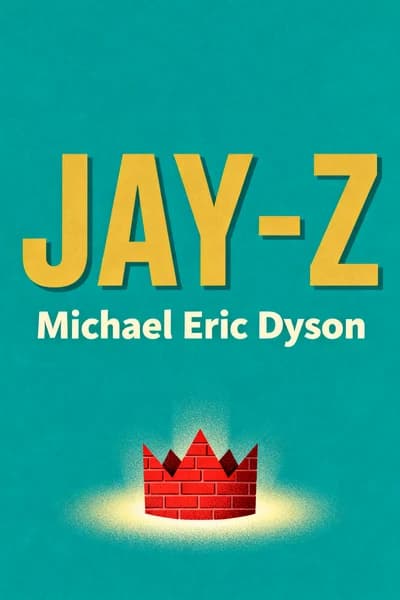
JAY-Z's meteoric rise from Brooklyn's Marcy Projects to becoming hip-hop's first billionaire represents one of the most remarkable American success stories of our time. Michael Eric Dyson's penetrating analysis of Shawn Carter's life and artistry reveals a figure whose cultural impact extends far beyond music into business, politics, and social justice. The book has become required reading in university courses nationwide, with figures from Barack Obama to Beyonce citing its influence. What makes JAY-Z's story so compelling is not just the rags-to-riches narrative, but how he's leveraged his platform to challenge systemic inequality while refusing to compromise his authentic voice. As Dave Chappelle once remarked, "JAY-Z isn't just a rapper who got rich-he's a philosopher who happened to hustle." Through examining the layers of JAY-Z's career, we gain profound insights into American culture, racial politics, and the transformative power of art when wielded by a master storyteller.
第2章
The Hustler's Manifesto: From Street Corner to Boardroom
JAY-Z's perspective on hustling represents a sophisticated philosophy rather than mere glorification of drug dealing. When he rapped "Gentrify your own hood, before these people do it," critics misinterpreted his intent. He wasn't advocating displacement but urging black economic empowerment and ownership. This approach mirrors Nipsey Hussle's vision of community-controlled development through ventures like the Our Opportunity fund, where residents could invest in their neighborhoods rather than being priced out.
The distinction JAY-Z makes between physical presence in the hood and mental transformation is crucial: "And we ain't gotta leave the hood physically / But we gotta leave that shit mentally." This ontology of ghetto existence differentiates between helpful and destructive behaviors. As he expressed in "D.O.A.": "I don't be in the project hallway / Talking 'bout how I be in the project all day / That sound stupid to me." He challenges performative "hood" identity by contrasting social media posturing with meaningful advancement: "You could choose to sit in front of your computer / Posin' with guns... Or you could come with me to the White House, get your suit up!"
JAY-Z's greatest contribution may be transforming how America perceives black hustle-applying underground wiles to conquer legitimate business while refusing to defer to whiteness or standard American grammar. He proudly claimed in "Come and Get Me": "I made it so you could say Marcy and it was all good... Made 'em relate to your struggle, told 'em 'bout your hustle." Through his art, Jay humanized young black Americans to those who control commerce, construct prisons, and often fear black youth.
This redefinition of hustling extends beyond music into his business ventures. When launching his champagne brand Armand de Brignac after Cristal's dismissive comments about hip-hop consumers, he wasn't just creating a product but making a statement about economic dignity. Similarly, his streaming service TIDAL represented an attempt to restructure how artists are compensated in the digital era. Each business move carries the same strategic thinking that once helped him navigate Brooklyn's dangerous drug trade-only now applied to dismantling systems of economic exclusion.
第3章
The Poetic Genius: Literary Mastery in Hip-Hop Form
JAY-Z's poetic sophistication often goes underappreciated. Beyond his swagger and verbal gifts lies a master of American poetry who wields metaphor, metonymy, simile and synecdoche with remarkable skill. He's "Robert Frost with a Brooklyn accent, Rita Dove with a Jesus piece"-a verbal architect whose rhymes satisfy the ear while painting vivid images that map the black experience onto American rhetoric.
His line "I paint pictures with poems" from "Guns & Roses" perfectly captures his approach, evoking his career-long artistic allusions and connection to Imagism-the early-twentieth-century movement championing precise imagery and rhythmic inventiveness. Despite minimal formal training, Jay's intentional practice began on Brooklyn street corners, mentally crafting rhymes while dealing crack until perfected and memorized.
His remarkable process involves no writing-no paper, no typing-making his complex compositions even more extraordinary. This approach extends the African oral tradition, particularly evident in narrative tracks like "Friend or Foe" and "Friend or Foe '98," which cinematically portray drug dealing conflicts without hooks or choruses. Jay's allusive style creates shared experiences with listeners, whether referencing hustling or paying tribute to fallen friends like Biggie Smalls.
In "Hola Hovito," he claims to "rhyme sicker than every rhyme-spitter," employing hyperbole while playing with contronyms like "sick" and "ill"-terms that flip negative meanings into positives within hip-hop's lexicon. This linguistic dexterity mirrors the preacher's role, transforming negative circumstances into positive outcomes.
Consider how he uses extended metaphor in "Moment of Clarity" to explore his artistic compromises: "I dumbed down for my audience to double my dollars / They criticized me for it, yet they all yell 'holla' / If skills sold, truth be told, I'd probably be / Lyrically Talib Kweli / Truthfully I wanna rhyme like Common Sense / But I did 5 mill' - I ain't been rhyming like Common since." This self-aware reflection demonstrates both his technical skill and his understanding of market forces, all while paying respect to more "conscious" peers.
His intellectual impact extends beyond music through his Shawn Carter Scholarship for disadvantaged youth, criminal justice reform advocacy, political engagement supporting Obama and Clinton, and financial contributions to various social causes including 9/11 victims and Hurricane Katrina survivors.
第4章
The Epic Battle: JAY-Z vs. Nas and Hip-Hop's Greatest Rivalry
The lyrical war between JAY-Z and Nas stands as hip hop's greatest beef, beginning with subtle jabs and escalating at Summer Jam 2001 when Jay performed "Takeover." After dismantling Mobb Deep by showing photos of Prodigy as a child dancer, Jay ended with "Ask Nas, he don't want it with Hov. NO!" This challenge came while hip hop was still mourning Tupac and Biggie's deaths, creating fear their battle might similarly turn deadly.
The conflict intensified with Jay's "Super Ugly," where he made deeply personal claims about Nas's baby mother. The pivotal moment came when Gloria Carter, Jay's mother, scolded her son for going too far, helping transform the beef into what eventually became reconciliation and collaboration. At stake was Biggie's legacy, as both rappers had legitimate claims to inheriting his crown as king of New York rap.
JAY-Z and Biggie's collaboration "Brooklyn's Finest" from 1996 opens with twenty-two gunshots before any lyrics begin-a violent introduction typical of that era but remarkable in contrast to Jay's later evolution. The track reveals the competitive spirit between the two reformed hustlers, with Biggie's verses containing eerily prophetic references: his "Frank White" persona from "King of New York" (later contested between Jay and Nas), mentions of Cristal champagne (which Jay would later boycott for racism), and the tragic reference to Tupac.
In a 2002 Angie Martinez interview during his Nas beef, JAY-Z explained most rap conflicts simply: "People clash at the top... It's wrestling." He illustrated this with his brief 1999 clash with 50 Cent, who had targeted Jay on "How to Rob." Before responding with "I'm about a dollar, what the fuck is 50 Cents?" at Summer Jam, Jay told 50 backstage he respected the record but had to "spank" him, to which 50 replied, "No doubt, do your thing." Despite occasional barbs since, their conflict never threatened violence.
Jay has shown remarkable generosity to talented successors, from praising Lil Wayne on "Mr. Carter" as his "heir" to his more complicated relationship with Drake. Their back-and-forth included Drake criticizing Jay's art references and Jay responding with "Sorry Mrs. Drizzy for so much art talk/Silly me rappin' 'bout shit that I really bought." Despite these exchanges, they've continued collaborating, showing how Jay maintains respect while defending his position as rap's elder statesman.
第5章
Breaking Barriers: Vulnerability and Emotional Growth in Hip-Hop
Drake has faced persistent criticism for being "soft" in hip hop-a genre historically dominated by combative masculinity and "ghetto authenticity." His willingness to embrace emotional vulnerability represents a transformative breakthrough in the genre. As a biracial ex-teen television star from Toronto's middle-class suburbs, Drake fundamentally challenges narrow definitions of blackness and masculinity in rap. While many artists hide their feelings "like a concealed weapon," Drake "shoots from the left side of his chest right into the nearest microphone," creating a new paradigm for emotional expression in hip-hop.
On signature tracks like "The Resistance," "Own It," "Marvin's Room," and "Hold On, We're Going Home," Drake consistently reverses traditional gender roles, prioritizes emotional intimacy over sexual conquest, and openly expresses heartbreak-all direct violations of hip hop's longstanding cardinal rule to never let women see you vulnerable. His sonic hybridity, seamlessly blending melodic R&B with traditional rap, mirrors his racial hybridity, breaking down established barriers between speech and song. Surprisingly, even some women critics have attacked his emotional transparency, perhaps reflecting society's deeply ingrained and distorted romantic expectations. The shame isn't Drake's but society's persistent inability to embrace and celebrate a black man who defies thug stereotypes and deliberately wears his heart on his sleeve.
This evolution toward emotional vulnerability in hip-hop reached its artistic apex in JAY-Z's landmark album 4:44, where he courageously abandoned his carefully constructed persona to engage in public confession and accountability. The album represents a dramatic evolution from the callous masculinity of earlier songs like "Big Pimpin'" and "Girls, Girls, Girls" to vulnerable confession, meticulously charting his personal transformation from heartless lothario to soulful empathizer. JAY-Z's journey included embracing therapy (challenging deeply-rooted cultural stigmas), symbolically changing his name spelling from "Jay Z" to "JAY-Z" (closing identity gaps), and publicly confessing vulnerability about his marriage, infidelity, and personal growth.
Art has historically been viewed as too highbrow for black masses, with prestigious galleries and museums systematically excluding black communities and artists. This institutional exclusion directly inspired JAY-Z's passionate artistic journey and collection building. His strategic purchase of significant artworks carries multiple layers of meaning: aesthetic appreciation, financial investment, political statement, and existential value-becoming a way of preserving and honoring the legacy of influential black men who came before him. In 2013, Jay made headlines by paying $4.5 million for Basquiat's "Mecca," later claiming in "Picasso Baby": "It ain't hard to tell, I'm the new Jean Michel"-a comparison that resonates deeply through their parallel journeys as black prodigies who fought tirelessly for artistic legitimacy in predominantly white spaces. This investment in art represents both personal evolution and a broader statement about black cultural ownership and preservation.
第6章
The Political Evolution: From Street Observer to Social Justice Advocate
JAY-Z has evolved politically throughout his career, though his capitalist aspirations and focus on hustling may have obscured his social consciousness. From his earliest work, he has been an incisive social critic addressing issues including the overmedication of black youth, racial injustice, slavery's impact on contemporary culture, European colonialism, American myths of patriotism, police brutality, and criminal justice reform.
JAY-Z and Barack Obama share profound similarities beyond their political alliance. Both exemplify "black cool" while navigating between racial worlds, though Jay's experience was divided by class rather than color. Both endured absent fathers, though Jay achieved closure at 33 when reconnecting briefly before his father's death. Both married brilliant women whose popularity exceeds their own. Their mutual admiration manifested in Obama referencing Jay's music (brushing dirt off his shoulders during his campaign and quoting "My 1st Song" before his final State of the Union), while Jay campaigned extensively for Obama, raising funds and creating the "My President Is Black" remix.
His political engagement extends far beyond his Obama association, employing a "sneak-and-speak" approach to commentary throughout his career. In "Shiny Suit Theory," he challenges psychiatric racism by flipping the script on therapists who deemed his success "delusional," addressing the overmedication of black children while referencing Rosa Parks. His animated "Story of O.J." video features "Jaybo" (a JAY-Z/Sambo portmanteau), using minstrel-style imagery to deconstruct racism's history.
JAY-Z consistently confronts American myths and illusions through his music. In "Oceans," he connects the blood of enslaved Africans lost in the Middle Passage with modern disasters like BP's oil spill, challenging imperial narratives by rejecting Christopher Columbus in favor of honoring Brooklyn's Christopher Wallace (Biggie Smalls). His line "I don't even like Washingtons in my pocket" carries multiple meanings-rejecting small bills, a slave-owning president's face, or white faces in his possession-while his "black card" represents economic resistance against racism.
In "A Ballad for the Fallen Soldier," JAY-Z crafts a sophisticated critique of American patriotism and policing through an extended analogy between street soldiers and military ones. His powerful line "Bin Laden been happening in Manhattan / Crack was anthrax back then, back when / Police was Al Qaeda to black men" creates a phenomenology of black existential dread, using familiar American experiences to illuminate the terror of police violence against Black bodies.
第7章
The Carter Trilogy: A Masterclass in Artistic Growth and Reconciliation
The Carters' trilogy of albums represents perhaps "the greatest record-cycle trilogy ever produced in black music history," following a Hegelian structure of thesis, antithesis, and synthesis. This ambitious musical journey not only chronicles their personal struggles but elevates them to universal themes that resonate across cultural boundaries. Beyonce's Lemonade (2016) served as the thesis-a "primal scream" therapy session expressing female rage against infidelity, with JAY-Z as the implied target. Through visceral tracks like "Sorry" and "Don't Hurt Yourself," she crafted a raw narrative of betrayal, hurt, and feminine power. This unprecedented artistic revelation of black domestic discord transcended reality television's filtered portrayals, offering instead high art that was paradoxically more honest through its deliberate construction, particularly evident in the visual album's rich symbolism and historical references.
JAY-Z's response came with 4:44 (2017), the antithesis to Lemonade and to "hem-hawing denials" that men typically use. His self-critical rejoinders were unprecedented as he straightforwardly admitted his failures, particularly in the title track where he confesses, "I apologize, often womanize." The album modeled a masculine ethic that regards others as precious, acknowledging injury inflicted without qualification. Songs like "Kill Jay Z" and "Family Feud" demonstrated a dramatic evolution from the callous masculinity of earlier works like "Big Pimpin'" to vulnerable confession, charting his detox from heartless lothario to soulful empathizer. This transformation was particularly powerful coming from an artist who had built his brand on unshakeable confidence.
The synthesis arrived with Everything Is Love (2018), creating a third space for black lovers that stands as a testament to the endurance of black relationships. The album, released under their joint moniker The Carters, features tracks like "APESHIT" and "NICE" that celebrate both their reconciliation and their cultural impact. The trilogy's arc was foreshadowed by the infamous elevator incident with Solange, which the family transformed from potential embarrassment into artistic growth by turning invisibility into a tool for spiritual rebirth. On "Black Effect," the couple celebrates blackness itself-a rare feat in the face of cultural demeaning. Their love transcends the personal to become political, declaring themselves "good on any MLK Boulevard"-signifying comfort in any black community despite the ironic poverty that often plagues neighborhoods bearing King's name.
This trilogy demonstrates how art can transform personal crisis into public healing, offering a blueprint for emotional evolution and reconciliation. By making their marital struggles public through carefully crafted art, the Carters created a template for working through relationship challenges that resonates far beyond celebrity gossip. The progression from accusation to accountability to reconciliation offers a powerful model for emotional growth rarely seen in hip-hop or popular culture generally. Each album serves as a chapter in a larger narrative about love, betrayal, growth, and redemption, while simultaneously addressing broader themes of black identity, wealth, and power in America. Through their artistic vulnerability, they've created a cultural touchstone that speaks to both personal relationships and collective healing in the black community.
第8章
Criminal Justice Reform: From Artistic Expression to Political Action
JAY-Z's personal experiences with America's justice system have profoundly shaped his activism on criminal justice reform. After writing a compelling Time magazine op-ed criticizing the predatory bail industry in 2017, he and his business partners invested $3 million in Promise, an innovative bail reformation start-up designed to help people navigate the complex pre-trial system. His most powerful contribution came as executive producer of "Time: The Kalief Browder Story," a devastating documentary chronicling how a sixteen-year-old spent over 1,000 days in Rikers Island awaiting trial for a robbery he consistently denied committing. Browder endured systematic officer assault, brutal inmate beatings, and two years in solitary confinement before his tragic suicide following release, becoming a powerful symbol of the system's fundamental brokenness.
JAY-Z's understanding of criminal justice flaws deepened during his years managing Philadelphia artists, particularly through his relationship with Beanie Sigel. Sigel's State Property clothing line became a potent symbol addressing how the system treats Black bodies as "state property," a theme that resonated deeply with urban communities. In his own music, particularly the iconic "99 Problems," Jay offers sophisticated critique of racial profiling and systemic bias, famously detailing a traffic stop that illuminates the power dynamics between law enforcement and Black citizens. His activism expanded significantly through passionate op-eds about Meek Mill's controversial case and co-founding the REFORM Alliance with prominent business leaders like Michael Rubin and Robert Kraft, focusing on eliminating outdated probation and parole laws that trap millions in cycles of incarceration.
His political consciousness manifests through carefully crafted references to Civil Rights leaders like Rosa Parks, Malcolm X, and especially Martin Luther King Jr. Rather than claiming to directly represent these iconic figures, Jay positions himself as an inheritor of "the seat where Rosa Parks sat / Where Malcolm X was shot, where Martin Luther was popped"- engaging with the physical and symbolic architecture of their struggles and transformations. He interprets these historical sites not as monuments to hatred but as sacred spaces where rebirth through symbolic or literal death occurs, drawing nuanced parallels to his own transformation from street hustler to cultural icon and activist.
Jay's complex relationship with Reverend Al Sharpton exemplifies the tensions between different generations of Black leadership. From playfully mocking Sharpton's viral workout selfie to threatening to mobilize him to protest housing discrimination, to publicly criticizing Sharpton's response to the Don Imus controversy, Jay articulates the delicate balance between artistic expression and moral leadership. On his track "Say Hello," he directly challenges Sharpton's disproportionate focus on rap lyrics rather than addressing structural inequality: "If Al Sharpton is speaking for me... Tell him I'll remove the curses if you tell me our schools gon' be perfect." This exchange highlights the ongoing debate about priorities in civil rights advocacy and the role of artists in social movements.
Through his evolution from artist to activist, JAY-Z has demonstrated how cultural influence can be transformed into meaningful political action, particularly in the realm of criminal justice reform. His work continues to bridge the gap between artistic expression and systemic change, using his platform to advocate for concrete reforms while maintaining his authentic voice as a cultural critic.
第9章
Beyond Billionaire Status: Redefining Success and Legacy
In June 2019, JAY-Z achieved a historic milestone by becoming the first hip-hop billionaire, joining an exclusive circle of only four other Black billionaires in America at the time. His achievement resonates deeply in Black communities not merely for the wealth itself, but for his extraordinary journey from street hustler in Brooklyn's Marcy Projects to global business icon. While critics argue his success merely places a Black face on capitalism, his rise represents the "irrepressible spirit of Black folk" against seemingly impossible odds and serves as a powerful argument against respectability politics that often demands conformity to white cultural norms.
What truly distinguishes JAY-Z is how his increasing wealth amplifies rather than silences his voice on Black issues. His controversial partnership with the NFL in August 2019 sparked intense debate, with many labeling him a sellout for working with the organization that had ostracized Colin Kaepernick over his peaceful protests. This tension perfectly exemplifies the historical dynamic between "outside agitators" and "inside activators" in civil rights movements, comparable to the Malcolm X/Martin Luther King dynamic of different but complementary approaches to advancing social justice.
JAY-Z's strategic approach follows in the footsteps of civil rights leaders like Jesse Jackson and Al Sharpton - first protesting injustice, then negotiating for systemic change from within institutions. His Roc Nation entertainment agency partnered with the NFL to influence social justice initiatives and Super Bowl programming, demonstrating how both outside pressure and internal reform can drive progress. The success of the Players Coalition, which secured $89 million in NFL funding for social justice causes, proves the value of working within the system, while simultaneously acknowledging Kaepernick's crucial role in sparking national consciousness through protest.
His achievement as hip-hop's first billionaire represents far more than personal success - it symbolizes possibility for those from similar marginalized backgrounds. Through ventures like Reform Alliance, focusing on criminal justice reform, and investments in Black-owned businesses, JAY-Z demonstrates how wealth can be leveraged for community impact. While Black billionaires alone cannot solve systemic injustice or replace needed reparations, JAY-Z consistently uses his platform to advocate for increased representation of formerly incarcerated people in growing industries like cannabis and continues speaking truth to power rather than retreating into privileged silence.
What JAY-Z ultimately symbolizes is a critical sweet spot in the culture's evolution - continuing to lay claim to what Black Americans are owed while forging ahead with a vision passed down by ancestors. His transformation from selling drugs in Brooklyn to building legitimate business empires isn't just an individual success story but a testament to the possibility of transformation without compromising authenticity or forgetting one's roots. Through his music, business ventures, and activism, JAY-Z embodies a reimagined American dream while simultaneously critiquing its historical limitations and expanding its possibilities for those who have been systematically excluded from its promises. His legacy proves that commercial success and cultural integrity need not be mutually exclusive, setting a new paradigm for future generations of artists and entrepreneurs from marginalized communities.