第1章
When Your Desire Fades: The Science Behind Relationship Passion
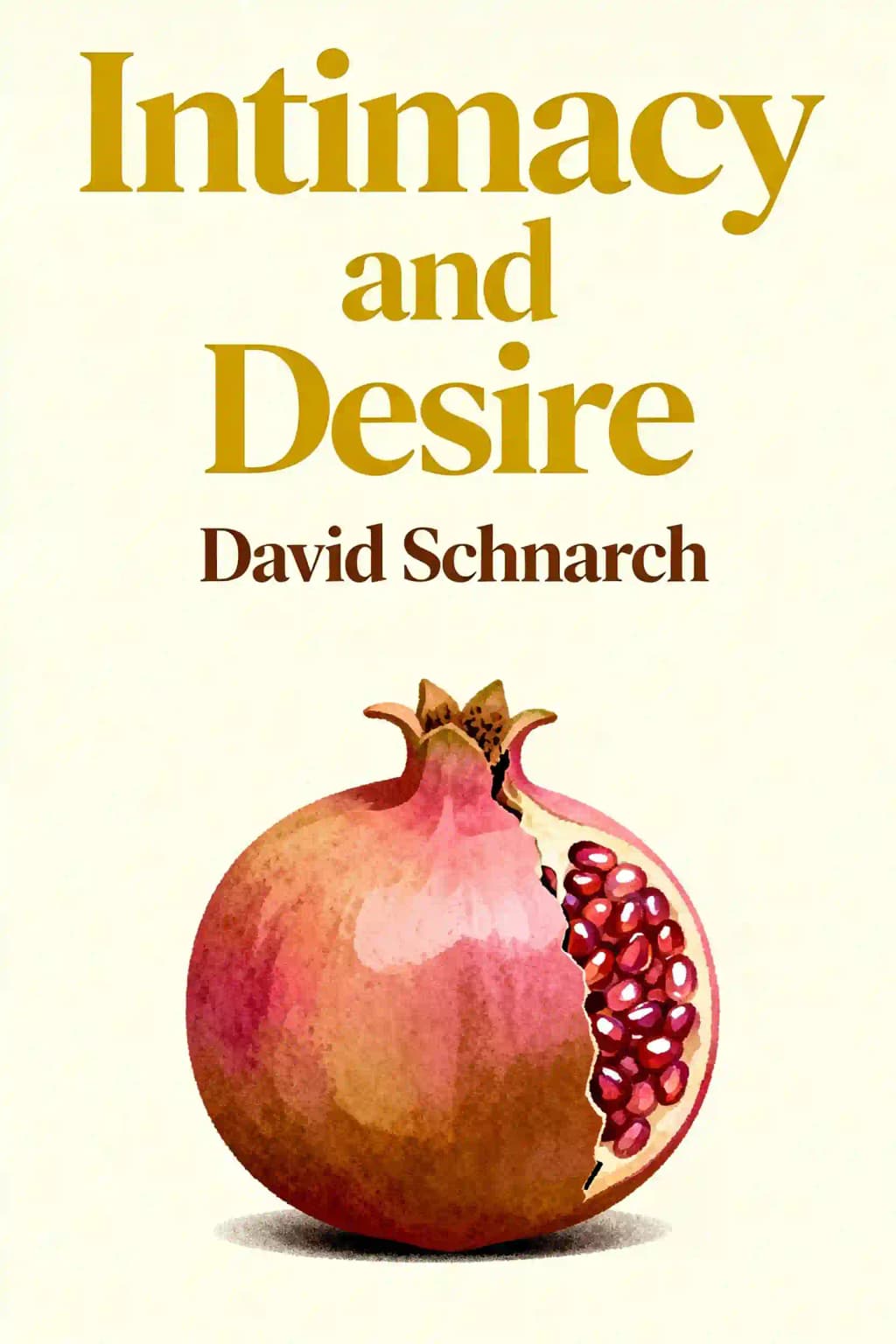
In a world where relationships are expected to be both emotionally fulfilling and sexually passionate, why do so many couples find themselves trapped in the paradox of loving their partner deeply while experiencing little sexual desire? This question haunted clinical psychologist David Schnarch for decades, leading him to develop the revolutionary Crucible Approach to relationship therapy. "Intimacy & Desire" has become a cornerstone text for couples therapists worldwide, with celebrities like Esther Perel and Dan Savage citing its influence on their own work. The book's radical premise-that sexual desire problems are normal in healthy relationships and can actually catalyze profound personal growth-has transformed how therapists approach couples' intimacy issues and helped countless relationships move from sexual stagnation to profound connection.
第2章
The Inevitable Low Desire Partner Dynamic
Sexual desire problems are universal in relationships because there is always a "lower desire partner" (LDP) and a "higher desire partner" (HDP)-positions that exist relative to each other rather than as absolute conditions. This dynamic isn't fixed; partners may switch positions across different life stages or circumstances, but the disparity always exists to some degree. Even in well-matched couples, subtle differences in desire levels create this dynamic.
This situation creates a fundamental power imbalance: the LDP always controls sex through a simple yet profound mechanism. While the HDP typically initiates sexual encounters, the LDP holds the ultimate power of response - deciding which overtures to accept or decline, thereby determining when sex happens. This control extends beyond frequency to encompass where, how, and why sex occurs, whether the LDP consciously wants this power or not. The dynamic manifests in subtle ways, from body language to timing of initiations, creating an intricate dance of approach and withdrawal.
Surprisingly, many LDPs feel burdened by this control rather than enjoying it. They experience a complex mix of emotions: simultaneously powerful yet defective, wondering how they can be so influential while feeling fundamentally inadequate. This paradox often leads to anxiety, guilt, and self-doubt. Meanwhile, HDPs frequently feel controlled, rejected, and frustrated, often misattributing their partner's responses to personality flaws or intentional withholding, when they're actually encountering a fundamental relationship dynamic that exists independently of individual characteristics.
This insight helps both partners stop taking things personally and recognize they're dealing with a universal relationship ecology rather than personal defects. Understanding this dynamic can transform blame into empathy and shift focus from fault-finding to solution-seeking. The solution isn't settling for unsatisfying sex or maintaining an uncomfortable status quo, but working together to transform these natural tensions into opportunities for deeper connection and passionate engagement.
What makes this approach revolutionary is reframing desire problems not as pathological conditions but as natural dynamics that emerge in all relationships. Sexual desire differences aren't symptoms of dysfunction but rather inherent aspects of human relating that create opportunities for growth. These challenges can foster personal development through "people-growing processes" that are elegantly simple in concept yet profound in their impact, offering reliable pathways to greater intimacy and satisfaction.
Human sexual desire is uniquely driven by the brain's capacity to bring meaning to sex, transcending mere biological drives. Unlike other mammals, human sexuality is deeply influenced by psychology, culture, and personal history. Enhancing desire requires more than breaking sexual routines or trying new techniques-it involves developing emotional intimacy, cultivating passion, exploring eroticism, building self-respect, and fostering psychological maturity. Rather than attempting to recreate past patterns or rekindle what was lost, couples need to develop desire from an entirely new source, often discovering that this evolved form of sexuality is more satisfying and sustainable than what they had before.
第3章
How Your Sense of Self Shapes Your Sexual Desire
When the human self emerged millions of years ago, it fundamentally changed sexual desire. Beyond the basic drives of lust (craving for sexual gratification), romantic love (infatuation with a particular partner), and attachment (secure union with a long-term partner), there exists a fourth evolutionary strategy driving desire: our drive to develop and preserve a self.
How we see ourselves, how our partner treats us, and how we believe our partner sees us profoundly shape sexual desire. Self-preservation is a powerful motivational system that can supersede even biological survival instincts. This self has neurological foundations-brain scans show unique activation patterns when thinking about oneself versus others.
The same neural regions that map others' thoughts and emotions also support self-awareness, creating inevitable battles over identity, autonomy, and togetherness in relationships. When our reflected sense of self (how we see ourselves through others' eyes) evolved, the importance of being attractive dramatically increased. Sexual desire transformed as what we found sexy changed.
We constantly engage in niche construction in our relationships, carving out personal space suited to our abilities, temperament, and shortcomings. In marriage, both partners attempt to establish their personal space, which shapes their sexual desire. These efforts to construct niches create our selves but inevitably collide with our partner's similar efforts.
This explains why couples fight about sex, home furnishings, family relationships, and work-leisure balance. As psychiatrist Jurg Willi observed, partners' criticisms of each other are attempts at niche construction and, though not always well-intended, serve as mechanisms through which normal couples push each other to grow.
Your sense of self evolves throughout your lifetime just as the human self evolved over millennia. You and your partner continuously shape each other's development through daily interactions and the problems you face together. This is why sexual desire problems often signal that everything is going right. Throughout life, you create your personality, reality, and destiny-and wire your brain accordingly-by coping with the people around you, especially your partner.
第4章
How the LDP Controls the HDP's Sense of Adequacy
The low desire partner not only controls when sex occurs but also controls the high desire partner's sense of adequacy and self-worth. When desire problems emerge, the high desire partner often takes rejection personally, while the low desire partner feels the burden of being responsible for their partner's emotional well-being.
This dynamic often begins early in relationships. When one partner doesn't immediately respond sexually as expected, the other may question their sexual abilities. To please them and protect their "sexual ego," the reluctant partner begins faking enthusiasm-a common pattern that transcends gender and sexual orientation.
After years of supporting a partner's reflected sense of self, many lose their own desire and autonomy. This pattern extends beyond sex-partners often "slide underneath" each other regarding parenting decisions, financial matters, and other important issues to avoid conflict, despite disagreeing internally.
This pattern exemplifies "borrowed functioning"-how people cope with having primarily a reflected sense of self. From infancy, we see ourselves through others' eyes, particularly those important to us. In relationships, borrowed functioning is like having a partner inflate your self-worth balloon-it feels better temporarily but doesn't last. This "borrowing" ultimately diminishes the donor partner's functioning and sense of self.
Unlike healthy relationships where both partners' functioning improves together, borrowed functioning creates artificial stability while depleting one partner emotionally. When partners are emotionally fused like Siamese twins, every move one makes deeply impacts the other's emotional balance, creating cycles where the low desire partner feels pressured and the high desire partner feels rejected.
People who rely on others for a positive reflected sense of self inevitably try to control them. Those unable to maintain their own sense of self or regulate their emotions end up controlling everyone around them to stay comfortable. This explains why normal people develop sexual desire problems-the more one partner seeks validation through the other, the more the other feels oppressed, triggering resistance.
Marriage does kill desire-but not in the way most people think. Sexual desire problems are a normal evolutionary development in the middle phase of marriage, part of how love relationships grow. The ebb and flow of desire and resulting conflicts are natural growth processes, not signs of failure. Developing a solid sense of self increases one's capacity for desire, just as it increases capacity for love.
第5章
The Four Points of Balance: Your Path to Emotional Maturity
The Four Points of Balance represent crucial human abilities that evolved over millions of years but emerge only as we mature. These abilities control not just sexual desire but all desires and interactions in our lives:
1) Solid Flexible Self-maintaining clarity about who you are when pressured to conform
2) Quiet Mind-Calm Heart-soothing your own hurts and regulating anxieties
3) Grounded Responding-staying calm without overreacting when your partner gets upset
4) Meaningful Endurance-facing difficult issues and tolerating discomfort for growth
These four abilities form the pillars supporting your sense of self and help maintain emotional balance during difficult times. Couples with poorly developed Four Points of Balance can't maintain self-worth when criticized, can't soothe their own emotional wounds, overreact to each other's anxiety through avoidance or clinging, and won't confront themselves about their behavior or tolerate the frustration needed for growth.
Emotional gridlock occurs when partners block each other's desires and needs, creating a seemingly irreconcilable impasse. Gridlock isn't caused by poor communication-in fact, it results from successful mind-mapping where each accurately senses the other's true thoughts and feelings. Rather than being a flaw, emotional gridlock is actually part of relationships' elegant design-a natural developmental stage that creates the pressure needed for personal growth.
Differentiation is the ability to maintain emotional balance while engaging in important relationships-essentially using the Four Points of Balance. The concept applies both to species evolution across generations and to personal development within relationships. Having well-developed Four Points of Balance indicates high differentiation and shows how far someone has evolved as a human being.
The tension between autonomy and attachment is like two one-legged people trying to stand together-they can achieve more together but conflict arises when one wants to go where the other doesn't. A low level of differentiation makes relationships feel oppressive. As two people try to become whole individuals while supporting each other, they co-construct and co-evolve through their wobbling attempts at balance.
第6章
How Intimacy Shapes Sexual Desire
Intimacy, like sexual desire, is a complex system that drives personal growth in marriage. It pushes couples to develop a more solid flexible self, and properly handling intimacy problems creates long-term stability and lasting sexual desire.
Intimacy exists in two critical forms: other-validated and self-validated. Other-validated intimacy involves one partner disclosing feelings while the other accepts, validates, empathizes, or reciprocates with their own disclosure. This type hinges on reciprocity and shores up the speaker's reflected sense of self. Most people, including therapists, focus primarily on this form of intimacy, which is our first childhood experience of connection.
Self-validated intimacy, by contrast, emerges when your partner doesn't validate you but you can validate and calm yourself. This form requires greater differentiation and typically develops later in life, becoming the bedrock of mature relationships. While other-validated intimacy feels warm and secure, self-validated intimacy involves confronting yourself and allowing yourself to be known accurately, even when it's uncomfortable.
Like sexual desire, intimacy functions as a sophisticated system permeating love relationships, not just as a feeling. Just as with sexual desire, the low desire partner for other-validated intimacy always controls it-unless partners develop their Four Points of Balance. This happens through process of elimination: couples first disclose safe information, but eventually face sharing things where acceptance isn't guaranteed.
While other-validated intimacy isn't inherently problematic, it eventually runs dry in relationships as partners fight to maintain autonomy. The romantic fantasy of losing yourself in love collides with differentiation needs, creating battles between attachment and autonomy.
A profound insight emerges: people don't desire partners they constantly have to validate. The pressure to provide endless validation feels suffocating, triggering either compliance or defiance, both of which intensify gridlock. Breaking free of gridlock requires a fundamental shift from other-validated to self-validated intimacy.
Intersubjective experiences create profound connections through self-validated intimacy. When bodily sensations are paired with intense feelings and meanings, they create unique mind states that foster breakthroughs in information processing. Adult intimacy requires self-confrontation-challenging your own perceptions and behaviors rather than justifying them. This process strengthens your Four Points of Balance and develops a more solid, flexible self.
第7章
Monogamy: From Constraint to Freedom
Monogamy functions as a dynamic system rather than a static commitment, operating differently based on a couple's Four Points of Balance. In well-differentiated couples, monogamy encourages high desire-you're more likely to want sex with a partner who has a strong sense of self. But in poorly differentiated couples, monogamy creates low desire as emotional fusion and borrowed functioning make partners feel trapped.
The monopolistic nature of monogamy gives the Low Desire Partner complete control over the sexual relationship. Without alternative outlets, the High Desire Partner must negotiate from an unequal position, often paying emotional prices for intimacy. The LDP can restrict the "supply" of sex for various reasons: to increase control, express anger, gain bargaining power, or manage their own anxieties about sex.
In monogamous relationships, the Low Desire Partner gains monopolistic power that wouldn't exist in an open relationship. Dating relationships operate like free markets with courteous bargaining, while monopolies like marriage can create a "take it or leave it" dynamic where the LDP controls when, where and how sex happens.
Foreplay serves as a negotiation for intimacy, eroticism and meaning in sexual encounters. These interactions involve constant mind-mapping, with partners backing off when they sense discomfort, and signaling when they want the other to stop pursuing.
Monogamy intensifies sexual desire problems by eliminating alternative outlets, reinforcing emotional fusion between poorly differentiated couples. The solution isn't affairs or open relationships, but developing stronger Four Points of Balance: staying clear about priorities, calming one's emotions, responding thoughtfully rather than impulsively, and confronting oneself about one's actions.
When partners develop stronger Four Points of Balance-self-confrontation, self-soothing, non-reactivity, and frustration tolerance-monogamy transforms from an externally imposed system to an internally chosen commitment. Well-differentiated monogamy increases sexual desire and makes partners want to give their sexual best, recognizing their partner as someone valuable who deserves their full attention.
The author reframes monogamy as a commitment to oneself rather than a promise to a partner. The problem isn't earning your partner's trust but becoming someone you yourself can trust. Well-differentiated people desire monogamy for good reasons-preferring sex with one beloved person without sexual martyrdom, avoiding wasted energy on clandestine romance, and seeking the deepest possible connection without distractions.
第8章
Sexual Boredom and the Path to Renewal
Sexual boredom is completely normal in relationships. Couples typically establish their sexual landscape by ruling out behaviors that make either partner uncomfortable, leaving only mutually acceptable activities. Through this process of elimination, sexual relationships inevitably consist of "leftovers," and people have sex only up to the limits of their development.
Boredom is guaranteed in normal sexual relationships, not because something is going wrong, but because it's built into the system. Sexual growth requires tolerating anxiety and converting initially uncomfortable activities into acceptable ones. Becoming sexually mature involves transforming things you once found disgusting into the way you now make love.
When your partner becomes too important to you-more important than you are to yourself-sexual desire problems emerge. This isn't about insufficient caring but rather excessive importance that exceeds your Four Points of Balance. As your partner's opinion grows more important than your own, you won't risk rejection by innovating sexually or revealing your true eroticism.
Many people with low desire are actually incredibly carnal but hide behind false personas, following their partner's lead through sex while bored and frustrated. Sexual novelty must be introduced unilaterally, which requires self-validated intimacy rather than depending on partner validation.
The real challenge isn't letting your partner see your body, but revealing your erotic mind. When your partner's importance exceeds your Four Points of Balance, you face limited options: dominate them, submit to them, withdraw, or strengthen yourself-with most people cycling through all options before choosing growth.
Your partner's importance grows not necessarily because you love them more, but because they become more central to your life through shared finances, children, friends, and linked identities. The longer your relationship, the more irreplaceable they become. Eventually, depending on your Four Points of Balance, they become too important to desire, as low desire emerges to protect you from their tremendous impact on your life.
Anxiety-tolerance rather than anxiety reduction is central to sexual maturity. Every developmental step from first kisses to oral sex involves enduring discomfort until it becomes comfortable. This works because humans are primarily self-soothing creatures who give meaning to their dilemmas, allowing them to tolerate pain for growth when outcomes matter enough.
第9章
Building a Collaborative Alliance: The Foundation of Desire
Creating a tangible physical collaborative alliance requires using your bodies together repeatedly in different ways. These methods help you use your body to change your mind and potentially rewire your brain. The goal isn't just mastering physical techniques, but creating rich, multilayered experiences by focusing on multiple dimensions simultaneously.
"Hugging till relaxed" involves standing on your own feet, putting arms around your partner, focusing on yourself, and quieting yourself down deeply. It's about centering yourself while maintaining physical contact-not about "holding each other" but putting arms around your partner while holding onto yourself. With practice, this initially awkward exercise evolves into a profound connection that feels like "melting into warm butter" without losing yourself.
"Heads on pillows" builds on hugging till relaxed. Partners lie on their sides facing each other with heads on separate pillows, far enough apart to see clearly. You gaze into each other's eyes while calming your mind and heart. The goal is to mentally touch your partner's heart. This creates profound intimacy that challenges those who typically disconnect during sex by focusing solely on physical sensations.
"Feeling while touching" addresses how many partners touch without truly feeling each other. One partner touches while both mentally follow the point of physical connection as it moves. Rather than focusing on technique or sensation, you focus on feeling each other. The approach requires discipline to stay present and connected.
These three techniques share important qualities. They build a physical collaborative alliance that's more resilient than intercourse for reconnecting, especially for couples who've stopped having sex. Each quiets the brain, provides insight into your mind, and is uniquely shaped by your specific relationship.
These techniques create seven conditions scientists believe facilitate brain change: a strong collaborative alliance, moderate stress alternating with calm, profound intersubjective connection, multi-dimensional experiences, activation of neural networks, integration of emotional and bodily experiences, and organization that fosters continued growth.
第10章
Tender Loving Sex and Mind-Blowing Passion
Rather than being a specific technique, tender loving sex represents a meaning that permeates the entire sexual experience-one that can repair emotional wounds, replenish the soul, and potentially "rewire the brain." Eyes-open sex creates powerful intersubjective experiences where partners actively take each other in while letting themselves be known. This intimate connection can even occur without physical contact-mutual masturbation while maintaining eye contact creates vulnerability and sexual maturity.
According to a survey of 10,500 people, 23% never make eye contact during sex because one or both partners keep their eyes closed, 14% never make eye contact despite open eyes, and only 52% sometimes make eye contact. Eyes-open sex doesn't require constant eye contact-occasional closing for pleasure is natural. However, consistently avoiding eye contact suggests avoidance of intimacy and self-awareness.
Eyes-open orgasms represent an advanced form of intimate connection-gazing into your partner's eyes before, during and after orgasm creates one of the most intense "moments of meeting" possible. Only 13% of 10,500 survey participants reported experiencing eyes-open orgasms, making them statistically rare but learnable.
The author challenges the stereotype that men prefer fucking while women prefer making love, noting his clinical experience shows women are often more interested in sex-particularly good sex-than men. He connects this to evolutionary biology, explaining that while human females are the only primates who've lost their "heat" (estrus), monthly peaks in desire and multiple orgasms may be remnants of our evolutionary past.
Contrary to expressions like "fucking your brains out," the author suggests that intense sexual experiences actually reorganize the brain positively. Oral sex creates a rich, multi-layered experience that activates multiple brain circuits simultaneously. When bodily sensations are paired with intense feelings and meanings, they create unique mind states that foster breakthroughs in information processing-essentially, great oral sex from a loving partner benefits your brain.
The author advocates for healthy sexual aggression-not raw sadism but aggression transformed through differentiation into something useful. This requires processing one's "dark side" through the Four Points of Balance. Sexual surrender requires holding onto oneself with "a tight grip on a loose rein."
Sexual desire problems connect to brain function and spirituality. The incredible growth from falling in love and staying together represents self-organizing processes found in all ecological systems. Sexual desire becomes human evolution in action, with humans serving as both scientists and experiment. The author sees spirit in action through desire, sex, intimacy and love working together-a "Great Oneness embodied in daily life." He concludes with a profound insight: "You can work on your relationship all you want, but your relationship will be working on YOU!"