第1章
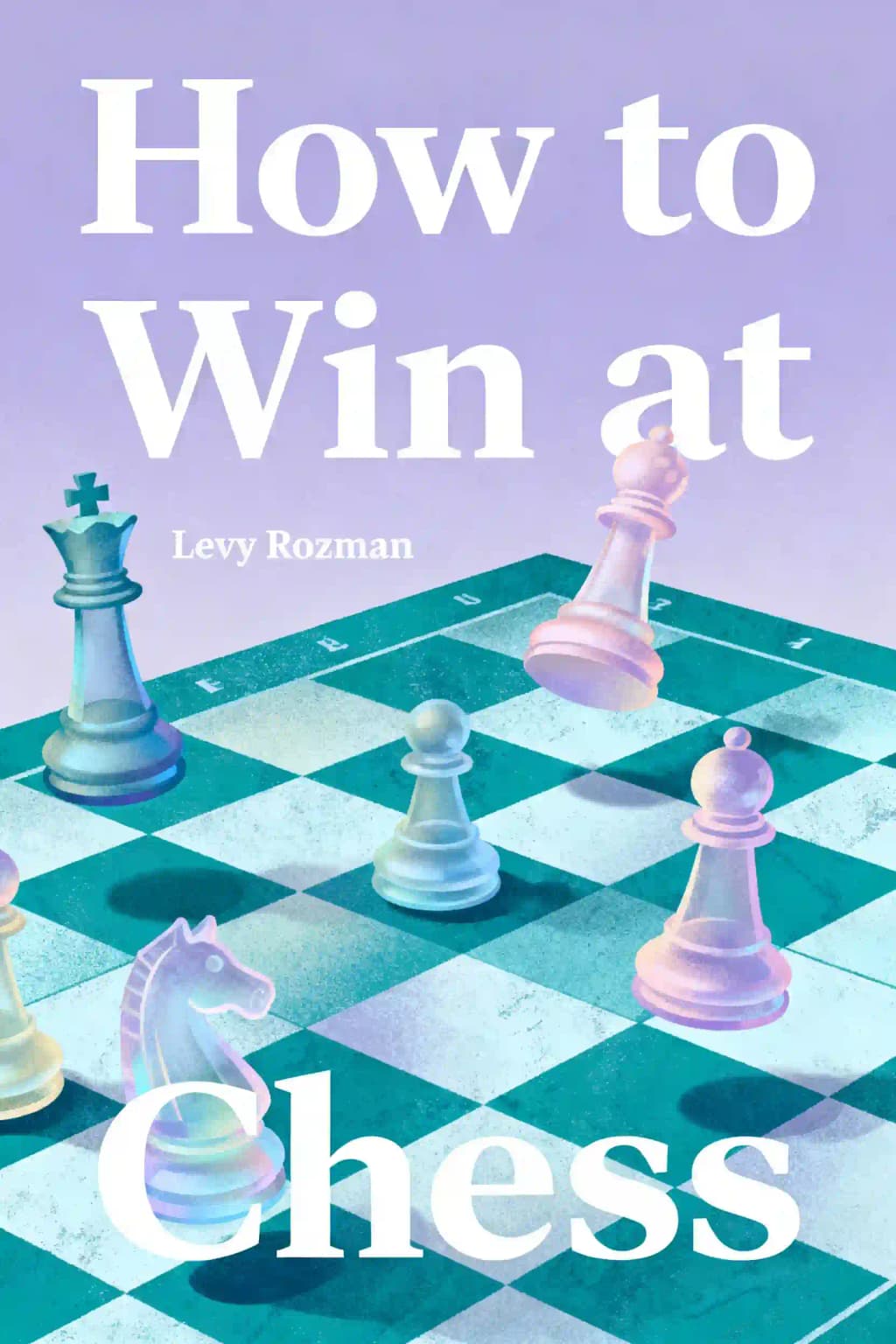
The Chess Revolution: Levy Rozman's Tactical Mastery Unleashed
Chess has experienced an unprecedented renaissance in recent years, with millions of new players flocking to the game during the pandemic. At the center of this revolution stands Levy Rozman, the International Master behind YouTube's largest chess channel, GothamChess. His approach strips away the intimidating complexity that has kept chess inaccessible to many, replacing it with clear principles and practical strategies. "How to Win at Chess" arrives at the perfect moment-when chess viewership has exploded on platforms like Twitch and YouTube, with celebrities from Logic to Rainn Wilson publicly embracing the game. What makes this book particularly special is how it distills Rozman's experience teaching thousands of students into a system that works for players at any level. Whether you're a complete beginner or looking to break through to the next rating bracket, Rozman's methodology offers something that many chess books lack: a clear path to improvement that actually works in real games.
第2章
The Four Paths to Victory: Understanding How Chess Games End
Chess isn't just about checkmating your opponent-though that's certainly the most satisfying way to win. Understanding all four ways to win gives you a complete picture of what you're working toward in every game.
Checkmate-the primary win condition-occurs when you attack the enemy king in a way that leaves it with no escape. This is why learning chess is actually easier when starting with fewer pieces rather than the full 32-piece arrangement. With just three pieces on the board, you can create simple checkmate patterns that demonstrate the fundamental goal of chess. Unlike other pieces that are captured and removed, the king can never be captured-instead, creating an inescapable threat to the king ends the game immediately.
The second most common way to win is when your opponent resigns. This typically happens when a player recognizes their position is hopeless due to material disadvantage or an inevitable checkmate. At the highest levels, resignation is considered respectful when defeat is clearly inevitable. During the 2014 World Chess Championship, former champion Viswanathan Anand resigned against Magnus Carlsen when facing a lost position, rather than dragging out the inevitable. However, for non-masters, resignation is rarely advisable-as long as pieces remain on the board and time on the clock, your opponent might still blunder.
Running out of time provides another path to victory. Chess games are played with time controls ranging from lightning-fast one-minute games to fourteen-day correspondence matches. If your clock hits zero, you lose-even if you're winning on the board. There's an important exception, though: if your opponent doesn't have enough pieces to ever deliver checkmate (like just a lone king), the game ends in a draw instead when you time out. This "insufficient checkmating material" rule prevents unfair losses when your opponent couldn't have won even with unlimited time.
The fourth and perhaps most amusing way to win is when your opponent abandons the game. This happens frequently online but occasionally in over-the-board tournaments too. The most famous example occurred in 1895 when Curt von Bardeleben was so disgusted with his position against world champion Wilhelm Steinitz that he literally left the tournament hall without resigning. Steinitz had to wait for von Bardeleben's clock to expire before claiming victory, then demonstrated to the applauding crowd that he had calculated a forced checkmate in nine moves.
Understanding these four ways to win-checkmate, resignation, timeout, and abandonment-provides the foundation for everything else in chess. With these victory conditions in mind, you can begin to develop strategies that lead toward these outcomes while preventing your opponent from achieving them.
第3章
First Moves: Starting Strong with the White Pieces
Playing the White pieces gives you the initiative-you move first and can begin implementing your plan immediately. While theoretically you could make any legal first move, it's far better to follow established opening principles than to reinvent the wheel.
The three golden principles of chess openings are controlling the center, developing your pieces, and castling your king. The center squares (e4, e5, d4, d5) give your pieces maximum mobility-a knight placed in the center has eight possible moves versus just two when cornered. The most effective opening moves involve advancing central pawns (e4, d4), developing knights toward the center (Nc3, Nf3), moving bishops to active squares (Bc4, Bf4), castling for king safety, and connecting rooks. These ten "golden moves" create an optimal position with all pieces defended and ready for coordinated attack.
The King's Pawn Opening (1.e4) is chess's most common first move, played nearly 100 million times at all levels. When Black responds with 1...e5, White typically develops a knight to f3, attacking Black's pawn. After Black defends with 2...Nc6 and White plays 3.Bc4, we reach the Italian Game-a position that has remained popular for over 400 years. Alternatively, White might play 3.Bb5 (the Ruy Lopez or Spanish Opening), threatening Black's defending knight.
Black doesn't have to mirror with 1...e5 though. The Sicilian Defense (1...c5) aggressively prevents White's ideal d4 push and leads to complex positions like the Najdorf Variation, favored by high-level players seeking dynamic counterplay.
The Queen's Pawn Opening (1.d4) accounts for about 40% of games, with e4 making up another 40%. Rather than experimenting with both, beginners should master one opening system. After 1.d4, Black commonly responds with 1...d5, mirroring White's central control. The London System (1.d4, 2.Bf4) creates a pyramid pawn structure from b-pawn to f-pawn with developed pieces. Another popular option is the Queen's Gambit (1.d4, 2.c4), where White seemingly offers a "free" pawn. If Black accepts, White plays e4, gaining central control and development despite the temporary pawn sacrifice.
While the Scholar's Mate (a four-move checkmate pattern) can occasionally win quick games against unprepared opponents, it contradicts sound opening principles by bringing the queen out early. This aggressive approach leaves your queen vulnerable to attack and doesn't contribute to your long-term chess development. Nevertheless, over 600,000 players have fallen victim to this pattern online, making it essential to understand both as an occasional weapon and for defensive purposes.
第4章
Responding with Purpose: Starting Strong with Black
When playing Black, you're responding to White's opening rather than dictating play. Despite being a move behind, you should still aim for the golden moves: pawns in the center, developed knights and bishops, castled king, and connected rooks. Your approach will depend on whether you choose traditional responses, setup-based systems, or building-block openings.
Traditional openings involve making logical responses to White's moves while developing your pieces toward the center. After 1.e4 e5, Black prevents White from establishing two central pawns. If White plays 2.Nf3, Black defends with 2...Nc6, developing a piece while protecting the e5 pawn. These traditional responses can lead to symmetrical positions, which are solid but potentially boring.
Setup-based openings allow Black to play nearly identical piece arrangements against various White openings, making them easier to learn and implement. The King's Indian/Pirc Defense (Nf6, g6, Bg7, d6, and castling) can be played regardless of White's opening moves. While these setups provide consistency and familiar positions, they risk becoming predictable and can lead to lazy play if you mechanically follow the same pattern without watching for specific threats.
Building-block openings involve supporting a central pawn with another pawn before advancing it. In the Caro-Kann Defense, Black plays c6 first to support the upcoming d5 move. The French Defense follows a similar principle with e6 supporting d5. These openings provide solid structure and central presence while avoiding the pitfalls of accepting gambits that surrender central control.
The Scandinavian Defense (1...d5) immediately challenges White's center, forcing White to make a decision about capturing your pawn and putting White into your game plan rather than the reverse. After 2.exd5 Qxd5 3.Nc3, Black moves the queen to a5, making it difficult for White to attack again. The key follow-up move is c6, creating an escape route for the queen to either c7 or d8 if attacked again.
When facing 1.d4, the Queen's Gambit Declined (1...d5 2.c4 e6) provides a solid response. Instead of accepting the "free" pawn, Black supports the central d5 pawn with e6, creating a strong position that works against not only d4 but also other non-e4 openings like c4 (the English) or knight to f3 (the Reti).
第5章
Essential Checkmates: Winning with Minimal Forces
Learning how to checkmate with minimal pieces is essential, as winning positions don't automatically translate to victory without proper technique. Three fundamental checkmate patterns form the foundation of endgame success: the Ladder Mate, the King and Queen Mate, and the King and Rook Mate.
The Ladder Mate requires two pieces that attack horizontally and vertically (two queens, queen and rook, or two rooks) to force the enemy king to the board's edge. The technique involves alternating checks that gradually push the opponent's king toward any outer rank or file, with each piece taking turns checking while the other blocks escape squares. With rooks, special care must be taken to keep them at a safe distance from the enemy king, as unlike queens, they don't defend each other diagonally.
The King and Queen Mate uses "knight opposition"-placing your queen where a knight would check the enemy king. This restricts the king's movement by preventing it from crossing the rank or file your queen occupies, gradually forcing it toward the edge of the board. The key steps are: chase the king to the board's edge using knight opposition, ensure the king has two squares to shuffle between in the corner (to avoid stalemate), march your own king up the board, and only then deliver the final checkmate. When executed perfectly, this checkmate takes 7-10 moves.
The King and Rook Mate requires your king to be actively involved, as a rook alone cannot trap the opposing king. The method uses knight opposition with your king while the rook cuts off the opponent's king horizontally or vertically. The goal is to force the enemy king into direct opposition with your king (facing each other with one square between), at which point you deliver a check with your rook, pushing the king closer to the edge.
Learning these three checkmate techniques is essential because without them, you might end up chasing the opposing king endlessly until you draw. Only king and queen, king and rook, and king and pawn endgames are winning when you have just one piece plus your king; king and bishop or king and knight (even two knights) versus a lone king are theoretical draws.
第6章
Middlegame Checkmates: Striking When Pieces Remain
While endgame checkmates are important, most checkmates actually occur during the middlegame when many pieces remain on the board. Checkmate opportunities can present themselves at any stage, even just a few moves into the game, so players should always be vigilant regardless of how many pieces remain.
Solo-act checkmates feature just one attacking piece against a king. The Back-Rank Mate typically occurs when a castled king is trapped by its own pawns, allowing an enemy rook or queen to deliver mate along the back rank. This is a common pattern players should watch for both offensively and defensively-creating a "luft" (escape square) for your king prevents this threat. The Smothered Mate, delivered by a knight, is rare but exciting-the king must be completely boxed in by its own pieces, allowing the knight's L-shaped attack to deliver checkmate.
Two-piece checkmates are more common and sophisticated. A powerful formation is the "battery"-two strong pieces aligned on the same diagonal, rank, or file, with the front piece attacking while defended by the piece behind. Queen-bishop batteries are particularly effective, as seen when a queen captures a vulnerable pawn while the bishop prevents the king from capturing the queen. Queen-rook batteries are equally potent, with the rook protecting the queen's attack. Queen-knight combinations work similarly, with the knight protecting the queen from capture while the queen delivers the fatal blow.
Advanced checkmates often require removing defenders that prevent your checkmate. In positions where a queen-bishop battery targets a weak pawn but an enemy piece defends it, you might sacrifice material to eliminate the defender. For example, trading a rook (5 points) for a knight (3 points) might seem poor, but becomes brilliant if it enables a queen checkmate.
To improve checkmating skills, practice forced checkmate positions starting with one-move mates before progressing to multi-move sequences. When planning checkmates, imagine what you'd do with multiple consecutive moves, then try to force those positions with moves that demand predictable responses from your opponent. Multi-move checkmates typically involve a series of checks that restrict the king's movement options.
第7章
Drawing Techniques: Salvaging Half Points
Chess isn't just about winning-sometimes a draw is the best outcome, especially when you're in a losing position. While this book focuses on winning, understanding draws is crucial both for salvaging half-points from bad positions and for avoiding tricks when you have the advantage.
The simplest way to draw is when both players agree to it. This typically happens in equal positions where neither side has winning chances, such as symmetrical endgames with equal material. At the grandmaster level, players recognize when positions are theoretically drawn and will shake hands rather than play on. However, draw agreements have become controversial in professional chess, as sponsors and fans dislike seeing players agree to draws after minimal play.
Threefold repetition occurs when the exact same position appears three times during a game, or when the same sequence of moves repeats three times. This rule prevents endless loops of moves. Even in seemingly hopeless positions-like being down 21 points of material-a player can sometimes force a draw through perpetual checks, where the opponent's king must continually move between the same squares to escape check.
Stalemate occurs when a player has no legal moves but is not in check. This typically happens when an inexperienced player with a material advantage fails to properly execute a checkmate. For instance, a player with a queen against a lone king might accidentally block all the king's escape squares without delivering check. Even with overwhelming material advantage-such as having two queens-you can still draw by stalemate if your opponent has no legal moves.
The 50-move rule states that a game is drawn when each player makes 50 moves without any captures or pawn advances. This rule prevents games from continuing indefinitely, especially in positions where neither side can make progress. Even in positions where one side has a theoretical advantage-like rook versus knight-the 50-move rule gives the stronger side a deadline to convert their advantage before the game is automatically drawn.
When neither player has enough pieces to deliver checkmate, the game immediately ends as a draw. For example, a position with just kings and knights or kings and bishops of the same color is a theoretical draw because checkmate is impossible. Even a material advantage is irrelevant if checkmate can't be forced-a king and knight versus a lone king is always drawn.
第8章
Tactical Foundations: Attacks, Defense, and Combinations
The middlegame transforms a chess position from the opening's full board to the endgame scenarios we've studied. Understanding how pieces "see" the board and interact with other pieces is fundamental to chess strategy. Every piece has a unique "vision" pattern-the squares it can potentially move to from its current position. A centrally placed queen can see twenty-seven squares (nearly half the board), demonstrating its tremendous power.
When defending against attacks, you have four primary options: moving the attacked piece, capturing the attacker, protecting with another piece, or blocking the attack. Moving works well when you can reposition to a more advantageous square. Capturing the attacker makes sense when the trade is even or favorable. Protecting is effective when you simultaneously improve your defending piece's position. Blocking works best when your blocking piece creates its own threat.
Tactics are forcing sequences that result in material gain-the key to converting openings into winning endgames. Forks are among the most powerful tactics, where a single piece simultaneously attacks two or more opposing pieces. Knights excel at creating forks because their unique movement pattern prevents counterattacks. The most devastating example is the "family fork" where a knight simultaneously attacks king, queen, and rook.
Pins immobilize pieces by threatening a more valuable piece behind them. In a relative pin, the pinned piece can legally move but would expose a higher-value piece to capture-like a bishop pinning a knight to a queen. An absolute pin is when moving the pinned piece would expose the king to check, making such a move illegal.
Skewers are the inverse of pins-you attack a higher-value piece that, when moved, allows you to capture another piece behind it. Skewers commonly involve kings, forcing them to move and exposing a valuable piece. When facing a skewer, try to position your king where it can recapture the attacking piece after it takes your exposed piece.
Discovered attacks occur when moving one piece reveals an attack from another piece behind it. The power comes from creating two threats simultaneously-one with the moved piece and another with the newly revealed attacker. Discovered checks are particularly devastating tactics where moving one piece reveals a check from another piece. Since the opponent must address the check immediately, your moved piece can attack elsewhere with impunity.
第9章
Strategic Thinking: From Tactics to Long-Term Plans
While tactics involve short-term combinations for immediate material gain, strategy focuses on long-term planning without necessarily seeking immediate advantage. Strategic thinking helps evaluate positions where material is equal but positional factors determine advantage. Understanding strategy helps you evaluate positions and develop plans that lead to winning endgames.
Weaknesses aren't just obvious undefended pieces-they can be subtle vulnerabilities in your position. Beyond hanging pieces, you should look for squares that are inadequately defended, particularly around the king. When pawns surrounding a king are all on the same color squares (like all light squares), they leave the opposite color squares (dark squares) weak and exploitable. This creates "Swiss cheese" positions where attacking pieces can infiltrate through these holes.
Space in chess refers to the number of squares you control in your opponent's territory. When you control more squares in your opponent's half of the board, you restrict their movement while giving your pieces flexibility. Following opening principles like the "golden moves" naturally creates space advantages, while timid pawn moves can leave you cramped. When lacking space, strategically trading enemy pieces that control territory in your half can help equalize.
Chess positions are classified as either closed or open based solely on pawn structure. In closed positions, pawns form blockades that restrict movement across the board, like fences pressed against each other. Open positions occur when pawns have been traded, creating clear lines of sight across the board for long-range pieces like bishops and queens. Neither type is inherently better-what matters is recognizing which benefits your pieces.
The bishop versus knight debate fascinates chess strategists. Though both are valued at three points, grandmasters like Fischer and Kasparov considered bishops slightly more valuable (3.15-3.25 points versus 3.0). Bishops excel at long-range attacks, moving corner-to-corner in a single move, making them devastating in open positions. Their main limitation is color restriction-each bishop only sees half the board's squares. Knights compensate with unique movement patterns, hopping over pieces and delivering dangerous forks from unexpected angles.
第10章
Advanced Openings: Building Your Repertoire
Moving from beginner to intermediate chess requires developing a deeper understanding of openings. While there are countless chess openings to choose from, your selection should reflect your personality, memory capacity, time commitment, and preferred playing style (solid/principled or wild/attacking). The key is consistency-stick with your chosen openings to build experience and understanding.
For White pieces, the London System remains one of the top recommendations for intermediate players. After placing a pawn at d4 and facing Black's common d5 response, White plays bishop to f4 to control the e5 square. The position typically evolves into a pyramid pawn structure that's difficult for Black to break through. The London is effective yet requires minimal study compared to other White openings because you can play it against almost anything Black does.
Playing 1.e4 offers more variety than the London and opportunities to achieve winning positions within ten moves. The Vienna System (1.e4 e5 2.Nc3) scores exceptionally well at beginner and intermediate levels because it's straightforward and contains powerful traps. When Black responds with the natural knight to f6, White plays f4 (the Vienna Gambit), sacrificing a pawn. If Black captures on f4, White pushes e5, forcing the knight to retreat to its starting position.
When facing the Sicilian Defense (Black's c5 response to e4), the Alapin Variation with c3 effectively neutralizes 90% of your opponent's Sicilian preparation, as they won't encounter it often. Against other Black responses like the French Defense or Caro-Kann, the Advance Variations-pushing the e-pawn forward to e5 after Black attacks your center-restricts your opponent's space, making development difficult.
For Black pieces, the Scandinavian Defense (1...d5) immediately challenges White's center, forcing White to make a decision about capturing your pawn and putting White into your game plan rather than the reverse. The Caro-Kann Defense (1...c6) allows Black to place a protected pawn in the center by following with d5 after preparation. Against 1.d4 openings, the Queen's Gambit Declined (1...d5 2.c4 e6) provides a solid response that works against not only d4 but also other non-e4 openings.
第11章
The Art of Gambits: Calculated Sacrifices for Advantage
Gambits, derived from the Italian word "gambetto" (tripping someone with the leg), are openings where a player sacrifices material-typically a pawn-to gain positional advantage or sometimes even achieve an early checkmate. While quick victories sound appealing, most gambits merely provide a positional edge for temporarily sacrificing a pawn, often with ways to quickly regain the material.
The King's Gambit dominated chess until the late nineteenth century during the Romantic era when players sacrificed material for flashy wins. The Immortal Game between Anderssen and Kieseritzky (1851) began with this gambit and resulted in White winning despite sacrificing half his pieces. Though modern computers show Black can equalize with best play, at beginner and intermediate levels it remains dangerous.
The Danish Gambit begins with 1.e4 e5 2.d4 exd4 3.c3, offering two pawns. If Black takes both pawns and White plays Bc4, White develops rapidly while Black has no pieces out. If Black continues taking pawns on b2, White recaptures with Bxb2, having sacrificed three pawns but gaining two active bishops and threatening Black's weak f7 square.
Playing gambits with Black is significantly riskier than with White since Black already starts at a disadvantage. Black gambits tend to be all-or-nothing propositions that either win or lose with little middle ground. The Englund Gambit (1.d4 e5) can lead to quick checkmates against unprepared opponents but leaves Black in a terrible position if White knows the best responses.
Gambits should be used sparingly rather than forming the foundation of your repertoire. Like enjoying sweets in moderation rather than basing your entire diet on sugar, gambits add variety and surprise to your chess toolbox while helping you recognize and avoid falling into these traps when facing them.
第12章
The CCA Method: A Systematic Approach to Chess Thinking
As you advance to intermediate play, tactics become less about immediate opportunities and more about pattern recognition. Like developing muscle memory in sports, chess mastery requires seeing tactical patterns thousands of times until recognition becomes instinctive.
The fundamental approach to any position is applying the CCA checklist: checks, captures, attacks. These forcing moves limit your opponent's responses, making calculation more manageable. When evaluating a position, start by examining all possible checks, prioritizing those that allow your opponent the fewest responses. In positions where you appear to be losing, this systematic approach can reveal surprising tactical opportunities.
The CCA approach extends beyond obvious situations to positions where your pieces are under attack. Rather than automatically retreating a threatened piece, consider creating a "danger level" that exceeds your opponent's threat. In some positions, despite being under attack, playing a check might create a greater threat that your opponent must address first.
Looking beyond immediate checkmates, the CCA approach can help find multi-move winning sequences. Regular practice with checkmate puzzles develops pattern recognition skills that help identify both attacking opportunities and defensive necessities. The CCA checklist isn't just for finding checkmates but also for identifying material-winning opportunities through tactics like removing defenders, zwischenzugs (in-between moves), and discovered attacks.
The zwischenzug (German for "in-between move") involves playing a forcing move before making the expected capture or response. These moves are typically checks or attacks on major pieces that demand immediate attention. Discovered attacks occur when moving one piece reveals an attack from another piece behind it. The most effective discovered attacks create dual threats-both the moved piece and the revealed piece create different threats.
Sacrifices, deflection, and attraction are powerful tactical motifs that can decisively win games. Deflection forces an opponent's piece away from its defensive duties, while attraction involves luring an enemy piece to a worse position. These tactical patterns require seeing multiple moves ahead and recognizing how pieces interact.
Mastering these tactical patterns requires extensive practice-not just dozens but thousands of puzzles. While memorizing pattern names isn't necessary, recognizing the underlying structures is vital for chess improvement. The CCA checklist provides a systematic framework that, with practice, becomes second nature and allows you to find winning combinations in even the most complex positions.