第4章
Bell's Theorem: The Forgotten Revolution
Into this intellectually sterile landscape stepped John Bell, a physicist at CERN who had long harbored private doubts about quantum mechanics. While acknowledging quantum mechanics worked "for all practical purposes" (FAPP), he wondered whether it offered a coherent description of nature beyond mere calculation. Bell was particularly troubled by the Copenhagen interpretation's emphasis on measurement and observers, feeling it dodged fundamental questions about physical reality.
Bell's thoughts returned to Einstein's famous EPR thought experiment from 1935. Einstein and colleagues had argued that quantum mechanics must be incomplete, using a scenario where measuring one particle of an entangled pair would seemingly reveal precise information about its distant partner-violating Heisenberg's uncertainty principle. Einstein objected to what he called "spooky actions at a distance"-the idea that measuring one particle could instantaneously affect its distant partner, violating locality. This apparent violation of special relativity's speed limit deeply troubled Einstein until his death.
Bell focused on a variation of the EPR experiment involving quantum spin-a discrete amount of angular momentum possessed by particles. Unlike macroscopic objects, quantum particles possess fixed amounts of spin (half-units, whole units, etc.), and can only be oriented in certain ways. A spin one-half particle like an electron can only be measured as "up" or "down" along any given direction, never in between. This quantization of spin had no classical analog and exemplified quantum mechanics' departure from classical physics. Bell realized this property could be used to test whether quantum entanglement required genuine nonlocality.
Bell's theorem, published in the obscure journal Physics Physique Fizika in 1964, proved that no local hidden variable theory could reproduce all the predictions of quantum mechanics. Through careful mathematical analysis, he showed that any theory maintaining locality must satisfy certain statistical inequalities (now called "Bell inequalities") that quantum mechanics violates. In other words, either quantum mechanics was wrong, or the world was fundamentally nonlocal-particles could indeed influence each other instantaneously across any distance. This result went beyond previous philosophical arguments to provide a concrete experimental test.
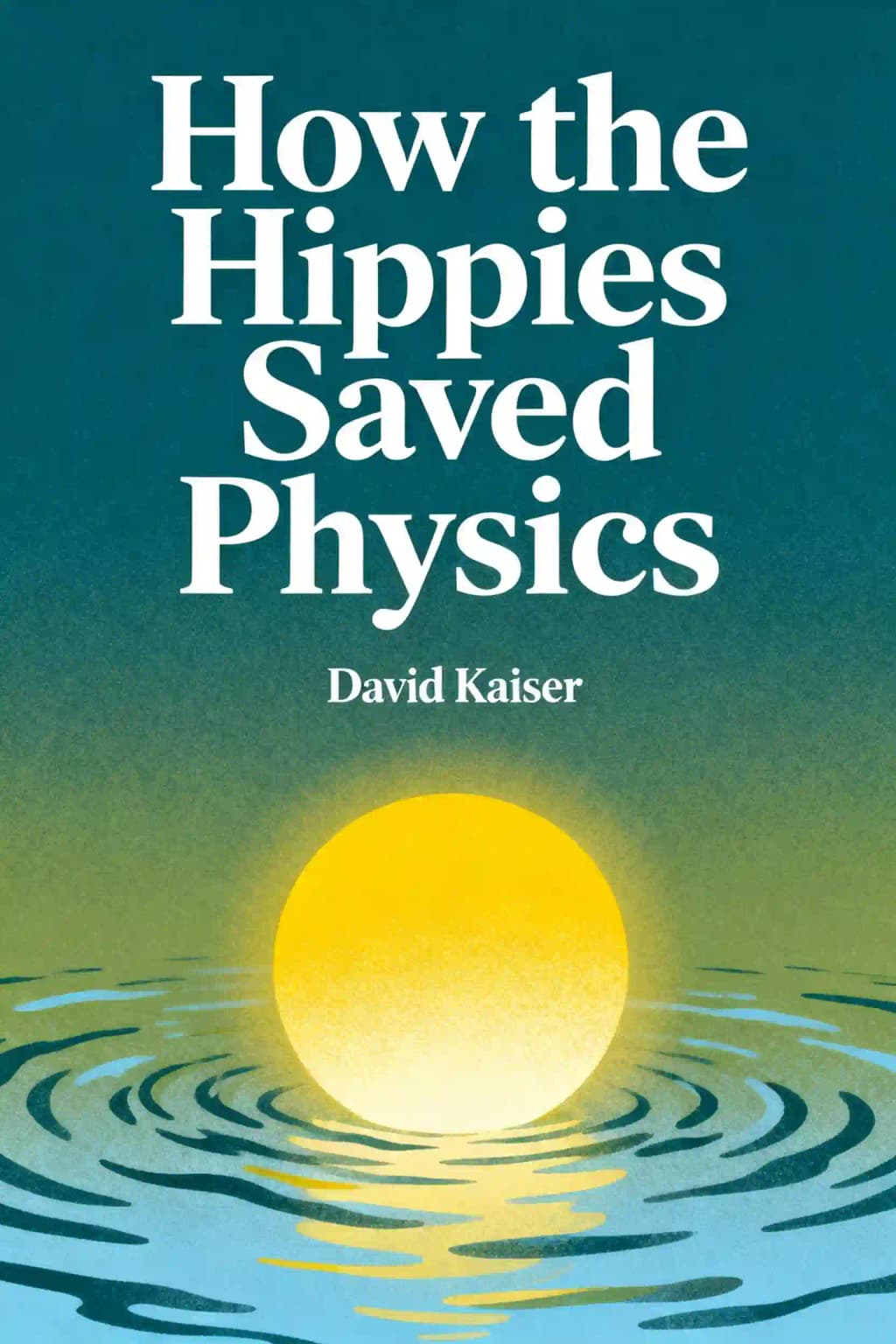
Despite its profound implications, Bell's paper initially went unnoticed. For four years, it received no citations whatsoever. Citations began appearing slowly-just six in 1971, seven in 1972, three in 1973-before activity increased around 1976. The largest share of early papers on Bell's theorem came from the United States, with nearly three-quarters of these produced by participants in Berkeley's Fundamental Fysiks Group, who had devoted their earliest sessions to Bell's work and quantum nonlocality. The group recognized that Bell's theorem forced a choice between quantum mechanics and fundamental principles like locality and realism that most physicists took for granted. Subsequent experimental tests, particularly those by Alain Aspect in the early 1980s, would confirm quantum mechanics' predictions and establish nonlocality as a basic feature of nature, though the implications remain debated today.
第5章
The Quantum Outsiders
The Fundamental Fysiks Group members followed diverse paths to Bell's theorem. Most were part of the Sputnik generation, drawn to physics' big metaphysical questions but finding their education crushingly pragmatic. Many graduated just as physics employment collapsed, disrupting their expected careers.
John Clauser discovered Bell's paper while browsing through Physics Physique Fizika as a Columbia graduate student in 1967. Though excited about testing Bell's theorem experimentally, his thesis advisor rebuffed him, and he was subsequently kicked out of prestigious offices from Robert Serber's to Richard Feynman's. Despite employment challenges in the collapsing physics job market, Clauser secured a postdoctoral position at Lawrence Berkeley Laboratory through Charles Townes, who allowed him to devote half his time to experimental tests of Bell's theorem.
Clauser built his apparatus from scavenged parts "dumpster diving" around the lab. In 1972, he published the first experimental results testing Bell's theorem, confirming quantum mechanics rather than toppling it as he'd privately hoped. His experiment demonstrated that measurements of particle A were indeed more strongly correlated with particle B than local mechanisms could explain-precisely the "spooky action at a distance" Einstein had found troubling. Yet despite publishing in Physical Review Letters, few physicists seemed interested.
Elizabeth Rauscher was among the few who recognized the significance of Clauser's experiments. A Berkeley physics graduate student with an unconventional approach, Rauscher had been fascinated by science since childhood. As one of the rare women in physics-women earned only 5% of undergraduate physics degrees and 2% of PhDs nationally-she faced considerable obstacles, including anonymous threats and sabotaged lab work. Undeterred, she founded discussion groups and taught summer courses examining the relationship between science and society.
Other key members included Saul-Paul Sirag, a physics dropout born to missionaries in Dutch Borneo who had abandoned his Berkeley studies for theater, becoming part of the counterculture scene; Nick Herbert, who had studied engineering physics at Ohio State before earning a Stanford physics PhD in 1967; and Henry Stapp, a senior Berkeley physicist who had studied with European quantum pioneers.
第6章
From Quantum Physics to Consciousness
By May 1975, when Elizabeth Rauscher secured a weekly reservation for the former office of Ernest O. Lawrence at the Lawrence Berkeley Laboratory, the Fundamental Fysiks Group was born. Each Friday afternoon, the room would fill with physicists seeking to explore quantum reality and its implications. But their interests extended beyond Bell's theorem and nonlocality to include parapsychological or "psi" phenomena like extrasensory perception and psychokinesis, which many members believed could be explained by quantum nonlocality.
Princeton Nobel laureate Eugene Wigner had proposed a decade earlier that consciousness plays a central role in quantum mechanics. Wigner suggested consciousness was the only thing that could break the infinite regress of probabilities in quantum measurements, introducing his famous "Wigner's friend" thought experiment to demonstrate that consciousness must have "a different role in quantum mechanics than the inanimate measuring device."
John Wheeler developed similar ideas, advocating for what he called the "participatory universe," arguing that observers actively participate in creating the reality they measure. Wheeler extended this concept with his "delayed-choice" experiments, proposing that observers could retroactively determine a particle's past behavior by choosing which measurement to perform after the particle had already completed most of its journey.
Jack Sarfatti aimed to connect these ideas with psi phenomena. If quantum objects were interconnected via entanglement (Bell's theorem) and consciousness shaped quantum processes (Wigner/Wheeler), then physics might explain psi phenomena. Sarfatti argued that while most mental contributions to quantum particles would be "uncoordinated and incoherent," certain individuals might possess "volitional control" over quantum motions.
Nick Herbert created a bizarre device called the "metaphase typewriter" to test these theories. This contraption used radioactive thallium, a Geiger counter, and a teletype machine to convert the random time delays between radioactive decays into letters. If consciousness could influence quantum events, then minds-either living or disembodied-might be able to manipulate these quantum probabilities to produce coherent messages through the machine.
第7章
Finding New Patrons for Radical Science
As the Fundamental Fysiks Group ventured into controversial territory, they needed both intellectual freedom and financial support outside traditional academic channels. With universities suffering budget cuts and job losses, they had to secure funding from unconventional sources and create their own parallel institutions.
Arthur Young, a Princeton-educated engineer who had invented the first commercially licensed helicopter, became an early patron. Jarred by the atomic bombings and financially secure from his helicopter patents, Young turned to philosophy, Jungian psychoanalysis, and Eastern spirituality. In 1973, he opened the Institute for the Study of Consciousness in Berkeley, believing science could "best serve mankind" by merging quantum theory with psychology and ESP.
When some group members grew restless under Young's intellectual constraints, toy manufacturer Henry Dakin stepped in, offering his San Francisco house for the Consciousness Theory Group's meetings. The expanded group now included computer programmers, EEG specialists, a biophysicist studying "psychic healing of bacteria," and electronic music pioneer Charles MacDermid.
Werner Erhard emerged as perhaps their most significant patron. After Wolf and Sarfatti met him at the Ritz Hotel in Paris in 1974, Erhard-who had named himself after Werner Heisenberg and whose est seminars had already earned millions-provided funding for their Physics/Consciousness Research Group (PCRG). Despite controversy surrounding est's confrontational methods, Erhard's lifelong fascination with physics made him eager to support cutting-edge research.
In January 1976, the various physics discussion groups converged at the Esalen Institute in Big Sur for the first annual workshop on physics and consciousness. Founded in 1962 by Michael Murphy, Esalen had become the epicenter of the New Age movement, hosting workshops on gestalt therapy, transpersonal psychology, and Eastern mysticism.
Nick Herbert and Saul-Paul Sirag organized annual five-day workshops on "Bell's theorem and the nature of reality," which ran until 1988-the longest-running seminar series in Esalen's history. These intense sessions featured heated debates about quantum reality amidst dramatic weather, with regular participants including John Clauser, Henry Stapp, and David Finkelstein. Even Richard Feynman, who initially declined, later hosted his own Esalen workshop in 1983.
第8章
Quantum Physics Goes Mainstream
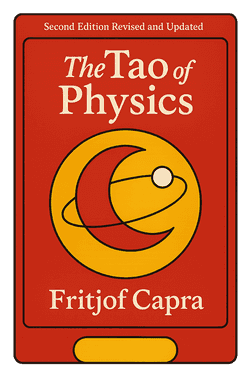
Members of the Fundamental Fysiks Group pioneered a new genre of popular physics books in the 1970s that connected quantum physics concepts with Eastern mysticism and New Age ideas. These works functioned both as popular science books and as alternative textbooks for science students, with Fritjof Capra's "The Tao of Physics" (1975) becoming the most successful example of this hybrid approach.
Despite criticisms from some academics, many physicists embraced Capra's work as a way to improve physics' public image during a time of widespread anti-scientific sentiment. The Cornell astrophysicist reviewing the book for Physics Today praised it for integrating "the abstract, rational world view of science with the immediate, feeling-oriented vision of the mystic." Physics educators quickly incorporated the book into their curricula, with the American Journal of Physics publishing articles on how to use it effectively in classrooms.
David Harrison at the University of Toronto developed a popular "Zen of Physics" course using Capra's approach, attracting both physics majors and non-science students. His course included novel assignments like having students distinguish between quotes from physicists versus mystics. Through correspondence with Nick Herbert of the Fundamental Fysiks Group, Harrison incorporated Bell's theorem into his teaching long before it appeared in standard textbooks.
The Fundamental Fysiks Group's exploration of quantum entanglement in relation to parapsychology and Eastern mysticism placed them outside mainstream physics, yet no clear boundary separated them from "real" physics. Many established physicists engaged seriously with the group's ideas. John Bell himself, when asked about connections between parapsychology and quantum entanglement, refused to dismiss the possibility outright, comparing the difficulty in reproducing psi effects to his own student struggles reproducing electrostatic experiments in damp Northern Ireland.
Several eminent physicists engaged seriously with parapsychology and quantum connections. Yale's Henry Margenau likened psi research to early radioactivity studies. Nobel laureate Eugene Wigner publicly supported Elizabeth Rauscher's quantum explanations for remote viewing. Perhaps most notably, Brian Josephson, who won the Nobel Prize at age thirty-three for discovering the Josephson junction, embraced Eastern mysticism and parapsychology shortly afterward.
第9章
From Faster-Than-Light to Quantum Encryption
Nick Herbert had been intrigued by the practical applications of Bell's theorem and quantum entanglement from his earliest encounters with the concepts. In his 1975 rederivation of Bell's theorem, he speculated about the possibility of "superluminal telegraphy"-using entangled particles to send messages faster than light.
The implications of faster-than-light communication were profound and paradoxical. Messages could be received before being sent, creating causal loopholes like warning ancestors about stock market crashes or altering past events. Some even wondered if phenomena like telepathy might already represent such signaling.
In May 1978, Jack Sarfatti prepared a patent disclosure for a "Faster-than-light quantum communication system" that he circulated through his network. His device used entangled photons sent to distant detectors, with the transmitter manipulating the efficiency of a slit detector to encode messages that would instantly appear as variations in interference patterns at the receiver's end.
Within a year, Nick Herbert devised a design called "FLASH" (First Laser-Amplified Superluminal Hookup). Herbert's scheme exploited the coherent nature of laser light-the amplified output would maintain the same polarization as the input. In his design, experimenter A would measure either linear or circular polarization of one photon, forcing its twin (heading to experimenter B) into a corresponding state. This photon would enter the laser gain tube, producing numerous identical copies.
Herbert's FLASH paper received wildly divergent reviews from six referees, with several prominent physicists unable to find any flaws in the scheme. Even Richard Feynman had been stumped until Wojciech Zurek personally explained what became known as the "no-cloning theorem"-the impossibility of making perfect copies of unknown quantum states.
While the debate over superluminal communication continued, a parallel development began to emerge: quantum encryption. What had seemed like a limitation of quantum theory-the inability to clone quantum states-was transformed into an asset for secure communication.
The concept of quantum encryption began with Stephen Wiesner's ingenious "quantum money" scheme. His system involved embedding photons with specific polarization states inside dollar bills, with the issuing bank maintaining a sealed record of these states. Any counterfeiter attempting to copy the bill would need to measure the photons' polarizations, but quantum mechanics ensured they could never determine the correct states with certainty, making perfect counterfeiting physically impossible.
In December 1984, Charles Bennett and Gilles Brassard presented the landmark "BB84" protocol for quantum key distribution. Like Herbert's FLASH scheme, BB84 uses photon polarization states, but with a crucial difference: after measurements, communicating parties compare only which detector settings they used, not measurement outcomes. For matching detector settings, they could infer perfectly correlated results, creating a shared secret key.
This system has moved beyond theory to real-world applications, including a 2004 bank transfer in Vienna and 2007 electronic voting in Geneva. Researchers have demonstrated quantum encryption through fiber-optic cables up to 115 miles long and through open air for nearly 100 miles-sufficient for satellite communication.
第10章
Legacy of the Quantum Counterculture
The Fundamental Fysiks Group disbanded in early 1979 after nearly four years of weekly meetings. Elizabeth Rauscher and George Weissmann, the group's founders, had completed their dissertations and moved on to other commitments. Internal tensions also contributed to the group's dissolution, with personal rivalries intensifying as some members achieved publishing success.
The members followed diverse paths after the group disbanded. Jack Sarfatti, after a period of financial struggle, connected with conservative patrons and transformed his politics. Saul-Paul Sirag took a job as a night watchman at an upscale San Francisco apartment building-a position perfectly suited to his scholarly nature. During quiet night shifts, he studied physics and wrote research papers, publishing two articles in the prestigious journal Nature.
Nick Herbert's Quantum Reality (1985) filled an important niche, explaining Bell's theorem and quantum entanglement when no textbooks covered these topics. The book sold over 100,000 copies, earned translations in German and Japanese, and remains in print decades later. Elizabeth Rauscher founded Tecnic Research Laboratories, securing contracts from the Naval Surface Weapons Center and aerospace manufacturer Martin Marietta for the space shuttle program.
In the late 1990s, Elizabeth Rauscher and George Weissmann organized a 25th anniversary reunion of the Fundamental Fysiks Group, held on November 18, 2000. Henry Dakin hosted the event in San Francisco, bringing together core members including John Clauser, Nick Herbert, Jack Sarfatti, Fred Alan Wolf, Saul-Paul Sirag, Fritjof Capra, and Russell Targ.
The Fundamental Fysiks Group's influence extended into physics education as the discipline underwent major shifts. As graduate enrollments plummeted in the 1970s, faculty could incorporate broader pedagogical approaches. Essay questions requiring conceptual articulation rather than just calculations reappeared on doctoral exams. New quantum mechanics textbooks emerged with interpretive discussion questions.
Following physics' second post-Cold War collapse in the 1990s, new institutions emerged to sustain foundational research outside mainstream funding structures. The Perimeter Institute (founded 1999) supports "foundational, non-directed research" with a "youth-oriented focus" and "flattest possible hierarchy"-echoing countercultural values. The web-based Foundational Questions Institute (FQXi) distributes modest grants for deep foundational questions "unlikely to be supported by conventional funding sources."
While occasional boundary disputes still erupt, many Fundamental Fysiks Group interests have entered the mainstream. Leading physicists now explore consciousness and quantum brain processes, building on work by Group member Henry Stapp. When our children eventually use quantum-encrypted messages and quantum computers, they'll be living in a world that these hippie physicists helped invent-a world where the deepest questions about reality have returned to the heart of physics.