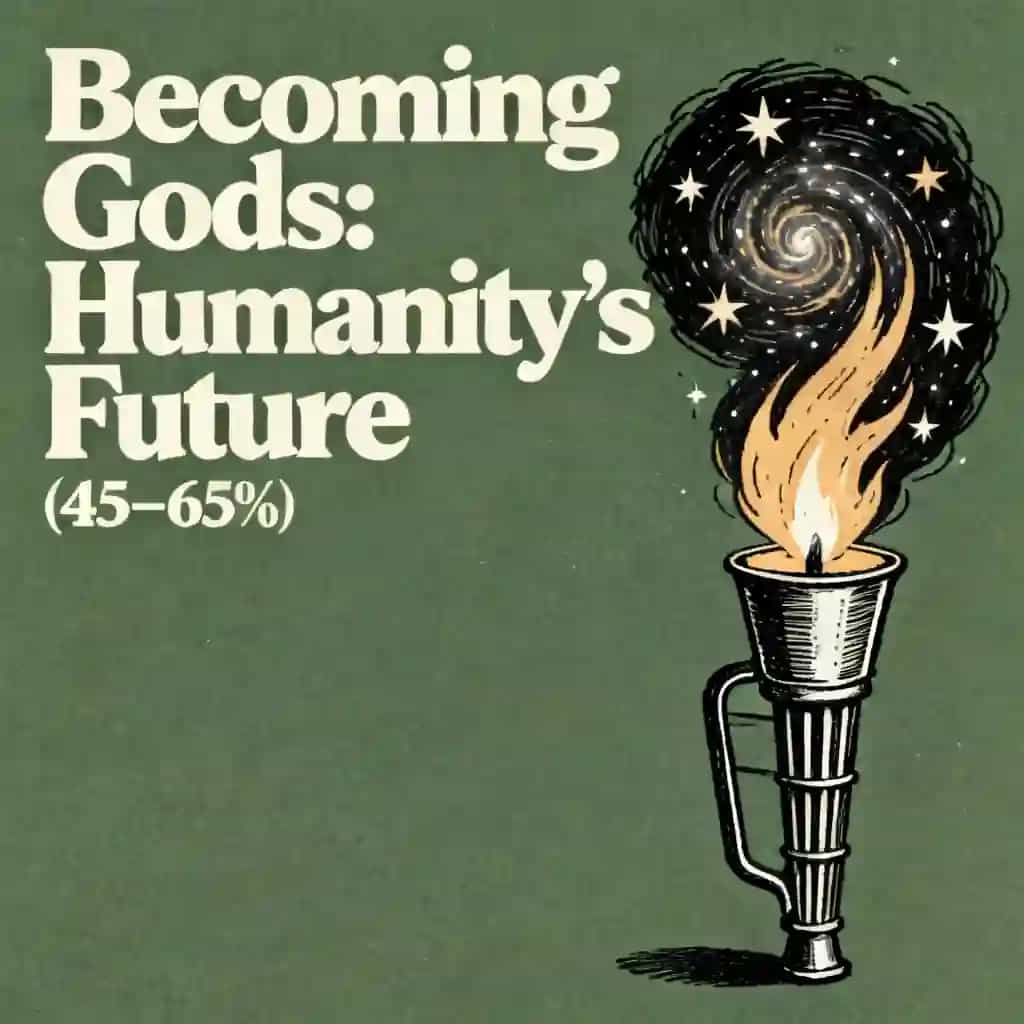
In "Homo Deus," Harari explores humanity's future as we pursue godlike powers through technology. Endorsed by Mark Zuckerberg and translated into 50+ languages, this 10-million-copy bestseller asks: What happens when algorithms know us better than we know ourselves?
Yuval Noah Harari is an Israeli historian and the bestselling author of Homo Deus: A Brief History of Tomorrow. He is renowned for merging macrohistory with provocative futurism.
Born in 1976, Harari is an Oxford-educated professor at the Hebrew University of Jerusalem. He rose to global prominence through his exploration of humanity’s past and future, blending evolutionary biology, philosophy, and technology studies.
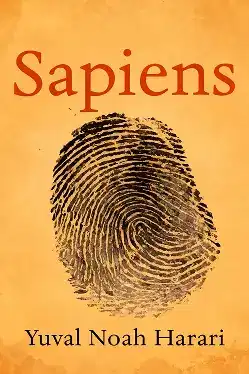
Homo Deus continues the trajectory of his groundbreaking work Sapiens: A Brief History of Humankind (2011), examining how artificial intelligence and biotechnology might redefine human existence. Harari is also a co-founder of the social impact company Sapienship.
Harari regularly contributes to global discourse through TED Talks and publications like 21 Lessons for the 21st Century and Nexus: A Brief History of Information Networks. His works, translated into 65 languages, have sold over 45 million copies worldwide, establishing him as one of the most influential public intellectuals of the digital age.
Homo Deus explores humanity’s future by analyzing historical trends, technological advancements, and philosophical challenges. Yuval Noah Harari argues that humans may evolve into god-like beings through biotechnology and AI, while grappling with existential questions about consciousness, dataism, and the decline of humanism. The book examines how societies might prioritize happiness, immortality, and divine creation over traditional goals like survival.
This book suits readers interested in futurism, philosophy, and technology’s societal impact. Educators, tech professionals, and policymakers will value its insights into AI ethics and transhumanism. Fans of Harari’s Sapiens or works by Jared Diamond and Daniel Kahneman will appreciate its macro-historical perspective.
Yes, for its provocative analysis of humanity’s potential trajectories. While some critics argue its predictions are overly pessimistic, the book offers a compelling framework for understanding AI, bioengineering, and shifting global priorities. It ranks among Harari’s most cited works, with endorsements from Bill Gates and Barack Obama.
Key concepts include:
Harari frames these trends as extensions of humanity’s historical quest to conquer famine, plague, and war.
While Sapiens examines humanity’s past, Homo Deus focuses on future scenarios. It shifts from factual history to speculative philosophy, emphasizing technology’s role in redefining human purpose. Critics note its darker tone but praise its audacious interdisciplinary synthesis.
Harari anticipates:
He warns these changes could create unprecedented inequality or render Homo sapiens obsolete.
Dataism posits that the universe consists of data flows, and value derives from processing information efficiently. Harari suggests this emerging ideology could replace humanism, reducing art, relationships, and ethics to algorithmic patterns—a shift with profound ethical implications.
The book argues AI and machine learning will outperform humans in most tasks, from medical diagnosis to governance. Harari cautions that uncontrolled AI development might erode human agency, creating a “useless class” of economically irrelevant individuals.
Critics argue Harari oversimplifies complex systems like consciousness and underplays solutions to technological risks. Some historians contest his dismissal of human agency, while ethicists note his sparse guidance for mitigating dystopian outcomes.
These lines encapsulate Harari’s themes of technological transcendence and existential paradox.
The book presciently discusses GPT-style language models, neural implants, and algorithmic governance—topics dominating 2025’s tech discourse. Its warnings about data monopolies and cognitive outsourcing align with contemporary debates about AI regulation.
Pair with Ray Kurzweil’s The Singularity Is Near for techno-optimism, or Naomi Klein’s The Shock Doctrine for critiques of unchecked capitalism. For alternate futures, try Kim Stanley Robinson’s The Ministry for the Future.
著者の声を通じて本を感じる
知識を魅力的で例が豊富な洞察に変換
キーアイデアを瞬時にキャプチャして素早く学習
楽しく魅力的な方法で本を楽しむ
Organisms are algorithms.
We are consequently facing a dual revolution. Biotechnology will enable us to upgrade humans, while infotech will enable us to merge them into immense data networks.
Our perception of danger often doesn't align with statistical reality.
We seem to hit a glass ceiling of satisfaction.
The right to pursue happiness has subtly shifted toward an expectation.
『Homo Deus』の核心的なアイデアを分かりやすいポイントに分解し、革新的なチームがどのように創造、協力、成長するかを理解します。
『Homo Deus』を素早い記憶のヒントに凝縮し、率直さ、チームワーク、創造的な回復力の主要原則を強調します。

鮮やかなストーリーテリングを通じて『Homo Deus』を体験し、イノベーションのレッスンを記憶に残り、応用できる瞬間に変えます。
何でも質問し、声を選び、本当にあなたに響く洞察を一緒に作り出しましょう。

"Instead of endless scrolling, I just hit play on BeFreed. It saves me so much time."
"I never knew where to start with nonfiction—BeFreed’s book lists turned into podcasts gave me a clear path."
"Perfect balance between learning and entertainment. Finished ‘Thinking, Fast and Slow’ on my commute this week."
"Crazy how much I learned while walking the dog. BeFreed = small habits → big gains."
"Reading used to feel like a chore. Now it’s just part of my lifestyle."
"Feels effortless compared to reading. I’ve finished 6 books this month already."
"BeFreed turned my guilty doomscrolling into something that feels productive and inspiring."
"BeFreed turned my commute into learning time. 20-min podcasts are perfect for finishing books I never had time for."
"BeFreed replaced my podcast queue. Imagine Spotify for books — that’s it. 🙌"
"It is great for me to learn something from the book without reading it."
"The themed book list podcasts help me connect ideas across authors—like a guided audio journey."
"Makes me feel smarter every time before going to work"

Homo Deusの要約をPDFまたはEPUBで無料でダウンロード。印刷やオフラインでいつでもお読みいただけます。