第1章
From Tone-Deaf to Tuned In: One Man's Musical Journey Against All Odds
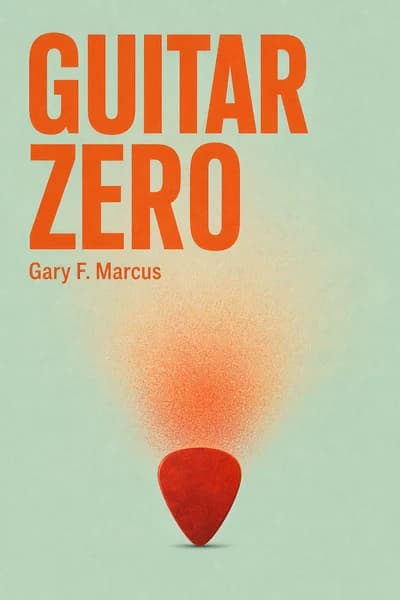
What if everything we believed about learning music was wrong? Gary Marcus, a cognitive psychologist who had been told he was "congenitally arrhythmic" and completely unmusical, decided to challenge the conventional wisdom about critical periods in learning. At 38, despite repeated musical failures since childhood, Marcus embarked on an audacious experiment: to see if he could learn guitar from scratch. His journey, documented in "Guitar Zero," isn't just a personal tale-it's a scientific exploration that has captured the imagination of neurologists, educators, and amateur musicians worldwide. The book has become required reading in music education programs at Juilliard and Berklee College of Music, with Steven Pinker calling it "a remarkable feat of musicological empathy" and The New York Times praising its "refreshing perspective on how anyone at any age can become musical."
第2章
The Myth of the Critical Period
Are musicians born or made? And more importantly, is there an age after which it becomes impossible to truly learn music? These questions haunted Gary Marcus throughout his life. Science once firmly supported the notion of rigid "critical periods"-windows during which complex skills must be acquired or forever remain beyond reach. But Marcus discovered that evidence for these inflexible learning periods is surprisingly weak.
Consider the often-cited case of Genie, a girl isolated from language until age thirteen who never fully acquired speech. Rather than proving a critical period for language, her tragic story might simply reflect the severe trauma she experienced. Recent research shows adults can learn second languages with near-native fluency, suggesting our brains remain more plastic than previously thought.
This plasticity extends to music as well. While conventional wisdom suggests musical training must begin in childhood, Marcus found inspiring counterexamples: Tom Morello of Rage Against the Machine didn't pick up guitar until seventeen; Patti Smith began in her mid-twenties; and Pat Martino completely relearned guitar after a brain aneurysm at thirty-five erased his musical memory.
These late-starting success stories gave Marcus hope. Could he overcome his intrinsic limitations, age, and complete lack of talent? His first breakthrough came unexpectedly through the video game Guitar Hero. After initially failing miserably (reminiscent of his fourth-grade recorder disaster), he eventually succeeded with his wife's patient feedback. This sparked a deeper question: if he could master a plastic controller, could he learn a real instrument?
Despite extensive research on children learning music, Marcus found almost no studies on adult beginners-not because scientists lacked interest, but because finding committed adult novices for proper studies proved nearly impossible. Most adults with jobs and responsibilities simply can't devote the necessary hours. So Marcus decided to become his own guinea pig, using his upcoming sabbatical to immerse himself in music full-time.
One hopeful study showed that while barn owls demonstrated critical learning periods where young owls adapted better to visual distortions than adults, older owls could still succeed when tasks were broken into smaller, manageable steps. Taking this "owl-style" approach, Marcus set out to discover whether adults can acquire musical skills despite age and lack of natural talent.
第3章
Strategic Immersion: The Path to Musical Growth
Knowing his age and lack of talent required a strategic approach to learning music. Marcus needed complete immersion, similar to how children learn languages most effectively in immersion programs. The brain requires extensive exposure to learn complex skills, with regular practice preventing loss of new knowledge. This explains why methods like Suzuki emphasize immersion from an early age.
Becoming an expert requires two key elements according to cognitive psychologist Anders Ericsson: substantial practice (the famous "ten thousand hours") and "deliberate practice"-constantly evaluating oneself and focusing on weaknesses rather than just playing for fun. Most practice yields minimal improvement because learners reach plateaus where they repeat what they already know. Effective learning happens in the "zone of proximal development"-tackling challenges just beyond current abilities, where success occurs roughly 80% of the time.
Marcus began with a two-week "pilot study" at his wife's family cottage in Canada, six months before turning thirty-nine. He brought everything he owned musically: a Casio keyboard, cheap acoustic guitar, and instructional books. He practiced 2-6 hours daily, splitting time between instruments to learn basic notes and chords.
Piano came relatively easily with its logical layout, but guitar captured his heart despite being brutally difficult. Unlike piano where playing a note requires pressing a single key, guitar required coordinating both hands simultaneously-fretting with the left while plucking with the right. Forming chords demanded memorizing obscure finger shapes and precise placement to avoid fret buzz.
His breakthrough came when he discovered David Mead's "Crash Course: Acoustic Guitar," which broke skills into manageable chunks perfect for an "old owl" like him. He learned scales-particularly the minor pentatonic-which gave his playing a faintly musical quality. Soon he was practicing daily, even buying a travel guitar to maintain practice while lecturing internationally.
Along with this beauty came the first step in rewiring his brain. Studies show musicians' brains differ from non-musicians in multiple areas, including the primary motor cortex, the planum temporale (for pitch perception), cerebellum (rhythm), and corpus callosum (connecting brain hemispheres). Musicians' brains respond more sensitively to musical deviations, with specializations related to their specific instruments. Research by Harvard neuroscientist Gottfried Schlaug found children taking music lessons for just fifteen months showed greater growth in brain regions controlling hand movements compared to non-musicians. While practice clearly changes the brain, talent matters too-musicians' brains likely differ due to both practice and innate abilities.
第4章
Music and the Developing Brain
Even before birth, babies are surrounded by music, albeit muffled by amniotic fluid-mostly bass sounds with treble lost, like listening from the bottom of a swimming pool. Inside the womb, fetuses hear heartbeats, breathing, and their mother's voice through bone conduction. By the final trimester, they begin perceiving external sounds.
Some musical abilities emerge remarkably early. Newborns can recognize relative pitch (the gaps between notes), detect missing beats in rhythmic patterns, distinguish different timbres, and differentiate between consonance and dissonance. By two months, infants prefer consonance over dissonance. At six or seven months, they become sensitive to melody shapes and can recognize transposed melodies.
Despite these early capabilities, the notion of an innate "music instinct" comparable to language remains questionable. Unlike songbirds who master singing quickly without correction, humans develop musical abilities slowly and unevenly. Many adults never learn to sing in tune, and mastering instruments takes years. People like Theodore Roosevelt and Sigmund Freud lived perfectly normal lives despite being amusical-something impossible for a male zebra finch who needs to sing to find a mate.
The evidence suggests music is more learned than hardwired. While humans excel at intellectual pursuits with practice, drawing on language, culture and teaching, the average person isn't born with special musical gifts. It's like skiing-we can learn to zip down hills with practice, but aren't born knowing how.
Music lacks the strong universals found in language. Even seemingly basic elements like tonality, scales, melody, and harmony vary dramatically across cultures. Rather than having dedicated "music circuits," our brains repurpose existing neural systems-temporal cortex circuits shared with other primates for sound processing, combined with our capacity for cultural learning, cross-sensory integration, and language. Brain imaging shows music activates many regions (prefrontal cortex, temporal lobe, Broca's area, amygdala)-none dedicated solely to music.
Infants actually prefer speech to music, suggesting language may precede musical development. The musical mind develops gradually as neural circuits originally evolved for other purposes are co-opted through deliberate practice-not because music circuitry exists from birth.
第5章
The Struggle Is Real: Why Music Is So Hard to Learn
Rules are easy to learn, but idiosyncrasies are hard-especially infrequent ones. Just as children struggle with irregular verbs like "fled" and "bore," musicians face the maddening irregularities of music theory. While children eventually master irregular verbs automatically, music's complexities require deliberate practice.
Guitar proved particularly challenging. Unlike a piano's logical one-to-one mapping between keys and notes, the guitar fretboard presents a bewildering array of options. The same note appears in multiple locations-middle C alone can be played in four different positions. This multiplicity confuses beginners but gives advanced players flexibility in forming chords.
Guitar demands not just memorization but precise perceptual mastery, coordinated muscle control, and physical strength. Musicians need "relative pitch"-the ability to recognize intervals between notes regardless of key. Without this skill, which requires extensive ear training to develop, playing by ear remains impossible. Meanwhile, the physical demands include contorting fingers into precise chord shapes with zero margin for error, developing independent finger movement, and building finger strength.
Speed and timing present further challenges. Musicians must reshape their hands many times per second with surgical precision while maintaining perfect timing-something the human brain isn't naturally equipped for. Unlike computers with millisecond-accurate clocks, humans struggle with precise timing, making musical rhythm a lifelong pursuit. Musicians spend countless hours with metronomes, learning to master not just the beats but the spaces between them.
Even harder is counting multiple rhythms simultaneously-try tapping three beats with one hand against two with the other, and you'll find it devolves into simpler patterns at higher speeds. Our brains have only one master clock, making true limb independence impossible. Instead, we learn to "chunk" separate actions together, creating an illusion of independence.
Everything must eventually become automatic through proceduralization-the brain's transition from explicit knowledge to implicit skill. This involves neural changes as mental representations shift from the conscious prefrontal cortex to motor areas and the basal ganglia. Without this practice-driven brain growth, you might enjoy music, but you certainly won't be able to play it.
第6章
The Language-Music Connection
Language and music fascinate as formal systems with remarkable similarities. Both arrange finite elements (words/notes) into infinite possibilities following specific rules. Both emerge early in development-babies practice syllables by five months and may sing by eighteen months.
The brain uses overlapping networks in unique combinations for different mental abilities. Broca's area combines smaller units into larger ones whether in language, music, or motor planning, while the hippocampus supports memory across various domains. The tool kit metaphor helps explain this-like building furniture requires hammers and screwdrivers, language and music emerge from the same collection of brain tools, particularly memory systems.
Despite sharing neural resources, language likely preceded music evolutionarily. Archaeological evidence shows musical instruments appearing only 36,000 years ago versus language's 50,000+ year history. When melody and lyrics clash, lyrics typically win-infants prefer speech to instrumental music, and people remember lyrics more easily than melodies.
As linguist and accomplished clarinetist Ray Jackendoff notes, music and language share compositional structure, but this trait isn't unique to them-we use similar hierarchical planning for mundane activities like making coffee. Music isn't merely a special form of language; each stands independently while drawing on common cognitive resources.
Music ultimately expresses what language cannot. As Aaron Copland observed, music conveys "a state of meaning for which there exists no adequate word in any language." Words like "high" and "low" to describe pitches aren't even universal across cultures, showing language's limitations in capturing musical experience.
第7章
Finding the Right Teacher
By February, after six months of practice, Marcus's efforts finally yielded results. He was no rock star, but thrilled to play basic chords in tempo. A major and D major came fluently, and even the troublesome F major seemed attainable. What might take others a week had taken him six months, but he was ecstatic nonetheless.
With his sabbatical halfway complete, panic set in. He needed a teacher to maximize his remaining time! At his neighborhood guitar store, they recommended Don-a thirty-year teaching veteran who'd written several books on guitar. His "recession special" rate of fifty dollars an hour seemed reasonable for New York City. Hoping not to repeat his childhood recorder lesson trauma, Marcus reentered the world of music education.
Teachers serve multiple purposes beyond just imparting knowledge. They motivate through rewards or consequences, provide structure to learning, and for adult students, create accountability that encourages regular practice. Most importantly, good teachers help identify errors and target specific areas for improvement rather than simply instructing students to "go home and practice."
Don's teaching philosophy aligned with Marcus's-understanding music's tools and concepts rather than merely memorizing songs. He recommended "Like a Rolling Stone" as good practice for chord changes since it can be played with open chords in the key of C. At his first lesson, Don gave Marcus an unexpectedly positive assessment, noting his relaxed posture and light touch. He even approved of his barre chord attempts and scale playing, though he wanted him to use his pinkie more.
What makes a good teacher? Science on music education is surprisingly thin despite how many children take lessons. The best teachers diagnose problems accurately, motivate effectively, and design exercises that are challenging but achievable. Michele Horner, a renowned Suzuki method instructor, exemplifies exceptional teaching through her hawk-eyed attention to detail, perpetually positive feedback, ability to maintain children's attention, and careful instruction of parents in supporting home practice.
However, the Suzuki method has drawbacks-its rigid classical repertoire might not engage children interested in contemporary music, its emphasis on perfection requires unusual patience, and it typically neglects improvisation, which can be one of music's greatest joys. Many classical musicians never learn to improvise, missing out on music's creative potential.
In the end, the specific teaching method matters less than having instructors who listen well and provide feedback that's both constructive and enthusiastic. It's not about the technique; it's about the teacher.
第8章
Youth vs. Experience: Learning Across Generations
Ten months into his musical journey, Marcus received an invitation to DayJams, a summer camp where kids ages eight to fifteen learn to play and compose rock music. The camp director suggested he join a band rather than just observe-and recommended he play bass guitar since they never had enough bassists. Though he'd never played bass before, Marcus was determined to succeed.
He stayed up half the night researching basses online, rejecting the camp's offer of a loaner instrument. If he wanted teenagers to let him join their band, he needed to demonstrate at least minimal competence from day one. He ordered a purple Ibanez with overnight shipping and spent the next three weeks obsessively practicing.
At the opening assembly, after the instructors performed, he was introduced as a professor writing about the camp experience. He was brought to one of the youngest bands, directed by Michael Raitzyk-coincidentally a family friend and one of Maryland's leading jazz guitarists.
Three bandmates-Ryan (lead guitarist), Riley (drummer), and Greer (keyboardist)-were clearly experienced, while two others were complete novices like Marcus. In bass class, the instructor immediately criticized his technique of picking notes with his thumb instead of using his fingers.
Learning music requires mastering certain fundamentals regardless of age, but children's and adults' brains differ physiologically. Studies show adults typically struggle more than children when learning skills like second languages, though the decline is gradual rather than sudden. This reflects both slowly declining memory skills and interference from established habits.
Despite common belief that kids are quicker learners, laboratory research suggests adults actually learn procedural tasks faster. If kids outshine adults, it's likely because they're more persistent-the same drive that lets them watch the same TV episode repeatedly enables them to practice riffs tirelessly. Adults initially learn patterns more quickly, but with enough practice kids eventually achieve the same accuracy.
What truly determines learning speed is experience, not age. The kids who learned fastest were those who had practiced longest. Experience matters because mastery involves two key developments: recognizing patterns (chunking) and knowing where to focus attention. To experts, random notes become familiar blocks, making everything new easier to remember.
As the oldest band member, Marcus couldn't match his bandmates' energy, but he contributed a sense of song dynamics from years of listening. After Ryan introduced two basic riffs, he helped structure the composition-suggesting an introduction (Greer playing classical piano interrupted by Riley's drums), organizing solos, and planning the ending. The kids excelled at individual riffs but hadn't considered the ensemble as a whole.
This experience confirmed that children and adults bring different strengths: kids offer patience and dexterity; adults provide knowledge from years of listening and greater facility with abstractions. Like aging pitchers who shift from power to cunning, adults can use their experience to contribute something valuable despite technical limitations.
第9章
The Talent Question: Nature, Nurture, or Both?
While practice is undeniably crucial for musical development, the popular notion that talent doesn't exist or is overrated fails to capture reality. The psychologist Anders Ericsson claimed that "outstanding performance is the product of years of deliberate practice and coaching, not of any innate talent or skill," echoing behaviorist John Watson's earlier assertion that he could train any healthy infant to become any type of specialist regardless of inherent abilities.
Practice matters tremendously, but it's a logical error to conclude that talent is therefore irrelevant. Great musicians, like the tallest trees, need both optimal genes and optimal environments.
The hereditary component of musical ability is striking. An impressive number of top musicians come from musically inclined families: the musical dynasties of the Marleys, Lennons, Jacksons, Wainwrights, Marsalises (all four brothers from pianist Ellis Marsalis), and classical families like the Bachs, Mozarts, and Strausses. Even when musicians like Norah Jones develop styles different from their parents, or Jeff Buckley sounds eerily like the father he met only once, the heritable component of musical ability is undeniable.
This pattern extends beyond music-sports dynasties like the Ripkens, Mannings, and Griffeys demonstrate similar inheritance patterns. Twin studies consistently show genetics is a better predictor than shared family environment for virtually any measurable human behavior.
Our musical capacity doesn't come from genes specific to music, but from genes affecting broader aspects like memory efficiency, curiosity, absolute pitch sensitivity, and composition ability. Studies show that factors beyond practice-intelligence, auditory aptitude, and working memory-significantly predict musical achievement even after controlling for practice hours.
Edwin Gordon's comprehensive longitudinal study found that nearly half the variation in children's musical performance could be predicted three years in advance based on aptitude tests measuring tonal and rhythmic imagery. The evidence is clear: talent and practice both matter tremendously.
Marcus's own musical challenges stemmed partly from his poor vestibular system-the balance-tracking mechanism tied to rhythm perception. Having always been motion-sick and unable to enjoy swings or roller coasters as a child, it's no surprise rhythm posed difficulties for him.
Pat Metheny exemplifies the talent-practice combination. Though he practices relentlessly, he also comes from an extraordinarily musical family. When Pat picked up guitar at twelve, he was playing professionally in Kansas City's best jazz clubs within just three years. While he developed his physical dexterity through practice, he was born with "golden ears"-an exceptional auditory sensitivity that allows him to analyze other musicians' styles with remarkable precision.
第10章
The Evolution of Music: Cultural Technology, Not Instinct
The Hendrix theory of music evolution fails for several key reasons. First, it's premised on modern fame and wealth that didn't exist when music evolved-court jesters weren't rock stars, and few performers became internationally renowned before Mozart and Paganini. Second, it incorrectly assumes a specific "music module" in the brain, when music actually utilizes neural tissue that predates music itself. Third, it naively treats all music as equally appealing, when our musical preferences are actually highly individual and discriminating.
Social bonding theories also fall short, failing to explain why sound patterns specifically would enhance bonding when many modern inventions like beer drinking also create social cohesion. Similar evolutionary explanations for all arts-poetry, sculpture, painting-suffer from the same weakness: most artistic pursuits aren't beneficial for our genes. For every Picasso or Hendrix whose genes benefited from fame, thousands of artists toil in obscurity. People engage in art despite their genes, not because of them.
Scientists have made "the error of the historical present"-assuming what's compelling now was always compelling. Modern artistic media far exceed what was available to our ancestors. Artists have evolved their craft to increasingly tickle the brain in particular ways-like Disney gradually making Mickey Mouse cuter and more juvenile over decades.
Music isn't an innate mental mechanism but a technology refined over 50,000 years to maximize "flow"-that state of joyous immersion where one loses all sense of time passing. Each generation of artists has developed new ways to keep listeners and performers entranced. These innovations include physical instruments like the piano (which added dynamic control the harpsichord lacked) and synthesizers, but also intellectual technologies like harmony (which didn't exist before 900 AD), steady percussion (imported from Africa), and structures like the twelve-bar blues that balance familiarity and novelty.
Cultural selection, not just natural selection, has shaped music. New musical tools and techniques that effectively hold listeners' attention persist, while others fade away. With all the techniques available to modern musicians-from harmony and percussion to production tools like equalizers and synthesizers-we can't help but get into the groove.
第11章
The Joy of Musical Knowledge
We can deeply enjoy music without understanding its technical aspects. When James Brown asks "Shall I take 'em to the bridge?" in his song "Sex Machine," most listeners appreciate the musical transition without knowing that a bridge is a contrasting section that provides relief from repetition while setting up the finale. This technical knowledge isn't necessary for enjoyment, just as movie viewers don't need to understand concepts like tension and resolution to be moved by a film.
Even professional musicians sometimes can't articulate their musical knowledge. Terre Roche, though an accomplished musician, once froze when asked about a "IV chord" in a recording session, feeling like "the stupidest person in the room." Later, she composed "Mr. Sellack" by experimenting with chord shapes without knowing music theory terms like "secondary dominant" or even "bridge."
Our brains process "knowing how" differently from "knowing that." Facts are stored in declarative memory (associated with the medial temporal lobe and cortices), while action programs reside in procedural memory (encoded in structures like the cerebellum and basal ganglia). This explains why musicians can play without consciously understanding music theory-their muscles and basal ganglia know what to do even when they can't articulate it.
Jazz pianist Bill Evans revolutionized chord voicings before anyone, including himself, could fully explain what he was doing. Only later were his innovations codified into explicit theory. Great jazz requires blending conscious knowledge with unconscious playing-what Marilyn Crispell describes as mixing "overall frame" awareness with unconscious in-the-moment playing.
Just as Daniel Goleman argued that social and emotional savvy matters as much as analytical intelligence in professional success, music requires emotional intelligence too. Like the old man who defused a violent drunk on a Tokyo subway through empathy and connection, musicians must anticipate their audience's emotional needs. Bruce Springsteen captures this perfectly: "I always write with an audience in mind. If I feel that [connection] coming back at me then I feel like I'm doing my job."
What truly matters isn't how many chords you know, but how you use them to express emotion.
第12章
The Journey's End: Why Music Matters
After a year and a half of dedicated practice, Marcus achieved remarkable progress despite his initial lack of rhythm and musical talent. He could form chords effortlessly, distinguish musical intervals, count beats, improvise, and understand music at a deeper level. His brain had genuinely changed-not to expert level, but enough to transform both his perception and production abilities. While he found no miraculous shortcuts, targeted practice aimed at specific skills proved effective even for someone "congenitally arrhythmic."
Why invest so much effort learning an instrument when machines can produce technically perfect music? This question grows more acute as technology advances. Despite technological alternatives, musical training correlates with benefits in other domains-from language learning to higher IQs-with musicians even disproportionately represented among Nobel Prize winners.
However, these correlations may not be causal-perhaps brighter, more disciplined people simply gravitate toward music. While games like Guitar Hero offer instant gratification through an illusion of control, they remain finite experiences. Real instruments offer deeper rewards: opportunities for creativity, improvisation, and ongoing growth.
Music provides both immediate pleasure (hedonia) and long-term fulfillment (eudaimonia)-the satisfaction of constantly developing and living life to the fullest. For Marcus, acquiring the Moog Guitar represented this convergence of technology and musicianship, allowing him to create sounds nobody else yet could-exploring a new musical landscape.
Music brought two unexpected gifts to his life. First, a vast new circle of creative friends-from record producers to performers. The second benefit was discovering a powerful new form of expression. After gaining confidence on guitar, Marcus began writing songs, including one for his ailing uncle David. Working with a producer, he captured his uncle's seriousness of purpose through minor chords, crafting lyrics about David's intellectual influence and spiritual struggles.
When he performed it for David in North Carolina, his uncle responded with a warm hug and called him "a nascent Bob Dylan." They shared their deepest conversation that night, and David passed away five weeks later. Marcus reflects that this musical connection in their final meeting brought a closure that words alone never could.