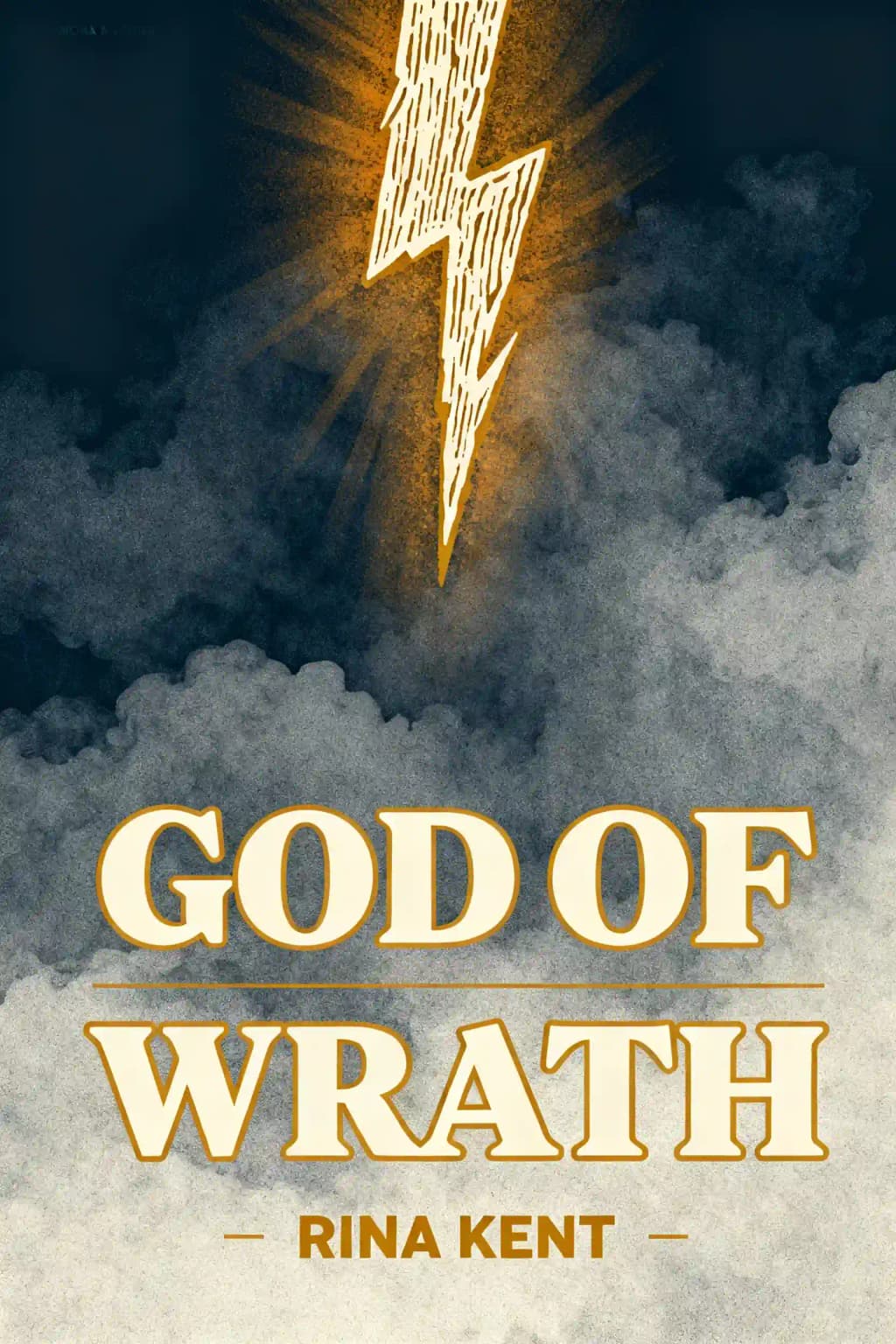
In "God of Wrath," Jeremy Volkov and Cecily's forbidden romance ignites within elite criminal families. This dark standalone in Rina Kent's bestselling Legacy of Gods series delivers what readers call "action movie romance with a hint of criminal minds." What dangerous desires await in their morally gray world?
Rina Kent is the New York Times and USA Today bestselling author of God of Wrath, the third installment in her wildly popular Legacy of Gods series. Known for crafting unapologetic dark romance featuring morally grey anti-heroes and villains, Kent has built a devoted following through her interconnected "Rinaverse"—a sprawling universe of interconnected stories filled with angst, intensity, and forbidden passion.
With an academic background in medical research (she completed her master's degree and began a PhD before pursuing writing full-time), Kent brings a methodical, disciplined approach to her storytelling. A polyglot fluent in multiple languages, she leads a private life in London while creating some of dark romance's most beloved characters. Her Legacy of Gods series—including God of Malice, God of Pain, God of Fury, God of Ruin, and God of War—has become a cornerstone of the genre.
Kent's work has earned over 2.5 million ratings on Goodreads across 60 distinct works, with her books consistently topping bestseller charts and captivating readers worldwide with her bold, emotionally charged narratives.
God of Wrath by Rina Kent is a dark romance novel following Cecily Knight, a British college student who infiltrates a secret society called The Heathens and becomes entangled with Jeremy Volkov, a violent mafia prince. The story explores their intense enemies-to-lovers relationship built on obsession, psychological dominance, and power dynamics. As the third book in the Legacy of Gods series, it delves into themes of trauma, forbidden desire, and the blurred lines between control and consent.
Rina Kent is a New York Times, USA Today, and #1 bestselling author specializing in dark romance novels. She's best known for creating the "Rinaverse" and writing unapologetic anti-heroes and morally grey villains that readers can't help but fall for. With a background in academic medical research, Rina Kent abandoned her PhD to pursue writing full-time. Her signature style combines psychological complexity, emotional intensity, and darker themes that challenge traditional romance boundaries.
God of Wrath is ideal for readers who enjoy dark romance, enemies-to-lovers tropes, and psychologically complex relationships with morally grey characters. This book appeals to fans of mafia romance, college settings, and stories featuring dominant anti-heroes. However, it contains graphic content, BDSM elements, obsessive behavior, and emotionally intense scenes, making it suitable only for mature readers comfortable with darker themes and power imbalances in fictional relationships.
God of Wrath by Rina Kent is worth reading for fans seeking an unapologetically dark romance that pushes boundaries and explores the psychology of obsession and desire. The novel delivers intense character development, particularly Cecily's confrontation with her own darkness, and Jeremy's violent possessiveness. While the toxic dynamics won't appeal to everyone, readers who appreciate Rina Kent's signature style of morally complex anti-heroes and emotional depth will find it compelling. The book works as a standalone within the Legacy of Gods series.
Cecily Knight is the emotionally complex heroine of God of Wrath, a British student at Royal Elite University who disguises herself to infiltrate The Heathens' initiation ritual. Beneath her cautious, morally upright exterior lies a fractured psyche shaped by trauma and hidden desires for domination and control. Throughout the story, Cecily confronts her darkest impulses, evolving from a timid observer to someone who embraces her primal cravings while struggling to maintain emotional autonomy in her toxic relationship with Jeremy Volkov.
Jeremy Volkov is the violent, obsessive anti-hero of God of Wrath—a mafia prince and heir who becomes fixated on Cecily after their initial encounter during The Heathens' ritual. As "Orange Mask," he psychologically and physically dominates her, exercising total control through stalking and coercion masked as consent. Jeremy's character embodies the dark romance archetype: dangerous, possessive, and incapable of expressing love without domination. His deep-rooted trust issues and familial damage drive his need to possess rather than simply love Cecily.
The Heathens is a violent, secret society at The King's U that conducts savage initiation rituals involving predator-prey games in dark mansions surrounded by woods. Cecily infiltrates this organization on behalf of Landon King, disguising her identity with a brown wig and masked accent. The initiation serves as the catalyst for Cecily's encounter with Orange Mask (Jeremy Volkov), where she experiences psychological unraveling and a terrifying awakening to her forbidden desires for domination and loss of control.
God of Wrath explores power dynamics, obsession, and psychological control through Jeremy's predatory pursuit of Cecily, where dominance manifests both physically and emotionally. The novel examines trust and betrayal as transactional elements that constantly shift between characters incapable of vulnerability. Additional themes include trauma responses, the psychology of desire and shame, emotional coercion disguised as consent, and the dangerous intersection where obsession cannibalizes genuine affection. The story questions whether love can exist within such toxic, unbalanced power structures.
Yes, God of Wrath by Rina Kent incorporates significant BDSM elements throughout the narrative. Cecily signs up for sessions on a kink site where she's matched with a partner whose dominance style mirrors her traumatic encounter with Orange Mask. The story explores themes of consent through safe words, domination and submission dynamics, and the psychological complexities of surrendering control. However, the power exchange is portrayed through a darker lens involving stalking, coercion, and blurred consent boundaries rather than healthy BDSM practices.
God of Wrath is book three in Rina Kent's Legacy of Gods series but functions as a standalone novel with its own complete storyline focused on Cecily and Jeremy. While it's set in the same universe as other Legacy of Gods books and features connections to characters like Landon King from Royal Elite University, readers don't need to read previous installments to understand the plot. The Legacy of Gods series includes six books total, with other titles like God of Malice, God of Pain, and God of Fury.
God of Wrath faces criticism for romanticizing toxic relationship dynamics, including stalking, psychological manipulation, and dubious consent portrayed as passionate love. Critics argue the power imbalance between Cecily and Jeremy—where coercion is masked as desire—normalizes unhealthy patterns rather than exploring them critically. Some readers find the obsessive behavior disturbing rather than romantic, and the graphic content may be triggering for trauma survivors. The novel's portrayal of BDSM without emphasizing safe, sane, and consensual practices also draws concern from the community.
God of Wrath follows Rina Kent's signature dark romance formula seen throughout the Rinaverse, featuring morally grey anti-heroes, intense psychological warfare, and enemies-to-lovers dynamics similar to her Royal Elite series. However, Jeremy Volkov's violence and obsession push boundaries even further than characters in God of Malice or Deviant King. The mafia elements provide a grittier backdrop compared to the elite university politics in earlier works. Fans of Rina Kent's unapologetic villains and angst-heavy storytelling will recognize her style, though God of Wrath leans heavier into darker psychological themes.
著者の声を通じて本を感じる
知識を魅力的で例が豊富な洞察に変換
キーアイデアを瞬時にキャプチャして素早く学習
楽しく魅力的な方法で本を楽しむ
mercy is seen as weakness and violence is a daily currency.
the hunter and the hunted, the predator and the prey
fantasy shatters like glass
Cecily harbors fantasies of "being ambushed in a dark place and taken against her will"
『God of Wrath』の核心的なアイデアを分かりやすいポイントに分解し、革新的なチームがどのように創造、協力、成長するかを理解します。
鮮やかなストーリーテリングを通じて『God of Wrath』を体験し、イノベーションのレッスンを記憶に残り、応用できる瞬間に変えます。
何でも質問し、学習スタイルを選び、自分に本当に響くインサイトを一緒に作れます。

"Instead of endless scrolling, I just hit play on BeFreed. It saves me so much time."
"I never knew where to start with nonfiction—BeFreed’s book lists turned into podcasts gave me a clear path."
"Perfect balance between learning and entertainment. Finished ‘Thinking, Fast and Slow’ on my commute this week."
"Crazy how much I learned while walking the dog. BeFreed = small habits → big gains."
"Reading used to feel like a chore. Now it’s just part of my lifestyle."
"Feels effortless compared to reading. I’ve finished 6 books this month already."
"BeFreed turned my guilty doomscrolling into something that feels productive and inspiring."
"BeFreed turned my commute into learning time. 20-min podcasts are perfect for finishing books I never had time for."
"BeFreed replaced my podcast queue. Imagine Spotify for books — that’s it. 🙌"
"It is great for me to learn something from the book without reading it."
"The themed book list podcasts help me connect ideas across authors—like a guided audio journey."
"Makes me feel smarter every time before going to work"

God of Wrathの要約をPDFまたはEPUBで無料でダウンロード。印刷やオフラインでいつでもお読みいただけます。
What happens when the monster under your bed becomes your addiction? When the very person who terrifies you also makes you feel more alive than anyone else? God of Wrath explores this intoxicating paradox through the story of Cecily Knight and Jeremy Volkov. Their relationship begins in the shadows-literally-during a secretive initiation ceremony in the woods surrounding King's University. Disguised with a brown wig and numbered mask, Cecily infiltrates the notorious Heathens club, relying on her "superpower" of invisibility to gather intelligence on their Russian mafia connections. But her carefully constructed anonymity shatters when Jeremy, the most feared Heathen, discovers her hiding place. Their first encounter sets the tone for everything that follows: his golf club pressed against her throat, her desperate improvisation revealing her virginity as a bargaining chip, his cruel amusement mixed with unmistakable interest. Most disturbing is Cecily's own reaction-beneath her very real fear pulses an unexpected thrill that both confuses and shames her. This primal response foreshadows her internal struggle throughout the story: how can she trust her own judgment when her body and mind seem at war? The forest becomes a perfect metaphor for their developing relationship-dark and primal, filled with hidden dangers and unexpected paths, where nothing is quite what it seems. What starts as a game of predator and prey evolves into something far more complex, challenging our understanding of desire, consent, and the thin line between protection and possession.
They couldn't be more different. Cecily spends weekends nursing injured strays, her apartment filled with rescue plants and secondhand furniture that tell stories of compassion. Jeremy is heir to the Petrov crime empire, raised where mercy equals weakness and violence is currency. Their worlds collide when Jeremy discovers Cecily's profile on Primal-an underground app for predator/prey fantasies. He intercepts her intended match and orchestrates their encounter in the forest near the Heathens' mansion. Cecily's fantasy shatters when she realizes her captor isn't Landon, her coffee shop crush, but Jeremy Petrov-a man whose reputation terrifies hardened criminals. Jeremy infiltrates her life, appearing unannounced, leaving expensive gifts, demanding weekly meetings at his isolated cottage. His obsession is contradictory: tracking her movements possessively while memorizing her favorite foods and fulfilling her darkest fantasies with intensity. What makes this compelling is Cecily's conflicted response. She recognizes their toxic arrangement yet can't deny their electric connection. He sees through her walls to desires she's always denied.
"I want to be ambushed in a dark place and taken against my will." These fantasies both shame and excite Cecily, our window into taboo desires. When Jeremy forces her to play Russian roulette, she's terrified yet exhilarated. Their encounters are violent and primal - yet Cecily never uses her safe word, blurring the boundary between fantasy and reality. The story suggests these dark desires don't make Cecily broken but are aspects of her sexuality she's struggled to accept. Jeremy provides a judgment-free space for exploration, understanding her needs even when she can't articulate them. This psychological depth transforms the narrative into an exploration of self-acceptance. Cecily's journey involves not just falling for Jeremy but embracing parts of herself society tells her to suppress. When she dissociates during extreme stress - a trauma response - Jeremy's unexpected tenderness creates bridges between their worlds.
With his "warlord build" and skull tattoos, Jeremy physically embodies danger. Cecily labels him a sociopath or psychopath - lacking empathy and remorse. Yet the story gradually reveals deeper dimensions. Jeremy's perspective chapters unveil his troubled childhood with a mentally ill mother who became a "ghost" and his fierce yet controlling protectiveness toward his sister Annika. His vulnerability with Cecily stems from fear she could never truly choose him. What makes Jeremy compelling isn't that he changes - he remains violent, possessive, and dangerous - but that we understand his logic. He arranges "accidents" for men who hurt Cecily and plans revenge on her abusive ex-boyfriend. His violence, never justified, becomes contextualized as a warped expression of care. The novel doesn't ask us to forgive Jeremy but to understand him as someone shaped by an upbringing where power meant survival, with his obsession with Cecily becoming his one genuine connection.
Both protagonists carry deep wounds that shape their behaviors. Cecily suffers from sleep paralysis and dissociative episodes triggered by witnessing sexual acts, while Jeremy's trauma manifests as control issues and fear of abandonment-consequences of his mother's mental illness. These damaged individuals become instruments of healing for each other. Cecily helps Jeremy understand his mother differently, explaining that she fought her demons out of love for her family, allowing him to reconnect with her after years of resentment. Jeremy provides space for Cecily to confront her trauma. When she's sexually assaulted by a classmate named Zayn, Jeremy eliminates the threat by slicing Zayn's throat. Though extreme, this violence represents an end to Cecily's fear, enabling her healing. Their relationship, despite its toxicity, becomes a crucible for transformation. They completely see and accept each other's darkness-a radical form of unconditional acceptance that helps both integrate fragmented parts of themselves.
This story explores the journey of acceptance - both of others and ourselves. Cecily confronts desires that challenge societal norms, grappling with shame over her response to Jeremy's dominance and questioning her identity. Jeremy's journey centers on emotional vulnerability. Having survived betrayal, he's built walls, trusting only his fellow Heathens. When he discovers Cecily provided information leading to the mansion fire, his violent reaction reveals deep trauma and trust issues. Their reconciliation demonstrates the complexities of forgiveness. Cecily establishes clear boundaries - refusing uncontrolled violence while demanding respect alongside passion. Jeremy's acceptance shows growth as he learns to channel his intensity constructively. Their relationship transforms from potentially destructive to nuanced, maintaining primal energy while incorporating mutual understanding. The epilogue captures this transformation. Their campus chase games preserve the thrilling dynamic they crave, now ending with gentle aftercare and emotional intimacy. Jeremy transitions between dominant protector and tender partner, while Cecily embraces both strength and vulnerability.
Can someone defined by darkness bring light into another's life? This paradox challenges our preconceptions about redemption and love. Jeremy remains violent and possessive, yet for Cecily, he becomes exactly what she needs - someone who sees her darkest desires without judgment and offers protection without demanding she diminish herself. Their relationship exists in a gray area beyond simple healthy/toxic labels. What makes their connection work is mutual acceptance - they see each other completely, darkness and all, and choose each other anyway. This becomes particularly evident when Cecily confronts her own capacity for darkness, with Jeremy serving as both catalyst and witness. Perhaps that's the most radical form of love - not the sanitized version in conventional romances, but the messy acceptance of another's whole self. God of Wrath suggests that sometimes the most unexpected people help us heal our deepest wounds. Sometimes the monster under the bed is exactly what we need to face the monsters within ourselves.