第1章
When the Glass Shatters: America's Heartland Betrayed
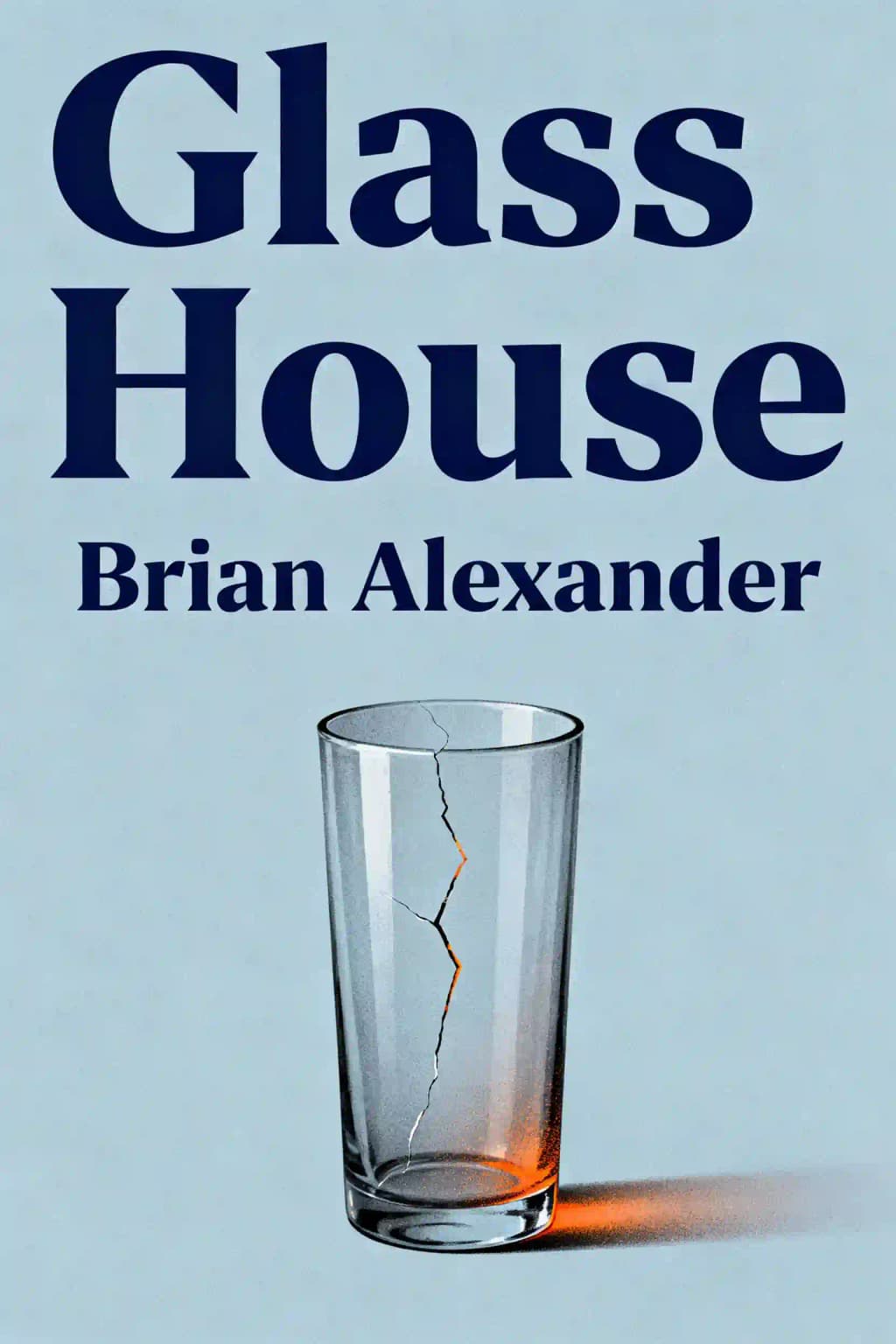
In Lancaster, Ohio, a police officer fights back tears in a local pub. Eric Brown, who runs the Major Crimes Unit, has watched his beloved hometown crumble under the weight of economic devastation and drug addiction. Once a proud industrial center built around Anchor Hocking Glass Company, Lancaster now struggles with poverty, addiction, and a fractured community spirit. "My mom and dad are still here. My son's here. He's raising his son here..." Brown says before emotion overwhelms him. His story opens Brian Alexander's searing examination of how Wall Street's predatory practices destroyed an iconic American town-a book that Warren Buffett called "a must-read for anyone concerned about the future of American capitalism," and which Barack Obama included on his summer reading list as an essential text for understanding the hollowing out of Middle America.
第2章
The Rise and Fall of an American Glass Kingdom
Lancaster, Ohio wasn't just any small town-it was America's quintessential industrial success story. In 1947, Forbes magazine devoted an entire issue to Lancaster as the perfect embodiment of the American free enterprise system. The town's economic backbone was Anchor Hocking, founded in 1905 when Isaac J. Collins and partners purchased a defunct carbon factory for $8,000. "The Hockin'" turned a profit in its first year, beginning a remarkable journey to becoming the world's leading glass tableware manufacturer.
By the 1960s, Anchor Hocking employed 5,000 people in Lancaster-nearly a quarter of the town's population. The company's relationship with the community was symbiotic: when the factory burned in 1924, residents raised funds to rebuild it; when Anchor needed a hotel for visitors, locals created the Community Hotel Company; when they needed a hospital, executives helped pass a bond issue. Though founder I.J. Collins was considered a hard man who spent much time in Florida, he remained connected to Lancaster until his death at nearly 101, famously declaring, "I gave them all those jobs."
The town flourished under this arrangement. Middle-class families joined the country club for modest fees, children roamed freely through safe neighborhoods, and high school graduates could walk into factory jobs with training, benefits, and lifetime employment. While workers didn't get rich, they could buy homes, raise families, and send children to state universities. The 1982 Anchor Hocking newsletter proudly noted many 40+ year retirements, demonstrating the stability of employment.
This prosperity wasn't perfect-alcoholism was widespread, sometimes leading to family abuse, and the town had a troubling racial history with few Black residents who faced severe discrimination. In the 1920s, both the mayor and sheriff belonged to the Ku Klux Klan, which targeted not only Black residents but also Catholics and businesses that served them. Despite these flaws, Lancaster represented what many saw as the fulfillment of the American Promise-a civic-minded community where hard work led to a decent life.
第3章
The Hostile Takeover: When Wall Street Came to Town
Everything changed in 1982 when corporate raider Carl Icahn began buying Anchor Hocking stock. Armed with borrowed money and claiming to fight corporate inefficiency, Icahn had begun his assault on American business. Though Anchor's management bought him off with a $3 million profit, this brief episode put the company "in play" in financial waters and induced panic at headquarters, ultimately changing Lancaster forever.
The raid coincided with the rise of Milton Friedman's economic philosophy that became dominant during Reagan's presidency. Friedman's influential 1970 New York Times Magazine article declared businesses had only one social responsibility: delivering profits to shareholders. He claimed executives concerned with employment, discrimination, or pollution were "preaching pure and unadulterated socialism" and "unwitting puppets" undermining free society. This doctrine told executives that maximizing profit without broader social responsibility was their duty.
After Icahn's raid, Anchor Hocking CEO Ray Topper embraced 1980s finance tactics. The board instituted golden parachutes for executives, supposedly as a poison-pill defense against takeovers. Workers, seeing their interests no longer aligned with management, responded with angry cartoons depicting executives urinating on the plant from their golden parachutes.
In late 1984, Topper pitted Plant 2 in Lancaster against the Clarksburg, West Virginia plant in a cynical race to the bottom. When Ohio's EPA pressured Anchor to install new exhaust scrubbers at Plant 2, Topper demanded Clarksburg workers accept further wage and benefit concessions or face closure. If they agreed, Plant 2 would close instead. Despite union efforts, Clarksburg workers accepted the terms to save their own jobs.
On December 5, 1984, twenty days before Christmas, Topper announced Plant 2's permanent closure. The equipment was later trucked to West Virginia, devastating Lancaster's economy and beginning a downward spiral that would accelerate in coming years.
第4章
Newell's Takeover: The Dismantling Begins
In 1986, Newell Corporation began buying Anchor Hocking stock. CEO Daniel Ferguson had caught the takeover bug, subjecting each acquired company to "Newellization"-firing people, cutting product lines, and selling off company parts. When negotiations with unions broke down in September, the Flint union called a strike that turned violent with armed guards, scabs, and arrests. It ended with unions conceding to a 15% wage cut and benefit reductions. Two weeks later, Newell offered to buy Anchor outright.
After Newell's takeover was completed in February 1987, they immediately fired 110 headquarters employees. By year's end, all 300 office employees were gone and the headquarters closed, devastating Lancaster's leadership class. Newell executives refused to live in Lancaster, severing traditional corporate civic involvement.
The bond between town and company fractured. Newell executives rotated through without living locally, viewing Lancaster as a "hick town." From 1987-2004, Anchor had six non-resident CEOs, compared to five local CEOs in the previous 82 years. Anchor's United Way donations plummeted from $50,000 to a few thousand dollars.
Lancaster's confidence diminished as public investment suffered. School tax measures repeatedly failed, the fire department shrank, and public scandals erupted. Drug problems escalated from marijuana to methamphetamine, crack, and OxyContin.
Meanwhile, Newell continued acquiring companies, culminating in the troubled $5.8 billion Rubbermaid purchase in 1998. By 2001, new CEO Joseph Galli was desperate to shed Anchor, which had suffered from years of underinvestment and maintenance neglect.
第5章
Enter the Vultures: Private Equity Takes Control
In March 2004, Cerberus Capital Management purchased Anchor Hocking for part of a $310 million package that included other struggling brands. Lancaster was about to enter the world of private equity, where the extraction of value would reach new heights.
Under Cerberus' ownership through its Global Home Products subsidiary, conditions worsened dramatically for Anchor Hocking employees. In December, Cerberus announced cuts to retiree healthcare, pension accruals, and holiday pay. Former quality control worker Brenda Stone, who had retired before bankruptcy expecting health benefits, wrote desperately to the bankruptcy judge: "I was a very dedicated employee from 1982 until March 2, 2006, always giving 100 percent." With diabetes, high blood pressure, and other conditions, she couldn't afford her $1,183 monthly insurance premium. "Now, without insurance, there is no way of surviving."
When Global Home Products filed for bankruptcy in 2006, Cerberus attempted to regain control through a "credit bid" based on $200 million owed to its own affiliate bank, Madeleine. This would have freed them from obligations to creditors and the pension plan. The Pension Benefit Guaranty Corporation objected to this self-dealing, noting that despite legal fiction, GHP was clearly a "controlled group" with Cerberus owning 97.7% through entities controlled by Stephen Feinberg.
The standoff ended when Wachovia refused to extend financing on April 2, 2007. At auction, Monomoy Capital Partners became the sole bidder. Wachovia was repaid in full while other creditors, including the pension fund, lost most of what they were owed. Cerberus negotiated a settlement with PBGC, paying $912,347 in "administrative costs" while being released from all claims and liabilities.
第6章
Monomoy's Extraction Game: The Private Equity Playbook
Monomoy Capital Partners purchased Anchor Hocking in 2007 with just $6.5 million of their own capital while loading $68.5 million in debt onto the company itself. Their strategy was transparent from the start-as union leader Chris Nagle recalled, Stephen Presser had bluntly stated, "We're only gonna keep ya for two, three years. We're sellin' ya. If I can't get you sold in three years, I'll shut ya down."
Monomoy immediately began cutting costs, firing seventy union workers without warning despite promises that reductions would occur through attrition. In a particularly damaging move, they sold Anchor's distribution center for $23 million, then forced the company to lease it back for $2.3 million annually with built-in increases for twenty years.
Their handling of Anchor Hocking followed the standard private equity playbook. They hired undocumented Mexican workers who worked for lower wages until immigration authorities raided the plant. Despite public claims of long-term commitment when receiving $10 million in Ohio state loans, Monomoy extracted value through monitoring fees that increased yearly: $1.2 million in 2008, $1.3 million in 2009, and $1.6 million in 2010. Directors' fees were also paid to Monomoy employees for sitting on the board of the company their fund owned.
When the 2008 financial crisis made selling Anchor impossible, Monomoy executed a "dividend recapitalization" in 2011, having Anchor borrow $45 million to pay Monomoy a $30.5 million dividend, despite the company's struggles to reduce its debt burden.
In November 2011, Monomoy used its second investment fund to purchase Oneida, the iconic flatware brand, for approximately $85-100 million, contributing only $5.8 million of its own capital. Unlike Anchor Hocking, Oneida no longer manufactured anything, having outsourced production to China in 2005. In March 2012, Monomoy merged Anchor and Oneida to form EveryWare Global, refinancing with a $150 million loan and extracting another $10 million dividend.
An Anchor insider lamented they had been "within months of being debt-free" before the merger saddled them with $181 million in debt. Monomoy's "tabletop" strategy-positioning EveryWare to supply everything for a table setting-mirrored a failed strategy Anchor had already attempted in the 1980s.
第7章
The Human Cost: Lives Shattered by Corporate Greed
While financial players extracted millions from Anchor Hocking, Lancaster residents paid the price. The book follows several characters whose lives illustrate the human cost of this economic devastation.
Brian Gossett, a fourth-generation Anchor Hocking employee, runs a dangerous H-28 machine making glass vases amid deteriorating conditions. Though technically an apprentice, he operates mostly alone in a plant where temperatures reach 130 degrees. Despite his respect for the craft, Brian hates his job, frustrated by management's neglect: "The people who own the place don't give a shit about us." An aspiring artist with a studio in his mother's garage, Brian creates collages and drawings while feeling trapped in a corrupt "System" that fails workers, the factory, and America itself.
Across from the plant, Lloyd Romine establishes a drug operation in a dilapeted house. With a criminal record dating back to age eight and distinctive tattoos, Lloyd sells whatever drugs flow through town-meth, bath salts, Xanax, heroin-to customers including Anchor workers. His business thrives as despair grips the community.
Twenty-five-year-old Mark Kraft lives in his family's inherited house, supporting his heroin habit through a well-established supply chain. Once an aspiring pilot with 28 flight hours and good grades, Mark's path dramatically changed after a disciplinary incident led to his placement in an alternative program where he started using drugs. His journey from weed to OxyContin to Percocet and finally heroin mirrors many in Lancaster who turned to substances as economic opportunities vanished.
Wendy Oatney works the late shift at Taco Bell for $8.50 an hour, bringing home about $563 biweekly. Her husband John is unemployed after losing his job when a Finnish company bought his employer and moved operations to Kansas. Both their fathers worked at Anchor Hocking. Despite completing a financial counseling program through a church-based charity to escape predatory payday loan debt, they struggle to make ends meet.
These stories represent thousands of others in Lancaster and similar communities across America-people whose lives were upended not by their own choices alone, but by systematic extraction of wealth from their community by distant financial players who never set foot in their town.
第8章
The Breaking Point: Bankruptcy and Betrayal
When Sam Solomon joined EveryWare Global as CEO in February 2014, he inherited a company drowning in $290 million in loans with total liabilities around $400 million. Within weeks, he discovered the company was about to breach its loan covenants, forcing him to delay the annual earnings report while negotiating with angry lenders.
The crisis stemmed from serious discrepancies in financial reporting. While EveryWare had told investors it expected over $60 million in EBITDA for 2013, the actual figure was closer to $50 million-or more realistically around $28 million. Despite attempts to stabilize the situation, by May 2014, the company was forced to shut down operations.
On May 15, 2014, workers finished their shifts at Plant 1 and were sent home. The 109-year-old company that had survived every economic crisis, including the Great Depression, was now closed indefinitely, leaving 900 people without paychecks. While Solomon announced the shutdown might last four weeks, the reality proved much worse.
Some Lancastrians tried to help-firefighter Jeff Couch started "Save Anchor Hocking" with dreams of a community buyout, stores offered discounts, and churches held rallies. By July, Monomoy presented an ultimatum: $20 million investment only if unions accepted wage rollbacks and benefit cuts. Lancaster workers reluctantly agreed while Monaca rejected the terms, yet both plants reopened anyway-leaving Lancaster workers feeling betrayed.
While workers struggled without paychecks, EveryWare's board met on June 9 and upgraded Solomon from interim to permanent CEO with a $600,000 salary plus bonuses and $100,000 in moving expenses-a jarring contrast to the company's dire financial situation. Meanwhile, they contracted with consultants at $31,680 weekly-more than factory worker Brian Gossett would earn all year.
By March 2015, EveryWare Global faced another crisis when their independent auditor issued a "going-concern" qualification, doubting the company could remain in business. Despite appearances of productivity at the plant and showroom, the company was drowning in debt. In April 2015, EveryWare filed for bankruptcy, wiping out nearly $250 million in debt, with lenders acquiring 96% of the company while Monomoy and Clinton retained just 4%. The bankruptcy process itself cost roughly $21 million in professional fees, with lawyers billing over $1,000 per hour.
第9章
The Broken Social Contract: Community in Collapse
Lancaster's social fabric unraveled as its economic foundation crumbled. Once-vibrant neighborhoods declined, downtown businesses closed after a mall opened in the 1980s, and now the mall itself stood largely empty. Drug addiction spread rapidly, with heroin becoming the drug of choice for many young people who saw no future in their hometown.
The town's class divide had grown severe-there were no more executives mingling with workers at local establishments, no shared civic spaces where different classes interacted. Even the wealthy shopped out of town since local department stores had closed. The Lancaster Festival, ironically, remained one of the few environments where volunteers from different social strata worked together.
Political divisions ran deep. Some residents straddled party lines-leaning Democrat but voting Republican over specific issues like gun rights. Many condemned government programs while ignoring that Lancaster's largest employers-the hospital (funded largely by Medicare/Medicaid), public schools, and Anchor Hocking-depended on government support.
Local politics had devolved into amateur dogmatism. City council meetings turned contentious over minor issues while larger problems went unaddressed. An ultra-conservative, anti-tax philosophy prevented infrastructure repairs, while conspiracy theories about secret cabals flourished. Real corruption existed too-the county clerk was sentenced to prison for misusing public funds, following earlier convictions of a sheriff and judge.
Despite reality, many Lancastrians-especially those over fifty-decided negativity was the enemy. The mayor and local organizations promoted forced optimism with the underwhelming slogan "We're no worse off than a lot of other places." Small victories like Ohio State's football championship, new restaurants, building restorations, and five new elementary schools fueled hopes for revival.
Yet despite dreams of an "artisanal-scone-based economy," Lancaster still desperately needed Anchor Hocking's thousand jobs, as council president Cathy Bitler admitted: "Oh my gosh, we would really, really be in bad shape" if the plant closed.
第10章
The System: How America Abandoned Its Communities
The tragedy of Lancaster wasn't an isolated incident but a pattern repeated across America's industrial heartland. As former police officer Eric Brown observed when asked what happened to Lancaster's social contract: "Corporate America is what happened."
Lancaster had become one of America's five largest markets for predatory lending, with companies extracting over $318 million in fees alone. These operations were politically protected-their owners contributed generously to Ohio's auditor, congressman, and governor. Meanwhile, most Lancastrians couldn't name the financial players who had transformed their town-Monomoy, Barington Capital, Wexford Management, or the Clinton Group. They didn't follow carried interest, union decline, Wall Street lobbying, or predatory lending politics.
This wasn't because they were "rubes," but because they had lives to lead and work to do. Meanwhile, local and national media that might have educated them had been eviscerated by digital culture and undermined by cable news messaging to distrust "the media."
The social contract in Lancaster had shattered after three decades of greed. While locals like Judge Trimmer preached personal responsibility, private equity firms and corporate raiders bore no such burden-they simply got rich. Without decent jobs, many turned to addiction or struggled to find purpose. The fracturing of trust affected everyone, even wealthy locals like Brad Hutchinson who had lost faith in politicians and business leaders: "Everybody's out for number one. Take care of yourself. Zero respect for anybody else."
Brian Gossett, reflecting on Lancaster's decline, referenced a rat experiment showing that communal rats avoided drugs while isolated ones self-destructed: "Lancaster," he concluded, "was like a cage. We don't have a population problem. We have a consumption problem." People consumed to distract themselves-whether through drugs, real estate, cars, social media, or entertainment.
第11章
The Future in Play: Can Lancaster Survive?
By the end of 2015, Lancaster's future remained uncertain. EveryWare Global had emerged from bankruptcy with less debt but continued struggles. New CEO Sean Gumbs, a self-described corporate fixer with "a particular set of skills," represented the modern face of capitalism intervening in Lancaster's traditional industries. Unlike Solomon, Gumbs wasn't focused on acquisitions but on cleaning up the business, making it profitable, then selling it.
Plant workers like Joe Boyer struggled with deteriorating health conditions they couldn't afford to treat properly. Boyer's knee problems prevented him from enjoying his beloved '71 Plymouth Barracuda and forced him to work through pain, as the high deductibles on company insurance made medical care unaffordable. With premiums consuming about one week's wages per month, many younger workers opted out of insurance entirely.
Union leader Chris Nagle warned that a strike was likely when the contract expired in October. Workers were furious that their 6% wage concessions seemed to be funding equipment upgrades while they struggled to feed their families. The $12 hourly wage for new hires-about 1/100th the hourly rate of the lawyers who represented EveryWare during bankruptcy-left some workers with under $10,000 take-home pay if they purchased health insurance.
Meanwhile, some characters showed signs of personal redemption. Mark Kraft entered rehab in January, paying the deductible himself to show sincerity to Judge Berens. In rehab, he gained clarity about his addiction and credited his arrest with forcing sobriety. Lloyd was adjusting to his prison sentence, seeing it as necessary time to get "disgusted with himself" before returning to Lancaster. Despite drugs being available inside, he was avoiding them and focusing on self-improvement-working out, getting dental care, taking GED courses, and considering becoming a drug counselor.
Brian was making art again-creating wedding trees for friends where guests would write names on leaves. Though working at Drew Shoe, he confessed, "Anchor was the only job I've ever really been proud of." Despite considering moving west someday, he still loved Lancaster deeply-its buildings, history, and even the things that offended him.
Lancaster would survive but could never return to what it once was, despite some residents' hopes. It might transform into a Columbus bedroom community with organic delis and loft apartments, or slide deeper into dysfunction. Either way, it would remain a lonelier place than it had been during its industrial heyday. The community's fractures resembled how Anchor Hocking tested glass strength-applying pressure until stress lines appeared and the glass shattered along predictable patterns.
第12章
The Glass House: A Cautionary Tale for America
"Glass House" serves as both metaphor and warning-a transparent view into how America's industrial communities were systematically dismantled not by inevitable market forces alone, but by deliberate financial engineering that prioritized short-term profits over sustainable businesses and human lives.
The book challenges simplistic narratives about personal responsibility and government dependence by revealing how corporate raiders, private equity firms, and Wall Street banks extracted wealth from productive companies while leaving communities to deal with the consequences. It shows how the financialization of the American economy transformed manufacturing from a source of stable middle-class jobs into a vehicle for enriching distant investors.
Most importantly, it gives voice to the people caught in this transformation-the workers, families, and community members who watched their town's foundation crumble while being told it was their own fault. Their stories reveal the human cost of economic policies that treat communities as disposable assets rather than places where real people live, work, and build their lives.
As America continues to grapple with economic inequality, the opioid epidemic, and political polarization, "Glass House" provides essential context for understanding how we arrived at this moment. The fracturing of Lancaster's community-like the testing of glass until it shatters-offers a warning about what happens when we allow financial interests to override human concerns. The question remains whether we will heed this warning before more American communities meet the same fate.