第1章
The Sorcerer's Apprentice: Journeying Through Castaneda's Magical World
Carlos Castaneda's twelve books chronicling his apprenticeship with a Yaqui Indian sorcerer named don Juan Matus captivated millions worldwide, becoming cultural touchstones that transcended the psychedelic literature of the 1960s. Unlike Timothy Leary or Aldous Huxley who promised enlightenment through expanded consciousness, Castaneda described being "whooshed away and hurled into a dangerous place" where survival itself brought wisdom. His work polarized readers-some dismissed him as a fraud who fabricated his anthropological research, while others embraced him as a spiritual guru. Yet his enduring influence can be seen everywhere from Hollywood (James Cameron's "Avatar" bears striking similarities to Castaneda's concepts) to Silicon Valley, where tech leaders have drawn inspiration from his ideas about perception and reality. What makes these books so compelling even decades later? Perhaps it's because they tap into our primal longing for a magical world that exists just beyond our ordinary perception-a world that Castaneda claimed wasn't merely imaginary, but terrifyingly real.
第2章
Power Plants: Gateways to the Unknown
Don Juan Matus first appeared in Castaneda's world during the summer of 1960 when the anthropology student was researching medicinal plants used by Southwestern Indians. Born in 1891 to Yaqui parents in Arizona, don Juan had experienced a difficult life marked by persecution and displacement. Orphaned during a forced migration, he worked as a plantation laborer until meeting Julian Osorio, a former actor turned sorcerer who introduced him to an ancient tradition of knowledge that predated the Spanish conquest of Mexico.
The relationship between Castaneda and don Juan evolved from student-informant to apprentice-teacher as Castaneda began experiencing the effects of three hallucinogenic plants from the Mexican desert: peyote, datura (devil's weed), and psilocybin mushrooms. Don Juan called these "power plants," explaining that Native Americans had used them for millennia with elaborate rituals for their cultivation and preparation.
Collecting peyote involved multi-day treks to isolated desert locations and harvesting with special knives in ritualistic ways. Consumption occurred either in one-on-one sessions or during overnight group ceremonies called mitotes. During one such ceremony, Castaneda perceived a local dog as an iridescent, transparent being with whom he could communicate telepathically. The goal of peyote rituals was to encounter an anthropomorphic figure named Mescalito, who would teach the proper way to live to those he accepted.
Unlike peyote, datura required personal cultivation and was purely a source of power rather than a teacher. Castaneda grew his own datura bush in a secret location over several years, then processed its various parts-roots, stem, leaves, flowers and seeds-which had to be stored ritualistically for another year. Different parts served different purposes: roots provided power boosts, stems and leaves cured diseases, and flowers controlled people. Don Juan eventually confessed he no longer used devil's weed, lamenting that modern Indians had abandoned the ancient knowledge of transformation that once made such power meaningful.
The third substance, "the smoke of diviners," was a mushroom mixture don Juan considered the most complete yet dangerous helper. Unlike the other plants, precise rituals were less important than the user's state of mind and intent. The smoke could "set you free to see anything," but required impeccable intent and will-both to return from the experience and to remember what was seen.
These psychedelic experiences eventually overwhelmed Castaneda. During one smoke session, he lost bodily sensation and walked through walls. When he questioned whether these were mere hallucinations, don Juan insisted everything was real-the plants didn't cause hallucinations but revealed hidden realities. By 1965, fearing permanent mental damage, Castaneda withdrew from his apprenticeship, returning to UCLA where he spent three years recovering and writing his first book.
Though Castaneda initially emphasized these experiences in his first two books-which brought him wealth and fame-these power plants ultimately held little importance in don Juan's teaching system. They were merely tools to shock apprentices out of their ordinary perception, introducing them to a darker, ancient world where fearful powers stalked all but the most responsible visitors.
第3章
Emanations of Intent: The Universe as Conscious Energy
To truly understand Castaneda's journey requires grasping the fundamental worldview that emerges in his later books. Unlike scientific views that see life and awareness evolving from inert matter, Castaneda describes a universe made of infinite strands of luminous energy that are inherently alive and aware. These filaments of light-the universe's "commands" or "intention"-bundle together into beams of vibrating light reaching infinity, forming a vast sea of awareness.
Our human form is merely a receptacle interacting with these filaments to perform perception. We exist as tiny bubbles in an immense ocean of awareness that has its own intent. This universe is fundamentally predatory, with countless entities seeking each other's awareness. We are lent awareness temporarily, with life's purpose being to enrich and return it. Our position is precarious-tiny islands of known perception floating in boundless unknown powers.
Every sentient being possesses an energy cocoon, with humans having a spherical one sized to contain the body with extended limbs. Universal filaments pass through this cocoon, entering one side and exiting the other, continuing to infinity. The energy inside and outside is identical-we're directly connected to universal strands extending infinitely in all directions. Our earth is also a living being with a cocoon that we inhabit, our fates intertwined.
Only a small portion of the billions of energy strings in our cocoon are used for perception, selected by an orb of bright energy called the assemblage point, located behind the right shoulder. This point selects and lights up specific emanations, creating perception. Our human band of energy is divided into 48 bundles, with only two used for normal perception. The remaining 46 bundles allow access to other realms, including six belonging to non-organic "twin" beings sharing our world, and 40 belonging to over 600 complete alternate worlds.
We're protected from these realms by our rigid assemblage point, which creates a wall of perception. Our cocoons are temporary, beginning at birth and ending at death when they collapse, releasing energy back to the universe. Don Juan explained that power plants have unusually large energy cocoons-"almost as big as a man's body and three times its width"-despite their small physical size, giving them special ability to "break the barrier of perception."
第4章
With the Dons in the Desert: The Warrior's Path
In 1968, Castaneda resumed his apprenticeship with don Juan, beginning their final phase of relationship that lasted until Matus' disappearance in 1973. Their interactions featured playful banter as they roamed deserts and towns, with don Juan constantly challenging Castaneda's understanding of the world. Don Genaro Flores, a Mazatec Indian who appeared as a simple peasant but performed sophisticated magic, joined as assistant teacher, bringing humor and theatricality to Castaneda's apprenticeship.
Many readers who were initially drawn to Castaneda's work for its psychedelic adventures lost interest when hallucinogens disappeared from the narrative. By the end of his second book, Castaneda had stopped using power plants entirely. Don Juan explained that these plants were initially necessary to break down Castaneda's "shields"-his habitual internal and external dialogue that kept his assemblage point rigidly fixed. Without psychedelics, Castaneda could no longer dismiss his experiences as hallucinations, making his encounters with other realities more significant and dangerous.
Don Juan taught him that the world contains inexplicable forces, and only by living as a warrior could one survive the path of knowledge. This vulnerability to the "vast ocean of indescribable predatory awareness" marked a crucial turning point in Castaneda's apprenticeship. By repeatedly shocking Castaneda with power plants, don Juan made him drop his shields, opening doors between normal reality and the universe of aware energy. Once this openness persisted without the excuse of hallucinogens, Castaneda reached a turning point where he outgrew the need for peyote or mushrooms.
Yet this created a paradox of awareness: we must control our awareness to protect ourselves from inexplicable forces, but doing only that deprives us of our birthright as perceivers capable of magic. Don Juan taught Castaneda warrior techniques to expand awareness while maintaining protection-lessons that became the foundation of Journey to Ixtlan. A warrior acknowledges death's constant presence, abandons self-importance, takes responsibility, and maintains alertness with a balance of seriousness and laughter.
In an unforgettable scene, don Genaro displayed impossible physical mastery, balancing atop a 150-foot waterfall by using invisible fibers from his luminous being. This demonstrated the difference between looking and seeing-looking involves our learned visual interpretation system that quickly categorizes the world, while seeing uses the entire body as a perception instrument beyond the eyes. We normally "touch incoming energy lightly with our eyes," triggering interpretations that create our separated reality.
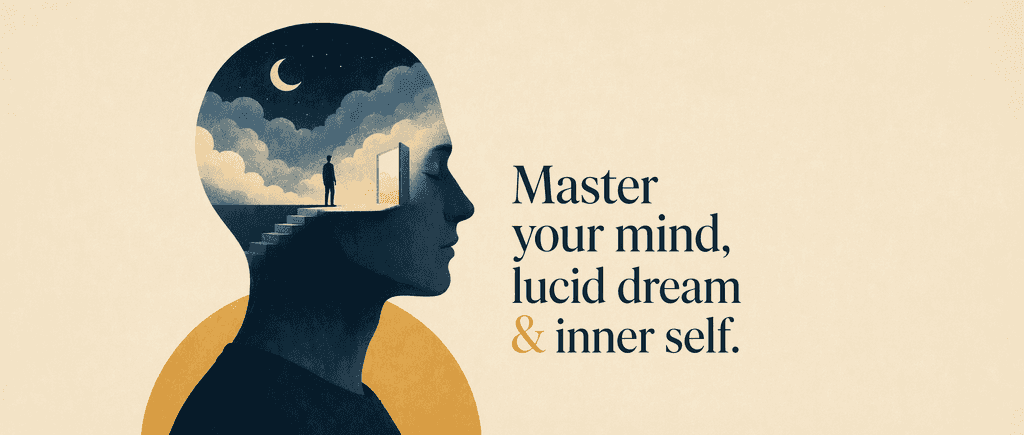
Don Juan introduced Castaneda to dreaming as the safest way to access the unknown. As luminous beings, humans perceive reality by holding their "assemblage point" in a specific position. While this point cannot be moved by conscious command, it shifts naturally during sleep. Rather than analyzing dreams psychoanalytically, Castaneda learned to develop attention inside dreams, assembling another world by focusing on dream elements. Our daily reality is merely a shared dream held in unison by humanity's agreement, expressing the universe's intent. What we do within this dream becomes our responsibility and determines our measure of control.
第5章
Throwing the Other Self: The Mystery of the Double
Castaneda recalled a day with don Juan and don Genaro at Genaro's mountain shack, where the old man entertained them with pantomimes and acrobatics. After don Juan stepped away, Genaro dramatically announced "I better go where the wind blows" before departing. Don Juan warned Castaneda not to worry about strange noises, joking that "when Genaro shits the mountains tremble." Minutes later, Castaneda heard an unearthly rumble while don Juan doubled over with laughter. The ultimate aim of these adventures was for Castaneda to encounter his "double" or other self-a more basic and complete version of himself that exists alongside his daily self due to our two-step perception process.
Words fail to truly connect us with the double. Though language makes us feel enlightened about concepts like the double, when we face reality, words leave us unenlightened. The double can be encountered accidentally through illness, insanity, love, war or extreme shock-or more harmoniously but still haphazardly in dreaming. Our typical reaction is to quickly revert to our thinking world, negating the memory or reinterpreting it.
Don Juan and don Genaro taught Castaneda about his double by repeatedly moving him between his normal self and his double self. They would push his assemblage point, which Castaneda experienced as a slap on the back, sometimes struggling to return him to normal awareness with another slap or buckets of water. They also showed their own doubles without explanation, teasing and confusing him. The first day Castaneda met don Genaro, he actually met Genaro's double-explaining the joke about defecation that Castaneda recorded without understanding. This concept of being in two places at once parallels quantum physics' superposition, where particles exist in multiple states until observed.
The complete luminous being contains both selves-dreamer and dreamed-and has eight points arranged in a geometric shape: reason, talking, dreaming, seeing, feeling, will, the known, and the unknown. Don Juan explained that reason dominates our era despite being the smallest, most isolated point, connected only to talking. Together, reason and talking comprise our normal self. Talking connects to three larger points-dreaming, seeing and feeling-which have been given constricted definitions in our era. Will, a much larger point, was the epicenter in ancient times when reason was despised.
The final two points-the known and unknown-dwarf all others; if reason were a rulebook in a referee's pocket, the known would be an entire stadium, and the unknown the infinite world beyond. The unknown can arise and make the known aware of one's totality, though this usually only happens at death. The known, being weak, must be cunning to maintain the illusion that the unknown doesn't exist. Any prolonged glimpse of the unknown is deadly for the known unless proper training allows the unknown to safely boost the known, creating personal power.
In Castaneda's universe, eternal units of selves and feelings float separately in the unknown until collected by the life force to emerge into the known. At death, these units separate and return to the unknown. When Castaneda leapt from the cliff in 1973, he did so as a trained warrior prepared to enter the unknown intentionally. This pivotal moment created an unavoidable conflict between his reason and his totality. Unlike death, a trained warrior's components expand "without losing their togetherness" and can reintegrate in any form at any location.
第6章
Finding the Other Self Again: The Struggle for Totality
The fifth book, The Second Ring of Power, occupies a crucial position in the series with its straightforward chronological narrative. Castaneda returned to Mexico about 18 months after leaping off the cliff to visit his co-apprentices. Though his leap should have culminated his apprenticeship, he somehow survived but returned to normal consciousness with his reason reasserting control. Back in Los Angeles, he questioned what had actually happened to him.
Juan Matus had assembled a group of five women and three men to support Castaneda as his successor, recognizing that a sorcerer's evolution is too dangerous to accomplish alone. The "little sisters" included Lidia (abandoned in a barn), Josefina (a perpetually crying "crazy girl"), Rosa (who bumped into Matus while chasing a pig), and Elena (renamed La Gorda, an abused woman who had fled multiple bad situations). Dona Soledad (originally Manuelita) posed as Pablito's mother. According to Matus, women make better sorcerers than men because they can more easily disappear from their former lives.
The male apprentices-"the Genaros"-included Pablito (discovered making love in a hidden market booth), Benigno (one of five young men met in the desert), Eligio (who knew Matus from childhood), and Nestor (a healer who was struck by lightning while stalking Genaro).
The eight apprentices, now accepted as Castaneda's cohorts, arranged meetings to demonstrate their respective powers. Despite being meant to be their leader, Castaneda struggled with his limitations, unable to sustain his ability to see energy forms. After a dramatic confrontation where they forgave him, Castaneda's perception suddenly shifted-he could finally see the pure balls and lines of energy the women had manipulated.
This revealed the central paradox of perception: we always see first, but immediately ignore what we see to focus only on what we look at instead. Our normal perception involves a two-step process where we set aside raw perception and impose familiar images, maintaining our agreed-upon world through constant effort and internal dialogue.
第7章
Dreaming Together: The Shared Reality
Castaneda reintroduces himself at the beginning of his sixth book, explaining how his understanding evolved from studying psychedelic plants as an anthropologist to becoming a participant in "an ancient knowledge" related to but distinct from sorcery. He assures readers his adventures are not fiction, merely foreign to our understanding.
While The Second Ring of Power showed Castaneda moving from first to second attention through life-or-death struggles, The Eagle's Gift explores techniques for making this transition intentionally. Human awareness divides into the first attention (right-side awareness) governed by reason and language, and the second attention (left-side awareness)-a vast realm beyond words where we perceive with our entire being. The second attention knows about the first, but the first is usually unaware of the second, with memories from the left side typically forgotten upon return to normal consciousness.
Continuing from the previous book, Castaneda and the eight apprentices confronted each other until discovering memories of another teacher named Silvio Manuel. They realized they had been taught in their second attention by an older group of sorcerers whose very existence was unknown in their normal awareness. By teaching them in the second attention, these sorcerers imparted knowledge directly without the interference of reason. The apprentices eventually parted ways, with only La Gorda remaining with Castaneda.
After separating from the young apprentices, Castaneda and La Gorda began working together as equals in Arizona and Los Angeles. They discovered that dreaming was the only way for the first attention to remember experiences from the second attention. Having both learned the basics of dreaming, they developed techniques to meet in shared dreams, exploring them together to uncover their shared memories from the other self. Through dreaming together, they recapitulated what all humans do as infants when learning to join the world of their elders-luminous cocoons naturally dream together by placing their assemblage points at the same positions, allowing participants to agree on a shared reality.
Midway through The Eagle's Gift, Castaneda's narrative voice transformed from that of an uncertain apprentice to a confident practitioner. After recovering memories with La Gorda, he understood the full scope of don Juan's teachings and could recount the history of sorcery with authority. They discovered they had been part of a traditional grouping following the Toltec Tradition, which evolved into "the new seers." According to this tradition, an ancient civilization centered around exploring the second attention flourished in Mexico between 5000-2000 BCE before being conquered and eventually nearly exterminated by the Spanish Inquisition.
第8章
Cocoons and Filaments: The Metaphysics of Awareness
Castaneda's seventh and eighth books, published in 1984 and 1987, finally provided a clear philosophical framework behind his writings-arriving 25 years after meeting Matus, 16 years after his first publication, and a decade after his apprenticeship ended. These works revealed a deep consistency that clarified all his previous writing, closing gaps of incoherence that critics had pointed to.
Castaneda reiterated that humans possess two types of awareness-right and left sides-reflecting the universe's division between known and unknown. The "new seers" evolved from ancient sorcery traditions that once dominated pre-conquest Mexico. Unlike the ancient sorcerers who used secret knowledge to control others, these new seers sought freedom rather than dominance. After mastering awareness, Castaneda could access his complete self, integrating both sides of awareness through memory.
In "The Power of Silence," Castaneda formally summarized the mastery of awareness through nine basic premises: The universe consists of infinite threadlike energy fields emanating from a source called the Eagle; humans are composed of these same fields forming a luminous egg-shaped ball; perception occurs when energy fields are illuminated by the "assemblage point"; this point can move to new positions, enabling perception of entirely different worlds; intent is the pervasive force causing perception; and the ultimate aim of sorcerers is to reach total awareness, including an alternative way of dying.
The energy in the universe's aware filaments expresses its intent, commanding everything to be and perceive. Our entire existence is determined by these commands. The universe creates our energy cocoon, positions the assemblage point, and commands us to perceive. During dreaming, this assemblage point dislodges and moves, allowing perception of entirely new worlds. Memories and experiences are stored at precise positions of the assemblage point, which can be revisited later with greater clarity than the original experience.
Early dreamers encounter certain milestones, including the "mold of man"-an entity that shapes life force into human form. This mold appears as a radiant luminous being that all humans see at death. While ancient sorcerers and mystics mistook it for a god or protector spirit, the new seers determined through repeated viewings that it's merely a pattern of energy that stamps human qualities onto aware energy, with no power to reward, punish or intervene.
When a person's intent aligns with universal intent, their assemblage point can move to wherever they intend. A sorcerer can gradually illuminate all the energy within their cocoon, entering the "third attention"-an alternative way of dying called "burning with the fire from within." Unlike monotheistic religions with heaven and hell, Castaneda described two ways of dying: either in the first attention where life elements simply separate, or in the third attention where awareness continues as long as Earth exists.
According to Castaneda, life's purpose is to enrich awareness by incorporating the unknown into the known, bringing us closer to the universe's intention to know itself. Don Juan Matus taught that the universe bestows awareness upon sentient beings so they can enhance it during life and return it in an improved condition. This provides an answer to humanity's eternal question about existence: we exist to enhance awareness on behalf of the universe.
第9章
Conservatives and Liberals: The Spectrum of Knowledge
Humanity possesses two knowledge types: everyday reasoning through language and silent knowledge that exists beyond language. Throughout our million-year history, we've moved from silent knowledge to reason, with our current internal dialog being relatively recent. We still contain both aspects: an ancient, indifferent part connected to everything that didn't need language, and a modern, agitated rational part. As language developed, we lost access to vast realms of silent knowledge that can't be recovered through rational attempts.
Reason and silent knowledge represent two points on a spectrum. In our current era, most people cluster near reason, with true leaders being those precisely positioned at reason's point. Earlier in human history, we were anchored in silent knowledge, explaining our nostalgia for it. Only by reaching either position fully can one clearly see the other. Don Juan's goal was to connect both positions through two one-way bridges: "concern" leading from silent knowledge to reason, and "pure understanding" leading from reason to silent knowledge.
Our perception is determined by the assemblage point's position, currently fixed at extreme self-involvement. Since any movement must be away from self-importance, reducing self-concern releases energy and allows the assemblage point to move naturally under universal intent. While illness, war, love or mysticism can accidentally move the assemblage point, these shifts can't be sustained. Matus could intentionally move his own assemblage point and others', teaching Castaneda about different perceptual positions. These movements access "islands of perception" where memories and experiences are stored, allowing past events to be relived with remarkable clarity.
Matus' philosophy aligns with quantum physics in unexpected ways. His teaching that we can exchange energy with distant luminous beings parallels quantum entanglement, where separated particles instantaneously influence each other. This connection suggests that quantum phenomena like electron jumps and light's wave-particle duality might relate to the gap between observed reality (first attention) and the pre-perceived raw energy of the universe.
第10章
Lost in a Dream: The Dangers of the Second Attention
In don Juan's philosophy, sorcerers divide into dreamers and stalkers. Dreamers move their assemblage point by becoming aware of its natural movement during dreams, while stalkers systematically modify behavior until it causes the assemblage point to shift. Castaneda specialized in dreaming, which exploits the natural movement of the assemblage point during sleep. Though we normally fix our assemblage point rigidly in waking life, dreaming allows us to access enhanced perceptual abilities and encounter our other self through techniques developed by ancient sorcerers-though Matus warned this was "the most dangerous facet of sorcerers' knowledge."
Dreaming represents the only time our assemblage point naturally detaches from its fixed position. This explains why we need sleep-to rest the unconscious autonomic system that maintains our assemblage point's position. Without this release, we go insane. During sleep, as thoughts quiet, the assemblage point moves fluidly, aligning different emanations of awareness from the universe. As it shifts deeper into dreaming, we enter silent knowledge beyond language, which is why dreams fade quickly upon waking unless immediately captured in words.
To harness dreaming power, Matus taught Castaneda a three-step process: becoming aware of falling asleep, holding dream images steady, and remembering dreams upon waking-together constituting "crossing the first gate of dreaming." This moves one from first attention to "dreaming attention," an intermediate step toward the vast second attention. The dreaming attention must learn to assemble a coherent dream world by moving attention between items, allowing the dreamer to discover their "energy body" or double.
While crossing the first gate of dreaming took Castaneda over two years of practice, crossing the second gate is simpler-requiring only the conscious intention to change dreams without waking up or to follow a scout from dream attention into second attention. This boundary leads to a more vast and dangerous realm where the dreamer encounters the rules of sorcery dreaming, faces challenges to sobriety, and begins meeting other sentient beings sharing our planet.
When entering the second attention, interaction with inorganic beings becomes unavoidable. Their realm appears like a giant sponge with countless geometric tunnels. Though immobile, these beings possess sophisticated awareness from their ancient existence and covet human energy. They project images to entice dreamers, offering instruction through a "dreaming voice" while ultimately seeking to capture them. Every dreamer must decide whether to accept their offer of safe asylum in exchange for becoming an inorganic being with infinite life, or reject it to continue exploring more dangerous realms.
Crossing the third gate of dreaming involves merging dreaming reality with daily reality. After years of training, Castaneda's dreaming body could move at will, shifting between worlds until items from dreams appeared in his waking life. With scouts and inorganic beings constantly stalking him, he struggled to determine which realm he occupied. The fourth gate allows the energy body to travel to specific places through someone else's intent-a dangerous practice favored by ancient sorcerers who would trap apprentices in unknown realms.
第11章
The Predator's Mind: A Darker Truth
Don Juan explained that his defeated Yaqui tribe epitomized the worldwide human condition of our age-feeling defeated, humiliated and powerless against monstrous outside forces. This sense of outrage, self-pity and grievance unifies all humanity regardless of status. In every book, don Juan hammered on this theme: self-pity and self-importance are the primary characteristics of modern humans. Our interior dialog traps us in recitations of problems and grievances, like being caught in a shallow side pool of the river of human awareness, spinning endlessly. This condition, Matus claimed, was imposed from outside.
According to Matus, as humanity moved from silent knowledge to reason, an invader from another realm-the "flyer"-took advantage of our neglected awareness. This predator imposed its mind on top of ours, feeding on our awareness and leaving us only the parts that flare with self-pity and self-importance. The predator keeps us like livestock, repeatedly stripping us of our best awareness. Because we carry the predator's mind, we fear exposure when we try to remove it. Inner silence makes us indigestible to the flyer, allowing our true awareness to return. Matus described these monsters as our challengers-integral parts of the universe through which humans, as "energetic probes," help the universe become aware of itself.
Don Juan taught that having to believe differs from simply believing. When caught between the world of reason and the world of will, one must believe without believing while thoroughly examining one's situation. To evaluate Castaneda's work, we must similarly straddle two worlds-neither simply accepting his story at face value nor dismissing him as a complete fraud.
Castaneda's story of Antoine suggests a third possibility-that his deathbed confession revealed he had plagiarized someone else's work, perhaps discovering an old manuscript about another Castaneda and don Juan, or hearing stories from a tribal storyteller. Perhaps he initially inserted himself as the main character without foreseeing the work's popularity, then became entangled in extending the falsehood for decades.
Regardless of whether Castaneda's work is authentic, fiction, or plagiarized, it presents a compelling vision of human potential and limitation. His twelve books published over thirty years reveal an evolving philosophy about achieving full awareness through memory and the interplay between first and second attention. They tap into humanity's nostalgia for a magical era that predates our current rationalistic period, explaining the metaphysics behind the magic rather than simply employing it as modern myths do.
In the end, perhaps the greatest value of Castaneda's work lies in its challenge to our perception of reality itself. By describing a world where awareness rather than matter forms the fundamental building block of existence, he invites us to question our most basic assumptions about consciousness and its place in the universe. Whether we accept his experiences as literal truth or metaphorical wisdom, they remind us that our ordinary perception may be just one thin slice of a vastly more complex reality waiting to be explored.