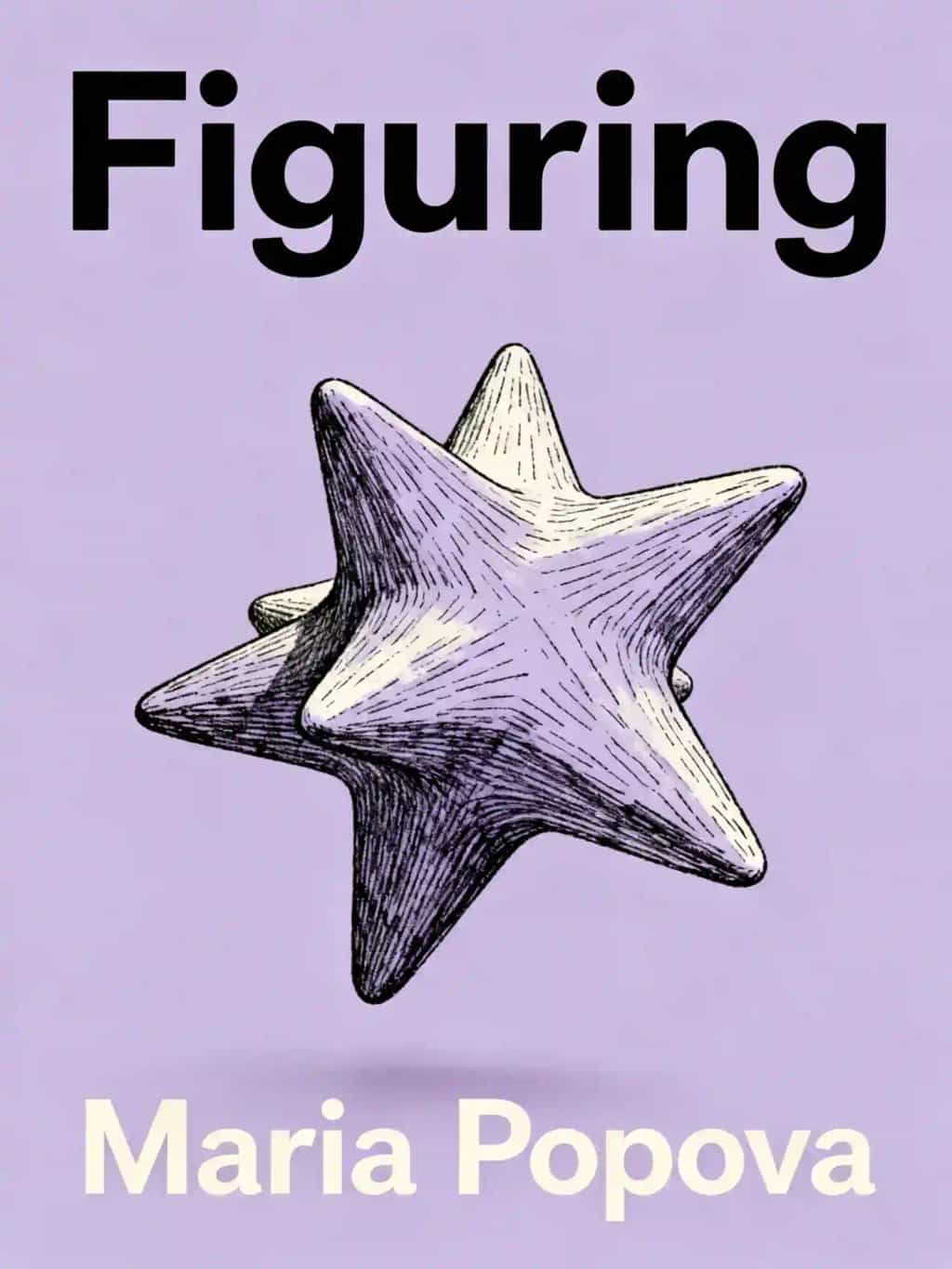

『Figuring』の概要
"Figuring" weaves four centuries of pioneering women's lives - from astronomers to poets - into a transcendent tapestry of science, art, and human connection. This genre-defying masterpiece has readers saying, "I immediately sent copies to friends," revealing how extraordinary minds illuminate our deepest questions about existence.
- Figuring explores how scientific curiosity and artistic expression intertwine across generations.
- Maria Popova frames biography as mapping territories of knowable truth through lived experiences.
- Existential ecology emerges as life's beauty through ever-shifting human connections and cosmic belonging.
- Nineteenth-century women intellectuals constructed meaning through resistant acts of creativity amid societal constraints.
- Figuring reveals how love letters expose hidden emotional dimensions of scientific pioneers.
- Popova's intellectual history shows genius belongs not to individuals but to collective humanity.
- The book challenges linear narratives by blending quantum physics with poetic sensibilities.
- Figuring demonstrates how personal heartbreak fuels transcendent work in science and art.
- Popova reframes selfhood through evolving dialogues between historical figures and modern readers.
- The interconnected web of genius spans Emily Dickinson's poetry to Rachel Carson's environmentalism.
- Figuring posits that truth and beauty must coexist to create lasting meaning.
- Maria Popova's mosaic approach reveals invisible connections between astronomy, literature, and social change.
『Figuring』の著者について
Maria Popova is a Bulgarian-American author, best known for her book Figuring, and a renowned literary curator celebrated for her interdisciplinary explorations that bridge science, art, and philosophy. Born in Bulgaria in 1984, she pursued her education at the University of Pennsylvania.
Popova is the founder of Brain Pickings (now The Marginalian), an ad-free, Patreon-supported platform that weaves together intellectual history and cultural criticism. This platform has garnered a readership of over 7 million monthly readers. Her work has been featured in The New York Times, recognized in TIME’s “140 Best Twitter Feeds,” and celebrated in Forbes’ “30 Under 30.”
Her writings delve into the intricate threads connecting creativity, love, and existential inquiry. Popova's other works include the collaborative anthology A Velocity of Being and the forthcoming Universe in Verse, further extending her mission to make wisdom accessible across various disciplines.
Figuring, a genre-defying tapestry of biographies spanning scientists and poets, reflects her signature style of connecting overlooked historical dots to illuminate universal truths. This book has solidified her status as a modern polymath, embraced by readers seeking depth in an age of fragmentation.
『Figuring』に関するよくある質問
What is Figuring by Maria Popova about?
Figuring explores the interconnected lives of scientists, artists, and writers across four centuries—including astronomers Maria Mitchell and Johannes Kepler, poet Emily Dickinson, and environmentalist Rachel Carson—to examine how love, curiosity, and creativity shape human legacy. Blending biography, history, and philosophy, Popova illuminates their struggles, triumphs, and often-overlooked queer relationships, revealing how their contributions transcended societal constraints.
Who should read Figuring by Maria Popova?
This book appeals to readers of interdisciplinary nonfiction, history enthusiasts, and fans of Brain Pickings. Ideal for those interested in LGBTQ+ narratives, feminist perspectives on science/art, and lyrical storytelling. Its dense, associative style suits readers who enjoy deep dives into niche historical figures and existential themes.
Is Figuring worth reading?
Yes—Figuring offers a unique blend of poetic prose and rigorous research, weaving lesser-known stories of pioneers like sculptor Harriet Hosmer and astronomer Caroline Herschel. While lengthy, its exploration of how “figures” shape culture through science, art, and activism provides fresh insights into resilience and intellectual legacy.
What are the main themes in Figuring?
- Interconnectedness: How lives across eras influence one another (e.g., Kepler’s astronomy inspiring Carson’s environmentalism).
- Queer narratives: Recovering historical LGBTQ+ relationships, like astronomer Maria Mitchell’s bond with actress Fanny Kemble.
- Art-science synergy: Goethe’s poetic approach to biology and Dickinson’s scientific metaphors.
How does Maria Popova connect science and poetry in Figuring?
Popova frames scientists as poets of reality—e.g., Rachel Carson’s lyrical environmental writings or Johannes Kepler’s musical model of planetary motion. She highlights Emily Dickinson’s use of astronomical metaphors, arguing that truth-seeking unites both disciplines.
What historical figures are featured in Figuring?
Key profiles include:
- Maria Mitchell: First female U.S. astronomer and suffragist.
- Margaret Fuller: Transcendentalist journalist and women’s rights advocate.
- Harriet Hosmer: Queer neoclassical sculptor challenging 19th-century gender norms.
- Rachel Carson: Marine biologist and author of Silent Spring.
How does Figuring address LGBTQ+ history?
The book highlights queer relationships often erased from mainstream narratives, such as sculptor Harriet Hosmer’s romances with women and Emily Dickinson’s passionate letters to her sister-in-law. Popova frames these bonds as catalysts for creative and scientific breakthroughs.
What writing style does Maria Popova use in Figuring?
Popova employs a lyrical, associative style reminiscent of her Brain Pickings blog—blending primary sources (letters, diaries) with reflective commentary. Her sentences sprawl with vivid details, like describing Einstein’s brain “bathing in formaldehyde” alongside Bulgarian shepherdesses’ songs.
How does Figuring critique traditional biographies?
The book rejects linear storytelling, instead using “constellations” of figures to show how legacies intertwine. Popova prioritizes emotional truth over factual chronology, speculating on inner lives through archival fragments.
What is the significance of the title Figuring?
It plays on dual meanings: “figuring out” existential questions and honoring marginalized “figures” who shaped culture. Popova argues that understanding ourselves requires grappling with these interconnected lives and ideas.
How does Figuring relate to modern readers in 2025?
Its themes of resilience and interdisciplinary curiosity resonate amid current debates on climate action, LGBTQ+ rights, and AI ethics. The book’s celebration of unconventional thinkers offers a blueprint for navigating complex, rapidly changing worlds.
Are there criticisms of Figuring?
Some readers may find its 578-page length daunting and its nonlinear structure disorienting. Critics note that Popova’s poetic tangents occasionally overshadow historical analysis, leaning more toward impressionism than rigorous scholarship.
著者の声を通じて本を感じる
知識を魅力的で例が豊富な洞察に変換
キーアイデアを瞬時にキャプチャして素早く学習
楽しく魅力的な方法で本を楽しむ
『Figuring』の登場人物
- Maria PopovaAuthor and narrator who traces interconnected lives
- Johannes KeplerRevolutionary astronomer and mathematician
- Maria MitchellAmerica's first professional woman astronomer
- Katharina KeplerMother of Johannes, accused of witchcraft
『Figuring』の主要テーマ
- interdisciplinary connection
- cosmic interconnectedness
- scientific discovery history
- women in astronomy
- meaning of existence
『Figuring』の名言
We are all stardust, temporarily assembled into conscious beings.
The cosmic and the intimate are never truly separate.
Medals are small things in the light of the stars.
Chance for choice.
The universe is fundamentally interconnected.
あなたに合った学び方を探す
 クイックサマリーモード
『Figuring』の要約を8分で読む・聴く
『Figuring』の核心的なアイデアを分かりやすいポイントに分解し、革新的なチームがどのように創造、協力、成長するかを理解します。

 エンタメモード
『Figuring』のレッスンを21分のストーリーで
鮮やかなストーリーテリングを通じて『Figuring』を体験し、イノベーションのレッスンを記憶に残り、応用できる瞬間に変えます。
 パーソナライズモード
Figuringを自分の学習スタイルで体験
何でも質問し、学習スタイルを選び、自分に本当に響くインサイトを一緒に作れます。
"Instead of endless scrolling, I just hit play on BeFreed. It saves me so much time."


"I never knew where to start with nonfiction—BeFreed’s book lists turned into podcasts gave me a clear path."


"Perfect balance between learning and entertainment. Finished ‘Thinking, Fast and Slow’ on my commute this week."
"Crazy how much I learned while walking the dog. BeFreed = small habits → big gains."
"Reading used to feel like a chore. Now it’s just part of my lifestyle."

"Feels effortless compared to reading. I’ve finished 6 books this month already."
"BeFreed turned my guilty doomscrolling into something that feels productive and inspiring."

"BeFreed turned my commute into learning time. 20-min podcasts are perfect for finishing books I never had time for."
"BeFreed replaced my podcast queue. Imagine Spotify for books — that’s it. 🙌"

"It is great for me to learn something from the book without reading it."
"The themed book list podcasts help me connect ideas across authors—like a guided audio journey."
"Makes me feel smarter every time before going to work"
"Instead of endless scrolling, I just hit play on BeFreed. It saves me so much time."
"I never knew where to start with nonfiction—BeFreed’s book lists turned into podcasts gave me a clear path."
"Perfect balance between learning and entertainment. Finished ‘Thinking, Fast and Slow’ on my commute this week."
"Crazy how much I learned while walking the dog. BeFreed = small habits → big gains."
"Reading used to feel like a chore. Now it’s just part of my lifestyle."
"Feels effortless compared to reading. I’ve finished 6 books this month already."
"BeFreed turned my guilty doomscrolling into something that feels productive and inspiring."
"BeFreed turned my commute into learning time. 20-min podcasts are perfect for finishing books I never had time for."
"BeFreed replaced my podcast queue. Imagine Spotify for books — that’s it. 🙌"
"It is great for me to learn something from the book without reading it."
"The themed book list podcasts help me connect ideas across authors—like a guided audio journey."
"Makes me feel smarter every time before going to work"
"Instead of endless scrolling, I just hit play on BeFreed. It saves me so much time."
"I never knew where to start with nonfiction—BeFreed’s book lists turned into podcasts gave me a clear path."
"Perfect balance between learning and entertainment. Finished ‘Thinking, Fast and Slow’ on my commute this week."
"Crazy how much I learned while walking the dog. BeFreed = small habits → big gains."
"Reading used to feel like a chore. Now it’s just part of my lifestyle."
"Feels effortless compared to reading. I’ve finished 6 books this month already."
"BeFreed turned my guilty doomscrolling into something that feels productive and inspiring."
"BeFreed turned my commute into learning time. 20-min podcasts are perfect for finishing books I never had time for."
"BeFreed replaced my podcast queue. Imagine Spotify for books — that’s it. 🙌"
"It is great for me to learn something from the book without reading it."
"The themed book list podcasts help me connect ideas across authors—like a guided audio journey."
"Makes me feel smarter every time before going to work"
"Instead of endless scrolling, I just hit play on BeFreed. It saves me so much time."
"I never knew where to start with nonfiction—BeFreed’s book lists turned into podcasts gave me a clear path."
"Perfect balance between learning and entertainment. Finished ‘Thinking, Fast and Slow’ on my commute this week."
"Crazy how much I learned while walking the dog. BeFreed = small habits → big gains."
"Reading used to feel like a chore. Now it’s just part of my lifestyle."
"Feels effortless compared to reading. I’ve finished 6 books this month already."
"BeFreed turned my guilty doomscrolling into something that feels productive and inspiring."
"BeFreed turned my commute into learning time. 20-min podcasts are perfect for finishing books I never had time for."
"BeFreed replaced my podcast queue. Imagine Spotify for books — that’s it. 🙌"
"It is great for me to learn something from the book without reading it."
"The themed book list podcasts help me connect ideas across authors—like a guided audio journey."
"Makes me feel smarter every time before going to work"

Figuringの要約をダウンロード
Figuringの要約をPDFまたはEPUBで無料でダウンロード。印刷やオフラインでいつでもお読みいただけます。


