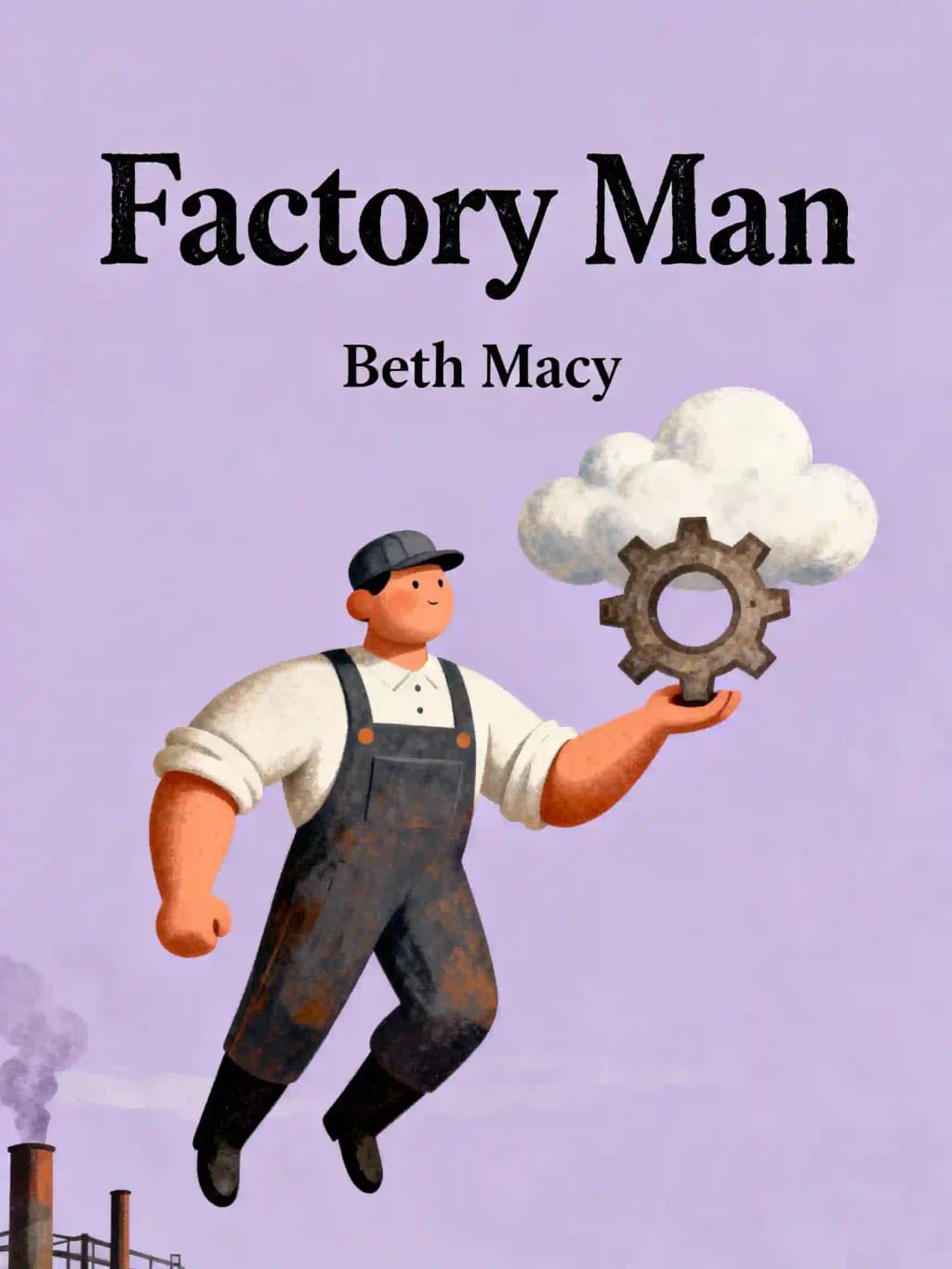
"Factory Man" chronicles John Bassett III's battle against Chinese imports to save American jobs. This NYT bestseller sparked crucial debates on globalization's human cost, with Pulitzer winner Rick Bragg calling it "a breath of hope - and a damn fine story to read."
Beth Macy, New York Times bestselling author of Factory Man: How One Furniture Maker Battled Offshoring, Stayed Local—and Helped Save an American Town, is an award-winning journalist renowned for chronicling the struggles of rural America and marginalized communities.
A former reporter for The Roanoke Times with over two decades of investigative experience, Macy’s work blends deep-rooted empathy with rigorous narrative nonfiction, focusing on themes of corporate greed, economic displacement, and resilience. Her expertise in documenting blue-collar communities stems from her Ohio upbringing as the daughter of a factory worker and housepainter, grounding her storytelling in authenticity.
Macy’s acclaimed works include Dopesick—a Peabody- and Emmy Award-winning Hulu series adaptation—and Raising Lazarus, both exposing the opioid crisis. A Nieman Fellow at Harvard and Guggenheim Fellow, her writing has appeared in The Atlantic, The New Yorker, and The Wall Street Journal. Factory Man, winner of the J. Anthony Lukas Prize, was hailed as a defining account of globalization’s human toll, solidifying Macy’s reputation as a vital voice for underserved regions.
Factory Man chronicles John Bassett III’s battle to save American furniture manufacturing from globalization-driven offshoring to China. Beth Macy weaves a narrative of corporate resilience, trade wars, and the human toll of deindustrialization, focusing on Bassett’s legal and operational strategies to preserve jobs in Virginia.
This book appeals to readers interested in economic history, globalization’s impact on rural communities, and stories of corporate perseverance. It’s ideal for professionals in manufacturing, policy makers, and fans of narrative nonfiction that blends personal grit with systemic analysis.
Yes, Factory Man is nonfiction. Beth Macy documents the real-life struggle of John Bassett III and Vaughan-Bassett Furniture against foreign competition, using interviews, court records, and historical research to highlight the 2000s-era trade battles that reshaped American industry.
Macy frames globalization as a double-edged sword: while driving consumer prices down, it decimated rural economies reliant on manufacturing. Her reporting contrasts corporate profit motives with workers’ plights, emphasizing policy gaps that allowed unchecked import dominance.
Bassett emerges as a pragmatic, defiant leader who weaponizes trade laws to save his company. Macy depicts him as both a flawed family scion and a grassroots advocate, balancing cost-cutting measures with employee loyalty to keep production local.
While not its focus, the book hints at economic despair fueling addiction in factory towns—a theme Macy expands on in Dopesick. Job losses and declining opportunities create fertile ground for substance abuse.
Some reviewers note Macy’s sympathetic portrayal of Bassett overshadows broader systemic critiques. Others argue the book could delve deeper into labor unions or alternative economic models beyond tariffs.
Like Dopesick, it examines crises ravaging rural America but focuses on trade rather than opioids. Both books combine deep reporting with personal stories, though Factory Man emphasizes corporate strategy over individual narratives.
With renewed debates over U.S.-China trade relations and reshoring initiatives, Bassett’s story offers lessons on balancing globalization with domestic priorities. Its themes align with current discussions about supply chain resilience and fair competition.
Fans of Factory Man may enjoy Hillbilly Elegy (J.D. Vance) for its rural economic analysis or The End of Loyalty (Rick Wartzman) examining corporate-community ties. For trade policy, try The China Syndrome (Gordon Chang).
著者の声を通じて本を感じる
知識を魅力的で例が豊富な洞察に変換
キーアイデアを瞬時にキャプチャして素早く学習
楽しく魅力的な方法で本を楽しむ
For JBIII, this wasn't just business-it was war.
Someday I'll buy and sell you.
When you see a snake's head, hit it.
We made 'em rich.
It ain't right
『Factory Man』の核心的なアイデアを分かりやすいポイントに分解し、革新的なチームがどのように創造、協力、成長するかを理解します。
『Factory Man』を素早い記憶のヒントに凝縮し、率直さ、チームワーク、創造的な回復力の主要原則を強調します。

鮮やかなストーリーテリングを通じて『Factory Man』を体験し、イノベーションのレッスンを記憶に残り、応用できる瞬間に変えます。
何でも質問し、声を選び、本当にあなたに響く洞察を一緒に作り出しましょう。

"Instead of endless scrolling, I just hit play on BeFreed. It saves me so much time."
"I never knew where to start with nonfiction—BeFreed’s book lists turned into podcasts gave me a clear path."
"Perfect balance between learning and entertainment. Finished ‘Thinking, Fast and Slow’ on my commute this week."
"Crazy how much I learned while walking the dog. BeFreed = small habits → big gains."
"Reading used to feel like a chore. Now it’s just part of my lifestyle."
"Feels effortless compared to reading. I’ve finished 6 books this month already."
"BeFreed turned my guilty doomscrolling into something that feels productive and inspiring."
"BeFreed turned my commute into learning time. 20-min podcasts are perfect for finishing books I never had time for."
"BeFreed replaced my podcast queue. Imagine Spotify for books — that’s it. 🙌"
"It is great for me to learn something from the book without reading it."
"The themed book list podcasts help me connect ideas across authors—like a guided audio journey."
"Makes me feel smarter every time before going to work"

Factory Manの要約をPDFまたはEPUBで無料でダウンロード。印刷やオフラインでいつでもお読みいただけます。
What would you do if a Communist Party official suggested you close your family's century-old factories and let him supply you instead-at prices so low they defied economic logic? In 2002, John D. Bassett III, third-generation furniture maker from rural Virginia, found himself in exactly this position. Standing in a dusty Dalian factory near the North Korean border, he watched Chinese businessman He YunFeng unveil plans for an "American Furniture Industrial Park" designed to flood U.S. markets with bedroom sets at what YunFeng called "tuition price"-selling at $100 to capture market share, even at a loss. For most American manufacturers, this moment signaled surrender. For JBIII, it meant war. His subsequent battle against Chinese dumping would make him an outcast among competitors already offshoring production, alienate family members, and ultimately save hundreds of American jobs while revealing globalization's brutal human cost.