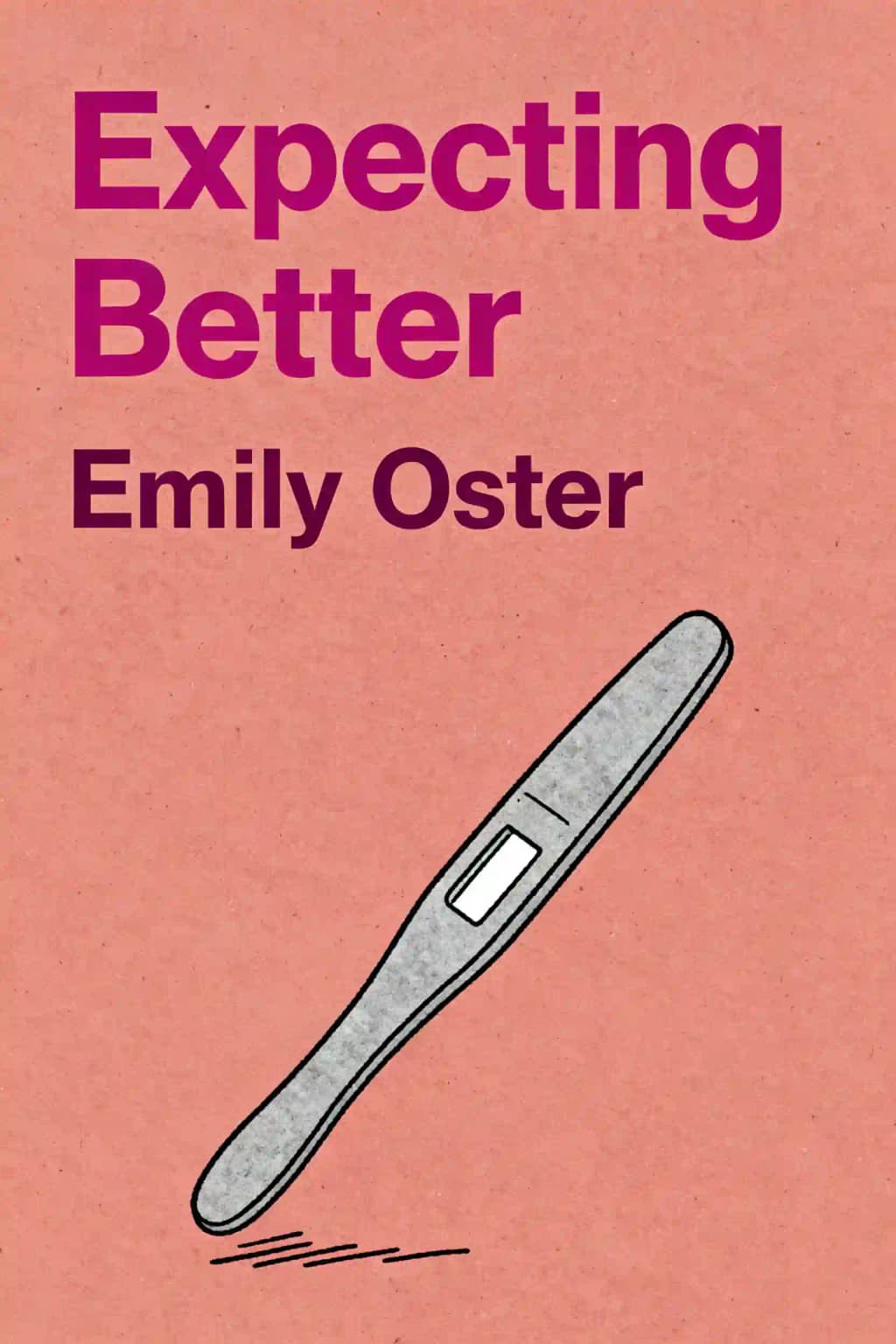
Economist Emily Oster demolishes pregnancy myths with hard data. Endorsed by Amy Schumer as "the non-judgmental girlfriend guiding us through pregnancy," this controversial bestseller dares to ask: What if that glass of wine isn't dangerous? Science-backed freedom for expectant mothers everywhere.
Emily Fair Oster, bestselling author of Expecting Better, is an economist and professor at Brown University renowned for her data-driven approach to pregnancy and parenting decisions.
A Harvard-trained PhD, Oster bridges academic rigor with accessible insights, challenging conventional wisdom through empirical analysis in her books Cribsheet, The Family Firm, and The Unexpected.
Her work as founder and CEO of ParentData—a platform offering evidence-based guidance via newsletters and social media to hundreds of thousands of subscribers—complements her role as a trusted voice in health economics. Oster’s research on pandemic-era education policy and her viral TED Talk further cement her authority in translating complex data into actionable advice.
Expecting Better has sold over 1 million copies worldwide, solidifying its status as a modern parenting classic.
Expecting Better challenges conventional pregnancy advice using data-driven analysis, empowering parents to make informed decisions. Economist Emily Oster evaluates topics like alcohol consumption, caffeine limits, and prenatal testing, separating myths from evidence. The book provides a framework to interpret research, helping readers navigate conflicting recommendations while reducing anxiety.
This book is ideal for expectant parents seeking evidence-based insights into pregnancy guidelines. It’s particularly valuable for analytical thinkers who want to understand the “why” behind rules like avoiding sushi or gardening. Healthcare professionals and birth educators may also benefit from its critical evaluation of common practices.
Yes, Expecting Better is widely praised for transforming pregnancy decision-making through accessible data analysis. Readers gain tools to weigh risks independently, reducing reliance on fear-based advice. Over 1 million copies sold and its status as a New York Times bestseller highlight its impact.
Oster argues that many pregnancy rules lack strong scientific backing. For example, moderate caffeine intake (under 200mg/day) shows no significant harm, and occasional alcohol consumption in later trimesters may be low-risk. She emphasizes individualized risk assessment over one-size-fits-all mandates, using meta-analyses and cohort studies.
The book critiques flawed studies, such as those linking low alcohol intake to miscarriages without controlling for other factors. Oster highlights how observational data often conflates correlation and causation, advocating for clearer communication of statistical risks. Her analysis of prenatal testing reveals how false positives vary by maternal age.
Oster tackles debates like sushi consumption (low mercury-risk fish is safe), gardening (toxoplasmosis risk is overstated), and epidural safety. She also questions rigid weight-gain targets, noting minimal evidence linking moderate gains to negative outcomes.
Unlike What to Expect’s prescriptive advice, Expecting Better emphasizes personal choice through data interpretation. While both cover pregnancy milestones, Oster’s approach appeals to readers wanting statistical context rather than checklist-style guidance.
Yes, Oster provides decision trees for topics like genetic testing and delivery timing. The “TRAF” framework—Test, Research, Analyze, Follow-up—helps structure complex choices. These tools aim to reduce decision fatigue.
Some medical professionals argue Oster underestimates cumulative risks (e.g., alcohol’s neurodevelopmental effects) and over-relies on observational data. Critics note her economic lens may oversimplify clinical contexts, though supporters praise her transparency about evidence limitations.
The book explains sensitivity/specificity of tests like NIPT and amniocentesis, emphasizing how false positives vary with maternal age. Oster advocates informed consent, detailing pros/cons of each test without pushing specific choices.
Despite publishing in 2013, its emphasis on critical thinking aligns with today’s demand for personalized healthcare. Updated editions address newer research, and Oster’s ParentData platform extends its principles to modern parenting challenges.
著者の声を通じて本を感じる
知識を魅力的で例が豊富な洞察に変換
キーアイデアを瞬時にキャプチャして素早く学習
楽しく魅力的な方法で本を楽しむ
Conception requires remarkably precise timing.
Official recommendations were extremely cautious—often too cautious.
Tobacco isn't recommended to anyone at any time.
『Expecting Better』の核心的なアイデアを分かりやすいポイントに分解し、革新的なチームがどのように創造、協力、成長するかを理解します。
『Expecting Better』を素早い記憶のヒントに凝縮し、率直さ、チームワーク、創造的な回復力の主要原則を強調します。

鮮やかなストーリーテリングを通じて『Expecting Better』を体験し、イノベーションのレッスンを記憶に残り、応用できる瞬間に変えます。
何でも質問し、声を選び、本当にあなたに響く洞察を一緒に作り出しましょう。

"Instead of endless scrolling, I just hit play on BeFreed. It saves me so much time."
"I never knew where to start with nonfiction—BeFreed’s book lists turned into podcasts gave me a clear path."
"Perfect balance between learning and entertainment. Finished ‘Thinking, Fast and Slow’ on my commute this week."
"Crazy how much I learned while walking the dog. BeFreed = small habits → big gains."
"Reading used to feel like a chore. Now it’s just part of my lifestyle."
"Feels effortless compared to reading. I’ve finished 6 books this month already."
"BeFreed turned my guilty doomscrolling into something that feels productive and inspiring."
"BeFreed turned my commute into learning time. 20-min podcasts are perfect for finishing books I never had time for."
"BeFreed replaced my podcast queue. Imagine Spotify for books — that’s it. 🙌"
"It is great for me to learn something from the book without reading it."
"The themed book list podcasts help me connect ideas across authors—like a guided audio journey."
"Makes me feel smarter every time before going to work"

Expecting Betterの要約をPDFまたはEPUBで無料でダウンロード。印刷やオフラインでいつでもお読みいただけます。
When I discovered I was pregnant during an economics conference, my first thought wasn't about nursery colors-it was about my morning coffee. Could I still have it? The pregnancy advice I encountered was frustratingly contradictory. As an economics professor with a PhD, I was trained to analyze data and make evidence-based decisions. Why should pregnancy be any different? This disconnect launched me on a journey to apply economic decision-making principles to pregnancy. Instead of accepting vague warnings and arbitrary rules, I dove into the research myself. What I discovered was eye-opening: many standard pregnancy recommendations are based on minimal evidence, outdated research, or extreme caution rather than clear risk-benefit analysis. By challenging conventional wisdom with hard data, I found a more relaxed, less rigid approach to pregnancy-one that empowers women to make informed choices based on actual risks rather than fears. Think about it: wouldn't you rather know that the occasional glass of wine has no documented negative effects rather than being told simply "don't drink" without explanation? Wouldn't you prefer understanding which foods actually pose risks during pregnancy instead of memorizing an arbitrary prohibited list?