Eat That Frog! Action Workbook: 21 Great Ways to Stop Procrastinating and Get More Done in Less Time

『Eat That Frog! Action Workbook』の概要
Transform your productivity with Brian Tracy's action-packed workbook that turns procrastination into achievement. Endorsed by productivity gurus like Thanh Pham, this international bestseller teaches you to "eat your frog" - tackling your toughest task first. What could you accomplish if procrastination vanished today?
- Start your day by completing your most impactful task first to build momentum.
- Apply Brian Tracy’s 80/20 principle: focus on the 20% of tasks yielding 80% of results.
- Write tomorrow’s priority tasks tonight to bypass decision fatigue and jumpstart productivity.
- Use the “Touch It Once” rule to eliminate procrastination and reduce task-completion time by 500%.
- Develop urgency with the mantra “Do it now!” to trigger consistent action and flow states.
- Avoid multitasking—adopt monotasking to maintain focus and finish critical projects 100% faster.
- Break large goals into sub-tasks using Tracy’s “chunking” method to sustain progress and motivation.
- Practice Single Handling: work on one high-value activity without interruption until completion.
- Leverage the Momentum Principle—starting tasks requires more energy than sustaining them once begun.
- Prioritize tasks using the ABCDE method to systematically eliminate low-value activities.
- Schedule “frog-eating” time blocks for peak energy hours to maximize willpower and concentration.
- Reinforce habits with Brian Tracy’s “Back to work!” mantra to counteract distractions and maintain focus.
『Eat That Frog! Action Workbook』の著者について
Brian Tracy, the bestselling author of Eat That Frog! Action Workbook, is a globally recognized authority in personal and professional development. A Canadian-American motivational speaker and self-help expert, Tracy has authored over 80 books translated into 42 languages, including classics like No Excuses! The Power of Self-Discipline and The Psychology of Achievement.
His work in Eat That Frog!—a productivity manifesto focused on overcoming procrastination—draws from decades of experience in sales, business leadership, and corporate training. As CEO of Brian Tracy International, he has advised organizations like IBM and Microsoft, blending pragmatic strategies with actionable psychology.
Tracy’s insights are rooted in his early career triumphs in sales and his global travels across 80+ countries. His books, required reading in business programs worldwide, have sold millions of copies, with Eat That Frog! remaining a cornerstone of time-management literature since its 2001 release.
『Eat That Frog! Action Workbook』に関するよくある質問
What is Eat That Frog! Action Workbook by Brian Tracy about?
Eat That Frog! Action Workbook is a practical guide to overcoming procrastination using 21 time-management principles. It expands on Brian Tracy’s bestselling book by providing exercises, reflection prompts, and a narrative character’s journey to help readers prioritize critical tasks (the "frogs") and build habits of discipline, decision-making, and determination.
Who should read Eat That Frog! Action Workbook?
This workbook is ideal for professionals, students, or anyone struggling with productivity. It’s tailored for those seeking actionable strategies to tackle procrastination, improve task completion, and achieve goals efficiently.
What are the “3 Ds” in Eat That Frog! Action Workbook?
The “3 Ds” are decision, discipline, and determination:
- Decision: Commit to task-completion habits.
- Discipline: Practice the 21 principles until automatic.
- Determination: Persist until habits solidify.
How does the “frog” metaphor apply to productivity?
The “frog” symbolizes your most important, daunting task. By tackling it first (like eating a live frog), you build momentum and reduce procrastination. This concept, inspired by Mark Twain, emphasizes prioritization for maximum impact.
What practical exercises does the workbook include?
The workbook features:
- Self-assessment quizzes to identify procrastination triggers.
- Goal-setting templates for breaking tasks into steps.
- A narrative storyline showing real-life application of the methods.
How does Eat That Frog! Action Workbook differ from the original book?
While the original book outlines 21 principles, the workbook adds interactive exercises, checklists, and a relatable character’s journey to help readers implement Tracy’s strategies systematically.
Can Eat That Frog! Action Workbook help with work-life balance?
Yes. By teaching prioritization of high-impact tasks, the methods free up time for personal priorities. The workbook’s exercises encourage boundary-setting and focused energy allocation.
What are common criticisms of Eat That Frog! Action Workbook?
Some critics argue the approach oversimplifies complex productivity challenges. However, supporters praise its structured, actionable framework for immediate habit-building.
How does Tracy address modern distractions like technology?
The updated edition advises using technology for task reminders while avoiding low-priority interruptions. Techniques include time-blocking and single-tasking to maintain focus.
How does this workbook compare to Getting Things Done?
While Getting Things Done focuses on organizational systems, Eat That Frog! emphasizes prioritization and mindset. The workbook’s exercises make it more hands-on than theoretical guides.
What key quotes define Eat That Frog! Action Workbook?
- “Your ‘frog’ is your biggest, most important task.”
- “Continuous action is the key to ultimate success.”
These underscore proactive task management and consistency.
Is Eat That Frog! Action Workbook worth reading in 2025?
Yes. Its focus on prioritization and habit-building remains relevant amid rising productivity demands. The workbook’s exercises adapt well to remote work and digital distractions.
By combining Tracy’s principles with interactive tools, this workbook offers a roadmap to transform procrastination into purposeful action.
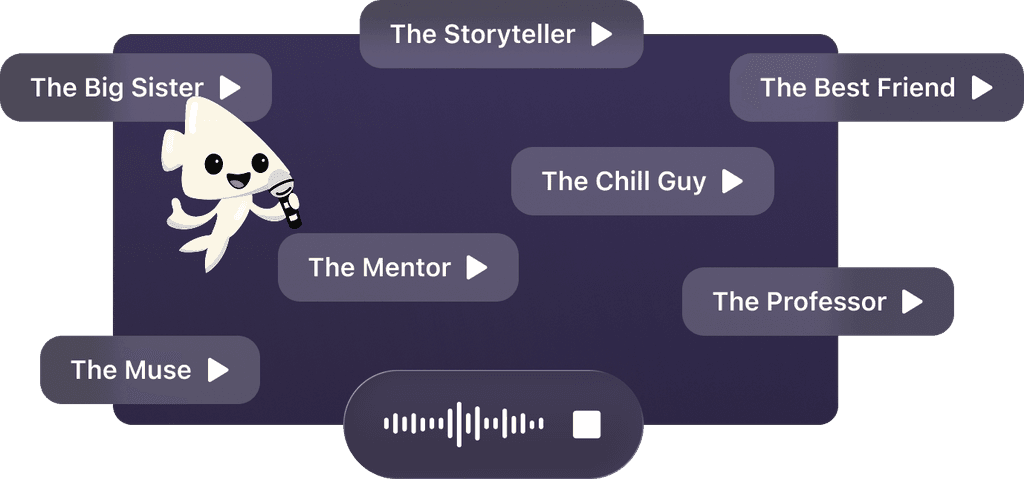
著者の声を通じて本を感じる
知識を魅力的で例が豊富な洞察に変換
キーアイデアを瞬時にキャプチャして素早く学習
楽しく魅力的な方法で本を楽しむ
『Eat That Frog! Action Workbook』の登場人物
- Brian TracyAuthor and creator of the productivity framework
- ShaneMiddle manager used as a goal-setting case study
『Eat That Frog! Action Workbook』の主要テーマ
- task prioritization
- procrastination management
- goal setting
- daily planning
- pareto principle
『Eat That Frog! Action Workbook』の名言
Clarity precedes mastery.
Being busy is not the same as being productive.
あなたに合った学び方を探す
 クイックサマリーモード
『Eat That Frog! Action Workbook』の要約を8分で読む・聴く
『Eat That Frog! Action Workbook』の核心的なアイデアを分かりやすいポイントに分解し、革新的なチームがどのように創造、協力、成長するかを理解します。

 エンタメモード
『Eat That Frog! Action Workbook』のレッスンを18分のストーリーで
鮮やかなストーリーテリングを通じて『Eat That Frog! Action Workbook』を体験し、イノベーションのレッスンを記憶に残り、応用できる瞬間に変えます。
 パーソナライズモード
Eat That Frog! Action Workbookを自分の学習スタイルで体験
何でも質問し、学習スタイルを選び、自分に本当に響くインサイトを一緒に作れます。
"Instead of endless scrolling, I just hit play on BeFreed. It saves me so much time."


"I never knew where to start with nonfiction—BeFreed’s book lists turned into podcasts gave me a clear path."


"Perfect balance between learning and entertainment. Finished ‘Thinking, Fast and Slow’ on my commute this week."
"Crazy how much I learned while walking the dog. BeFreed = small habits → big gains."
"Reading used to feel like a chore. Now it’s just part of my lifestyle."

"Feels effortless compared to reading. I’ve finished 6 books this month already."
"BeFreed turned my guilty doomscrolling into something that feels productive and inspiring."

"BeFreed turned my commute into learning time. 20-min podcasts are perfect for finishing books I never had time for."
"BeFreed replaced my podcast queue. Imagine Spotify for books — that’s it. 🙌"

"It is great for me to learn something from the book without reading it."
"The themed book list podcasts help me connect ideas across authors—like a guided audio journey."
"Makes me feel smarter every time before going to work"
"Instead of endless scrolling, I just hit play on BeFreed. It saves me so much time."
"I never knew where to start with nonfiction—BeFreed’s book lists turned into podcasts gave me a clear path."
"Perfect balance between learning and entertainment. Finished ‘Thinking, Fast and Slow’ on my commute this week."
"Crazy how much I learned while walking the dog. BeFreed = small habits → big gains."
"Reading used to feel like a chore. Now it’s just part of my lifestyle."
"Feels effortless compared to reading. I’ve finished 6 books this month already."
"BeFreed turned my guilty doomscrolling into something that feels productive and inspiring."
"BeFreed turned my commute into learning time. 20-min podcasts are perfect for finishing books I never had time for."
"BeFreed replaced my podcast queue. Imagine Spotify for books — that’s it. 🙌"
"It is great for me to learn something from the book without reading it."
"The themed book list podcasts help me connect ideas across authors—like a guided audio journey."
"Makes me feel smarter every time before going to work"
"Instead of endless scrolling, I just hit play on BeFreed. It saves me so much time."
"I never knew where to start with nonfiction—BeFreed’s book lists turned into podcasts gave me a clear path."
"Perfect balance between learning and entertainment. Finished ‘Thinking, Fast and Slow’ on my commute this week."
"Crazy how much I learned while walking the dog. BeFreed = small habits → big gains."
"Reading used to feel like a chore. Now it’s just part of my lifestyle."
"Feels effortless compared to reading. I’ve finished 6 books this month already."
"BeFreed turned my guilty doomscrolling into something that feels productive and inspiring."
"BeFreed turned my commute into learning time. 20-min podcasts are perfect for finishing books I never had time for."
"BeFreed replaced my podcast queue. Imagine Spotify for books — that’s it. 🙌"
"It is great for me to learn something from the book without reading it."
"The themed book list podcasts help me connect ideas across authors—like a guided audio journey."
"Makes me feel smarter every time before going to work"
"Instead of endless scrolling, I just hit play on BeFreed. It saves me so much time."
"I never knew where to start with nonfiction—BeFreed’s book lists turned into podcasts gave me a clear path."
"Perfect balance between learning and entertainment. Finished ‘Thinking, Fast and Slow’ on my commute this week."
"Crazy how much I learned while walking the dog. BeFreed = small habits → big gains."
"Reading used to feel like a chore. Now it’s just part of my lifestyle."
"Feels effortless compared to reading. I’ve finished 6 books this month already."
"BeFreed turned my guilty doomscrolling into something that feels productive and inspiring."
"BeFreed turned my commute into learning time. 20-min podcasts are perfect for finishing books I never had time for."
"BeFreed replaced my podcast queue. Imagine Spotify for books — that’s it. 🙌"
"It is great for me to learn something from the book without reading it."
"The themed book list podcasts help me connect ideas across authors—like a guided audio journey."
"Makes me feel smarter every time before going to work"

Eat That Frog! Action Workbookの要約をダウンロード
Eat That Frog! Action Workbookの要約をPDFまたはEPUBで無料でダウンロード。印刷やオフラインでいつでもお読みいただけます。