第1章
Trust: The Ultimate Human Adventure
Imagine standing at the edge of a vast, uncharted sea called Trust. The waters ahead are more often troubled than tranquil, yet this journey is one we must all undertake. Oprah Winfrey once called David Richo's work on trust "life-changing" during her Super Soul Sunday series, noting how his unique blend of psychological insight and spiritual wisdom creates a roadmap for navigating life's most vulnerable territories. "Daring to Trust" has become required reading in relationship therapy programs nationwide, with its framework for building authentic connections being cited in over 200 academic papers on interpersonal psychology. The book emerged from a pivotal moment in Richo's therapy practice when he realized that trust isn't merely about others' reliability-it's about our own capacity to open ourselves to life's uncertainties. As we embark on this exploration, remember that trust is both our deepest need and our finest risk-the ship's log of our entire life journey.
第2章
The Multidimensional Nature of Trust
Trust is a "firm and hopeful reliance on the fidelity, integrity, or ability of a person or thing"-not dependency but inner assurance providing security. Its etymology reveals deep connections to comfort and help, suggesting certainty that someone will come through unfailingly. Though often used as a noun, trust functions better as a verb-an ongoing process between people that evolves from belief into relationship quality as evidence of reliability accumulates.
While trust remains our optimal path, discernment is crucial. Throughout evolutionary history, guarded individuals survived better than gullible ones. Yet excessive suspicion costs us connections with trustworthy people. The balanced approach involves remaining heart-centered while maintaining appropriate caution. Some people may be unreliable in minor ways (consistently late) yet absolutely trustworthy in their love-we can direct our trust accordingly.
Our capacity to trust varies based on genetic factors, intrauterine experiences, and early caregiving. When maternal stress affects the fetus, it can influence trust development before birth. Touch plays a central role in trust formation-oxytocin, a stress-reducing hormone that facilitates bonding, gets released through physical connection. Many adults remain touch-starved, having suppressed these fundamental needs for contact.
Trust develops when children's distress signals are met with attunement and protection. Our emotional needs require what Richo calls the five A's: attention, acceptance, appreciation, affection, and allowing. "Allowing" is particularly crucial-freedom to show feelings without punishment, permission to live according to our deepest values, and support to make our own choices.
As mature adults, we find need fulfillment from multiple sources-ourselves, friends, family, career, spirituality-relying on partners for no more than 25% of our needs. When we're overly dependent, relationship endings feel catastrophic, as though our survival is threatened. Our fear in intimate relationships isn't actually of closeness but of anticipated disappointment. As we mature, others' opinions matter less as our self-resources grow.
第3章
The Developmental Roots of Trust
Trust capacity develops when parents attune to and validate our emotions. Authentic attunement creates a secure holding environment while allowing appropriate independence-holding us when needed and letting go when appropriate, a balance that becomes the hallmark of successful intimacy.
Conversely, indifference, abandonment, or conditional love damages trust development. When love comes with strings attached, it registers as reward rather than acceptance, undermining self-esteem and self-trust. Abuse makes it difficult to trust both others and ourselves, leaving our bodies poised for harm rather than comfort.
Healthy development involves a symbiotic phase peaking around five months, providing security for the subsequent move toward autonomy. Problems arise when caregivers can't allow independence, failing to provide the crucial "A" of allowing. The child then remains in symbiosis, potentially showing developmental delays.
Throughout life, we thrive with a balance of security and freedom-an open nest that allows exploration while offering welcome upon return. A toddler's development mirrors healthy adult relationships, combining independence with connection. Trust develops in three stages: first, "I am one with you"; second, "I can leave you for a while"; and third, "I can come back and you will be there."
When toddlers explore during a caregiver's absence, their sorrow transforms into joy about newfound powers. This joy-while-alone becomes a lifelong antidote to abandonment fears. Movement itself counteracts loneliness. Our developmental task involves exploring while holding an inner image of our absent caregiver, understanding that bonds endure in absence. This builds patience and teaches that presence transcends physical attendance-a skill that later applies to spiritual faith and creative imagination.
The ability to self-soothe as adults comes from having received soothing in childhood. Our development follows a path: from trusting someone's trustworthiness, to trusting ourselves, to trusting others, and potentially to trusting a higher power. Balanced development requires both comfort (leading to trust in others) and optimal frustration (building trust in our own capabilities).
第4章
The Dance of Trust in Relationships
In our evolutionary history, humans found safety in community, building trust around shared campfires. We're designed to live cooperatively, not in isolation. Our deepest need isn't for someone to rescue us, but for someone who remains present during our struggles-holding space without judgment. This presence forms the foundation of trust in relationships.
Trust in relationships works like doubles tennis rather than singles. In singles, players exploit each other's weaknesses to win individually. In doubles, partners notice each other's limitations but cover for one another, working toward mutual victory. The net between players transforms from a symbol of separation to one of connection.
Reciprocal trust means both partners can trust each other and each is trustworthy toward the other. This creates safety, security, and the possibility for genuine intimacy. While romantic chemistry is exciting-signaling both potential fulfillment and necessary soul work-it shouldn't replace careful observation of trustworthiness.
True surrender in relationships happens when we stop basing our security on someone else's fidelity to us. By accepting the limits of our relationship and the possibility of disloyalty, we develop internal safety and security-proof that we can trust ourselves. For many men, surrender feels like giving up freedom-their most prized possession. They fear closeness will lead to suffocation or loss of identity. Ironically, these same men often surrender completely to addictions without hesitation, revealing that they don't fear surrender itself but rather who they might become in genuine intimacy.
Unlike most mammals who seek safety in places when threatened, primates-including humans-run to someone. The one we trust in distress is the person who hasn't let us down before and with whom we feel a secure connection. In their presence, we can calm ourselves and reconstitute after disruption.
A trustworthy partner is one who fulfills our primary emotional needs-the five A's: Attention, Acceptance, Appreciation, Affection, and Allowing us to live freely. They stay with us through conflicts without punishment or abandonment. Their commitment involves addressing, processing, resolving and integrating struggles rather than denial or avoidance.
To evaluate trustworthiness in a relationship, partners should assess whether they: show integrity in all dealings, operate from self-interest but never at others' expense, avoid retaliation or silent treatment, consistently demonstrate the five A's, provide support when needed, keep agreements, remain faithful, avoid lies and secret lives, genuinely care, stand by and up for each other, and present themselves authentically without pretense.
第5章
When Trust Becomes Difficult
Trust can be undermined by deep-seated fears of intimacy and vulnerability. We often construct elaborate defenses, including lies of omission or commission, to avoid the raw exposure that genuine closeness demands. Our carefully guarded secrets become invisible walls, tragically preventing others from fully trusting us while simultaneously blocking our own capacity for trustworthiness. This creates a self-perpetuating cycle - we might fear revealing ourselves because we don't trust others' responses will be accepting, yet this very withholding makes authentic connection impossible.
When we attempt to trust in the present moment, it can trigger unconscious fears rooted in past betrayals. These conditioned responses manifest as physical symptoms - racing heart, shallow breathing, muscle tension - making us feel intensely anxious about trusting again. Our brains, designed to protect us, have created strong neural pathways associating trust with subsequent pain. This reaction isn't about the current experience of trust but rather our freeze response to it - the past forcefully interrupting the present moment. Specialized trauma therapy approaches, such as EMDR or somatic experiencing, can help by allowing us to retain our memories while significantly reducing their emotional charge and physical activation.
We encounter two distinct forms of suffering in trust-related challenges: the unavoidable suffering inherent in life (like the natural pain of loss or change) and the "do-it-yourself" pain we add through our interpretative stories. When relationships end, for instance, we might tell ourselves devastating narratives like "No one will ever want me" or "I'm fundamentally unlovable" - fiction created from our worst fears that registers in our bodies as genuine physiological stress. By learning to experience feelings mindfully without these additional narratives, we can free ourselves from this self-inflicted layer of suffering.
Mindfulness serves as a powerful tool for liberating us from mental chatter by anchoring us in pure experience. When confronting difficult facts, we typically add five distinct layers of unnecessary suffering: paralyzing fear, self-directed blame and shame, desperate escape attempts, harsh self-judgment, and rigid controlling behaviors. Through consistent mindfulness practice, we learn to drop these story lines by returning to our breath, staying present with our authentic feelings, and showing ourselves the five A's: attention, acceptance, appreciation, affection, and allowing.
This dedicated practice helps us gradually disidentify from our deeply ingrained stories of fear and desire, producing three transformative results: we learn to trust reality by saying yes to what is, rather than fighting against it; we develop genuine self-trust by freeing ourselves from limiting mind-sets and beliefs; and we begin to trust our fundamental wholeness as we awaken to universal love and wisdom. This hard-won self-trust ultimately empowers us far beyond any temporary ego rewards we once desperately sought, creating a foundation for authentic connection with ourselves and others.
第6章
When Trust Breaks Down
Betrayal requires more than grief to overcome-it demands reconstituting our entire perspective on ourselves and others. Trust breaks when someone deceives us, turns against us, acts unilaterally, breaks confidence, or refuses to address conflicts.
Unilateral silence severely damages trust in relationships. When someone disappears without explanation, it leaves the other person questioning what they did wrong and feeling betrayed at the heart level. The silent treatment-a vindictive form of pouting-reveals that one's partner values self-protection over the other's pain. This contrasts sharply with mature behavior where someone might directly state that things aren't working but offer to process feelings together.
We lie for many fear-based reasons: to get what we want, hide truth, protect our image, avoid responsibility, or manipulate others. Trust requires ongoing truthfulness in communication. While honesty is unconditional, self-disclosure can be conditional based on boundaries. Integrity indicates trustworthiness-if someone lies elsewhere, they likely lie to us too.
Some people prefer settled monogamy while others desire freedom to wander. Either can work with mutual honesty, but problems arise when someone claims to want commitment while secretly planning otherwise. A double life-whether involving affairs, addictions, or alternative lifestyles-breaks trust through surreptitiousness. Those leading double lives often rationalize their behavior, believing their needs justify deception.
Our capacity for fidelity begins showing in adolescence through loyalty to friends or partners. Infidelity often stems from projection-seeing a new person as the perfect solution to our unmet needs. This projection, fueled by adrenaline and instinctive needs, makes us vulnerable to affairs where even a faultless spouse can't compete with the new chemistry. Affairs thrive on secrecy, freedom from obligations, unconditional acceptance, and the transcendent feeling of merger that temporarily satisfies our deep longing for oneness.
Being betrayed inflicts a deeper wound than relationship breakup. We face an adult choice: either sink into self-pity and revenge fantasies, or choose courage and compassion by feeling our grief while examining our past patterns. As we heal, we experience three archetypal energies simultaneously: the orphan (abandonment), the freed slave (release from someone not truly committed), and the hero (gaining strength through initiation).
第7章
Rebuilding Trust After Betrayal
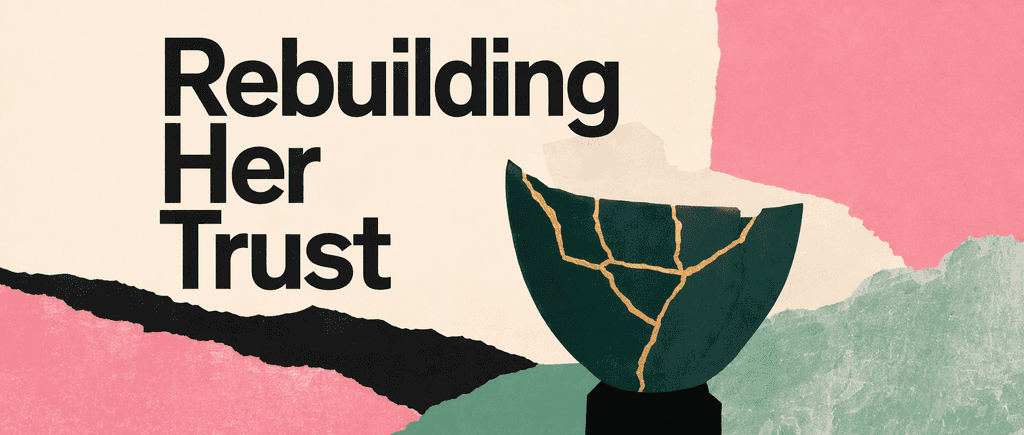
When trust breaks down, rebuilding requires risk since we now have only promises, not a record of trustworthiness. Trust rebuilding is lifelong work because early disappointments and betrayals are triggered by present breakdowns. Healing involves distinguishing between our experiencing self (immersed in feelings) and observing self (witnessing with perspective). Rather than choosing one over the other, we acknowledge both: "I feel this AND I realize it's a trigger from the past AND I still feel this."
If you've been unfaithful, whether staying or leaving, you must: admit what you did honestly; show genuine sorrow and compassion for your partner's pain; make agreed-upon amends; and remain present through the relationship's restructuring or ending. If staying together, additionally commit to ending the infidelity, rebuilding trust (possibly with therapy), and joining recovery programs if addiction is involved.
Mourning is essential when trust is lost-feeling sadness, anger, and fear fully until they naturally release. Distinguish between appropriate anger (from broken agreements) and ego-based frustration (from unilateral expectations). With integrity, express appropriate anger non-violently while examining ego-based reactions internally.
When both partners commit to rebuilding, they explore the relationship and infidelity (usually in therapy), examining trust histories, commitment fears, sexual issues, resentments, and willingness to start over. The process involves naming unmet needs, processing feelings about the infidelity and their connection to past issues, and making radical relationship changes.
Key commitments include trusting and being trustworthy, respecting boundaries, emotional honesty, openness to each other's needs, refusing retaliation, and addressing problems collaboratively through listening and resolution. Partners commit to the five A's: paying attention, accepting each other as they are, appreciating and stating it often, showing affection, and allowing freedom while remaining faithful to the relationship.
Building trust requires shared experiences outside the home-camping, retreats, sports-that draw attention outward. The motivation must be love and excitement about being together, not merely convenience or obligation. After betrayal, couples face only two viable options: unconditional commitment or clean separation.
第8章
The Journey to Self-Trust
In our civilized culture lacking traditional vision quests, we learn to trust ourselves through facing life's challenges. Self-trust emerges when we're happy with who we've become, capable of committed love, engaged in meaningful work, free from addictions, and able to handle stress-manifesting as equanimity and flow.
We may distrust our feelings because intense emotions in childhood might have preceded abuse or out-of-control behavior. Now we fear our tears might never stop or our anger might become harmful. Yet learning to trust ourselves requires going directly into our feelings while appropriately expressing them. As we develop self-trust, we release fear of our physical impulses, dismiss our internal referee, and allow unguarded moments.
Our basic feelings-sadness, anger, fear, and exuberance (SAFE)-become constructive when we allow rather than repress them. With mindfulness practice, we develop equanimity, experiencing feelings without being possessed by them or needing to process them. This creates a field of awareness that feels immensely trustworthy, allowing us to be defense-less at last.
Our body functions as both signal system and resource system-a field of experience that teaches us when we pay attention. By noticing physical sensations like tension or constriction, we can use techniques like deep breathing to release stress. Body awareness increases empathy by helping us read others' emotional states more accurately.
The human psyche contains desert places parched by weakness, helplessness, and hopelessness. In crisis, we can pause mindfully without judgment or compulsion to fix everything. By contemplating our situation without creating stories or projections about it, we access wisdom and stability. This dedicated presence allows us to navigate difficult terrain with growing self-trust.
When we feel powerless, we often get caught in childhood replays or victim identities. By accepting helplessness as a normal human predicament rather than personal weakness, we transform our relationship to it. Through deep breathing and saying "yes" to our experience, we open to new possibilities. This surrender paradoxically gives us personal power and self-trust.
第9章
Finding Core Trust in Life Itself
Core trust represents our most challenging direction of trust-faith in life itself as a trustworthy path toward evolution in love, wisdom, and healing power. This radical trust in bare-bones reality sees our circumstances as perfect ingredients for building self-trust and personal growth. Core trust means believing that all experiences can ultimately serve our development, even painful ones. When faced with loss, disappointment, or failure, core trust allows us to ask, "What is this experience teaching me?" rather than "Why is this happening to me?"
The frightened ego fights against reality, demanding control and perfection, while core trust offers an unconditional "yes" to whatever arises. Our need to control stems from childhood panic that our needs won't be met unless we take charge, but cultivating the ability to survive any contingency proves more valuable than always getting what we want. This might manifest as accepting a job loss as an opportunity for career reinvention, or viewing a relationship breakdown as a chance for deeper self-understanding.
The supreme attunement occurs when we recognize that the world of events and our own true nature are one and the same-what medieval thinkers called the unus mundus (one world). This ancient concept suggests a fundamental unity between our inner psychological reality and the outer physical world. Ironically, in trusting the world rather than our ego, we're actually trusting our authentic selves. Surrender to reality doesn't mean we won't be hurt, only that our hurt can become an aid to evolution and greater compassion.
Our trust can move in four essential directions: trusting ourselves, others, reality, and a higher power. If any direction is missing, too much pressure falls on the others, creating imbalance in our psychological well-being. Trusting ourselves means recognizing our body/mind as a suitable instrument for healthy living, acknowledging both our strengths and limitations. Trusting others means believing they have our best interests at heart, while maintaining healthy boundaries. Trusting reality means confidence that whatever happens beyond our control provides precisely what we need to grow in our unique way.
Developing core trust requires regular practice and patience. This might involve mindfulness exercises, journaling about challenging experiences, or simply pausing to acknowledge the wisdom inherent in difficult situations. When we face adversity with core trust, we begin to see patterns of growth and transformation emerging from what initially appeared as chaos or misfortune. This trust becomes particularly powerful during major life transitions, health challenges, or periods of uncertainty, where our usual control mechanisms prove ineffective.
Core trust also involves accepting the cyclical nature of life - understanding that periods of struggle and ease, growth and rest, are all natural parts of our journey. Rather than resisting these cycles, we learn to flow with them, recognizing each phase as essential to our development. This acceptance doesn't eliminate suffering, but it transforms our relationship with it, making it more bearable and meaningful.
第10章
Spiritual Dimensions of Trust
Faith is trust focused on the transcendent-reliance on invisible sources of support. Our capacity for religious trust often stems from early experiences with reliable caregivers who seemed to mysteriously know and meet our needs before we could express them. Without this foundation, we may develop fear-based religious views built on reward and punishment models.
As we evolve spiritually, our concept of the divine often shifts from external to internal, from literal to metaphorical. Mature faith recognizes the divine feminine as both nurturing and challenging, and sees God as manifest in whatever happens-making every experience an epiphany.
We search for meaning as something to rely on, yet life experiences rarely come with explanations. As adults, we learn to be content with provisional meanings rather than demanding final answers. Our childhood need for absolute clarity evolves into a tolerance for ambiguity and uncertainty-a key marker of adult development.
Buddhist trust centers on three refuges: the Buddha (our enlightened potential), the dharma (teachings and practices), and the sangha (community of practitioners). Unlike traditional religious trust as an insurance policy against suffering, Buddhist trust is the assurance that our capacity to love remains intact regardless of circumstances. Our Buddha-nature-our inner, ineradicable enlightened being-remains untarnished by our mistakes, always recoverable through mindfulness.
The human psyche has both individual and collective aspects. The Self (with capital S) in Jung's terminology represents our mostly unconscious collective human identity beyond individual ego-not an entity but a field transcending personal identity while animating every person. While the ego is born and dies, the Self is unborn and undying. The ego is unique to each person; the Self is universal.
When ego and Self work together, we achieve what Jung calls "individuation." The ego surrenders its fear, ignorance, and divisiveness to the higher Self's purposes of love, wisdom, and reconciliation. Spiritual practices help forge this ego/Self bond, making psychological health and spiritual health ultimately the same.
Throughout our journey, we encounter synchronicity-meaningful coincidences beyond our control that offer trustworthy opportunities for evolution. These synchronous moments aren't mere superstition but evidence of how the unconscious and powers beyond our ego activate our full selves. By opening ourselves to these mysterious connections, we discover that we can indeed dare to trust in the power that orchestrates healing moments in our lives.