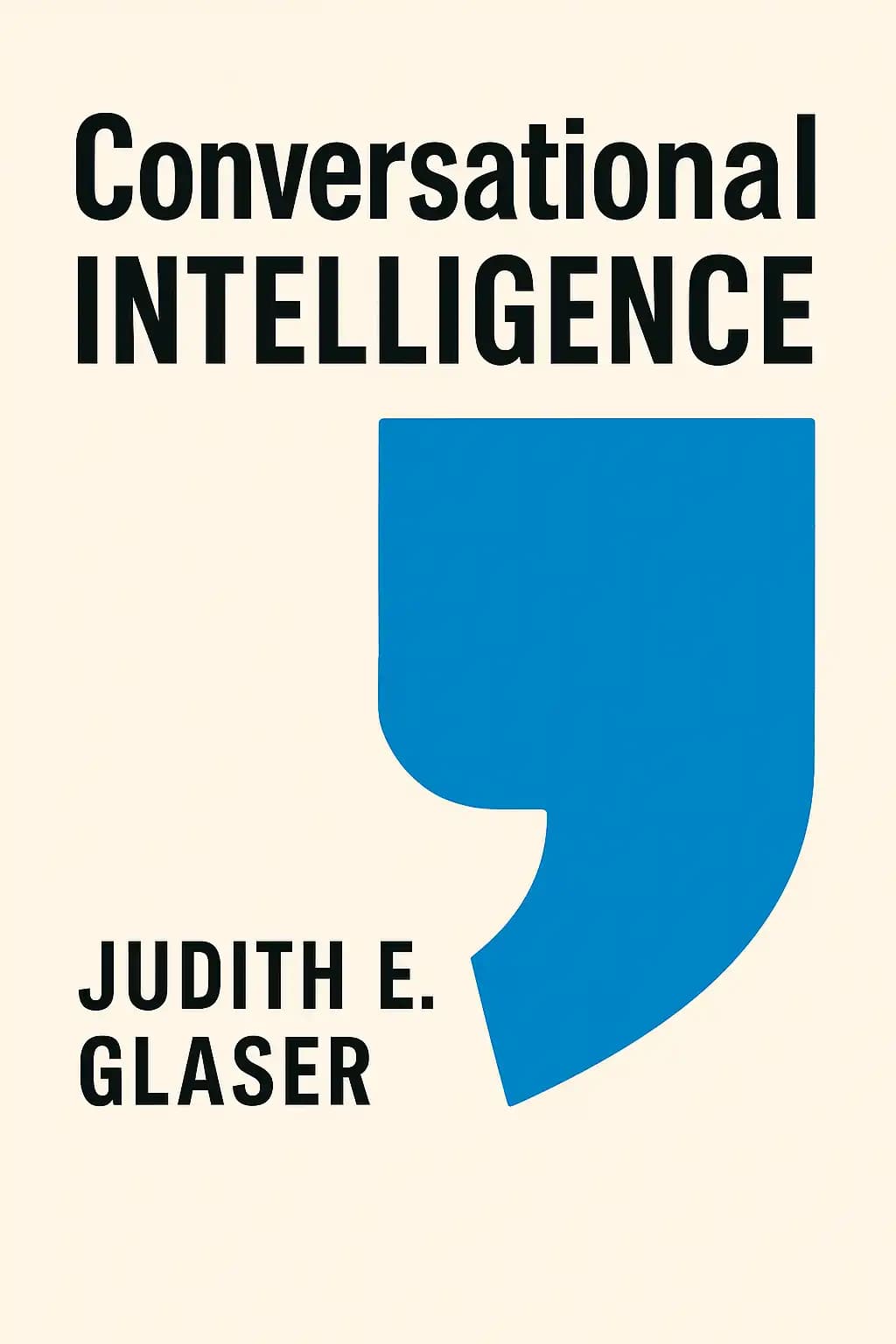
Unlock the neuroscience of powerful communication with Judith Glaser's "Conversational Intelligence," featured in Harvard Business Review and Wall Street Journal. What separates routine exchanges from transformative dialogues? Discover the C-IQ framework that top leaders use to build trust and drive unprecedented collaboration.
Judith E. Glaser (1946–2018), bestselling author of Conversational Intelligence: How Great Leaders Build Trust and Get Extraordinary Results, was a pioneering organizational anthropologist and leadership expert. Her work bridges leadership development, neuroscience, and communication, with themes focused on transforming workplace culture through trust-building dialogues.
As founder of Benchmark Communications and co-founder of the Creating WE Institute, Glaser advised Fortune 500 companies like IBM, Pfizer, and Citibank.
She authored seven books, including Creating WE: Change I-Thinking to We-Thinking and The DNA of Leadership, which explore collaborative leadership frameworks. A visiting lecturer at Harvard and Wharton, Glaser’s insights were featured on CBS and NBC.
Her Conversational Intelligence coaching program certified 830 professionals across 32,000 participants. Translated into multiple languages, her books remain foundational texts for executives seeking science-backed strategies to foster innovation and psychological safety in teams.
Conversational Intelligence explores how neuroscience shapes communication, revealing how conversations build trust or trigger defensiveness. Judith Glaser introduces three conversation levels (Transactional, Positional, Transformational) and frameworks to foster collaboration, innovation, and organizational change. The core premise: “Everything happens through conversations”—the quality of dialogues determines relationship health, culture, and leadership success.
Leaders, managers, and professionals seeking to improve workplace communication, resolve conflicts, or drive cultural change. It’s valuable for HR specialists, coaches, and teams aiming to replace distrust with co-creative dialogues using neuroscience-backed strategies.
Yes. The book blends accessible neuroscience with actionable tools, like the Conversational Dashboard, to navigate difficult discussions. It’s praised for transforming leadership approaches and fostering trust in organizations, though some may find its frameworks require deliberate practice to apply effectively.
Glaser argues Level 3 conversations unlock innovation and trust by aligning brain chemistry toward collaboration.
Leaders can use C-IQ to reframe conversations from “I-centric” to “we-centric,” reducing fear responses and fostering psychological safety. Techniques include reframing conflicts and priming for trust, enabling teams to navigate change and align on
著者の声を通じて本を感じる
知識を魅力的で例が豊富な洞察に変換
キーアイデアを瞬時にキャプチャして素早く学習
楽しく魅力的な方法で本を楽しむ
Conversations don't just reflect our reality-they create it.
Trust forms the foundation of human connection.
When conversations go badly, our primitive brain takes over.
You must trust and believe in people or life becomes impossible.
When we enter conversations with fear or judgment, we trigger distrust in others.
『Conversational Intelligence』の核心的なアイデアを分かりやすいポイントに分解し、革新的なチームがどのように創造、協力、成長するかを理解します。
『Conversational Intelligence』を素早い記憶のヒントに凝縮し、率直さ、チームワーク、創造的な回復力の主要原則を強調します。

鮮やかなストーリーテリングを通じて『Conversational Intelligence』を体験し、イノベーションのレッスンを記憶に残り、応用できる瞬間に変えます。
何でも質問し、声を選び、本当にあなたに響く洞察を一緒に作り出しましょう。

"Instead of endless scrolling, I just hit play on BeFreed. It saves me so much time."
"I never knew where to start with nonfiction—BeFreed’s book lists turned into podcasts gave me a clear path."
"Perfect balance between learning and entertainment. Finished ‘Thinking, Fast and Slow’ on my commute this week."
"Crazy how much I learned while walking the dog. BeFreed = small habits → big gains."
"Reading used to feel like a chore. Now it’s just part of my lifestyle."
"Feels effortless compared to reading. I’ve finished 6 books this month already."
"BeFreed turned my guilty doomscrolling into something that feels productive and inspiring."
"BeFreed turned my commute into learning time. 20-min podcasts are perfect for finishing books I never had time for."
"BeFreed replaced my podcast queue. Imagine Spotify for books — that’s it. 🙌"
"It is great for me to learn something from the book without reading it."
"The themed book list podcasts help me connect ideas across authors—like a guided audio journey."
"Makes me feel smarter every time before going to work"

Conversational Intelligenceの要約をPDFまたはEPUBで無料でダウンロード。印刷やオフラインでいつでもお読みいただけます。
Have you ever watched a simple conversation spiral into disaster before your eyes? One moment you're discussing project deadlines, the next you're locked in a battle of wills, hearts racing, defenses up. What just happened? The answer lies not in what was said, but in what happened inside your brain the moment threat replaced trust. Judith E. Glaser spent three decades unraveling this mystery, discovering that our conversations aren't just exchanges of words-they're neurochemical events that physically reshape our brains and bodies. When she coached Anthony, a difficult client, their relationship deteriorated despite her expertise. She saw him as arrogant and impossible; he likely saw her as incompetent. They created competing mental movies where each played the villain in the other's story, ultimately "firing each other" in mutual failure. This wasn't a communication problem-it was a brain problem. Within .07 seconds of contact, our bodies detect electrical signals from others up to ten feet away, triggering instant friend-or-foe assessments. When conversations threaten us, the amygdala hijacks our executive functions, flooding us with cortisol that lingers for 26 hours. We stop listening to understand and start defending our territory. The gap between what we intend and what others experience becomes a chasm where relationships fall and die.