第1章
A Race Against Time: Eugene O'Kelly's Final Gift to the World
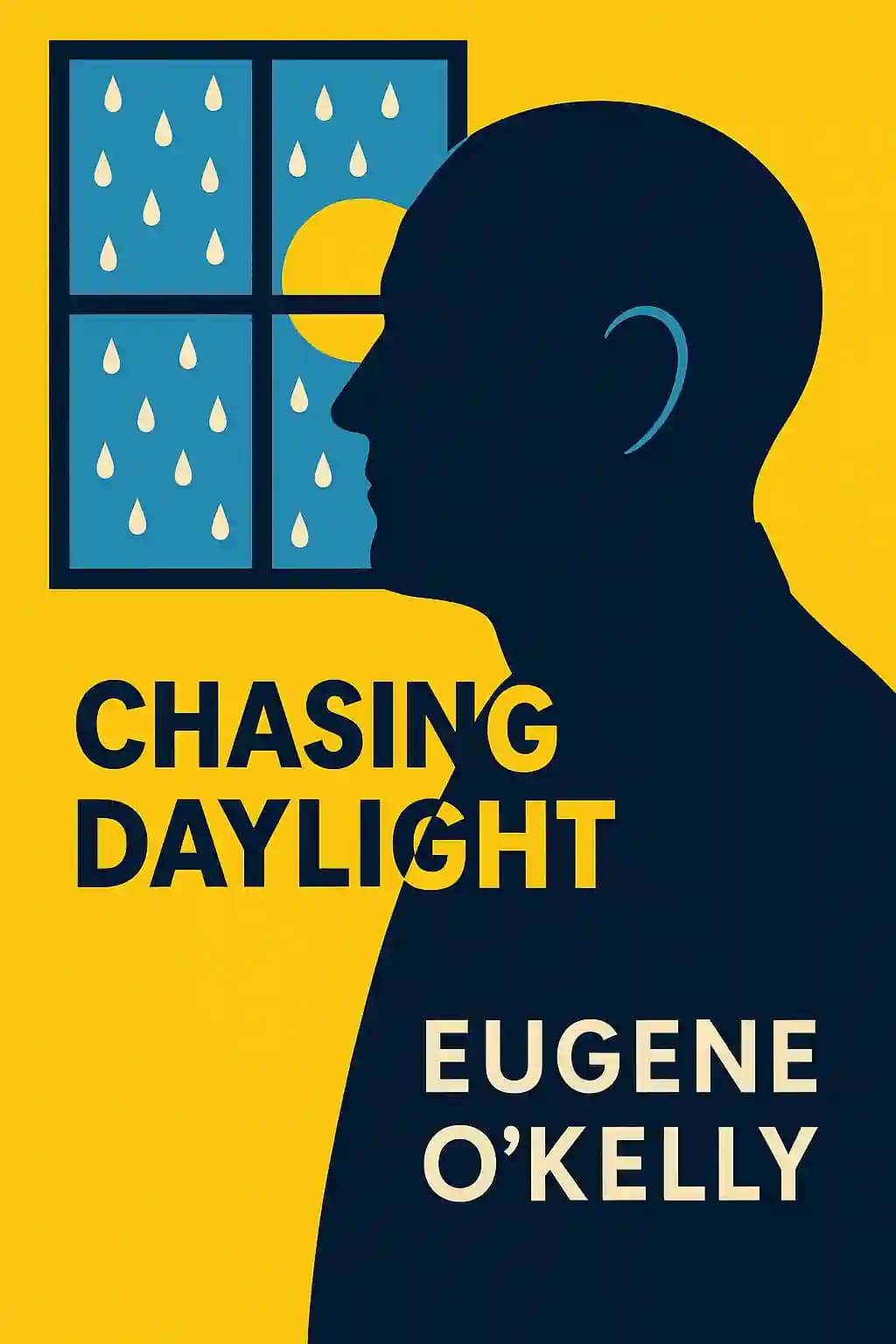
Imagine receiving the news that you have just three months to live. What would you do? How would you spend your remaining days? This is the profound journey that Eugene O'Kelly, former CEO of accounting giant KPMG, invites us into with his memoir "Chasing Daylight." Written in the final months of his life after being diagnosed with terminal brain cancer at age 53, this book has become a touchstone for executives and everyday readers alike seeking meaning in mortality.
Oprah Winfrey once cited it as "one of the most powerful books about living and dying" she'd ever read, while CEOs from Fortune 500 companies regularly reference it in leadership retreats. Beyond the business world, the book has developed a cult following among hospice workers and grief counselors who recommend it to patients facing terminal diagnoses. What makes O'Kelly's account so compelling is not just his corporate pedigree, but his analytical approach to death itself - treating his final days with the same strategic mindset he brought to the boardroom. In a culture that often avoids discussions of mortality, "Chasing Daylight" stands as a rare, unflinching look at how to die well by first learning how to truly live.
第2章
When Tomorrow Vanishes: The Gift of Terminal Diagnosis
There's a strange paradox in calling a terminal diagnosis a gift. Yet that's precisely how Eugene O'Kelly framed his devastating news in May 2005 - as an improbable blessing that transformed every remaining moment into something precious. With less than 100 days to live, he was forced to confront the ultimate deadline, one that couldn't be negotiated or extended through hard work or influence.
What does it mean to truly live when your days are suddenly countable? For O'Kelly, it meant a radical reevaluation of priorities. The man who once measured success through career achievements and leadership positions now found himself measuring life in perfect moments and meaningful goodbyes. His accountant's precision and CEO's systematic approach didn't abandon him in this crisis - rather, they became tools for planning a different kind of successful outcome: a good death.
Have you ever noticed how we postpone thinking about our mortality until it's thrust upon us? We live as if we have endless tomorrows, perpetually chasing daylight that we assume will always break again. O'Kelly's experience challenges this comfortable delusion. In one particularly moving exercise he recalls, participants were asked to speak as if facing imminent death - and the most profound insights emerged only when truly confronted with mortality's mirror.
The lesson here isn't morbid but liberating: What if we "moved up" our consideration of death from some distant future to today? How might that shift transform our present choices, relationships, and sense of purpose? This isn't about dwelling in darkness but about allowing awareness of our finite nature to illuminate what truly matters while we still have time to embrace it.
第3章
The Unbalanced Equation: Professional Success at Personal Cost
Success often demands sacrifice, but at what point does the equation become dangerously unbalanced? Before his diagnosis, O'Kelly's life was dominated by the relentless demands of being KPMG's CEO. His calendar was perpetually filled with meetings, his mind constantly occupied with corporate strategy, and his body frequently in transit between global offices. He thrived on this rhythm, finding genuine satisfaction in the challenges and rewards of leadership.
Yet this professional fulfillment came at a cost that only became fully apparent when facing mortality. Family dinners missed, children's milestones glimpsed only in photographs, and personal pleasures perpetually deferred to "someday" - these were the silent casualties of his success. The irony wasn't lost on him: he had mastered the art of building a thriving business while neglecting to build a fully present life.
Golf represented his rare sanctuary from this imbalance. On the course, especially during those magical evening hours when he was "chasing daylight" on nearly empty fairways, O'Kelly found moments of true presence. The game offered not just recreation but revelation - a space where professional ambition temporarily released its grip, allowing for connection, contemplation, and joy. These twilight rounds became metaphors for what was missing in his broader life: unhurried attention to the present moment.
Isn't it telling that it often takes a health crisis to reveal the poverty of our priorities? The body eventually demands the balance that the mind has ignored. For O'Kelly, this awakening came through alarming neurological symptoms that couldn't be dismissed as mere stress or fatigue. They were harbingers of a profound shift that would force a complete recalibration of what constituted a life well-lived.
第4章
The Subtle Warnings: Signs We Choose to Ignore
Change rarely announces itself with trumpets and fanfare. More often, it whispers through subtle anomalies we're too busy to hear. For O'Kelly, the first hint came on a golf course - a poorly aimed ball on the eighth hole, unusual for a skilled player. Small indicators accumulated: moments of confusion, difficulty focusing, a strange mental fog that seemed inconsistent with his typically sharp mind.
Spring 2005 brought mounting distraction. Life was chaotic with a home move underway. Important moments slipped through his fingers - missing his daughter's science fair, feeling perpetually behind. Even as he looked forward to a rare family vacation as salvation, his professional obligations continued their relentless march across continents. Tokyo, London, New York - his body traversed time zones while subtle neurological symptoms advanced unacknowledged.
Have you ever sensed something was wrong but pushed the thought aside because acknowledging it would disrupt everything? We become masters of rationalization when the alternative is too frightening to consider. A slight droop in the cheek? Must be fatigue. Momentary disorientation? Just jet lag. The mind protects itself from unwelcome truths until denial becomes impossible.
Perhaps the most poignant moment came during a U2 concert, when his wife Corinne experienced a flash of premonition. Watching her husband enjoy the music, she felt a sudden, inexplicable certainty that something was terribly wrong - as if their world stood on the precipice of unraveling. It was an intuitive recognition of what logic hadn't yet confirmed: that something fundamental was shifting beneath the surface of their carefully constructed life.
These early warnings remind us of our remarkable capacity for overlooking what we don't wish to see. We navigate through life's red flags with practiced obliviousness until the body's signals become too insistent to ignore. By then, precious time has often been lost - time that might have been spent differently had we listened sooner to the quiet alarms ringing within.
第5章
Finding Balance Through Play: Golf as Metaphor and Medicine
In the whirlwind of corporate demands, golf wasn't just a hobby for O'Kelly - it was essential medicine for his soul. On the course, particularly during those magical evening rounds when shadows lengthened across the fairways, he found a rare peace that eluded him elsewhere. There was something almost spiritual about "chasing daylight" with Corinne, trying to complete a round before darkness fell, each hole a meditation in presence.
Golf offered what his high-powered career couldn't: grounding in the physical world, immediate feedback on his actions, and most importantly, permission to be fully present. No emails to answer, no meetings to prepare for - just the pure geometry of club meeting ball, the satisfying arc of a well-struck shot, and the quiet companionship of fellow players. These moments represented what was too often missing from his broader life: simplicity, focus, and joy.
Isn't it fascinating how our leisure activities often reveal what our souls most hunger for? For the perpetually scheduled executive, unstructured time became precious. For the strategic thinker constantly planning quarters ahead, the immediate challenge of the next shot was refreshingly concrete. Golf wasn't an escape from life but rather a window into what life could be - more balanced, more present, more attuned to natural rhythms.
Yet even this sanctuary couldn't entirely shield him from what was coming. During one round, troubling symptoms manifested - confusion about the score, difficulty tracking the ball's flight. These moments on the course became unwitting harbingers of the medical crisis ahead. Meanwhile, Corinne's intuitive fears grew stronger, sensing disruption on the horizon even as they enjoyed these seemingly perfect days together.
The game that had brought such pleasure would soon become a measuring stick for what was being lost. After diagnosis, O'Kelly would find himself unable to play the game he loved - a tangible reminder of how quickly life's simple pleasures can slip away when health fails. The lesson here isn't to avoid attachment to such joys but rather to savor them fully while they're available, recognizing that nothing, not even our most cherished pastimes, is guaranteed tomorrow.
第6章
The Verdict: When Medical Reality Shatters Illusions
There's a surreal quality to receiving a terminal diagnosis - a moment when the abstract concept of mortality suddenly becomes concrete and personal. For O'Kelly, this moment came in a surgeon's office as clinical language delivered an unambiguous verdict: inoperable brain tumors, necrotic tissue, and a prognosis measured not in years but in months.
The surgeon's bluntness was both devastating and clarifying: "There is no cure." In an instant, the carefully constructed narrative of a long life with retirement, grandchildren, and golden years dissolved into something much more immediate. Treatment options like chemotherapy and radiation were presented not as paths to recovery but as desperate grasps for borrowed time - weeks or perhaps months, not the decades he had assumed were his birthright.
What does one do with such knowledge? For O'Kelly and Corinne, the immediate response was to look backward, connecting dots that had seemed insignificant - the subtle symptoms, the moments of confusion, the physical changes that had been attributed to stress or aging. There was a painful recognition that his life had been an inexorable sprint, moving so quickly that stops and slowdowns had seemed unnecessary luxuries rather than essential components of a balanced existence.
Yet amid this devastating news came one small mercy: the doctors anticipated little physical pain. Brain cancer, they explained, typically doesn't cause the suffering associated with other terminal conditions. This knowledge offered a strange comfort - that while life would end prematurely, the ending itself might be peaceful, a gentle dimming rather than a torturous struggle.
Have you ever considered how a definitive timeline might transform your priorities? For O'Kelly, the diagnosis demanded an immediate recalibration of dreams and pursuits. Goals that had seemed essential - career milestones, retirement plans, financial targets - suddenly appeared hollow when measured against the precious currency of days remaining. The ruthless clarity of his prognosis stripped away pretense and postponement, forcing immediate decisions about what truly mattered in the narrowing corridor of time ahead.
第7章
Navigating the Business of Dying: A CEO's Final Project
Death, it turns out, involves substantial paperwork. Beyond the emotional weight of saying goodbye lies the practical reality of unwinding a life - particularly one as complex and interconnected as a CEO's. With characteristic precision, O'Kelly approached this final project with the same methodical attention he'd given to corporate mergers and acquisitions.
At home, a new rhythm developed despite the uncertainty. His wife and daughters created a protective cocoon of love, with his stepdaughter Marianne - already seasoned by life's trials - guiding younger Gina toward acceptance of their father's mortality. Nighttime brought profound moments of connection, like Gina reading John Donne's "Death, Be Not Proud," its centuries-old defiance of mortality resonating with their current struggle.
How do we respond when faced with challenges that cannot be overcome through effort or intelligence? For O'Kelly, introspection about past responses to professional obstacles sharpened his resolve to face this final challenge with equal determination. The difference was that success would be measured not by survival but by the quality and meaning of his remaining days.
One of the most difficult transitions involved leaving KPMG, the organization that had defined much of his identity. With characteristic directness, he informed the firm of his condition and resigned his position, ensuring clarity and structure for the company's future. This clean break, while painful, provided necessary closure and allowed him to focus entirely on his new priority: making the most of limited time.
As symptoms escalated - focal seizures, significant vision loss - the physical reality of his condition became increasingly intrusive. Simple tasks grew complex; once-automatic activities required conscious effort. The man who had confidently led thousands now struggled to dress himself unaided, experiencing a childlike dependency that contrasted painfully with his former competence.
Treatment decisions loomed large. Chemotherapy offered the possibility of extended time but at the cost of debilitating side effects that would dominate his remaining days. After careful consideration, O'Kelly made the courageous choice to forgo chemo, prioritizing quality of life over its potential extension. Radiation, however, seemed a worthwhile compromise - a targeted approach that might provide benefits without completely overwhelming his final days with medical interventions.
The radiation routine itself became a daily reminder of his new reality - lying immobilized beneath precision equipment, surrounded by fellow patients whose struggles put his own situation in perspective. Success was redefined as simply making it through each session, accepting imperfection and delays as part of this new landscape. This "grading on a curve" extended to all aspects of life as expectations shifted to accommodate diminishing capacities.
第8章
Redefining Success: The Pursuit of Perfect Days
Seated at a table covered with the practical artifacts of dying - medications, family papers, condolence letters - O'Kelly experienced a profound shift in perspective. With the realization that his life had condensed to approximately 100 days, he resolved to make each one meaningful through a deliberate focus on three goals: achieving closure with loved ones, maintaining heightened awareness, and creating what he called "perfect moments."
This represented a radical departure from his previous relationship with time. Throughout his career, time had been something to maximize, optimize, and leverage for future gains. Now, with the future dramatically foreshortened, the present moment became his sole focus. The question was no longer "How much can I accomplish?" but rather "How deeply can I experience this day?"
What would it mean to experience 30 perfect days before dying? This became O'Kelly's new metric for success - not financial achievements or career milestones, but days filled with presence, connection, and meaning. Time itself seemed to become elastic; he discovered that when fully present, he could experience what felt like a week's worth of living in a single day, a month's worth in a week.
Have you ever noticed how our perception of time changes based on our level of engagement? In moments of deep presence - whether in conversation with a loved one, absorbed in creative work, or immersed in nature - time seems to both expand and disappear. O'Kelly discovered that this state, which most of us experience only occasionally, could become a deliberate practice when facing limited time.
The pursuit of perfect days required abandoning many ingrained habits: the constant checking of emails, the mental rehearsal of future meetings, the divided attention that had characterized much of his professional life. Instead, he embraced a radical simplicity - focusing completely on whatever person or activity was before him, without reservation or distraction.
This approach yielded unexpected rewards. Conversations became richer, sensory experiences more vivid, and ordinary moments revealed extraordinary beauty that had always been present but rarely noticed. The irony wasn't lost on him: it had taken a terminal diagnosis to teach him how to truly live in the moment - a skill that would have enriched his entire life had he mastered it earlier.
第9章
The Art of Goodbye: Unwinding a Lifetime of Relationships
How does one say goodbye to a lifetime of connections? For O'Kelly, this became a central project of his final days - not just saying farewell, but doing so in a way that provided mutual closure and meaning. He approached this task with characteristic thoroughness, mapping his relationships in concentric circles from most intimate to more distant connections.
The process revealed fascinating patterns. Friends with strong spiritual foundations or solid partnerships tended to handle these conversations with grace and acceptance. Those struggling with personal issues or lacking such anchors often found the interactions more difficult, sometimes projecting their own fears onto his situation or attempting to extend moments beyond their natural conclusion.
O'Kelly discovered the importance of boundaries even in these final exchanges. While open to meaningful connection, he remained firm about staying present rather than being pulled into others' anxieties or attempts to prolong interactions that had reached their natural end. This wasn't coldness but clarity - recognizing that perfect moments couldn't be manufactured or extended through effort.
The fifth circle - acquaintances and colleagues numbering in the thousands - presented a particular challenge. These were people with whom he'd shared significant experiences, yet the connections were often fleeting or context-specific. Addressing this vast network not only simplified his remaining time but highlighted past imbalances in how he'd allocated attention, underscoring the importance of investing more deeply in those closest to him.
Isn't it striking how death clarifies the relative importance of our various connections? Relationships that had seemed crucial in a professional context suddenly appeared peripheral when viewed through mortality's lens. Conversely, family bonds and deep friendships revealed themselves as the true anchors of a meaningful life - connections that sustained rather than depleted his limited energy.
These goodbyes weren't merely closures but opportunities for reflection, gratitude, and the creation of final memories. By approaching each relationship with intentionality, O'Kelly transformed what could have been awkward or painful partings into meaningful exchanges that honored shared histories while acknowledging the reality of separation.
第10章
Finding Transcendence: Meditation and Mortality
As physical decline accelerated, O'Kelly turned increasingly toward spiritual preparation. Water became a powerful metaphor in his thinking - representing the continuity between this life and whatever might lie beyond. Through daily meditation, he created a pathway between present experience and the mysterious transition ahead, finding comfort in practices that bridged the known and unknown.
This spiritual dimension wasn't about escaping reality but about integrating it more fully. The challenge became balancing two seemingly contradictory impulses: savoring earthly pleasures while simultaneously preparing for their release. Like a skilled tightrope walker, O'Kelly navigated between full engagement with life and graceful detachment from it.
Have you ever experienced moments of transcendence where the boundaries between self and world seem to dissolve? For O'Kelly, such experiences became more frequent as illness progressed. During a boat ride on Lake Tahoe, watching sunlight play across the water's surface while surrounded by family, he experienced what he called "zeroing" - a perfect alignment of external circumstance and internal peace, where past and future receded before an expansive present.
These moments weren't about denying death but about discovering a different relationship with it. Rather than an enemy to be feared or fought, death began to appear as a natural transition - the final unwinding of a life that had been fully lived and was now complete. This perspective didn't eliminate grief or loss but placed them within a larger context of acceptance and meaning.
The spiritual journey wasn't separate from his relationships but deeply intertwined with them. As physical capabilities diminished, connections with loved ones took on an almost mystical quality. Simple presence - sitting together, holding hands, sharing silence - became as profound as any philosophical discussion or emotional exchange. These wordless communications often conveyed more than language could express about love, gratitude, and the enduring bonds that transcend physical separation.
In his final days, as hospice workers joined family at his bedside, O'Kelly maintained this sense of peaceful transition. Declining further medical interventions, he chose comfort and clarity over prolonged struggle. His passing, when it came, reflected the intentionality with which he'd approached his entire journey - peaceful, conscious, and surrounded by those he loved most.
第11章
Legacy of Consciousness: Final Reflections on Living and Dying
Eugene O'Kelly's journey toward death ultimately became a master class in living consciously. By approaching mortality with awareness rather than denial, he transformed what could have been months of anguish into a period of profound meaning and connection. His experience suggests that the quality of our dying reflects the quality of our living - that consciousness, once cultivated, serves us in both life and its conclusion.
The power of his example lies not in extraordinary circumstances but in the ordinary humanity of his response to them. He experienced fear, grief, and moments of despair, yet consistently chose to move through these emotions toward acceptance and love. This wasn't spiritual bypassing but genuine integration - acknowledging difficulty while refusing to be defined by it.
For his family, witnessing this approach to death became its own lesson in living. Marianne absorbed the importance of staying awake to life's experiences rather than numbing or distracting herself from them. Gina, though devastated by loss, found strength in her father's example of resilience and presence. Corinne discovered depths of love and partnership that transcended physical separation.
Perhaps most remarkably, O'Kelly ensured that practical matters wouldn't burden those he left behind. Affairs were meticulously ordered, instructions clearly provided, and financial matters arranged with characteristic thoroughness. This final act of consideration allowed his family to focus on emotional processing rather than administrative chaos - another expression of love through thoughtful planning.
What might we learn from this accountant's approach to life's final audit? First, that awareness of mortality need not diminish life but can actually enhance it by clarifying what truly matters. Second, that presence - fully experiencing each moment rather than constantly projecting toward the future - is the secret to both living well and dying well. And finally, that relationships, when tended with intention and care, provide the most meaningful context for our brief journey through time.
O'Kelly's legacy isn't found in corporate achievements or financial success, impressive though these were. It resides instead in the example he set of facing life's ultimate challenge with grace, consciousness, and love - chasing not just daylight, but the perfect moments that illuminate our path through both living and dying.