第1章
The Enduring Legacy of Berkshire Beyond Buffett
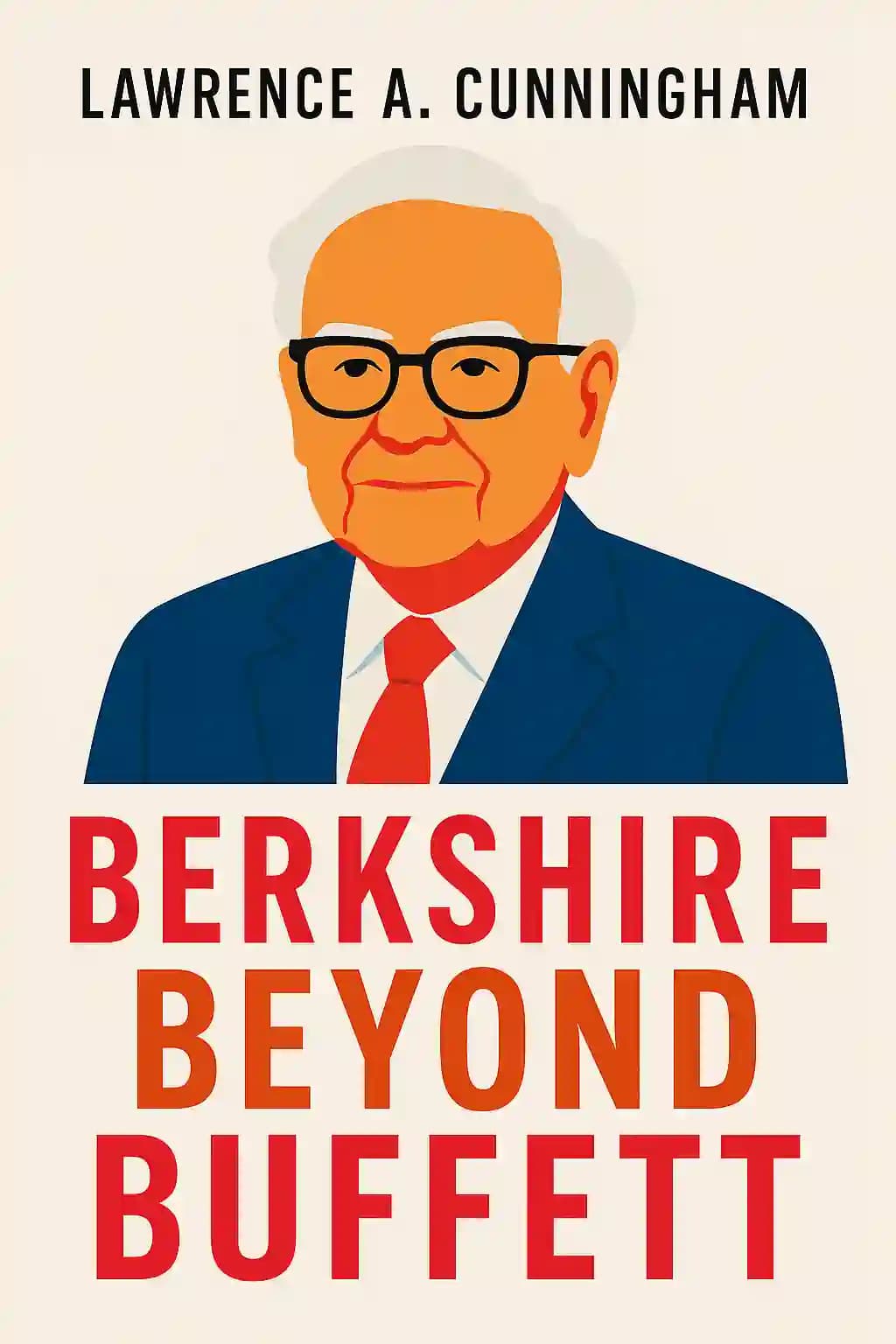
Warren Buffett's Berkshire Hathaway has become one of the most fascinating business stories of our time. What began as a struggling textile company in 1965 has transformed into a corporate juggernaut with over 500 entities spanning hundreds of business lines. Yet despite its extraordinary success, skeptics have long claimed that Berkshire cannot survive without Buffett at the helm. This paradox raises a compelling question: Has Buffett created something truly lasting, or will his life's work crumble without his guiding hand? The answer lies in understanding Berkshire's unique corporate DNA-a distinctive culture that has quietly become the company's greatest competitive advantage and its true moat against both competitors and time itself.
第2章
The Accidental Empire: How Berkshire Came to Be
Berkshire Hathaway was never supposed to exist-at least not in its current form. In 1956, a twenty-six-year-old Warren Buffett formed Buffett Partnership Ltd., seeking undervalued companies. By 1965, he had taken control of Berkshire Hathaway, a struggling New England textile manufacturer trading at one-third to one-half of book value.
The acquisition wasn't planned. Buffett initially bought shares expecting to sell them back to the company at a profit. When Seabury Stanton offered slightly less than promised ($11.38 instead of $11.50), Buffett felt cheated and instead bought more shares until gaining control. This emotional response to perceived unfairness-something Buffett later called a "$200 billion mistake"-inadvertently launched what would become one of history's greatest business empires.
Despite appointing Kenneth Chace as president, Buffett couldn't save the textile business, which continued declining until final closure in 1985. This painful experience taught him crucial lessons that would shape Berkshire's future: never engage in hostile takeovers, never liquidate acquired subsidiaries, acquire only companies with excellent management already in place, and seek businesses with long-term economic value.
While the textile operations deteriorated, Buffett began building Berkshire's future by acquiring two Omaha insurance companies in 1967-National Indemnity Company and National Fire & Marine Insurance Company-for $8.5 million. These insurance operations provided capital through "float"-premiums held until needed for claims-which Berkshire deployed in three ways: reinvesting in insurance operations, buying minority stakes in larger companies, and acquiring wholly owned subsidiaries.
Three early acquisitions laid the foundation for Berkshire's culture: See's Candies, a third-generation family chocolate business dating to 1921, acquired in 1971 for $25 million; Wesco Financial, acquired in 1973; and the Buffalo News, acquired after Kate Butler died in 1974 without estate planning. These early purchases established patterns that would define Berkshire's approach for decades: focusing on businesses with strong management, proven profitability, and competitive advantages or "moats" protecting their profits.
第3章
The Diverse Universe of Berkshire Businesses
What makes Berkshire truly remarkable is its extraordinary diversity. The company wholly owns fifty significant direct subsidiaries spanning industries from insurance to candy making, railways to jewelry, manufactured housing to industrial lubricants. These subsidiaries own another two hundred businesses, encompassing more than five hundred entities in hundreds of different business lines.
Berkshire organizes this diverse empire into four sectors: insurance (their oldest and historically most important sector); regulated or capital-intensive industries (the newest and increasingly important sector); finance and financial products (the smallest sector); and a broad cluster of manufacturing, service, and retail companies.
The insurance sector includes everything from personal car insurance (GEICO) to large business risks (Gen Re and National Indemnity). The regulated/capital-intensive sector includes Berkshire Hathaway Energy with its solar and wind investments, Burlington Northern Santa Fe railway, and aviation specialists FlightSafety and NetJets. The finance sector contains Clayton Homes (manufactured housing), CORT (furniture leasing), and XTRA (trucking equipment leasing).
The final sector-manufacturing, service, and retail-contains eight diverse subdivisions including food businesses (See's and Dairy Queen), jewelry retailers, home furnishings companies, media outlets, construction material producers, apparel makers, and industrial companies.
This diversity extends to acquisition prices (from under $100 million to $44 billion), valuation metrics, revenue contributions, and employment figures. Profit margins range from 1% to 25%, with returns on assets typically between 12-20%. Berkshire subsidiaries vary greatly in age-ten date to the nineteenth century (Fechheimer being the oldest from 1842), half were founded before World War II, and half after.
Geographically, Berkshire subsidiaries are spread across nearly half the U.S. states, with Omaha hosting the headquarters and several subsidiaries. While primarily an American company, Berkshire has acquired one significant non-U.S. subsidiary: ISCAR/IMC, a global leader in metal cutting tools founded in Israel in 1952.
第4章
The Cultural Foundation: Nine Traits That Define Berkshire
Berkshire's culture emerges from self-selection-companies don't sell to Berkshire unless they align with its norms and standards. This culture combines Berkshire's acquisition and ownership approach with the operating cultures of all subsidiaries, creating a distinctive institutional identity that contributes to performance and durability.
Nine cultural traits define Berkshire: budget consciousness, earnestness, reputation-mindedness, kinship, self-starting, hands-off management, investor savvy, rudimentary focus, and eternal perspective. Like a successful basketball team that doesn't require every player to be fast, strong, and tall but needs a combination of these traits plus teamwork, Berkshire's culture emerges from subsidiary traits shaped by leadership from the top.
The first trait-budget consciousness-is exemplified by National Indemnity Company (NICO), founded on the principle that any risk can be insured at the right price. The Ringwalts, who established the company, were willing to underwrite unusual risks others wouldn't touch-from hole-in-one contests to lion tamers-as long as they could calculate the odds and charge appropriate premiums. This focus on careful risk assessment and appropriate pricing remains central to Berkshire's insurance operations today.
Earnestness-the commitment to honor every promise-has become a valuable business asset across Berkshire. Gen Re, acquired in 1998 for $22 billion, built its reputation on rigorous standards and reserves exceeding requirements. Under Berkshire's ownership, Gen Re gained freedom from quarterly earnings pressure, allowing it to make decisions based on long-term merit rather than short-term appearances.
第5章
Reputation as Economic Value
Reputation translates directly into economic value across Berkshire's subsidiaries. Clayton Homes exemplifies this principle-while competitors in the manufactured housing industry collapsed during the 2008 financial crisis through predatory lending practices, Clayton stood apart through ethical business practices. Founded by James Clayton, who rose from sharecropping to entrepreneurship, the company built a vertically integrated business encompassing manufacturing, sales, financing, and community management.
Clayton maintained a "sacred wall" between sales and credit functions, unlike competitors who exploited customer naivety. During the crisis, no purchaser of Clayton-originated loans ever lost principal or interest-an industry anomaly. While the three largest manufacturers (Champion, Fleetwood, and Oakwood) disintegrated, Clayton emerged as number one, having acquired many competitors' assets. Clayton's story proves integrity isn't merely a moral virtue but a business value with tangible returns.
Jordan's Furniture sells $950 per square foot annually-six times the industry average-while turning inventory thirteen times yearly. Their secret: a reputation for exceptional customer service that translates directly into economic value. Founded in the 1920s when Samuel Tatelman sold furniture from his truck, the business transformed when his grandsons Barry and Eliot took over in 1973. They expanded aggressively through personal radio and TV commercials, creating a celebrity appeal. Their innovative "shoppertainment" approach includes in-store movie theaters, simulated New Orleans streets, and other attractions that engage children while parents shop.
Benjamin Moore & Co., founded in 1883, built its reputation on four principles: fair dealing, value without chicanery, truthful product representation, and economy without parsimony. Their "quality, start to finish" motto justified premium pricing, while their exclusive independent dealer distribution model became their hallmark. When CEO Denis Abrams was fired in 2012 for violating Berkshire's commitment to dealers by negotiating with retail chains like Lowe's, it demonstrated how quickly a 130-year tradition can be threatened, yet dealer loyalty remains the company's greatest asset.
第6章
Family Values: The Kinship Factor
Family businesses often possess an ingrained sense of permanence that makes them attractive fits for Berkshire's culture. The values of mutual support and loyalty that characterize many family companies make them worth the effort for Berkshire, whose culture of permanence and autonomy offers solutions to recurring family business challenges like succession struggles and emotional conflicts around selling.
Rose Blumkin, a Belarusian immigrant who escaped Russia in 1916 with no education or English skills, founded Nebraska Furniture Mart in 1937 after being inspired by Chicago's American Furniture Mart. Despite fierce competition, her business thrived on her credo: "Sell cheap, tell the truth, don't cheat nobody." She outmaneuvered competitors who tried boycotts and lawsuits, finding alternative suppliers and turning legal challenges into publicity opportunities. Buffett acquired 90% of the business for $60 million in 1983, though auditors later valued it at $85 million.
RC Willey Home Furnishings exemplifies how family values translate into business success. Bill Child expanded the company methodically, growing from a 600-square-foot store to multiple large locations throughout Utah. Rather than burdening the company with debt, Child personally purchased land and buildings for expansion, leasing them to the company until it could afford ownership. Customer service was exceptional-from free hot dogs and complimentary gifts to extraordinary gestures like honoring $1.5 million in warranties when a third-party warranty company went bankrupt.
Helzberg Diamond Shops illustrates how Berkshire solves unique family business dilemmas. Founded in 1915 by Russian immigrant Morris Helzberg, the company passed to his youngest son Barnett at just fourteen when Morris suffered a stroke. Facing declining downtown traffic, Barnett Jr. first contracted to fifteen stores before launching an aggressive suburban expansion and the wildly successful "I Am Loved" marketing campaign. Seeking to remove his burden while preserving the business, Barnett Jr. literally bumped into Buffett on a New York street corner. After negotiations, they settled on $167 million-far below other offers but worth more because it ensured keeping the business intact, maintaining Kansas City headquarters, and retaining personnel.
第7章
Self-Starters: The Entrepreneurial Spirit
Berkshire's entrepreneurs include several Horatio Alger Award recipients who, unlike typical entrepreneurs who incubate businesses and move on, focus intensely on innovation within a single domain. These self-starters embody the dream of rising from poverty to prosperity through determination and hard work.
Richard Santulli, a Brooklyn-born mathematics whiz, transformed Executive Jet Aviation after purchasing it in 1984. Analyzing years of charter flight data with his mathematician's mind, Santulli created the revolutionary fractional jet ownership model-essentially time-shares for private aircraft. By selling partial interests in planes to multiple owners and managing the fleet for service fees, he solved a complex mathematical problem: determining how many additional "core fleet" planes were needed to guarantee availability for all customers. Under Berkshire, NetJets expanded rapidly, though the 2009 recession caused challenges that required leadership changes.
International Dairy Queen began in 1927 as Homemade Ice Cream Company, founded by John F. "Grandpa" McCullough and his son Alex. They pioneered soft-serve ice cream, convincing store owner Sherb Noble to test consumer interest with an all-you-can-eat sale in 1938. After discovering a patented continuous freezer, they opened their first Dairy Queen in 1940. The business expanded rapidly when Harry Axene acquired territorial rights and resold them, creating a decentralized network of 3,000 stores by 1960.
Justin Boots began as H.J. Justin's boot repair service in 1879, eventually taken over by his sons after his death in 1908. His grandson John Justin Jr. seized control of the family business, imposing demanding leadership including nightly sales reports. Despite his passion for the Texas heritage and family name, Justin Jr. ironically didn't wear cowboy boots until age thirty-six, when his wife convinced him to become a walking advertisement. He similarly learned to ride horses at thirty-seven specifically because "it would be good for business." His marketing genius expanded Justin's appeal beyond cowboys to the general public, growing annual sales from $1 million to $450 million.
第8章
Hands-Off Management: The Power of Autonomy
At Berkshire's Omaha headquarters, just two dozen people oversee a company with 300,000 employees worldwide. This hands-off approach stresses decentralization and individual autonomy-core values of Berkshire culture that contrast with typical corporate hierarchies. While initially a choice reflecting belief in the value of autonomy, this approach became necessary by default given Berkshire's size and diversity.
The Pampered Chef exemplifies Berkshire's hands-off management philosophy while demonstrating how autonomy requires support. Founded by Doris Christopher in 1980 with a $3,000 loan against her life insurance policy, the company grew through direct sales of kitchen tools via in-home "Kitchen Shows." When faced with controversial decisions, Christopher prioritized fundamental values over short-term profits, enhancing their reputation with stakeholders. By 2002, sales exceeded $700 million with 67,000 kitchen consultants.
Christopher sold to Berkshire specifically to protect her sales force and maintain company culture, rejecting a potentially lucrative IPO in favor of Berkshire's promise of non-interference and permanence. When political activists targeted the Pampered Chef's consultants over Berkshire's shareholder charitable contribution program, threatening their livelihoods, Berkshire discontinued the program. This demonstrated that hands-off management coupled with autonomy doesn't mean abandonment-it provides support when needed.
Berkshire strikes a balance between autonomy and authority through Buffett's biennial written instructions to subsidiary CEOs. These mandate six key responsibilities: guard Berkshire's reputation, report bad news early, confer about major expenditures, adopt a fifty-year horizon, refer acquisition opportunities to Omaha, and submit successor recommendations. Beyond these parameters, managers are chosen for excellence and encouraged to exercise it.
The David Sokol incident tested Berkshire's culture of autonomy and trust. When Buffett learned of Sokol's undisclosed Lubrizol stock purchases before recommending the company as an acquisition target, he drafted a press release about Sokol's resignation that was criticized for being too mild. The audit committee later concluded Sokol violated company policies by purchasing stock in a potential acquisition target and using confidential information for personal gain. Though critics questioned whether Berkshire's hands-off culture was partly to blame, Charlie Munger defended the trust-based approach: "The greatest institutions select very trustworthy people and trust them a lot... This general culture of trust is what works."
第9章
Investment Savvy: The Capital Allocation Edge
Berkshire subsidiaries leverage financial acumen to grow through strategic acquisitions and capital allocation. McLane Co. Inc., a grocery wholesaler and distributor generating $46 billion in 2013, exemplifies Berkshire's approach of reinvesting earnings in profitable opportunities. Founded in 1894 by Robert McLane as a small grocery store in Cameron, Texas, the company expanded through efficient distribution systems, surviving both adverse weather patterns of the 1920s and the Great Depression.
Under Drayton McLane Jr., McLane followed a consistent expansion strategy: extending trucking routes from distribution centers until business volume justified building new centers in expanding regions. Each distribution center operated autonomously with locally-appointed division presidents making all operational decisions to address regional differences in customer base and product mix.
MiTek, acquired by Berkshire in 2001, revolutionized building construction by developing advanced machinery and components for roof trusses that enabled more varied, stronger, and taller rooflines. Under Gene Toombs' leadership after Berkshire's acquisition, MiTek became increasingly acquisitive, closing more than forty deals. Their acquisition strategy includes both "bolt-on" acquisitions of direct competitors or complementary product lines and "tuck-in" acquisitions of related but new businesses.
Lubrizol's story demonstrates how a noble but sleepy company reawakened to become a huge profit center for Berkshire through strategic acquisitions. Founded in 1928 by former Dow Chemical employees, Lubrizol initially created solutions for the automotive industry. The company perfected its business model as the intellectual link in the value chain, developing additives for lubricants and providing performance certifications that allowed them to charge premiums for their expertise.
James Hambrick, who rose from chemical engineer to CEO in 2004, transformed the company by expanding beyond additives into surface technologies. In 2004, Lubrizol acquired Noveon International for $1.84 billion, adding polymer chemistry expertise to complement Lubrizol's monomer chemistry and expanding into personal care products and specialty coatings. By 2011, net income reached $1 billion, making Lubrizol one of Berkshire's "fabulous five" non-insurance companies.
第10章
The Power of the Rudimentary: Sticking to Basics
Berkshire companies share a common trait of modesty and simplicity, focusing on basic industries and fundamental principles rather than flashy ventures. From National Indemnity to Burlington Northern Santa Fe, these businesses stick to rudimentary pursuits-energy, shelter, transportation, chemicals, insurance, clothing, furniture-with pilot training and fractional airplane ownership being as glamorous as Berkshire gets.
This preference for the rudimentary isn't merely about Buffett's self-professed technophobia; it's about institutional permanence. Basic industries have existed for centuries and will likely continue for centuries more, offering insulation from technological disruption and allowing companies to embrace the "if it's not broke, don't fix it" philosophy. For Berkshire, understanding the business thoroughly matters more than chasing cutting-edge technology, aligning with the principle that avoiding losses takes precedence over making gains.
Burlington Northern Santa Fe (BNSF), an amalgamation of nearly 400 railroads dating back to 1849, exemplifies Berkshire's preference for rudimentary businesses with staying power. BNSF underwent two critical cultural transformations that made it ideal for Berkshire: first in the 1980s after railroad deregulation, when it broke from rigid industry traditions, and again in 1995 after merging with Santa Fe.
The post-deregulation era shifted BNSF's focus from merely running trains to managing assets and serving customers, with executives emphasizing return on invested capital rather than market share. The company revolutionized safety practices, abandoning the macho culture that had given it the industry's worst safety record and implementing merit systems like the "2.5 Club" that rewarded safe operations with company stock.
Fruit of the Loom demonstrates the importance of maintaining modest capital structures. The company originated from two textile companies: Knight Brothers (dating to mid-19th century) and Union Underwear Company. Knight Brothers created the "Fruit of the Loom" brand in 1851, registering one of America's first trademarks in 1871.
The company's troubles began when William Farley acquired Northwest Industries (then-owner of Fruit of the Loom) in a 1985 leveraged buyout, saddling it with enormous debt. Despite business success under executive John Holland, the leveraged capital structure drove years of losses. By 1999, Farley resigned and the company filed for bankruptcy. Berkshire acquired Fruit of the Loom from bankruptcy in 2000, with Holland returning to restore the company's basic capital structure. The revived company has since prospered, even acquiring Russell Corporation for $1.12 billion in 2006.
第11章
The Eternal Perspective: Finding Forever Homes
Berkshire offers permanent homes to corporate orphans that have suffered through serial ownership changes. Brooks Sports exemplifies this role. Founded in 1914, Brooks had been a modest athletic shoe maker until riding the 1970s jogging wave. However, rapid growth led to quality problems and a succession of five corporate owners in two decades.
Jim Weber, who became CEO in 2001, believed Brooks would succeed by focusing on high-end running shoes ($80-$160) for serious runners. This niche strategy initially reduced revenue to $20 million but enabled rebuilding. Under Berkshire's ownership and as an independent subsidiary, Brooks flourished, becoming the second-most worn brand at the 2013 Boston Marathon. Sales grew from $69 million to $409 million in 2012, nearly $500 million in 2013, with a target of $1 billion by 2020.
Weber attributes this success to Berkshire's permanent ownership, allowing management to concentrate without interference and invest with a fifty-year horizon rather than meeting short-term demands of "fickle foster parents."
Oriental Trading Company followed a similar path to Berkshire. Founded in 1932 by Japanese immigrant Harry Watanabe as an Omaha novelty shop, the business expanded under his son Terry, who added toys and party goods while pioneering direct sales through catalogs and later the internet. After Terry sold to private equity firm Brentwood Associates, the company endured a series of ownership changes culminating in a 2010 bankruptcy filing under crushing LBO debt. After emerging from bankruptcy, Oriental Trading turned to Berkshire in 2012, seeking a permanent home rather than maximum sale price.
TTI, Inc., an electronics distributor founded by Paul Andrews in 1971 from his apartment after being laid off from General Dynamics, grew to $1.3 billion in sales by 2006. At age 64, Andrews sought Berkshire's ownership after witnessing the disruption a founder's death could cause. He specifically rejected strategic buyers who might dismantle his company and private equity firms that would load it with debt. Andrews and Buffett quickly reached agreement, with TTI continuing to achieve record sales and earnings while making complementary acquisitions under Berkshire's ownership.
第12章
Life After Buffett: The Succession Question
Since 1993, Buffett has openly discussed post-Buffett Berkshire, formalizing plans to split his role between a CEO and investment officers. For investments, Todd Combs and Ted Weschler (managing $7 billion each of $115 billion total) will face challenges with the larger portfolio they'll inherit, including managing concentrated positions in companies like American Express and Coca-Cola that represent over half the portfolio. For CEO succession, the best candidates are Berkshire insiders with deep cultural understanding.
Buffett's ownership succession plan addresses his 34% voting control and 21% economic interest in Berkshire. He's gradually transferring shares to charitable foundations, including 500 million Class B shares to the Gates Foundation by 2026, with the requirement they sell shares to fund grants. After his death, executors will manage his declining block for up to twelve years, maintaining cultural continuity during transition.
Berkshire's shareholder base is uniquely concentrated compared to other blue chips. Forty-four of the hundred largest publicly disclosed Class A owners hold more than 5% of their portfolios in Berkshire stock, following Buffett's own portfolio concentration philosophy. This contrasts sharply with conventional wisdom against concentration-few large shareholders of companies like Apple or ExxonMobil allocate more than 5% to a single stock.
While institutional investors like Blackrock, Fidelity, State Street and Vanguard dominate most blue chip shareholder lists with 2-5% stakes, they aren't Berkshire's dominant shareholders. Instead, Berkshire enjoys a rare "partnership conviction" among its stalwart shareholders who appreciate what Buffett built and believe in its durability beyond him. Their significant combined voting power will help shape Berkshire's future.
Despite shareholder alignment during profitable periods, Berkshire will face external pressure endangering its commitment to permanence. Without Buffett's presence assuring adherence to long-term values, a potential tug-of-war could emerge between conviction-driven owners and activist investors preferring short-term gains. Traditionalist owners and activist shareholders might clash over dividend policy, with activists potentially demanding large cash distributions during periods of poor performance.
Warren Buffett may be irreplaceable and Berkshire Hathaway inimitable, but the company's deeply ingrained values promise its survival beyond him. The businesses examined throughout this book-from GEICO's thrift to Clayton's integrity, from family businesses like the Blumkins' to entrepreneurs like Al Ueltschi at FlightSafety-all share common values despite their diversity.
Buffett's exceptional talent for selecting outstanding managers, his ability to motivate and retain them, his refusal to imitate, and his decisive acquisition style informed by voracious reading may not endure beyond him. After Buffett, some slippage is inevitable-deals may not come Berkshire's way as readily, negotiations may be less favorable, and some subpar businesses or managers might slip through. Returns will likely be lower, but not so disappointing as to warrant dismembering the company.
While Berkshire's folksy demeanor, negotiating techniques, and shareholder communications will change under new leadership, the core values that define it offer unique sustaining value. Though Berkshire will never be the same without Buffett, the institution that transcends the man will be his legacy.