『シャリバナの恐怖』の要約の概要
100万部を超えるベストセラーが問いかけるのは、「完璧な結婚が、実は完璧な悪夢だったとしたら?」という衝撃の真実です。41言語に翻訳されたB.A.パリスの閉塞感漂うスリラーは、玄関のドアが閉まった後、いかに容易に表向きの顔が崩れ去るかを暴き出します。その結末の衝撃は、いつまでも心に残り続けるでしょう。
シャリバナの恐怖の要約をダウンロード
シャリバナの恐怖の要約をPDFまたはEPUBで無料でダウンロード。印刷やオフラインでいつでもお読みいただけます。
100万部を超えるベストセラーが問いかけるのは、「完璧な結婚が、実は完璧な悪夢だったとしたら?」という衝撃の真実です。41言語に翻訳されたB.A.パリスの閉塞感漂うスリラーは、玄関のドアが閉まった後、いかに容易に表向きの顔が崩れ去るかを暴き出します。その結末の衝撃は、いつまでも心に残り続けるでしょう。
シャリバナの恐怖の要約をPDFまたはEPUBで無料でダウンロード。印刷やオフラインでいつでもお読みいただけます。
コロンビア大学卒業生が開発 | サンフランシスコ発
平均評価
7,840件以上のアプリ評価
BeFreedコミュニティ
正直、まだアプリを使いこなせていませんが、この数日使っただけで本当に感動しました… BeFreed は、今まで使ったどの学習アプリともレベルが違います。夢中になれるうえに集中力も実際に上がるので、スマホをだらだら見てしまう人にぴったりです!
@ladyInfinity
ちょうど 23 日前に BeFreed を購入して、それから毎日欠かさず使っています。仕事の流れと学習習慣に完全に溶け込みました。
@jayallen
正直なところ、このアプリは期待をすべて超えてきました。どんなテーマでも音声を生成してもらえて、その結果には驚かされます。私の専門は心理療法で、多分野にまたがる領域ですが、それでも回答はとても正確です。
@Raguipa
何よりありがたいのは、スマホをだらだら見る時間が減ったことです。探す時間が減って、吸収する時間が増えました。オーディオブック、ポッドキャスト、学習プランの組み合わせが素晴らしいです。
@colonyofcreatorsNGO
私は 24 年間、PhotoReading 加速学習のインストラクターをしています… 本と読書と学びが私の専門ですが、BeFreed は情報を消化しやすい形で届ける革新的なアプローチを見事に実現しています。
@BeFreed user
ただの本の要約アプリではありません。「ファン」スタイルを使ってみたら、従来のやり方よりずっと良い要約で、アイデアもつかみやすいです。これだけでも十分元が取れます。
@austinakon
このアプリが大好きです。数日使っただけで、聞くのが止まらなくなりました。始め方として最高です。
@jcrules328
本当に気に入っています。約 1 か月試していますが、まさに掘り出し物だと感じます。BeFreed で自分だけのテーマを作れるのが便利で、声も素晴らしく、ナレーションの選択肢は無限です。
@DanielCZ
役立つ情報やアイデアを 8〜15 分のポッドキャスト風音声にぎゅっとまとめて聞けるのが最高です。ポッドキャストは余計な話が多くて苦手でしたが、これは無駄を全部そぎ落としてくれます。
@BeFreed user
博士課程の仕上げの段階で、なじみのない資料を大量に読む必要があります… BeFreed ならプロンプトを入力するだけで、アプリが資料を探して音声ポッドキャストを作ってくれます。BeFreed のほうが NotebookLM よりも流れがスムーズだと感じます。
@Brad
朝食を作りながら、散歩しながら、通勤しながら聞くものを YouTube でよく探していましたが、BeFreed は広告も余計な話もなしで、もっと的を絞った聞き方をさせてくれます!
@BeFreed user
このプラットフォームの一番の魅力は、その万能さです。扱えないテーマは文字どおりひとつもありません。何を投げても応えてくれます… 制限がまったくないのに約束をきちんと果たしてくれる学習ツールには、なかなか出会えません。
@jayallen
BeFreed は素晴らしいです。使いやすいデザインのおかげで、操作に迷う時間が減り、学ぶ時間が増えました。オーディオブック、ポッドキャスト、学習プランの組み合わせは天才的で、毎日の習慣がすっかり変わりました。
@BeFreed user
最初はイタリア語でポッドキャストを作る方法を理解するのに少し時間がかかりましたが、わかった瞬間、最高でした!どんなテーマでも説明してもらえて、しかもとても賢く、うまく話してくれます!
@matteo77
BeFreed は毎日使うオーディオブックアプリになりました… 一番気に入っているのは、自分のテキストを入れると、外出先でも聞ける音声にしてくれるところです。
@kotanzu1




シャリバナの恐怖の同じアイデアを、あなたに合う声・深さ・ペースで学べます。いつでも切り替えられます。
Behind Closed Doors has captivated over three million readers worldwide since its 2016 release, becoming one of the most chilling psychological thrillers of the decade. This debut novel from B.A. Paris spent weeks on The New York Times bestseller list and earned praise from Stephen King, who called it "unputdownable." The book's exploration of domestic abuse behind a perfect facade resonated deeply during the #MeToo movement, with celebrities like Reese Witherspoon recommending it through her book club. What makes this thriller particularly unsettling is how it forces readers to question: how well do we really know the people closest to us, even those who seem perfect on the surface?
The dinner party at Jack and Grace Angel's home is a masterclass in perfection. Grace serves impeccable food in their immaculate house while Jack charms everyone with his wit and attentiveness. They appear to be the quintessential couple - he's a successful lawyer who defends abused women, she's a devoted homemaker who gave up her career to support him. Their guests marvel at their flawless marriage, their beautiful home, and their seemingly perfect life. Yet beneath this carefully orchestrated performance lies a horrifying truth. Grace isn't living a dream - she's trapped in a nightmare. Every smile, every perfect souffle, every loving glance at her husband is part of a performance she must execute flawlessly or face terrible consequences. Jack monitors her every move, controlling what she wears, what she says, and even what she eats. The dinner parties aren't social gatherings but carefully staged productions where Grace must play her role perfectly while silently screaming for help. What makes their situation even more disturbing is how thoroughly Jack has crafted their public image. His career as a defender of abused women provides the perfect cover - who would suspect such a champion of vulnerable women could be an abuser himself? The irony is devastating: the man publicly celebrated for protecting women is privately terrorizing his wife. This juxtaposition reveals the book's central theme: appearances can be dangerously deceiving, and sometimes the most perfect-seeming relationships hide the darkest truths.
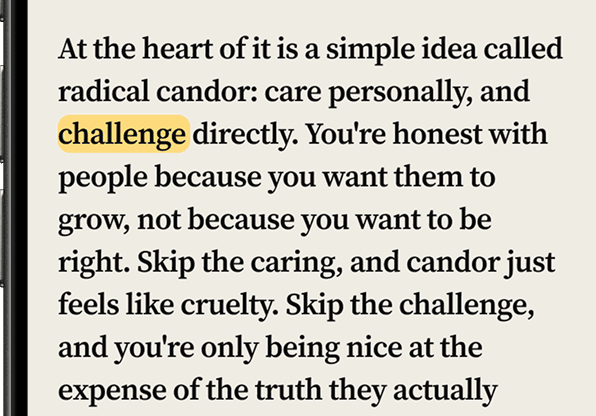
『シャリバナの恐怖』の要約の一語一語が音声に合わせてリアルタイムでハイライトされ、自然に読み進められます。
Grace and Jack's love story seems like something from a fairy tale. They meet in a park where Jack charmingly dances with Grace's sister Millie, who has Down's syndrome. While most men in Grace's past had been uncomfortable with her devotion to Millie, Jack seems to embrace it. He courts Grace with old-fashioned attentiveness - opening doors, sending flowers, and showing genuine interest in both her and Millie. When he proposes after just three months, he promises that wherever they live, there will always be a place for Millie - the words Grace had longed to hear from a partner. What appears romantic in retrospect reveals itself as calculated predation. Jack's courtship exemplifies "love bombing" - overwhelming someone with excessive attention and affection to manipulate them. Each gesture was deliberately designed to lower Grace's defenses and isolate her from potential support systems. His insistence that she quit her job as a fruit buyer for Harrods eliminated her financial independence and professional connections. His push for a quick wedding prevented her from noticing red flags. His suggestion they move to a remote house in Surrey physically isolated her from friends. Most insidiously, Jack weaponized Grace's love for Millie. He recognized that Grace's devotion to her sister was both her greatest strength and her greatest vulnerability. By presenting himself as uniquely accepting of Millie, he created an irresistible lure. Grace had spent years searching for someone who would embrace both her and her sister; when Jack appeared to be that person, she ignored subtle warning signs that might otherwise have given her pause. The whirlwind romance section serves as a chilling reminder of how predators identify and exploit vulnerabilities. Jack didn't choose Grace randomly - he selected her precisely because her commitment to Millie made her the perfect victim: someone who would endure anything to protect a vulnerable loved one.
The wedding day marks the pivotal moment when Jack's true nature begins to reveal itself. As Grace prepares for the ceremony, Millie suffers a terrible accident, falling down the stairs and breaking her leg. Though initially devastated that her sister can't attend the wedding, Grace is persuaded to continue with the ceremony, comforted by Jack's apparent concern and the paramedics' assurances that Millie will recover. The wedding proceeds beautifully, and Grace is filled with joy and anticipation as they retire to their hotel room. She prepares for their first night together, having specially purchased cream silk lingerie for the occasion. When she emerges from the bathroom, however, she encounters a stranger. The charming, loving man she married has vanished, replaced by someone cold, calculating, and cruel. Jack reveals that he has no interest in a physical relationship with her - she was merely "the means to an end," the end being access to Millie. This transformation is terrifying precisely because it's so absolute. In an instant, the man Grace thought she knew completely disappears. The contrast between the public Jack - charming, attentive, seemingly perfect - and the private Jack - calculating, cruel, and sadistic - establishes the pattern that will define their marriage. It also introduces the book's central horror: not just that Jack is abusive, but that no one would ever believe Grace if she told them the truth. His public persona is so convincingly crafted that any accusation she might make would seem absurd. The wedding night revelation also forces readers to reexamine everything that came before it. Moments that seemed romantic now appear sinister. Jack's interest in Millie wasn't compassionate but predatory. His insistence on a quick wedding wasn't romantic eagerness but strategic haste. His suggestion that Grace quit her job wasn't concern for her well-being but a tactic to isolate her. The beautiful house in Surrey wasn't a dream home but a carefully designed prison. What makes this section particularly chilling is the realization that Grace's nightmare was meticulously planned long before she ever met Jack. Her entire relationship was built on a foundation of lies, crafted by a man who saw her not as a partner but as an obstacle to overcome in his pursuit of Millie.
Jack's house is a physical manifestation of his psychological control - beautiful on the surface but designed as an inescapable prison. The elegant exterior with its manicured gardens presents a picture of domestic bliss to neighbors and visitors. Inside, however, every aspect of the home has been engineered for containment and control. The windows on the ground floor are fitted with steel shutters that close automatically when Jack activates them. The guest bedroom where Grace is kept has bars on the windows, disguised as decorative elements to any outside observer. The basement contains a hidden room behind a steel door - a blood-red chamber where Jack plans to eventually imprison Millie. Even the beautiful yellow bedroom prepared for Millie is merely a facade, concealing Jack's true intentions. Technology, typically associated with convenience and connection, becomes another tool of imprisonment. Jack controls all communication devices. The telephone and computer remain in his study, used only under his strict supervision. Grace's emails to friends and family are composed under his watchful eye, ensuring she can never signal for help. When visitors call, Jack screens all interactions, creating plausible excuses for Grace's absences or strange behavior. Most insidiously, Jack uses social occasions to reinforce Grace's captivity rather than provide opportunities for escape. Dinner parties become performances where Grace must maintain the illusion of happiness while Jack watches for any misstep. Outings to restaurants are carefully orchestrated, with Jack positioning himself to monitor every interaction. Even visits to Millie are controlled, with Jack rarely allowing the sisters a moment alone. What makes this imprisonment particularly cruel is how it forces Grace to participate in maintaining her own captivity. To protect Millie, she must become complicit in Jack's deception, smiling for photographs, preparing perfect meals, and pretending to be blissfully happy. Each convincing performance she delivers makes it less likely anyone will believe her if she ever tries to reveal the truth. The more perfectly she plays her role, the more thoroughly she seals her own fate. This section highlights how domestic abuse often operates: not through constant physical violence, but through systematic control of every aspect of the victim's environment and interactions. Jack rarely needs to resort to physical violence because his psychological and environmental control is so complete. The house itself becomes both the instrument and symbol of Grace's captivity - beautiful, perfect, and inescapable.
Jack's abuse extends far beyond physical confinement; it's a sophisticated campaign of psychological torture designed to break Grace's spirit. He systematically strips away everything that gives her life meaning and stability, creating an environment of perpetual uncertainty and fear. One of his most effective tactics is the deliberate disruption of routine. Grace never knows when she'll be fed, when she'll be allowed to sleep, or when she'll face punishment. Some days Jack brings her breakfast; other days he leaves her without food entirely. This unpredictability prevents her from developing coping mechanisms or planning escape attempts, keeping her in a constant state of anxious anticipation. Jack also employs a form of gaslighting, making Grace question her own perceptions and memories. He rewrites their history, claiming he never said things he definitely said or insisting events happened differently than they did. When friends mention his comment about Millie's room being red (when he's shown her a yellow room), he flatly denies ever saying it, making Grace appear confused or mistaken. Perhaps most cruelly, Jack transforms Grace's strengths into vulnerabilities. Her artistic talent becomes a tool of torture when he forces her to paint portraits of beaten women that he hangs in the basement room intended for Millie. Her love for Millie becomes her greatest weakness, as Jack threatens to accelerate his plans for her sister whenever Grace defies him. Even her social graces become a liability, as her ability to maintain a perfect facade makes it less likely anyone will suspect her suffering. Jack's psychological warfare extends to creating impossible situations where Grace must choose between terrible options. When she breaks down at a dinner party, he punishes her by forcing her to choose between disappointing Millie by canceling a planned visit or submitting to punishment in the basement. When she attempts to communicate with others through hidden messages, he increases her isolation by removing more privileges. What makes this psychological torture particularly effective is Jack's deep understanding of what truly terrifies Grace. It's not physical pain she fears most, but the thought of Millie suffering the same fate. Jack exploits this fear masterfully, constantly reminding Grace that her sister's fate depends entirely on her compliance. This psychological leverage proves far more effective than any physical restraint could be. The psychological warfare section reveals the most disturbing aspect of Jack's character: his enjoyment of fear itself. As he chillingly tells Grace, "I love how it looks, I love how it feels, I love how it smells. And I especially love the sound of it." His abuse isn't merely about control; it's about the sadistic pleasure he derives from witnessing terror. This revelation transforms him from a controlling abuser into something far more disturbing - a predator who feeds on fear as others might feed on love.
『シャリバナの恐怖』の要約の一語一語が音声に合わせてリアルタイムでハイライトされ、自然に読み進められます。
At the heart of this psychological thriller lies the relationship between Grace and her sister Millie, whose vulnerability drives both the plot and Grace's desperate determination to escape. Millie, who has Down's syndrome, represents both Grace's greatest joy and her most profound vulnerability - a vulnerability Jack identified and exploited from their very first meeting. Grace's devotion to Millie stems from their childhood, when their parents made it clear they never wanted children, especially a child with special needs. When they planned to put Millie up for adoption and move to New Zealand, teenage Grace attempted suicide, which convinced them to let her become Millie's primary caregiver. This early experience shaped Grace's identity around protecting her sister, creating the perfect psychological profile for Jack's manipulation. What makes Jack's targeting of Millie particularly disturbing is how he weaponizes societal attitudes toward people with disabilities. He correctly calculates that if Millie were to disappear, fewer resources would be dedicated to finding her than would be for a neurotypical person. He exploits the sad reality that society often values disabled lives less, making Millie the "perfect victim" for his sadistic plans. The relationship between the sisters provides the emotional core of the story. Despite her own suffering, Grace's primary concern remains Millie's safety. When she learns that Jack deliberately caused Millie's accident at the wedding by pushing her down the stairs, her horror transcends her own situation. When Jack announces his countdown to Millie moving in, Grace's determination to escape intensifies not for her own sake, but for her sister's. Perhaps most poignantly, it's Millie who ultimately provides Grace with the means to escape. Despite being underestimated by everyone except Grace, Millie demonstrates remarkable perception and courage. She recognizes Jack's true nature when others don't, creates a secret code with Grace to discuss him safely ("Jack is George Clooney"), and smuggles sleeping pills to Grace that become instrumental in her escape plan. The person Jack targeted for her vulnerability proves to be the catalyst for his downfall. This section highlights how predators often target not just individuals but relationships, exploiting bonds of love and loyalty. Jack didn't choose Grace randomly; he selected her precisely because her devotion to Millie made her the ideal victim - someone who would endure unimaginable suffering to protect someone she loved. Yet ultimately, it's this same bond that gives Grace the strength and determination to fight back when her own survival alone might not have been sufficient motivation.
After enduring months of captivity and psychological torture, Grace finally finds the opportunity and resources to plan her escape. The turning point comes when Millie secretly passes her sleeping pills during a bathroom conversation. Though Millie suggests using them to kill "Jorj Koony" (their code name for Jack), Grace develops a more sophisticated plan - one that will allow her to escape without facing murder charges. Grace's plan demonstrates remarkable psychological insight and strategic thinking. Rather than attempting a straightforward escape that Jack would anticipate, she crafts a scheme that uses his own patterns and weaknesses against him. She begins by establishing a new routine of drinking whisky with Jack in the evenings, creating a predictable scenario she can exploit. She then initiates a hunger strike, making Jack concerned about her health and more willing to accommodate her requests. The most brilliant aspect of her plan emerges when Jack loses his first court case. Grace realizes this provides the perfect opportunity - a way to kill Jack that would appear to be suicide. A lawyer who has built his reputation on never losing a case might plausibly take his own life after such a professional blow. By crushing Millie's sleeping pills into Jack's whisky, luring him to the basement, and locking him in the very room he had prepared for Millie, Grace turns Jack's own creation into his prison. What makes this escape plan particularly satisfying is how it inverts the power dynamic that has defined their relationship. Throughout their marriage, Jack has controlled every aspect of Grace's life, forcing her to perform for others while suffering in private. In executing her escape, Grace employs the same tactics - performing the role of devoted wife preparing for a romantic Thailand getaway while secretly orchestrating Jack's demise. The performance skills Jack forced her to develop become the tools of his destruction. Grace's meticulous attention to detail mirrors Jack's own calculated planning. She arranges for Esther to drive her to the airport, creating a witness who can confirm she left while Jack was still alive. She books a flight to Thailand and maintains the appearance of a wife expecting her husband to join her, establishing an alibi. She even leaves loving voicemails on Jack's phone, creating evidence of her supposed ignorance about his fate. This section transforms Grace from victim to strategist, revealing the strength and intelligence that have been present throughout her ordeal but suppressed by circumstance. Her escape plan isn't just about physical freedom; it's about reclaiming her agency and turning Jack's psychological warfare back on him. By imprisoning him in the room designed for Millie's torture, she forces him to experience the very fear he so enjoyed inflicting on others.
The final section of the book delivers a chilling form of poetic justice as Grace's carefully executed plan succeeds in ways even she hadn't anticipated. After locking Jack in the basement room, she flees to Thailand, establishing her alibi while he remains trapped in the prison he designed for Millie. What Grace hadn't fully calculated was that Jack would regain consciousness after the sleeping pills wore off, only to die slowly of dehydration over four days - experiencing the same fate he had planned for others. When Grace returns to England after being informed of Jack's "suicide," she faces the moment of greatest danger - the police investigation into his death. To her surprise, Esther subtly indicates she understands what really happened and will corroborate Grace's story about Jack's final moments. When Grace asks why Esther is helping her, Esther simply asks what color Millie's room really was. "Red," Grace admits, and Esther's quiet "That's what I thought" confirms she has pieced together the truth and chosen to protect Grace rather than expose her. This conclusion offers a complex moral resolution. Technically, Grace has committed murder - yet few readers would argue that justice hasn't been served. Jack's death in the very room he designed for torturing Millie represents a fitting end to his reign of terror. The fact that he died slowly, experiencing the fear he so enjoyed inflicting on others, adds a layer of karmic retribution to his demise. What makes this ending particularly powerful is how it subverts expectations about domestic abuse narratives. Rather than being rescued by outside forces or the legal system (which Jack, as a successful lawyer, could likely manipulate), Grace engineers her own escape. She transforms from victim to survivor through her own intelligence, determination, and courage. The justice system that failed to recognize Jack's true nature in life becomes irrelevant to the justice delivered in his death. The book's final moments suggest a future where Grace and Millie can finally live without fear. With Jack gone and his crimes buried with him, they have the opportunity to rebuild their lives. Yet the psychological scars of their ordeal will undoubtedly remain, raising questions about the lasting impact of trauma even after physical danger has passed. This conclusion challenges readers to consider complex questions about justice, revenge, and moral responsibility. In a situation where traditional justice has failed and lives are at stake, what actions become justifiable? When the legal system cannot protect the vulnerable, do victims have the right to take justice into their own hands? By leaving these questions unanswered, the book invites readers to grapple with the ethical ambiguities that exist in the shadows behind closed doors.
Behind Closed Doors ultimately delivers a powerful meditation on the gap between public personas and private realities. Throughout the novel, characters present carefully constructed facades that conceal their true natures and circumstances. Jack, the charming lawyer who publicly champions abused women, privately terrorizes his wife. Grace, who appears to be living a perfect life in a beautiful home, is actually a prisoner. Even Millie, who others underestimate due to her Down's syndrome, demonstrates remarkable perception and courage. These contrasts force readers to question how well we truly know the people in our lives. The dinner parties where Grace and Jack perform marital bliss while she silently screams for help serve as powerful metaphors for how abuse often hides in plain sight. Friends and colleagues see exactly what Jack wants them to see - a devoted husband and his happy wife - because they have no reason to look deeper. Only Esther, with her natural skepticism of perfection, senses something amiss beneath the flawless surface. The book challenges our cultural obsession with perfection, suggesting that flawlessness itself should raise suspicions rather than admiration. When Grace's dinner parties are too perfect, when her home is too immaculate, when her marriage appears too blissful - these aren't signs of success but warning signals that something is deeply wrong. True relationships contain imperfections; it's the flawless facade that should concern us. Perhaps most disturbingly, the novel highlights how societal expectations about marriage can facilitate abuse. Jack exploits traditional gender roles - the successful husband and the devoted homemaker - to justify Grace's isolation and constant presence at home. He weaponizes the privacy we grant to married couples, knowing that what happens "behind closed doors" is generally considered no one else's business. The very phrase that gives the book its title points to this dangerous cultural norm that allows abuse to flourish unseen and unchallenged. By the story's end, we're left questioning how many other perfect facades might conceal similar horrors. How many other Jacks might be hiding behind charming smiles and successful careers? How many other Graces might be silently screaming for help behind perfect dinner parties and immaculate homes? The true horror of Behind Closed Doors lies not just in Grace's specific situation but in the realization that her story might be playing out in countless homes around us - invisible suffering behind carefully maintained appearances of domestic bliss.
“23日間、毎日使い続けています。今では日課の一部です。”
jayallen


The Psychology of Hidden Motives
In a world where true intentions are often masked, understanding the underlying mechanics of human behavior is a critical competitive advantage. This plan is ideal for leaders, negotiators, and anyone looking to master social dynamics by reading between the lines of every interaction.

The Anatomy of a Revenge Swap
This plan is essential for writers and storytellers looking to master the dark mechanics of psychological thrillers. It is specifically designed for those interested in exploring the thin line between justice and vengeance through the lens of complex female protagonists.

Mastering the Gothic Castle Romance
This plan is essential for novelists looking to elevate their romance writing with atmospheric depth and psychological complexity. It is specifically designed for authors who want to move beyond cliches to create immersive, haunting worlds and compellingly flawed leads.

Dark romance
Dark romance has emerged as one of the fastest-growing and most psychologically complex subgenres in contemporary fiction, attracting readers who crave emotionally intense stories that explore the shadowy side of desire and human connection. This learning plan is ideal for romance readers seeking more morally complex narratives, writers wanting to understand the genre's conventions and subversions, or anyone interested in how literature explores taboo themes, power dynamics, and the intersection of love with darkness.

Psychologie noir
This learning plan provides critical insights into the darker aspects of human behavior and the mechanics of manipulation. It is essential for professionals in law enforcement, psychology, or anyone seeking to protect themselves from predatory personalities.

Become a dark romance author
Dark romance is one of the fastest-growing subgenres in publishing, with readers craving emotionally intense stories featuring morally grey characters and complex relationships. This learning plan is ideal for aspiring authors who want to break into this lucrative market, as well as existing romance writers looking to pivot into darker, more psychologically complex narratives that resonate with modern audiences.

The Silent Closer
This plan is essential for sales professionals and negotiators who want to master the non-verbal side of influence. It provides a strategic framework for reading people and protecting interests by focusing on the psychological mechanics of the close.

Read dark psychology books
This learning plan is essential for anyone seeking to understand the hidden dynamics of human behavior and protect themselves from predatory personalities. It is particularly beneficial for individuals looking to build psychological resilience and recognize manipulation in personal or professional settings.