第1章
The Unapologetic Paradox of Being a Bad Feminist
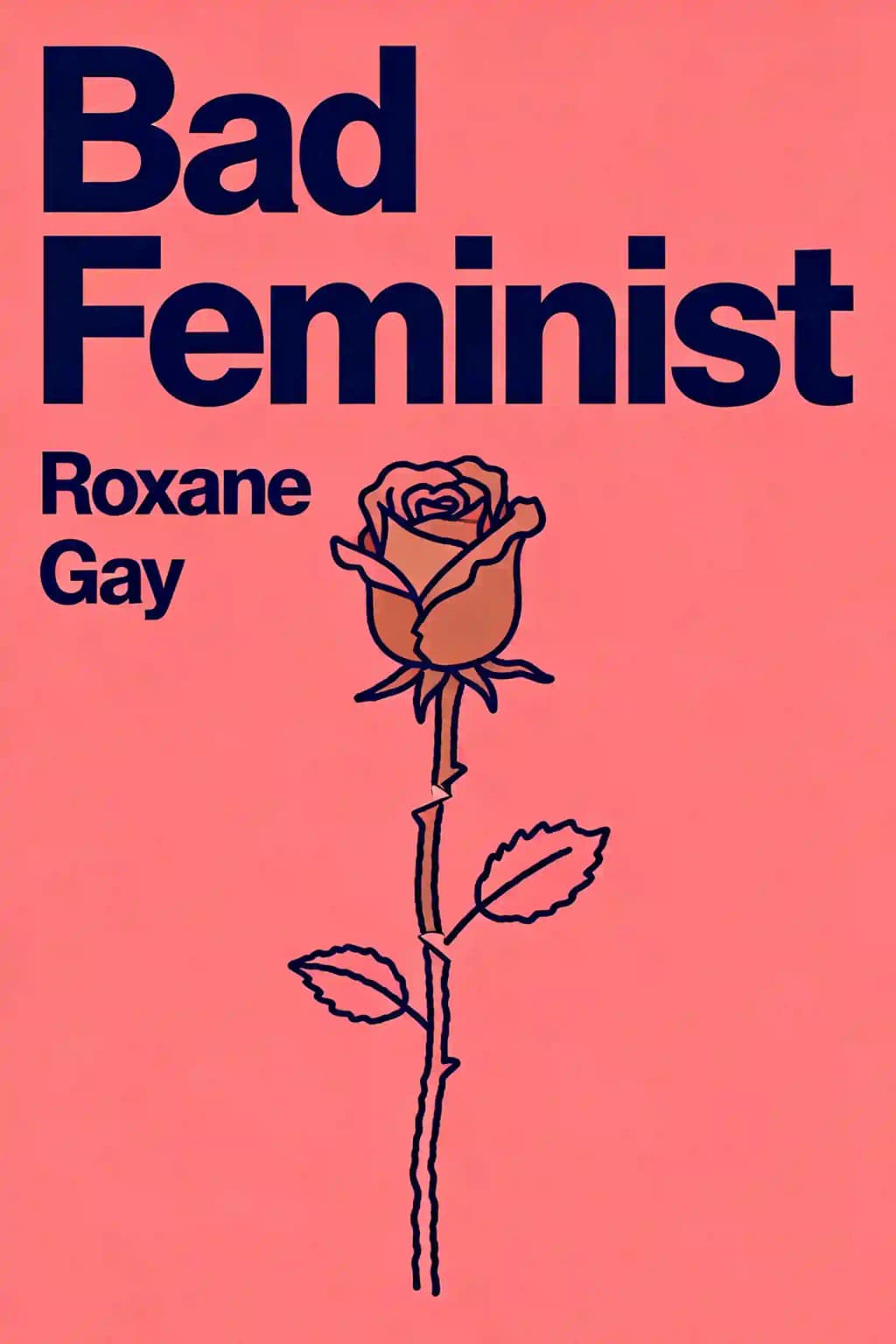
Roxane Gay's "Bad Feminist" has become a cultural touchstone for a reason-it brilliantly captures the messy contradictions of modern feminism with raw honesty and surprising humor. Since its 2014 publication, this collection of essays has resonated with readers across the spectrum, from college students discovering feminism to seasoned activists. Even celebrities like Emma Watson and Lena Dunham have praised Gay's work for its accessibility and unflinching examination of difficult truths. The book's impact stems from Gay's refusal to present a sanitized version of feminism, instead embracing the complications that come with being human in a world that demands perfection from women, especially feminist women. As she navigates pop culture, politics, and personal experiences, Gay invites us into her world-one where loving pink and listening to misogynistic rap can coexist with a deep commitment to gender equality.
第2章
Embracing the Contradictions: What Makes a Bad Feminist
Gay begins her collection by redefining feminism on her own terms, offering a refreshingly honest and nuanced perspective. "I embrace the label of bad feminist because I am human," she writes, acknowledging the impossibility of perfect ideological consistency. This confession feels revolutionary in a world where women are expected to be flawless examples or risk undermining their entire belief system. Through personal anecdotes, including her early misconceptions about feminism as representing "angry, sex-hating, man-hating victims," Gay traces her evolution toward embracing a more fundamental definition: the pursuit of equal opportunities, reproductive freedom, and equal pay for equal work.
What makes her approach so refreshing is her willingness to admit her own contradictions and complexities. She loves pink despite its traditionally gendered associations, sometimes plays dumb with repairmen because it's easier than confrontation, and occasionally dances to music with lyrics that degrade women. She watches reality TV shows that often portray women in problematic ways and enjoys fashion magazines while recognizing their contribution to impossible beauty standards. These admissions create space for readers to recognize their own inconsistencies without shame, suggesting that perfect adherence to feminist ideology isn't necessary for meaningful advocacy.
Gay delves deep into feminism's historical shortcomings, particularly its privileging of white, middle-class women's experiences. She examines how the movement has historically excluded or marginalized women of color, queer women, transgender women, and working-class women. Through specific examples, from the suffragette movement's racial blind spots to contemporary feminist organizations' failure to address intersectional issues, Gay illustrates how feminism has often failed those who need it most. Rather than abandoning feminism entirely because of these shortcomings, she suggests we can acknowledge and learn from these failures while building on its successes. This nuanced position recognizes that feminism isn't monolithic-we don't need to believe in exactly the same feminism, but we do need to respect our differences while working to bridge divides.
Perhaps most powerfully, Gay encourages readers who can't find feminists they identify with to "become the feminist you want to see." She shares examples of women who have done exactly this, from bloggers creating inclusive online communities to activists organizing grassroots movements. This call to action transforms feminism from a static set of rules into a dynamic, evolving movement shaped by those who participate in it. By claiming the label "bad feminist," Gay liberates herself and her readers from impossible standards while still maintaining a fierce commitment to the core principles of equality and justice. She demonstrates how embracing our contradictions can actually strengthen rather than weaken our advocacy, making feminism more accessible and ultimately more effective.
第3章
The Personal is Political: Navigating Identity and Belonging
Gay's exploration of identity and belonging reveals how deeply personal experiences shape political consciousness. As a Black woman and child of Haitian immigrants, she occupies multiple intersecting identities that inform her perspective on privilege and marginalization. Her essays on these themes demonstrate how individual experiences connect to broader social patterns.
In "Peculiar Benefits," Gay wrestles with acknowledging her own privilege-educational opportunities, a tenure-track position, financial stability-while still experiencing racism and sexism. She argues that privilege is relative and almost everyone has some form, yet she rejects what she calls the "Privilege Olympics," noting that endless privilege-policing only silences necessary voices. Instead of accusation, she calls for observation: "If you're reading this, you have privilege. Recognize it and consider using it for good."
This nuanced understanding of privilege extends to her reflections on belonging. In "Feel Me. See Me. Hear Me. Reach Me," Gay explores her constant preoccupation with connection, loneliness, community, and belonging. Unlike many who seek partners similar to themselves, she finds herself drawn to people with whom she shares few obvious commonalities, finding it fascinating to connect with someone "endlessly interesting precisely because we're different."
Her experiences as an academic reveal another dimension of belonging. In "Typical First Year Professor," she describes the isolation of living in a small Midwestern town surrounded by cornfields, with colleagues fifty miles away who have families while she travels to nearby cities and takes up competitive Scrabble to fill the void. This sense of being an outsider extends to the classroom, where she catches students staring at phones beneath their desks while she sometimes sneaks glances at her own.
Through these personal narratives, Gay demonstrates how individual experiences of isolation, connection, and identity are never just personal-they're shaped by broader social structures and power dynamics. By sharing her own struggles with belonging, she creates space for readers to recognize their own experiences within these larger patterns, illustrating how the personal truly is political.
第4章
Media Representation: The Power of Seeing Ourselves
Media representation emerges as a crucial theme throughout Gay's essays, particularly how limited portrayals of marginalized groups perpetuate harmful stereotypes and contribute to real-world inequalities. Her frustration with BET's programming illustrates this concern: "BET's programming is largely a travesty, offering limited visions of Black success primarily through sports and music." She craves seeing the full spectrum of Black experiences on television, not just narrow stereotypes.
This desire for authentic representation extends to her analysis of films like "The Help," which she criticizes for sanitizing the segregated South and presenting "an embarrassment of 'magical negro' characters." What troubles her most about such films is "how little has changed and how complacently we consume these often revisionist histories." She notes the absurdity of watching the film in a theater where she was the only Black person, surrounded by enthusiastic white women clutching worn copies of the book.
Gay's critique of Tarantino's "Django Unchained" similarly highlights the problems of white directors mediating Black experiences. She observes how the white audience laughed at the wrong times-"nervous tittering at the N-word's first instances, then heartier laughter as its usage became ubiquitous"-while remaining silent during subtler, funnier moments involving white characters. Her discomfort is deeply personal: "I could have been a slave."
Her essay "Beyond the Struggle Narrative" expands this critique to Hollywood's limited vision of Black stories, noting that critical acclaim for Black films is often built upon Black suffering or subjugation. She expresses exhaustion with "slavery and struggle narratives-broken Black bodies somehow persevering against impossible circumstances," calling for "more narrative complexity, more contemporary Black experiences, more artistic experimentation."
Even when media attempts diversity, Gay remains skeptical of superficial inclusion. Regarding "Orange Is the New Black," she writes, "I'm tired of being told I should enjoy certain movies or television shows simply because they exist. Time and again, people of color are expected to be grateful for scraps from the table." She argues that diverse characters on the show are "merely planets orbiting Piper's sun," and laments that "we'll never see a similar show about a woman of color as a stranger in a strange land."
Through these analyses, Gay demonstrates how media representation shapes our understanding of ourselves and others. When marginalized groups only see themselves portrayed through a narrow lens, it limits imagination about what's possible. By demanding better, more complex representation, Gay advocates for media that reflects the full humanity of all people.
第5章
Gender Performance: Playing Roles in an Unequal World
Gay examines how gender operates as a performance, drawing on Judith Butler's theory that gender is "an identity tenuously constituted in time" through "stylized repetition of acts." This framework helps her analyze how women are trapped by gendered expectations in popular culture and everyday life.
In "Garish, Glorious Spectacles," she explores how women perform femininity through characters like Ruth in Kate Zambreno's "Green Girl," a young American shopgirl in London selling perfume called Desire. Ruth oscillates between wanting invisibility and craving attention, her sexual encounters detached as she becomes "the voyeur of herself." Gay connects this fictional character to reality television shows that showcase "green girls interrupted"-women performing exaggerated femininity under constant camera surveillance, reduced to stereotypes about low self-esteem, marital desperation, and beauty obsession.
The pressure to perform likability emerges as a particularly insidious aspect of gender expectations. In "Not Here to Make Friends," Gay reflects on how an unlikable girl is considered "a problem" from a young age. She notes how critics branded Charlize Theron's character in "Young Adult" with "a scarlet U for unlikability," with Roger Ebert insisting her alcoholism provided necessary context because "without such a context, Mavis would simply be insane." Gay astutely observes that critics required a diagnosis for Theron's character's unpleasant traits rather than accepting the simplest explanation: "she's human."
This analysis extends to literary characters, with Gay expressing frustration at how likability dominates literary conversations: "That likability even exists in literary conversations is odd. It implies courtship." She finds "good," purportedly likable characters like May Welland in "The Age of Innocence" unbearable because "she always does everything right, everything expected of her." Meanwhile, she's drawn to characters who "make mistakes and put themselves first without apologizing."
Gay's examination of the Fifty Shades trilogy further illuminates problematic gender dynamics in popular culture. She describes the books as "a disturbing primer for abusive relationships," where Christian Grey tracks Ana's movements, conducts background checks, controls her eating habits, isolates her from friends, and uses sex as a weapon to maintain dominance. The books dangerously romanticize controlling behavior as passionate love, suggesting women should sacrifice their autonomy for a damaged Prince Charming who might be reformed.
Through these analyses, Gay demonstrates how gender performance constrains women's authentic expression and normalizes harmful relationship dynamics. By making these patterns visible, she invites readers to question the roles they've been assigned and imagine more liberating ways of being.
第6章
Sexual Violence: Confronting Rape Culture
Gay confronts rape culture with unflinching clarity, examining how society normalizes sexual violence against women through language, media representation, and legal systems. Her personal experience of sexual assault as a middle school student informs her analysis, giving her insights both intellectual and visceral.
In "The Careless Language of Sexual Violence," she critiques a New York Times article about the gang rape of an eleven-year-old girl that focused on how eighteen men's lives would be changed, rather than on the child whose body was violated. The article even implied the girl's appearance and her mother's absence somehow made the assault understandable. This carelessness, Gay argues, reflects our "rape culture," where male aggression toward women appears natural and inevitable.
She observes how we've become desensitized to rape's horror through constant exposure and casual appropriation of its language ("rape shower," "my boss raped me over that raise"). Television and movies inundate us with sexual violence-from special episodes of Beverly Hills 90210 to nearly every Lifetime movie to sweeps-week ratings grabs. These representations rarely address the devastating physical and psychological effects of sexual assault, instead allowing viewers to believe rape can be "washed away as neatly as on TV."
Gay's personal story in "What We Hunger For" reveals the lasting impact of sexual violence. She describes being sexually assaulted in middle school by a boy she thought was her boyfriend and his friends in an abandoned cabin in the woods. Despite praying and finally saying "no," nothing stopped them. Afterward, she walked home alone, hiding what happened because she was "a good girl" who feared getting in trouble. The trauma continued at school when the boys called her "slut"-a name that followed her for the rest of the year after they spread a different story about what happened.
This experience helps explain why The Hunger Games trilogy resonates so deeply with Gay-it acknowledges the darkness of life while still offering hope. Katniss endures the unendurable, showing visible damage yet persevering. The trilogy ultimately offers "the tempered hope that everyone who survives something unendurable hungers for-the possibility of a better life with someone who understands your strength and can hold your weak places while loving you through your darkest memories."
Gay also examines how trauma lingers in the body, triggered by seemingly innocuous things-men who look like her attackers, the smell of beer or cologne, harsh laughter, groups of men, depictions of violence, being in wooded areas, unexpected restraint during intimacy. These triggers produce visceral reactions-nausea, cold sweats, shutting down emotionally, clenched fists. She must remind herself of the time and distance between then and now, convince herself she's no longer that vulnerable girl in the woods: "It gets better until suddenly it doesn't."
Through these powerful essays, Gay exposes how rape culture operates and the real damage it causes. By sharing her own experience alongside cultural critique, she creates a powerful argument for confronting sexual violence honestly rather than minimizing or normalizing it.
第7章
Politics of Representation: Race, Gender, and Power
Gay examines how representation in media, politics, and everyday life reflects and reinforces power structures related to race and gender. Her analysis reveals how seemingly individual incidents connect to broader patterns of inequality.
In "The Racism We All Carry," she argues that everyone harbors racial judgments-"not necessarily cross-burning racism, but the subtle biases born from centuries of cultural conditioning." She illustrates this through Paula Deen's casual admission of using racial slurs "of course," as if it were perfectly normal. What's most revealing isn't Deen's racism but her "blitheness about it-a complete lack of shame suggesting someone surrounded by like-minded individuals." Gay notes that Deen clearly understands the unspoken rules of racism, having never used such language in media interviews, demonstrating what Teju Cole called "the unwritten rules about how to be racist."
Her essay "A Tale of Two Profiles" contrasts public reactions to Dzhokhar Tsarnaev, the Boston Marathon bomber, and Trayvon Martin, revealing how white privilege operates even in extreme circumstances. When Rolling Stone featured Tsarnaev on its cover, people who knew him still described him as "sweet," "superchill," and "a golden person," demonstrating an empathy that represents "white privilege-retaining humanity despite inhumanity." Meanwhile, Martin, the victim, "was put on trial posthumously for minor infractions." As Syreeta McFadden noted, "Only in America can a dead black boy go on trial for his own murder."
Gay's analysis extends to gender politics, particularly reproductive rights. In "The Alienable Rights of Women," she observes how women's bodies are continually "forced into being legislative matters while men refuse to assume their fair share of responsibility." She notes the absurdity of women having to justify using birth control for reasons other than preventing pregnancy, as if "there's something wrong with simply wanting sex without consequences." Meanwhile, the drug industry has "no motivation to develop male birth control because forcing this burden on women is profitable."
Her critique of Tyler Perry's films reveals how entertainment can reinforce problematic gender and class politics. Despite Perry's remarkable success as a Black filmmaker, Gay argues that "his success comes at a troubling cost-he builds it on the backs of Black women and the working class." In his films, "women who seek fulfillment outside their marriages or prescribed roles are invariably punished through abuse, addiction, or adultery," with the unspoken message: "Be grateful for what you've got."
Through these analyses, Gay demonstrates how representation matters not just culturally but politically. The stories we tell and the images we see shape our understanding of who deserves rights, protection, and empathy. By making these connections visible, she challenges readers to recognize how representation contributes to real-world power dynamics and inequalities.
第8章
Finding Voice: Writing as Resistance and Liberation
Throughout her essays, Gay explores how writing functions as both resistance to oppression and a path toward personal liberation. As a Black woman writer, she confronts unique challenges in a literary landscape that often marginalizes voices like hers while still finding power in self-expression.
In "Beyond the Measure of Men," she addresses the persistent gender disparity in literary attention, noting how "women writers continually demonstrate the serious disparity in critical attention they receive compared to male writers, yet nothing changes." She critiques the arbitrary category of "women's fiction," observing that "books by men about domestic themes (like Updike or Yates) are considered literary fiction, while similar books by women get relegated to 'women's fiction.'" Despite these frustrations, Gay maintains that "reading remains a pure joy" and continues these difficult conversations "because we carry a raw hope that someday we'll create enough change that we can focus solely on the joy and complexity of stories themselves."
As a writer addressing sexual violence in her fiction, Gay considers her responsibility "to critique rape culture intelligently and illuminate realities without exploitation." Writing her novel "An Untamed State" required "going to dark places that sometimes nauseated me," constantly questioning if she was "being gratuitous" and wondering "how to write violence authentically without exploitation." These reflections reveal the ethical dimensions of writing about trauma and the care required to avoid perpetuating harm.
For Gay, writing also serves as a form of personal liberation. In "Bad Feminist: Take Two," she describes how through writing and sharing her thoughts online, "I'm undestroying myself after years of allowing myself to stay damaged. I'm being open about who I am, who I was, where I've faltered, and who I would like to become." This process of self-revelation through writing allows her to embrace her contradictions rather than hiding them.
The power of storytelling emerges most clearly in "What We Hunger For," where Gay describes how books saved her after sexual assault: "Stories have always pulled me out of my darkest experiences, allowing me to remember, forget, and imagine better worlds." The Hunger Games trilogy resonated with her because it "acknowledges the darkness of life while still offering hope," showing a heroine who "endures the unendurable, showing visible damage yet persevering."
Through these reflections on writing, Gay demonstrates how storytelling can challenge oppressive systems while also healing personal wounds. By finding her voice and sharing it with others, she creates space for readers to recognize their own experiences and imagine new possibilities. Her essays themselves become acts of resistance-refusing silence, embracing complexity, and insisting on the value of her perspective in a world that often tries to diminish it.
第9章
The Revolutionary Act of Being Human
In the end, Gay's most radical act is simply claiming her full humanity in a world that often denies it to women, especially Black women. By embracing her contradictions rather than hiding them, she models a form of authenticity that feels revolutionary in its ordinariness.
Her essay "Bad Feminist: Take Two" captures this perfectly as she lists her contradictions: "I listen to thuggish rap with degrading lyrics while driving to work; pink is my favorite color; I love fashion magazines unironically; I shave my legs; I know nothing about cars and call my father with questions; I consider certain domestic tasks gendered; I sometimes fake orgasms because it's easier; I want a baby and worry about dying alone because I've pursued my career."
These admissions might seem trivial, but they represent a profound refusal to perform perfection. Gay acknowledges the pressure "to live up to feminist ideals-having it all, doing it all," when really she's "just a woman in her thirties struggling to accept herself and her credit score." She's "worked overtime trying not to be this utterly human and flawed woman," finding it "exhausting and unsustainable."
This embrace of imperfection extends to her feminism. While recognizing her failures as a feminist, Gay ultimately affirms: "No matter what issues I have with feminism, I am a feminist. I cannot deny the importance and absolute necessity of feminism." Her final declaration-"I would rather be a bad feminist than no feminist at all"-offers a powerful model for engagement with any political movement. It suggests we can acknowledge a movement's flaws and our own inconsistencies while still committing to its core principles.
Throughout her essays, Gay demonstrates how claiming one's full humanity-with all its messiness, contradictions, and imperfections-is itself a political act for those whose humanity has been historically denied or diminished. By sharing her personal experiences alongside incisive cultural critique, she creates a vision of feminism capacious enough to include all kinds of women with all kinds of contradictions.
This may be Gay's most important contribution: showing that we don't need to be perfect to fight for a better world. We can love problematic things, make mistakes, and still work toward justice. We can be utterly human and still demand to be treated with dignity and respect. In a world that expects women to be either flawless examples or silent observers, Gay's bad feminism offers a third option-being authentically yourself while still fighting for change. It's not just bad feminism; it's revolutionary humanity.