第1章
When Animals Lose Their Minds: The Shared Mental Health Journey
Oliver, a four-year-old Bernese Mountain Dog, seemed like the perfect pet when the author and her husband Jude first brought him home. Affectionate and well-behaved, he quickly settled into their lives. But when left alone, Oliver transformed - howling desperately, destroying furniture, and pacing frantically. His separation anxiety culminated in a shocking act: jumping from a fourth-floor apartment window while his owners were away. Miraculously, he survived the 55-foot fall onto concrete without breaking a single bone.
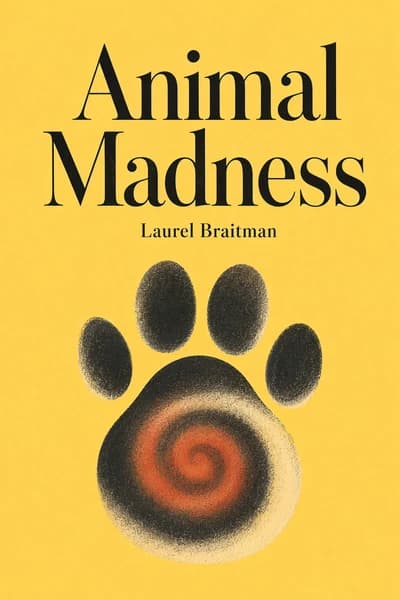
This dramatic incident launched the author on an intellectual journey that would become her life's work. "Animal Madness" has garnered widespread acclaim since its 2014 publication, with The New York Times calling it "beautiful, fascinating, and deeply moving." The book resonated with animal lovers and scientists alike, challenging our understanding of the emotional lives of non-human animals. Temple Grandin praised it as "a gem... that can teach us much about the wildness of our own minds." The work has influenced veterinary practice and zoo management worldwide, as institutions increasingly recognize the psychological needs of animals in their care.
第2章
The Evolutionary Roots of Animal Emotions
Charles Darwin delivered the most significant blow to human exceptionalism through his groundbreaking work on animal emotions. In his 1872 book "The Expression of the Emotions in Man and Animals," Darwin meticulously documented emotional experiences across species - disappointment in dogs (including his own dog's "hot-house face" when denied something), grief in elephants, contentment in cats, and even laughter in orangutans.
By 1874, Darwin directly addressed animal insanity in his revised "Descent of Man," writing that animals possess "passions, affections and emotions" and are "liable to insanity, though far less often than in the case of man." He cited Scottish physician William Lauder Lindsay, whose two-volume work "Mind in the Lower Animals" (1880) documented cases of dementia, nymphomania, delusions, and melancholia in various animals. Lindsay argued that animal mental illness deserved serious study not just because it resembled human conditions, but because mentally disturbed horses, oxen, or dogs posed genuine public health risks in an era when these animals lived in close proximity to humans.
The past forty to fifty years of animal research represents a scientific U-turn back toward Darwin's arguments. Researchers like Tinbergen and Lorenz laid foundations by studying innate versus learned behaviors in animals, creating the field of ethology. Jane Goodall's expressive chimps, Rachel Carson's environmental advocacy, and Donald Griffin's 1976 book on animal consciousness all contributed to this shift. The work continued with whale song recordings and elephant research by Moss, Poole, and Payne, collectively suggesting that Descartes' view of animals as mere automatons has been thoroughly rejected.
Neurosurgeon Phil Weinstein, whose Australian shepherd developed canine Alzheimer's, explained to the author that the neurological hardware for emotional states exists across species, with similar potential for malfunction. This neurological similarity explains why animals have long served as research subjects for human psychiatric treatments. Recent MRI studies of dogs suggest their neural networks process positive emotions similarly to ours. While some researchers like Joseph LeDoux argue that feelings require language, others like Jaak Panksepp counter that feelings aren't limited to humans just because we describe them with words.
第3章
The Historical Lens: How We've Interpreted Animal Distress
Throughout history, our understanding of troubled animal behavior has mirrored the psychiatric labels of each era. In Victorian times, a dog like Oliver might have been shot as "mad," while in the early twentieth century, he might have been diagnosed with "homesickness." These shifting diagnoses reflect our evolving medical understanding and cultural attitudes.
For centuries, "madness" in animals was confusing and difficult to define. The term evolved from meaning "insane" in the sixteenth century to indicating "anger" by the eighteenth century. By the late nineteenth century, any animal acting strangely could be labeled mad, regardless of whether it was rabid. Before Pasteur's rabies vaccine in 1885, the disease was often considered a form of insanity rather than infection, sometimes viewed as punishment for unclean behavior.
Elephants featured prominently in these narratives of animal madness. Newspaper accounts detailed their "insanity" and violent outbursts, though these weren't typically cases of physical illness but reactions to mistreatment and abuse. Tip, an Asian elephant "gifted" to Central Park, transformed from celebrity attraction to alleged criminal over several years. Despite being presented as "docile as a lamb," Tip had likely endured traumatic capture from his mother, harsh training methods, and frustrating confinement. After years in the elephant house, the New York Times announced in 1894 that Tip "must reform or die" following violent attacks on his keeper. Despite massive public interest, Tip was executed with cyanide-laced bran. His remains were sent to the American Museum of Natural History, where his skull remains today - a specimen representing not just an elephant species but also a frustrated mind, punished for behaviors stemming from his severely restricted existence.
Throughout the nineteenth and early twentieth centuries, homesickness and nostalgia were considered potentially fatal physical illnesses rather than mere emotional states. During the Civil War, Union doctors diagnosed 5,000 soldiers with homesickness, with 74 reportedly dying from it. Army bands were sometimes forbidden from playing "Home Sweet Home" for fear it might trigger fatal cases. These diagnoses reflected societal anxieties about urbanization, immigration, and displacement. As humans traveled unprecedented distances, so too did exotic animals, whose behaviors in captivity often mirrored human responses to displacement.
John Daniel, a young gorilla who lived with humans in England in the early 1920s, thrived in his adoptive home but deteriorated rapidly when sold to a circus. Separated from his human family, he became depressed, refusing food and hiding under blankets facing away from visitors. Despite his caretaker rushing to America, John died within three weeks of arrival at Madison Square Garden. His story exemplifies how animals, like humans, can experience profound distress when removed from their social bonds and familiar environments.
第4章
The Diagnostic Challenge: Understanding Animal Minds
Veterinary psychiatry faces unique challenges compared to human mental health diagnosis. Without verbal communication, veterinarians like Mel Richardson first examine an animal's environment, recognizing that poor living conditions often produce both physical and psychological problems. For pets, they rely heavily on owner interviews, while finding zoo animals "easier to diagnose" without an intermediary's potentially incomplete reporting.
Unlike human mental health diagnosis, which primarily relies on verbal self-reporting matched against the DSM's thousands of diagnostic codes, animal diagnosis depends almost entirely on behavioral observation and sometimes drug response. There is no DSM for animals - the closest equivalent might be experienced veterinarians who have witnessed virtually every abnormal behavior from phobic dogs to depressed lions and compulsively self-pleasuring primates.
At Tufts Animal Behavior Clinic, specialists explained to the author that animals can suffer from versions of almost every human psychiatric disorder, including PTSD in search and rescue dogs from 9/11 and Hurricane Katrina. While they believe animals have obsessive thoughts, they use the term "compulsive disorder" rather than "OCD" in publications since they can't prove what animals are thinking. The clinic treats animals with specific phobias like fear of shadows, bright sunlight, contrails, beeping noises, and even flies.
Daniel Quagliozzi, who works at the San Francisco SPCA, diagnoses newly arrived cats and provides post-adoption support. He explains that cats thrive on routine and predictability, categorizing new arrivals into three groups: "fast-lane cats" who adapt quickly, "slow-lane cats" who might hide under blankets for months, and "middle-lane cats" somewhere between. To identify depression, he observes if cats eat, use the litter box, or move at all. Unlike fearful cats who hiss and swat, depressed cats become "lifeless lumps" unresponsive to interaction.
Understanding an animal's individual history is crucial for diagnosis, as the author learned with Rara, an elephant raised at a Thai hotel. Taken from her mother as a calf, Rara entertained guests with harmonica playing and beach swims. As she grew larger and more dangerous, she was increasingly chained, until a German banker helped relocate her to Elephant Nature Park. At the sanctuary, Rara struggled to integrate with other elephants, having missed crucial socialization. Without elephant culture, she didn't know how to approach or communicate with her own kind. Instead, she preferred human company, especially white women who reminded her of hotel guests.
第5章
The Environmental Impact: Captivity and Mental Health
The environment where an animal lives profoundly impacts their mental health. When visiting zoos, one notices stereotypic behaviors everywhere - gorillas rhythmically regurgitating food, animals plucking out their hair, and creatures pacing endlessly in their artificial habitats. Despite zoo exhibits carefully designed to mimic natural environments, captive animals born in zoos still possess powerful instincts to run, swing, and hunt that cannot be properly expressed.
Even in modern "naturalistic" exhibits, animals develop disturbing behaviors like dolphins engaging in inappropriate sexual behaviors with filtration systems. Some zoos post educational signs explaining enrichment items, while others remove disturbed animals from public view. The author questions whether zoos truly inspire conservation as claimed, noting how artificial environments - even those designed to look natural - can be deceptive and sometimes worse than older cement enclosures when hot-wired foliage restricts usable space.
Trichotillomania, or repetitive hair plucking, affects approximately 1.5% of men and 3.5% of women in the United States. This condition isn't unique to humans. Hair pulling occurs in six primate species and various other animals including mice, rats, guinea pigs, rabbits, sheep, dogs, and cats. "Barber mice" remove fur from other mice, particularly in captive populations. Laboratory studies using mice as models for human hair-pulling have revealed potential genetic components. Mice lacking the Hoxb8 gene, which helps develop brain immune cells called microglia, become severe self-barbers. When these mice received bone marrow transplants containing healthy microglia, many stopped overgrooming and their hair regrew, suggesting connections between the brain's immune system and compulsive disorders.
Birds, particularly parrots, also develop feather-picking disorders when bored, frustrated, or stressed. Treatment approaches include environmental enrichment, opportunities for natural behaviors like flying and foraging, and sometimes medications like SSRIs, Xanax, or Valium.
Temple Grandin notes that the absence of stereotypic behaviors doesn't necessarily indicate an animal is happy - some may be too withdrawn or lack energy to express their frustration through pacing or other compulsive behaviors. Even clearly stress-related behaviors can be misinterpreted. Mel Richardson once examined a tree kangaroo at the San Antonio Zoo that keepers believed was viciously attacking her babies. Upon observation, Richardson realized she wasn't being aggressive at all - she was desperately trying to pick up her babies from the ground to protect them from humans. In their natural habitat, these kangaroos would never be on the ground but safely in trees.
第6章
When Animals Give Up: The Question of Suicide
When animals lose their will to live, the line between self-destructive behavior and suicide becomes blurred. Charlie, a blue and gold macaw, suffered multiple traumas - first losing her human family, then bonding with another parrot who was subsequently stolen. Charlie began plucking her feathers relentlessly until she was completely bald except for a few feathers on her head and tail. Despite various interventions, Charlie died after falling onto a metal stake while perched in a tree. Her caretaker wondered if Charlie might have deliberately ended her life, having "just had enough."
The question of whether animals can commit suicide has fascinated philosophers since antiquity. Aristotle wrote of a stallion who threw himself into an abyss after being tricked into mating with his mother. While suicide is defined as intentional self-harm with the intent to die, the boundary between self-destructive behaviors and suicide is often blurred.
Researchers have documented various self-destructive behaviors in animals - from self-biting and rubbing to head banging. Studies from the National Institutes of Health suggest that while suicide requires complex cognition unique to humans, animal models can help understand self-harming behaviors. Western psychiatry maintains that suicide requires a form of self-consciousness proven in humans but not in other animals. Yet animals like Charlie may possess enough self-awareness to make cognitive leaps when their situations become insufferable, even if they don't fully comprehend that their actions will end their lives.
In Maya communities of Mexico's Yucatan, anthropologist Beatriz Reyes-Foster observed a different understanding of animal suffering. When animals become sick and listless, Maya families often say the animal "se puso triste" (became sad) or "no tiene ganas" (has no desire to live). Death is viewed as commonplace, not as neglect or mistreatment.
Ric O'Barry, once a celebrated dolphin trainer who helped create the Flipper television phenomenon, underwent a dramatic transformation after the death of Kathy, the female dolphin who most often played Flipper. After the show ended, Kathy was isolated in a steel tank at Miami Seaquarium, where O'Barry found her covered in black blisters, barely breathing. According to O'Barry, Kathy swam into his arms, stopped breathing, and died. "Dolphins and whales are not automatic air breathers," he explained. "Every breath they take is a conscious effort. So they can end their life whenever they want to."
Cetacean strandings have been documented since antiquity. Since the 1930s, American press frequently compared these events to suicide, particularly when they appeared deliberate. While scientists grew increasingly skeptical of the suicide theory, the general public remained receptive. Today, scientists propose various explanations for strandings: harmful ocean noise from military sonar or shipping, pollutants, climate change affecting ocean currents, illness, or confusing topography.
第7章
The Pharmaceutical Solution: Medicating Animal Minds
Psychopharmaceuticals developed for humans are increasingly prescribed to animals suffering emotional distress. From Anna Nicole Smith's Prozac-taking dog Sugarpie to French President Chirac's anxious Maltese-Bichon mix Sumo, animals are being medicated to help them cope with human environments. Fluoxetine (Prozac) comes in dozens of animal-friendly flavors and forms. This represents a full circle in pharmaceutical development, as most psychoactive drugs were initially tested on animals before human use.
The pharmaceutical industry heavily marketed tranquilizers to "fix" women's behavior in the 1950s, pathologizing single women, working women, and opinionated women. Marketing built on earlier notions that such women were pathological, with hysteria being replaced by new diagnoses. Before the mid-1950s, talk therapy dominated, but Miltown facilitated rather than replaced it, becoming the fastest-selling drug in U.S. history by 1955. Within two years, one-third of American executives used tranquilizers, with half being habitual users. Hollywood embraced them - Lucille Ball took it in coffee, Lauren Bacall after Bogart's death, Tennessee Williams while writing. By 1957, 36 million Miltown prescriptions had been filled.
Marine mammal facilities commonly use psychotropic drugs but maintain strict secrecy through nondisclosure agreements. One documented case involved a four-year-old beluga whale at Shedd Aquarium who received antidepressants for compulsive regurgitation that was causing dangerous weight loss. Though the medication helped, she remained on a maintenance dose even after recovery.
The concept of depression itself evolved dramatically - from a rare disorder affecting 50-100 per million people before 1950 to affecting 100,000 per million by 2002. Historian Edward Shorter suggests this thousandfold increase may be due to the drugs themselves creating the concept they purportedly treated. By the 1990s, antidepressants had entered popular culture as medications that could make people "better-than-well."
Gigi, a thirty-six-year-old gorilla at Franklin Park Zoo, became a psychiatric patient after the arrival of Kitombe, an aggressive male who attacked her repeatedly. Having been hand-raised in a Cincinnati Zoo nursery, Gigi already exhibited anxiety behaviors like regurgitating food and throwing feces. When Kit's attacks left her trembling and refusing to eat, veterinarian Hayley Murphy called in Harvard psychiatrist Michael Mufson. Mufson prescribed Prozac for young Okie, who had become withdrawn, and tried various medications for Kit. For Gigi, beta-blockers proved ineffective, but a combination of Xanax and Paxil helped reduce her anxiety.
Our pets are now the largest consumers of psychotropic medications. The pet pharmaceutical market is booming - growing from $6.68 billion in 2011 to a projected $9.25 billion by 2015. Psychopharmaceuticals are particularly profitable, with markups exceeding several thousand percent. Nicholas Dodman of Tufts has been a leading advocate, dubbed "the Timothy Leary of veterinary medicine." He's published research on using antidepressants for various animal behavioral issues, arguing that SSRIs like Prozac are "silver bullets" for pet problems.
第8章
The Healing Power of Connection
Animal companionship proves healing across species. Rabbit rescuer Marinell Harriman witnessed "miracles of motivation" through friendship therapy. When Jefty, an eight-year-old rabbit, developed a massive hairball after obsessively chewing his fur following his mate's death, Harriman introduced him to another bereaved rabbit. Their relationship gave Jefty motivation to eat properly, helping him recover without surgery. Similarly, rat communities strongly advocate against keeping rats alone, noting they grow lethargic and stop eating when companions disappear.
Sometimes the best therapy comes from different species entirely. For at least a century, racehorses have been given companions - goats, rabbits, donkeys, roosters, pigs, cats, even monkeys - to calm their naturally high-strung, nervous temperaments. Many famous racehorses had such companions - Miss Edna Jackson had rabbits and a goat, while Kentucky Derby champion Exterminator shared his stall with three successive Shetland ponies named Peanuts for 21 years. Modern trainers like Hall of Famers John Veitch and Jack Van Berg still use companion animals, especially goats for "stall walkers" who pace anxiously. The bond becomes so strong that horses and goats often travel together, and when horses are sold, their goats must go too - "A horse that loses its goat is just bereft."
When companion animals aren't possible, the enrichment industry steps in to stimulate captive animals' minds. The Association of Zoos and Aquariums defines enrichment as improving animal environments within the context of their behavioral biology. Successful enrichment keeps animal minds engaged: the National Zoo's Giant Pacific octopus receives shrimp inside plastic dog toys; Bronx Zoo cheetahs explore their enclosure more when sprayed with Calvin Klein's Obsession cologne; Phoenix tortoises bob for cactus pads; and Boston's small cats get cardboard tubes stuffed with frozen mice.
Enrichment has expanded beyond zoos to the booming pet products industry, worth over $53 billion annually as of 2010. Pet stores offer an array of mental stimulation toys and anxiety-relief products: CDs like "Music to a Dog's Ear," Happy Traveler chews, Bach Flower Rescue Remedy, Tranquility Jerky, pheromone diffusers, and various calming supplements. The ThunderShirt - a snug Velcro jacket for dogs - has spawned an entire product line including ThunderCaps, ThunderLeashes, and even cat versions, though studies of their effectiveness come only from the manufacturer.
第9章
The Human-Animal Bond as Mutual Healing
Just as there's no single solution for troubled humans, disturbed animals often need individualized treatment plans combining exercise, behavior therapy, pharmaceuticals, and healthy relationships. Sometimes the most healing relationships are with people.
Preecha Phuangkum, a respected Thai elephant veterinarian with over thirty years' experience, believes elephant-human relationships should be built on mutual love rather than control. During his fifteen years overseeing government logging elephants, he observed that proper matching between elephants and mahouts was crucial for both safety and productivity. When logging was banned in the 1990s, Preecha directed Thailand's Mahout Training School, where he found that elephants respond to their handlers' emotions - cruelty breeds cruelty, while sadness causes concern.
Mosha, a nine-year-old elephant who lost her leg to a landmine as a baby, formed an extraordinary bond with her keeper Ladee, a gentle Karen man. Their relationship involves napping together, with Mosha wrapping her trunk around him. She has nightmares without him nearby, calls for him continuously during his rare visits home, and recognizes the sound of his motorbike from a distance. Ladee rarely leaves the hospital, having discovered that his absences distress Mosha terribly. Though they no longer sleep together as Mosha has grown larger, Ladee still tucks her in at night, stroking her until she falls asleep.
When psychiatrist Harry Prosen was asked to treat Brian, a troubled bonobo at the Milwaukee County Zoo, he encountered an ape who threw feces, spit, and urinated on him during their first meeting. Brian exhibited extreme psychological distress - vomiting dozens of times daily, pacing constantly, tearing off his fingernails, and violently inserting his fist into his rectum until he bled. Brian's trauma stemmed from his unnatural upbringing at Yerkes Research Center, where he was separated from his mother and housed alone with his abusive father for seven years. After four years of structured care, consistent routines, and integration with calmer troop members, Brian began reading social cues correctly and was even trusted with a newborn infant. By his sixteenth birthday, he was finally acting his age and eventually became troop leader when the previous leader aged.
第10章
When The Devil Fish Forgive
Years after Oliver's death, the author traveled to Baja, Mexico to meet the "ballenas amistosas" (friendly gray whales). These California gray whales, who migrate 5,000 miles from the Arctic to Baja's warm lagoons for calving and mating, were once hunted so aggressively they were called "devil fish" for their fierce defense of their calves. By the early 1900s, fewer than two thousand remained before protections were established.
During her visit to Laguna San Ignacio, she spent over an hour with a mother whale and her month-old calf. The mother repeatedly pushed her baby toward the boat, allowing them to stroke the calf's head, gums, and jaw. The baby whale made sustained eye contact with each person, its skin warm and squishy despite the cold water. The mother gently lifted their boat several times, while her calf exhaled whale breath and seawater over the author, its eyes shining.
These friendly encounters began in 1972 when fisherman Francisco "Pachico" Mayoral experienced a whale gently lifting his boat. The whales' friendliness remains mysterious - they're not seeking to remove barnacles or being fed, as mothers don't eat while nursing. Local guide Jonas believes they're curious, feel safe, and are teaching their calves about humans and boats. Remarkably, these same whales only interact with humans in the Baja lagoons, not elsewhere along their migration route.
Some believe the whales' long memories and intelligence allow them to distinguish between the peaceful present and violent past - perhaps even forgiving humans for the mass killings that were fundamental events in their history. This capacity for forgiveness, for moving beyond trauma toward connection, offers a powerful lesson for humans and animals alike. In the end, the author reflects, many troubled animals manage to thrive despite their challenges, finding healing through connection with their own kind, with other species, or with the humans who care for them. Their resilience reminds us of our shared capacity for both suffering and recovery, for both madness and healing.