第1章
A Legacy of Resistance in Nazi Germany's Darkest Hours
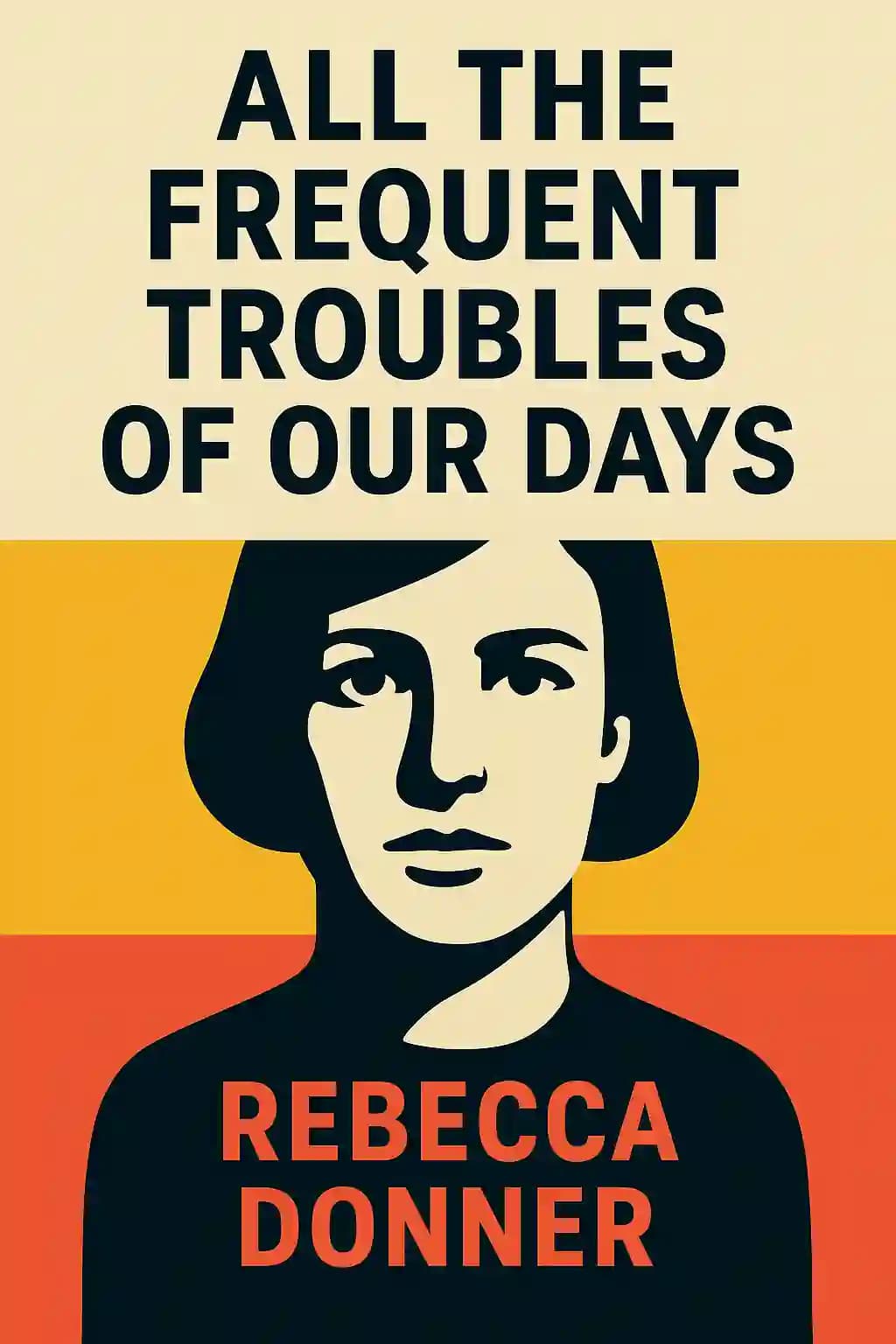
In February 1943, American-born Mildred Harnack faced her executioner in Berlin's Plotzensee Prison. As the guillotine blade fell, few outside Germany knew her name or the extraordinary resistance network she had helped build. Rebecca Donner's meticulously researched account resurrects this forgotten hero who chose to stay in Hitler's Germany and fight from within.
The book has captivated readers across political spectrums, with figures from Hillary Clinton to Glenn Beck praising its powerful narrative. Named one of the New York Times' 100 Notable Books and winner of the National Book Critics Circle Award, it reveals how an unassuming Wisconsin-born literature professor became central to the German resistance-a story deliberately suppressed by both American and Soviet intelligence after the war. Donner, Harnack's great-great-niece, spent a decade piecing together this remarkable story from declassified documents, family letters, and survivor accounts, creating what The Wall Street Journal called "a masterpiece of historical recovery."
第2章
The Unlikely Spy: An American Woman in Hitler's Berlin
Mildred Fish was born in 1902 to a struggling Milwaukee family, where early hardship shaped her resilient character. Despite financial constraints, she excelled academically and eventually found her intellectual sanctuary at the University of Wisconsin. There, amid the bustling academic atmosphere of the 1920s, she met Arvid Harnack, a charismatic German economics student on a Rockefeller Fellowship. Their shared passion for literature, social justice, and economic theory sparked an intense connection, leading to marriage in 1926 after a passionate courtship filled with intellectual discourse and shared dreams of social reform.
Following her husband to Germany in 1929, Mildred carved out a meaningful role teaching American literature at Berlin's progressive Night School for Adults (BAG). The school represented a beacon of democratic education, where she could reach working-class Germans who were increasingly vulnerable to Nazi propaganda. Her classes became forums for discussing American democratic ideals through the works of Whitman, Emerson, and Thoreau. She particularly emphasized themes of individual liberty and social responsibility, concepts that would soon become dangerous to express in Hitler's Germany.
When Hitler ascended to chancellor in January 1933, Mildred and Arvid demonstrated remarkable political prescience. While many educated Germans, including prominent Jewish citizens and liberal politicians, dismissed Hitler as a temporary phenomenon or a puppet of industrial interests, Mildred had meticulously studied Mein Kampf. She recognized its blueprint for destruction, noting particularly how Hitler's rhetoric about racial purity and living space (Lebensraum) represented concrete threats rather than mere political hyperbole. The Munich Post's brave reporting confirmed her fears, documenting the activities of Nazi death squads and the systematic targeting of minorities. Mildred personally witnessed SA brownshirts attacking communist workers, social democrats, and Jewish shopkeepers, sometimes recording these incidents in coded diary entries.
As Hitler methodically dismantled democratic institutions - from labor unions to opposition newspapers - Mildred and Arvid established "the Circle," a resistance group that grew to include intellectuals, artists, workers, and even some disillusioned Nazi party members. Mildred developed sophisticated recruitment techniques that balanced the urgent need for new members against the omnipresent danger of infiltration. She would often begin by lending carefully chosen books - works by Heinrich Heine or Thomas Mann - observing how potential recruits responded to banned literature. Sometimes she would deliberately express support for certain Nazi policies, watching carefully for signs of genuine versus feigned agreement. Her methods included hosting literary salons where political discussions could occur under the guise of academic debate, and using her position as an English teacher to identify like-minded individuals through their responses to certain texts. This painstaking approach to building trust proved crucial in a society where denunciation had become commonplace and where even family members could not always be trusted.
第3章
The Intellectual Resistance: Words as Weapons Against Fascism
The Circle initially focused on education and awareness, believing that Hitler's regime would collapse within three years if Germans maintained pressure through resistance. Mildred used her position as a literature professor to teach subversive ideas through American texts-discussing Emerson's self-reliance, Gandhi's heroism, and Mill's warnings about the tyranny of the majority while encouraging students to draw parallels to Germany's situation.
As Nazi persecution intensified, the Circle's activities expanded beyond discussion to direct action. They distributed leaflets throughout Berlin urging Germans to "resist, resist, resist," leaving them in phone booths and public restrooms or mailing them to strangers selected from the Berlin phone book. They produced an underground newspaper called Der innere Front (The Inner Front), translating articles into multiple languages to reach beyond Germany's borders. They even conducted poster campaigns, pasting over Nazi propaganda with their own messages: "Permanent Exhibition: THE NAZI PARADISE - War, Hunger, Lies, Gestapo - How much longer?"
The resistance members became "thieves and forgers" in service to their moral cause-setting up safe houses, helping Jews escape Germany, and creating false documents. They had to live with constant deception, even to loved ones, growing wary as stories circulated of children reporting parents to authorities. Yet Mildred didn't see herself as anxious or a traitor-her task was simply to persuade as many Germans as possible to join the resistance against Hitler's murderous regime.
Throughout this period, Mildred and Arvid maintained a precarious balance between their public and private lives. Mildred joined a Nazi teachers' union to keep her teaching position and even led the Berlin chapter of the Daughters of the American Revolution to strengthen her "Aryan credentials." Meanwhile, Arvid secured a position at the Ministry of Economics, carrying confidential documents in his briefcase while perfecting his impersonation of a loyal Nazi. His blind eye-the result of a childhood injury-served as effective camouflage, and his prestigious family name opened doors that helped their resistance work.
第4章
From Resistance to Espionage: The Red Orchestra Takes Shape
By 1935, Mildred and Arvid realized their small Circle was insufficient against Hitler's growing power. They adopted a radical new strategy: penetrating and destroying the Nazi government from within. Arvid's position at the Economics Ministry gave him access to confidential information about Germany's rearmament and war preparations-intelligence that would prove invaluable to Hitler's enemies.
That same year, Soviet intelligence targeted Arvid for recruitment. Though initially hesitant, he eventually agreed to provide information to the Soviets, believing this would be more effective than paper leaflets against Hitler's war machine. He insisted on being treated as an anti-fascist underground representative rather than a spy and refused to sign a loyalty oath or accept payment. Despite these unorthodox terms, Moscow assigned him the code name "Balt" (later "Corsican") and began receiving his intelligence reports.
As the network expanded, it connected with other resistance groups, including Harro Schulze-Boysen's circle. Schulze-Boysen, an air force lieutenant with access to Luftwaffe documents, provided crucial military intelligence. His aristocratic wife Libertas, once a Nazi Party member who had attended Hermann Goring's hunting parties, now used her social connections to gather information and support resistance activities.
The expanded network-which German intelligence would later call the "Red Orchestra"-included factory workers who could access blueprints of Hitler's war machinery, economists with knowledge of strategic resources, and military officers with insight into operational plans. Women played crucial roles, transporting radio equipment "in broad daylight, pushing transmitters in baby carriages beneath blankets and toys" through Berlin streets.
By 1940-41, the group was providing Moscow with detailed intelligence about Hitler's plans to invade the Soviet Union, including bombing targets, fuel supplies, and military readiness. Despite receiving multiple warnings from this network and other sources, Stalin dismissed the intelligence as Western disinformation, convinced Hitler would honor their non-aggression pact. When Germany launched Operation Barbarossa on June 22, 1941, Soviet forces were completely unprepared, with devastating consequences.
第5章
The Courage of Children: Young Don's Secret Missions
One of the most extraordinary aspects of Mildred's resistance work involved eleven-year-old Donald Heath Jr., son of American diplomat Donald Heath Sr., who served as the Commercial Attache at the U.S. Embassy in Berlin. Beginning in December 1939, Don became an unlikely but invaluable courier, carrying messages concealed in his innocent-looking blue knapsack through Berlin's increasingly militarized streets to Mildred's apartment at Woyrschstrasse 16.
Don developed sophisticated tradecraft that would have impressed seasoned spies. He mastered elaborate precautions-stopping to tie his shoelace while scanning for followers, ducking into the crowded KaDeWe department store and weaving through multiple floors to shake potential surveillance, and memorizing the faces of regular pedestrians on his routes to spot anything unusual. At Mildred's apartment, they maintained a careful cover story, discussing English literature and German vocabulary in what appeared to be routine tutoring sessions. When their meetings concluded, she meticulously planned different routes home for him and cleverly concealed papers in his knapsack-disguised as innocent reading lists or his mother's recipes, but actually containing vital intelligence about Nazi activities.
The boy navigated Berlin's complex geography with remarkable skill, taking carefully varied routes to Mildred's apartment. Sometimes he would cut through the American Church on Motzstrasse, other times along the Landwehr Canal or past the Berlin Zoo's distinctive entrance. He learned to use shop windows and car mirrors to spot surveillance, developing an instinct for when he was being watched. Perhaps most daringly, Don served as a lookout during clandestine resistance meetings in the Spreewald forest outside Berlin. Wearing a stolen Hitler Youth uniform complete with knife and badges, he would position himself strategically and belt out Nazi anthems like "Die Fahne Hoch" to warn the adults when strangers approached their secret gathering spots.
What began as an exciting adventure for a precocious child gradually transformed into genuine fear as the war's reality intensified around him. Don witnessed firsthand Berlin's transformation: food shortages that led to long queues outside shops, coal rationing that left homes cold, and the terrifying wail of air raid sirens as RAF bombs began falling on the city. Yet he continued his dangerous missions with remarkable courage, delivering not only vital messages but also precious contraband: butter cookies from the embassy cook, coffee beans, and once, a rare orange from his mother that Mildred reverently inhaled before carefully preserving its precious peel.
Don's perilous service ended in June 1941 when his father was reassigned to Chile, forcing the family to leave Berlin. Five years later, as an eighteen-year-old U.S. Army private returning to a devastated Berlin in 1946, he stood silently outside Mildred's former apartment building on Woyrschstrasse. The structure was damaged but still standing, and he was haunted by her final words to him: "Don't forget" - a promise he would keep for the rest of his life, later sharing his remarkable story with historians documenting the resistance movement.
第6章
The Walls Close In: Betrayal and Capture
Despite their careful precautions, the resistance network faced growing danger as Nazi surveillance intensified. By 1939, Germany had developed an extensive system of informants-over 200,000 "block wardens" in brown uniforms patrolling neighborhoods and reporting suspicious activity. These wardens, known as "Blockleiter," maintained detailed records of residents' daily routines, visitors, and political discussions. The Gestapo headquarters, ominously close to Mildred and Arvid's apartment on Woyrschstrasse, maintained extensive card files on suspected agitators, with officers working around the clock to process intelligence reports.
The regime's surveillance network extended beyond official channels. Local shopkeepers, building superintendents, and even children in the Hitler Youth were encouraged to report suspicious behavior. Radio detection vans regularly swept the streets of Berlin, searching for unauthorized transmissions. The resistance members adopted increasingly elaborate security measures - meeting in public parks, speaking in code, and communicating through a complex system of dead drops.
The fatal blow came in mid-1942 when German cryptologists at the Foreign Office's radio intelligence division broke the group's radio code. On July 14, 1942, they obtained the addresses of key resistance members including Mildred and Arvid Harnack. The breakthrough came after months of monitoring suspicious radio traffic between Berlin and Moscow. In September, the couple fled to the Baltic coast, traveling under false papers and staying in safe houses along the way, planning to escape by boat to Sweden. But the Gestapo's network of informants tracked them down, arresting them at a cottage on the Curonian Spit in Nazi-occupied Lithuania.
Brought back to Berlin's Gestapo headquarters at Prinz-Albrecht-Strasse, Mildred and Arvid were separated and placed in basement cells measuring barely six feet by nine feet. The cold, damp basement soon filled with resistance members as the Gestapo rounded up the network-Harro and Libertas Schulze-Boysen, Greta and Adam Kuckhoff, Hans and Hilde Coppi, and many others. Each prisoner was photographed and fingerprinted for the "Gestapo Album," with Mildred identified as "an American, a Communist, a wife." The processing was methodical, with guards recording every personal detail and possession.
Prisoners faced brutal interrogations lasting up to 20 hours, with some choosing suicide rather than betray comrades. John Sieg hanged himself using his belt in his cell, while Herbert Grasse jumped from a fifth-floor window during questioning. Desperate to communicate, prisoners developed knock codes to tap messages through cell walls, warning each other about guards and sharing interrogation experiences. They used a system based on the position of letters in the alphabet, with different rhythms indicating specific messages.
The most devastating betrayal came from within. Libertas Schulze-Boysen, after enduring days of torture and threats against her family, desperate to save herself, whispered names to a typist who reported them to SS officials for 5,000 Reichsmark. Her confession led to dozens of additional arrests across Berlin. Later, Libertas admitted in a letter to her mother: "I, out of selfishness, have betrayed friends." The betrayal marked the effective end of the resistance network, leading to a wave of arrests that would ultimately claim over fifty lives.
第7章
The Final Days: Justice and Memory
The Reich Court-Martial trial of Mildred and her co-conspirators began on December 15, 1942, in a climate of predetermined guilt. The proceedings, held in the imposing Reich Military Court building, lasted four days during which prosecutor Manfred Roeder, known for his theatrical prosecutorial style, "sneered and bellowed, struts and crowed" through the proceedings. Despite overwhelming evidence of their humanitarian motives, Mildred received a six-year prison sentence while Arvid, Harro, Libertas, and Hans were condemned to death. The court, operating under Nazi principles of "justice," showed little interest in actual evidence or defense testimony.
Arvid faced his execution with remarkable dignity on December 22, 1942. In his final, deeply moving letter to Mildred, written on coarse prison paper, he reflected on their life together with profound love: "Our marriage was to the greatest degree the reason" for his life's happiness. He meticulously recalled their most precious moments - their engagement at Madison's Picnic Point, their first serious conversation on State Street that became his "guiding star," and the quiet moments when they comforted each other when "life had made us tired." His last wish transcended his immediate fate, hoping that Mildred would find joy in remembering him, just as thoughts of her brought him peace in his final hours.
Mildred's initial reprieve proved tragically temporary. Upon learning of her lesser sentence, Hermann Goring "exploded" in a characteristic rage, demanding immediate action. Hitler, taking personal interest in the case, ordered her verdict overturned - an unprecedented intervention in a military court decision. The second trial, little more than a formality, delivered the predetermined death sentence. On February 16, 1943, prison chaplain Harald Poelchau made his final visit to Mildred's cell. He found her in chains but remarkably composed, focused on translating Goethe's poems into English, including the prophetic line that would later title this book: "all the frequent troubles of our days."
That evening, at precisely 6:57 p.m., Mildred Harnack was executed by guillotine at Plotzensee Prison, becoming the only American woman put to death on Hitler's direct orders during World War II. Witnesses reported that she faced her end with extraordinary courage, maintaining her dignity until the final moment.
The post-war period revealed the bitter irony of justice perverted. Rather than facing prosecution, many Nazi war criminals found protection under Allied intelligence agencies. Horst Kopkow, who had personally overseen Mildred's arrest and torture, was granted a new identity by British intelligence. Manfred Roeder, who had prosecuted the Red Orchestra cases with such zealous cruelty, escaped war crimes indictment through protection from the U.S. Army Counter Intelligence Corps. Most disturbing was the U.S. Army's own assessment of Mildred's case, which concluded her execution was "justified" because she was "deeply involved in underground activities" - a chilling example of Cold War realpolitik overshadowing moral justice. This official position stood in stark contrast to her actual work helping Jews escape and providing crucial intelligence to Allied forces.
第8章
The Legacy of Courage: Remembering the Forgotten Resistance
For decades after the war, Mildred Harnack's story remained largely unknown, buried beneath layers of political tension and family grief. The Cold War severely complicated her legacy-East Germany celebrated her as an anti-fascist hero and named schools and streets in her honor, while West Germany and the United States viewed her Soviet connections with deep suspicion and unease. Her own sister Harriette, overwhelmed with grief and rage at her sister's execution, ordered the family to destroy all of Mildred's letters, photographs, and personal effects, insisting the "sad episode be put behind us." This act of familial censorship nearly erased crucial historical evidence of her resistance work.
Only after the Berlin Wall fell in 1989 did comprehensive documentation about her resistance activities emerge, as East German archives, Russian intelligence files, and declassified U.S. records became available to researchers and historians. Though she had methodically tried to erase her tracks for safety during the war, she left an unexpected trail of documents, letters, and testimonials from those who knew her. Among the most poignant accounts came from a young boy who served as her messenger, carrying coded communications between resistance members, and from her students who remembered her subtle ways of teaching anti-Nazi ideas through literature.
Mildred Harnack's story fundamentally challenges comfortable narratives about resistance and collaboration during World War II. She was neither a perfect hero nor a simple traitor, but rather a complex woman who witnessed evil rising and chose to fight it from within, knowing the tremendous personal cost. Her prison cellmate Gertrud Klapputh later wrote with trembling hands that their time together in Charlottenburg Prison made it "almost impossible even today for me to write about it," describing Mildred's unwavering dignity even in her final days. When repeatedly asked why she remained in Germany despite the mounting danger, Mildred's answer that "my life is here" convinced no one-except perhaps those who understood that some principles transcend self-preservation.
In our contemporary world, increasingly familiar with the rise of authoritarianism and the fragility of democratic institutions, Mildred Harnack's legacy offers a sobering reminder: resistance often begins not with grand gestures, but with small acts of courage by ordinary people who simply refuse to accept evil as inevitable. Her story resonates particularly today, as questions of moral courage and civil resistance again become urgent. As her fellow resistor Dietrich Bonhoeffer wrote from prison before his own execution: "We have been silent witnesses of evil deeds... Will our inward power of resistance be strong enough for us to find our way back?" This question, posed in the darkest days of Nazi Germany, continues to challenge readers today to consider their own capacity for moral courage in the face of systemic evil.
第9章
The Boy Returns: Don's Final Tribute
In 1946, eighteen-year-old Don Heath returned to a Berlin unrecognizable from the city of his childhood. The once-proud capital lay in ruins, with nearly 80% of its buildings destroyed or severely damaged by Allied bombing and the fierce street-to-street fighting of the war's final months. Walking through the debris-strewn streets, he struggled to reconcile the devastation with his vivid childhood memories of tree-lined avenues and bustling neighborhoods.
His friend Mole's neighborhood in Zehlendorf, once a peaceful suburb filled with diplomatic families and local Germans, was now a landscape of broken walls and collapsed roofs. The American School where he had studied alongside other expatriate children stood as a hollow shell, its windows shattered and walls blackened by fire. The American Church, where the community had gathered for services and social events, was reduced to a pile of twisted metal and crumbling stone.
Standing outside Woyrschstrasse 16, Don looked up at Mildred's former apartment building, which had miraculously survived relatively intact. The familiar balcony where they had sometimes conducted their lessons on warm days still jutted from the facade. He vividly remembered their sessions together, particularly the day he had enthusiastically shared his knowledge about the Fram, Nansen's revolutionary wooden ship built specifically for polar exploration. Mildred had listened intently, encouraging his passion for learning and his remarkable memory for detail - qualities that would later serve him well in his own career.
Her words resonated more powerfully now than ever before: "You've got a brain in there, and you've got to use it, or it will turn into a rotten apple." The metaphor seemed particularly apt amid the decay surrounding him. She had taught him not just facts and figures, but the importance of intellectual integrity and moral courage.
Her final imperative - "Don't forget" - took on new meaning as he stood there. It wasn't just about remembering historical facts or personal memories; it was about bearing witness to both the darkness and light of human nature he had witnessed in his youth. In the silence of that moment, surrounded by the physical remnants of a defeated ideology, Don kept his promise. He remembered the network of resisters who had worked in secret, risking everything to maintain their humanity and help others. He remembered those who, like Mildred, had refused to be cowed by the rising tide of fascism, who had maintained their principles when compromise would have been easier, and who had demonstrated through their actions that individual courage could stand against systemic evil.
This return to Berlin marked not just the end of Don's personal journey, but symbolized the broader imperative for future generations to remember and learn from this dark chapter of history. The ruins around him stood as testament to the consequences of unchecked totalitarianism, while Mildred's memory represented the enduring power of individual moral courage.