第1章
Beyond the Chaos: Embracing Your Authentic Self with ADHD
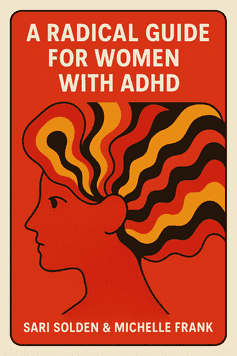
When Sari Solden published "Women with Attention Deficit Disorder" in 1995, she shattered a psychiatric glass ceiling. At a time when ADHD was considered a condition exclusively affecting hyperactive young boys, Solden's work was revolutionary. The book became an underground sensation, passed between women who finally found words for their lifelong struggles. Today, it remains one of the most influential works in the field, with celebrities like Simone Biles and Emma Watson citing it as transformative in their ADHD journeys. What made this book so powerful wasn't just its clinical insights, but how it validated the experiences of countless women who had been told they were simply disorganized, lazy, or not trying hard enough. In "A Radical Guide for Women with ADHD," Solden and Frank expand this conversation, offering women not just strategies for managing symptoms, but a pathway to reclaiming their authentic selves in a world that often misunderstands their neurodivergent minds.
第2章
Understanding the ADHD Brain: Beyond Attention Deficit
ADHD is frequently misunderstood as simply an attention problem, but it's actually a complex neurobehavioral syndrome affecting the brain's executive functioning system. Rather than just struggling with focus, women with ADHD experience what Dr. Thomas Brown describes as "developmental impairments of executive function" that vary by situation but chronically interfere with daily functioning.
These executive functions include activation (getting started on tasks), focus (sustaining attention), alertness regulation (maintaining consistent energy), emotional regulation (managing feelings appropriately), working memory (holding information in mind), and self-regulation (monitoring and adjusting behavior). For women, these challenges often manifest differently than the stereotypical hyperactive presentation we associate with young boys.
Women with ADHD frequently present with the predominantly inattentive type, characterized by difficulty activating, disorganization, and forgetfulness. Others may experience the hyperactive/impulsive presentation with fidgeting, impulsive decisions, and restlessness, or the combined presentation featuring both sets of symptoms. These differences in brain functioning affect every aspect of daily life, from maintaining relationships to managing households to pursuing careers.
The impact of these brain-based differences is often compounded by gender expectations. While boys with hyperactivity might be identified early because their behavior disrupts classrooms, girls-especially those with inattentive presentations-often fly under the radar. They're typically labeled as daydreamers, chatterboxes, or underachievers rather than recognized as having a neurological difference.
Understanding ADHD as an executive functioning challenge rather than just an attention problem helps explain why traditional advice like "just try harder" or "be more organized" is so ineffective. It's like telling someone with nearsightedness to "just focus harder" instead of prescribing glasses. The ADHD brain processes information differently, and this difference requires specific accommodations and strategies-not just more effort.
For women discovering they might have ADHD later in life, this realization can be both devastating and liberating. The years of struggling to meet expectations suddenly make sense, but the recognition often comes with grief over lost opportunities and damaged self-esteem. This understanding is the first step toward healing, but true transformation requires more than just knowledge-it requires a radical reimagining of one's relationship with oneself.
第3章
The Untangling Process: Separating ADHD from Identity
For many women with ADHD, the most difficult aspect of their journey isn't managing symptoms-it's dismantling the shame and stigma they've internalized throughout their lives. Years of negative feedback about being "too much" or "not enough" create a toxic tangle where ADHD challenges become inseparable from self-worth.
This entanglement happens through recurring patterns that transform specific challenges into global negative self-perceptions. A simple trait like disorganization morphs through automatic thought patterns from "I have a messy desk" to "I AM A MESS!" to "I AM BAD!" These thoughts diminish self-worth and paradoxically make managing ADHD symptoms harder by triggering overwhelm, shutdown, avoidance, or perfectionism.
Consider how this plays out in daily life: A woman notices her desk is cluttered. Instead of seeing this as a specific challenge related to her ADHD, she interprets it as evidence that she's fundamentally flawed. This belief triggers shame, which leads to avoidance of the desk altogether. The avoidance causes more disorganization, reinforcing her belief that she's broken. This cycle continues, with each instance of disorganization further cementing her negative self-image.
The authors call this process "the loop of shame," and it's particularly insidious because it operates below conscious awareness. Women with ADHD often don't realize they're making these leaps from specific challenges to global self-judgment-it happens automatically, the result of years of internalized messages.
This shame loop extends beyond self-perception to affect relationships through what the authors call "the loop of isolation and hiding." Negative self-talk influences how women let others treat them and how they engage with the world. Thoughts like "I'm not good enough" lead to withdrawal and concealment, creating beliefs like "I don't have much to contribute" or "I can't be myself around others."
Breaking these loops requires what the authors call "untangling"-the process of separating ADHD challenges from core identity. This isn't just a cognitive exercise but a profound shift in self-perception that allows women to see their ADHD as something they have, not something they are.
The untangling process begins with awareness-noticing when specific challenges trigger global self-judgments. It continues with compassion-responding to these challenges with understanding rather than criticism. And it culminates in acceptance-embracing ADHD as one aspect of a complex, multifaceted identity.
This radical acceptance isn't resignation but the foundation for meaningful change. Only by fully identifying, accepting, and respecting your differences can you truly engage in effective symptom management without the added burden of shame.
第4章
The Messages We Carry: How Shame Takes Root
Women with ADHD internalize damaging messages about their differences through four primary channels: You Messages, She Messages, Duh! Messages, and Absorbed Messages. These internalized lessons significantly impact women until they're replaced with more accurate, positive self-perceptions.
You Messages are direct attacks about ADHD-related challenges delivered by others. These include statements like "You're just being lazy," "You're too sensitive," or "You could be successful if you'd just apply yourself." These messages result from others misinterpreting ADHD behaviors as character flaws rather than brain-based differences.
One client recalled her father constantly criticizing her appearance: "You'd be so pretty if you'd just put some effort into how you look." Another remembered teachers dismissing her accommodation needs: "You're smart enough to do this without special treatment." These direct criticisms become internalized voices that continue long after the original speakers are gone.
She Messages are indirect comments about other women with similar ADHD traits that communicate your challenges are unacceptable. When hearing such criticisms of others, women often remain silent out of fear of being "found out," feeling trapped between supporting others and protecting themselves.
Kylie, a woman with ADHD, described sitting silently while her in-laws criticized her cousin's "chaotic" home, knowing her own home looked similar. Donna recalled staying quiet when coworkers ridiculed a disorganized colleague, feeling she was betraying both herself and someone like her. These moments create moral dilemmas where women feel they must choose between authenticity and acceptance.
Duh! Messages are simplistic suggestions that underestimate the complexity of ADHD challenges, like "Have you tried using a planner?" or "Just make a list." Though well-intentioned, these responses feel dismissive and belittling, implying women aren't trying hard enough or aren't smart enough to find "obvious" solutions.
As one woman sarcastically thought but didn't say: "I have a thousand lists on sticky notes all over my house. Which one is the magic solution?" These interactions lead to further hiding and demoralization, as they communicate a fundamental lack of understanding about ADHD's complexity.
Perhaps most insidious are Absorbed Messages-cultural and media messages about gender expectations that women with ADHD internalize without conscious awareness. These messages create "brain shame" when executive function difficulties clash with societal expectations of what women should naturally excel at.
Women with ADHD often feel mystified by neurotypical women, wondering "How do other women do it?" and describing watching others manage daily life as "watching a magic show." These comparisons create a profound sense of inadequacy and otherness that can be difficult to articulate but profoundly impacts self-perception.
Recognizing these messages is the first step toward challenging their validity. By identifying the source and content of internalized shame, women can begin to separate external judgments from internal truth, creating space for a more compassionate self-narrative.
第5章
Hiding: The Most Common Coping Strategy
The authors reveal a profound insight: hiding-not planners or calendars-is the most common coping mechanism reported by women with ADHD. While organizational strategies get most of the attention in ADHD literature, it's concealment that women most frequently employ to navigate a world that misunderstands their differences.
Hiding manifests in various ways, from staying "in the closet" about weaknesses to avoiding activities that might showcase strengths. Women with ADHD develop elaborate strategies to conceal their challenges, often at great personal cost. They decline invitations, avoid certain environments, and limit their self-expression-all to prevent others from discovering their differences.
Sari recalls how she would whisper answers in class rather than risk making mistakes publicly. Michelle avoided having friends visit her "messy" home, unintentionally communicating "keep out" and creating isolation. These hiding behaviors begin as self-protection but ultimately reinforce feelings of invisibility and prevent authentic connection.
The price of hiding is steep. Women miss opportunities, decline experiences, and avoid relationships due to fear of exposure. Sharon declined a committee chair position rather than request administrative support that would reveal her "limitations." Lydia turned down an exciting lecture opportunity because travel logistics seemed overwhelming. These protective behaviors ultimately keep women from what they truly desire.
Gender expectations uniquely complicate this dynamic for women with ADHD. Unlike deliberate nonconformists, women with ADHD have little choice but to deviate from typical roles due to brain-based differences. This deviation often triggers shame and fear of rejection, especially in environments with rigid expectations about women's roles and responsibilities.
These expectations become internalized as rules about how women should behave-rules like "Don't make waves," "Be nice," "Be accommodating," and "Don't ask for special favors." These implicit prohibitions make it difficult for women with ADHD to request accommodations or support, transforming simple questions like "How can I support my ADHD?" into anxious ruminations about the consequences of asking for help.
Deb's story illustrates how these internalized expectations create impossible standards. Growing up with a perfectly organized, socially adept mother, Deb learned to hide her challenges to avoid disappointing others. As an adult mother in an affluent community, she feels like "The Odd Mom Out" among seemingly perfect women. Her attempts to maintain family traditions despite executive functioning challenges lead to exhaustion, anxiety, and depression. Trapped by internalized messages about women's responsibilities, she feels unable to negotiate boundaries or ask for help.
Breaking free from hiding requires courage to assert oneself from an empowered position that honors differences. It means challenging the belief that differences must be concealed and embracing the radical notion that authenticity-even when it reveals imperfection-creates stronger connections than perfection ever could.
第6章
Reclaiming Dreams: Playing with Possibilities
For many women with ADHD, the constant struggle to manage daily life leaves little energy for dreams and aspirations. Years of just surviving with an atypical brain can disconnect women from their hopes and desires, creating a sense that they don't deserve to want more than basic functioning.
The authors emphasize that discovering purpose is essential for ADHD treatment, as compelling visions activate the ADHD brain that craves stimulation. Without meaningful goals, even the best organizational strategies feel hollow and unsustainable. As one client poignantly stated, "It's not just about getting organized. It's about the feeling that I don't have the right to hope and dream."
Reclaiming dreams requires what the authors call "playing with possibilities"-approaching aspirations with curiosity and experimentation rather than pressure and commitment. They suggest examining old dreams like sorting through clothes in a closet, categorizing them into four types:
"Save But Needs Alteration" represents dreams that still resonate but need updating to fit current circumstances. Perhaps you wanted to be a doctor but now realize you're more drawn to healthcare advocacy or medical writing.
"Needs an Update" includes childhood fantasies that represent core desires even if their specific form is outdated. The childhood dream of becoming a rock star might reflect a deeper desire for creative expression that could manifest in various ways.
"What Was I Thinking?!" covers dreams that no longer resonate with who you've become. The aspiration to climb the corporate ladder might feel foreign to someone who now values flexibility and autonomy.
"Discard and Start Fresh" applies when life circumstances have completely changed, requiring entirely new visions. Major life transitions like divorce, health changes, or relocation might necessitate reimagining what's possible.
Creating space for dreams to develop requires finding environments where the mind can wander creatively-embracing what the authors call "purposeful distractibility" that fuels imagination. This might mean carving out quiet moments in cafes, creating cozy nooks at home, or simply allowing yourself unstructured time to daydream without judgment.
The authors share their personal stories of how childhood dreams unexpectedly manifested in their adult lives: Michelle realized she had become the teacher, writer, and nonprofit worker she'd dreamed of being as a child, while Sari's early desires to perform and help others evolved into her career speaking and writing about mental health.
These stories illustrate how seemingly abandoned dreams often create meaningful patterns that may only become visible in retrospect. The childhood aspiration to become a teacher might manifest as mentoring colleagues. The desire to travel the world might express itself through studying international cultures or cooking global cuisine.
Recognizing these connections helps women with ADHD appreciate the valuable lessons learned through detours and identify how childhood aspirations might still be alive within them, waiting to be acknowledged and perhaps fulfilled in new forms.
第7章
Embracing Wholeness: Beyond Black-and-White Thinking
Women with ADHD often see themselves through the limited lens of their challenges, developing a fragmented self-image that overemphasizes difficulties while minimizing strengths. This dichotomous thinking keeps them trapped in rigid self-definitions that don't reflect their complexity as human beings.
The authors emphasize that healing means "restoring to wholeness" by embracing the full spectrum of one's characteristics rather than overfocusing solely on challenges or strengths. They caution against reductionism-simplifying oneself to just ADHD symptoms-and encourage developing a more expansive self-narrative that acknowledges complexity and humanity.
This balanced perspective doesn't mean denying ADHD struggles or falsely claiming ADHD is a gift. Rather, it recognizes that each person has many parts that make up their identity, with ADHD being just one aspect of a multidimensional self.
Lorraine's story illustrates how reframing negative self-perceptions can transform social experiences. She constantly apologized for her clumsiness at parties, reinforcing others' perception of her as awkward and insecure. When she learned to respond to her mistakes with good humor rather than self-deprecation, she discovered that others valued her for her teaching talents rather than judging her occasional awkwardness.
Jamie similarly shifted from negative self-talk to recognizing her strengths alongside challenges. By acknowledging that "being late isn't my whole story" and noticing when others appreciated her ideas, she built confidence and developed a more complete self-narrative. This balanced perspective allowed her to build on her successes rather than letting difficulties erase her achievements.
Developing this wholeness requires identifying personal values that serve as an internal compass when feeling pulled in multiple directions. Creating a "cheat sheet" of core values helps guide decisions when overwhelmed or distracted, providing clarity amid competing priorities. This values-based approach serves as an ADHD management strategy, helping women make intentional choices aligned with what truly matters rather than being derailed by distractions.
The authors acknowledge that resistance often emerges just as women begin seeing new possibilities. They normalize the experience of suddenly feeling doubt, anxiety, or an urge to retreat when approaching positive change. Like preprogrammed computer settings, we all have behavioral and emotional defaults that automatically activate, creating resistance to new visions for ourselves.
This resistance is particularly confusing for ADHD brains that simultaneously feel ready to move forward yet retreat into familiar patterns. The authors reframe resistance as informative rather than defeating, suggesting that inner barriers might actually signal important growth opportunities rather than reasons to stop.
By recognizing these resistance patterns-whether they manifest as anxiety, avoidance, self-doubt, or criticism-women can reconfigure their emotional "system preferences" to better align with their true desires and values.
第8章
Shining Your Light: Claiming Your Rights
Women with ADHD often feel "less than" and shrink back from life, hiding their authentic selves out of shame about their differences. The authors present a powerful "Declaration of Independence for Women with ADHD" affirming that women don't forfeit their rights to fulfilling lives because of their challenges.
This declaration includes seven fundamental rights that remain intact regardless of ADHD challenges:
1. The right to connection, even when maintaining relationships is difficult
2. The right to pursue talents and strengths, even while struggling with daily tasks
3. The right to speak and be known authentically, without hiding differences
4. The right to claim dreams and aspirations, despite organizational challenges
5. The right to take time and space for oneself, rather than constantly compensating
6. The right to live shame-free and be treated with respect despite imperfections
7. The right to ask for help, even while acknowledging strengths
Claiming these rights requires expanding beyond comfort zones in various life domains. In relationships, many women with ADHD struggle with maintenance due to executive functioning challenges. Their symptoms-forgetting birthdays, becoming distracted during conversations, delayed responses-are often misinterpreted as lack of investment, leading to anxiety, shame, and eventual avoidance of connections.
Regarding strengths, many women pull back from developing their talents, fearing criticism, inability to follow through, or disappointing others. Guilt about unfinished tasks and fear of exposure to failure often prevent women from showcasing their abilities. The voices-both internal and external-that question how you can pursue new interests when you struggle with basic tasks must be confronted.
Finding one's voice means taking the risk to state needs, let oneself be noticed, and reveal one's authentic self-accomplishments, thoughts, hopes, dreams, opinions, and idiosyncrasies. This doesn't mean telling everything to everyone all the time, but rather leaving "breadcrumb trails" that lead people to who you really are.
Holly's story demonstrates how this sometimes means owning strengths rather than minimizing them. When friends questioned her choice not to have children, she learned to directly address her different life path: "My legacy is going to be about my work, which is very exciting to me" rather than apologizing or hiding her accomplishments.
Expanding personal space means taking time for self-care rather than waiting until everyone else is taken care of. As Amber discovered, fear of taking up space-literally leaving belongings at her girlfriend's apartment-often reflects deeper fears about acceptance. By confronting these fears and directly asking for what she needed, she claimed her rightful place in her relationship and environment.
Growth happens at the edge of comfort zones, where optimal stress-not overwhelming but not understimulating either-creates opportunities for development. This requires developing an internal locus of control-recognizing your choices matter. When resistance appears, it often signals you're at your growth edge. Taking the smallest possible next step rather than retreating or pushing too hard creates sustainable progress toward authentic self-expression.
第9章
Taking Center Stage: Using Your Voice
Leading a bold life as a woman with ADHD means becoming more visible, speaking with a stronger voice, and commanding attention to step fully into an authentic life. This doesn't mean being narcissistic-it means acting in ways that keep you relevant, equal, and participating in reciprocal relationships.
For women with ADHD, this can be particularly challenging. Many struggle with verbal expression-organizing thoughts, holding the thread of a story, remembering conversation points, and staying focused. Sari shares how medication helped her tell a complete story at a dinner party, giving her the mental organization to sustain attention for five minutes. While medication provided the foundation, she still had to take the risk of speaking up and believing she had something worth saying.
The combination of ADHD and cultural messages as women can lead to overaccommodation and retreat from visibility. Three ways to stay in the spotlight are: being less accommodating, using your voice, and becoming more visible.
Being less accommodating means decreasing how much you revolve around others' needs. As a woman with ADHD, you may accommodate others while avoiding asking for the support you need. Overaccommodating signals you're moving off the center stage of your life. Actions to become a major player include asking for help, making your needs known, setting the agenda, allowing yourself to be the focus, claiming time and space for yourself, and sharing your ideas more assertively.
Using your voice becomes transformative when you believe in your vision and rewrite undermining narratives. This means dropping qualifiers like "just," "actually," and "sorry" that diminish impact. Instead, use direct "I statements" and replace apologies with gratitude. Your body language matters too-stand grounded with shoulders back rather than shrinking.
When listening, use "minimal encouragers" like nodding or saying "uh-huh" to stay present. Practice pausing to check in with yourself before responding with clear statements like "I think..." or "I prefer..." without qualifications. For those with verbal impulsivity, breaking down thoughts into smaller chunks and jotting down tangential ideas helps maintain focus during conversations.
Making yourself visible doesn't always require speaking up or revealing everything about yourself. It's about letting your authentic personality emerge-"lighting up" the space around you. This vulnerability creates space for more intimate visibility and authentic relationships.
Shining isn't selfish-it's about valuing who you are and what you have to offer. Depriving others of your authentic self is actually more selfish than taking up space. By becoming a bold neurodiverse woman who takes center stage through more direct, less apologetic communication, you not only transform your own life but create permission for others to do the same.
第10章
Living Authentically: Mindful Authenticity
Being authentic as a woman with ADHD requires developing what the authors call "mindful authenticity"-an active practice of awareness that helps notice when slipping into hiding or reactivity based on shame or ADHD autopilot. This two-part process of noticing and choosing helps increase sense of agency and effectiveness.
The practice requires intentionally slowing down-something naturally difficult for the ADHD brain-to assess experiences and make authentic choices rather than operating on autopilot. This awareness creates mental space to pause and reflect before acting.
The first step is noticing internal experiences, especially when uncomfortable feelings arise. This requires sitting with discomfort while holding fears with compassion and curiosity. Through body scanning and labeling internal experiences, women create enough distance from ADHD autopilot to make intentional choices.
For women with ADHD who tend toward emotional sensitivity and reactivity, these emotions aren't just overwhelming-they're valuable information about needs and boundaries. Physical sensations like chest tightness, increased heart rate, or stomach discomfort often signal moments when authenticity is diminishing. Behavioral changes like withdrawing, hiding, or dismissing needs are additional clues.
Conversely, authenticity has its own signatures: open body language, natural smiling, relaxed muscles, emotional engagement, and behaviors aligned with values. Recognizing these indicators helps women better identify when they're connected to their true selves.
After noticing comes choosing-deciding whether to move closer to authenticity or stay within safe confines. Living with ADHD often feels like having fantastic blueprints without the tools to build. The greatest power is being fully oneself, with the radical idea that as a unique woman with ADHD, you can choose authenticity!
This involves a three-step process for intentional revealing: asking what you want people to know about you, scanning to check if your behavior allows others to see you, and choosing how much to reveal. Sometimes deliberately choosing not to reveal yourself is the most authentic action, particularly when you don't feel emotionally safe.
Cindy's story powerfully demonstrates claiming space and choosing authenticity. At forty-five, she developed an autoimmune condition alongside her ADHD that affected her ability to participate in active vacations with her husband. Rather than communicating her needs, she'd agree to plans but cancel last-minute, creating tension.
Through an authenticity scan, Cindy identified when she was shutting down or pretending, noticing feelings of shrinking back and discouragement. She took concrete steps to be heard-printing vacation materials, scheduling specific discussion times, and clearly expressing her desires. Her boldness in saying "Here I am, a woman with needs" improved rather than weakened her marriage, giving her confidence to continue this approach in other areas of her life.
第11章
Creating Your Personalized ADHD Support Plan
Developing an effective ADHD management approach requires recognizing that "there is no right way to do ADHD-there is only your way." Traditional approaches often focus on vague "strategies" that can be demoralizing when applied as universal fixes rather than personalized solutions.
The authors emphasize that strategies become most helpful after completing the "untangling process" addressed in earlier chapters, as you can't effectively maintain organizational systems while battling an inner critic. When women with ADHD reflexively respond "I don't know" when asked what support they need, it's often because they've been trying to fit into organizational systems not designed for their brains.
Creating an integrated support plan involves several essential components:
Medication is presented as beneficial for most people with ADHD, though not a cure-all. Its goal is to make life easier-not to change who you are, but to help you be yourself with less internal distress. Finding the right medication and dose requires patience and trial-and-error, along with self-advocacy to assert needs and ask questions.
Environmental adjustments involve adapting your surroundings rather than forcing your brain to fit non-ADHD-friendly settings. Practical suggestions include strategic furniture placement, working with someone nearby, using noise-canceling headphones, adjusting lighting, using balance balls to minimize fidgeting, and incorporating visual cues alongside auditory prompts.
Rebalancing addresses the challenge of finding equilibrium, especially for natural caretakers or those who manage ADHD by "putting out fires." Balance looks different depending on stressors and resources at any given moment. The authors recommend practicing mindful authenticity and intentional choosing, starting by adding more of what "feeds you" rather than depleting yourself.
Effective strategies for women with ADHD include: simplifying everything; using more external prompts than you think necessary; having more fun; setting boundaries; understanding your unique attention patterns; balancing stress and stimulation; anticipating time perception problems; staying physically active in enjoyable ways; connecting with understanding people; prioritizing your competence zones; nourishing yourself well; identifying motivators; adjusting your environment; improving sleep hygiene; pausing and choosing intentionally; amplifying your inner cheerleader; acting even when not in the mood; and maintaining your sense of humor.
Assertive communication strategies include the internal reminder "I Know I'm Messy, But What Are You?" to establish equal footing in relationships by recognizing everyone has imperfections. "Just the Facts, Ma'am" encourages describing difficulties and needs without self-criticism, while suggesting solutions. "Yes And..." recommends using "and" to present a balanced perspective of strengths alongside challenges.
Support-seeking is reframed as healthy interdependence rather than neediness. Finding ADHD-knowledgeable therapists is crucial, as non-ADHD-friendly professionals might misinterpret symptoms or make dismissive recommendations. Speaking directly with therapists about concerns if obstacles arise can be powerful and corrective rather than reinforcing shame.
Women who live successfully with ADHD approach challenges from an empowered, proactive, and connected place. They've learned self-compassion and permission to try again when things get tough. The integrated woman with ADHD still struggles but does so with radical acceptance, understands her limiting beliefs, lives by values rather than shame, allows old fears to visit but not stay, pushes comfort zone boundaries, claims her voice unapologetically, continues dreaming with ADHD in tow, actively seeks support, and refuses to be diminished by shame.
The authors emphasize that "brave, bright, bold women with ADHD" lift each other up because "you can't do ADHD all by yourself." This community support, combined with personalized strategies and self-compassion, creates the foundation for a fulfilling life that embraces rather than fights against neurodiversity.