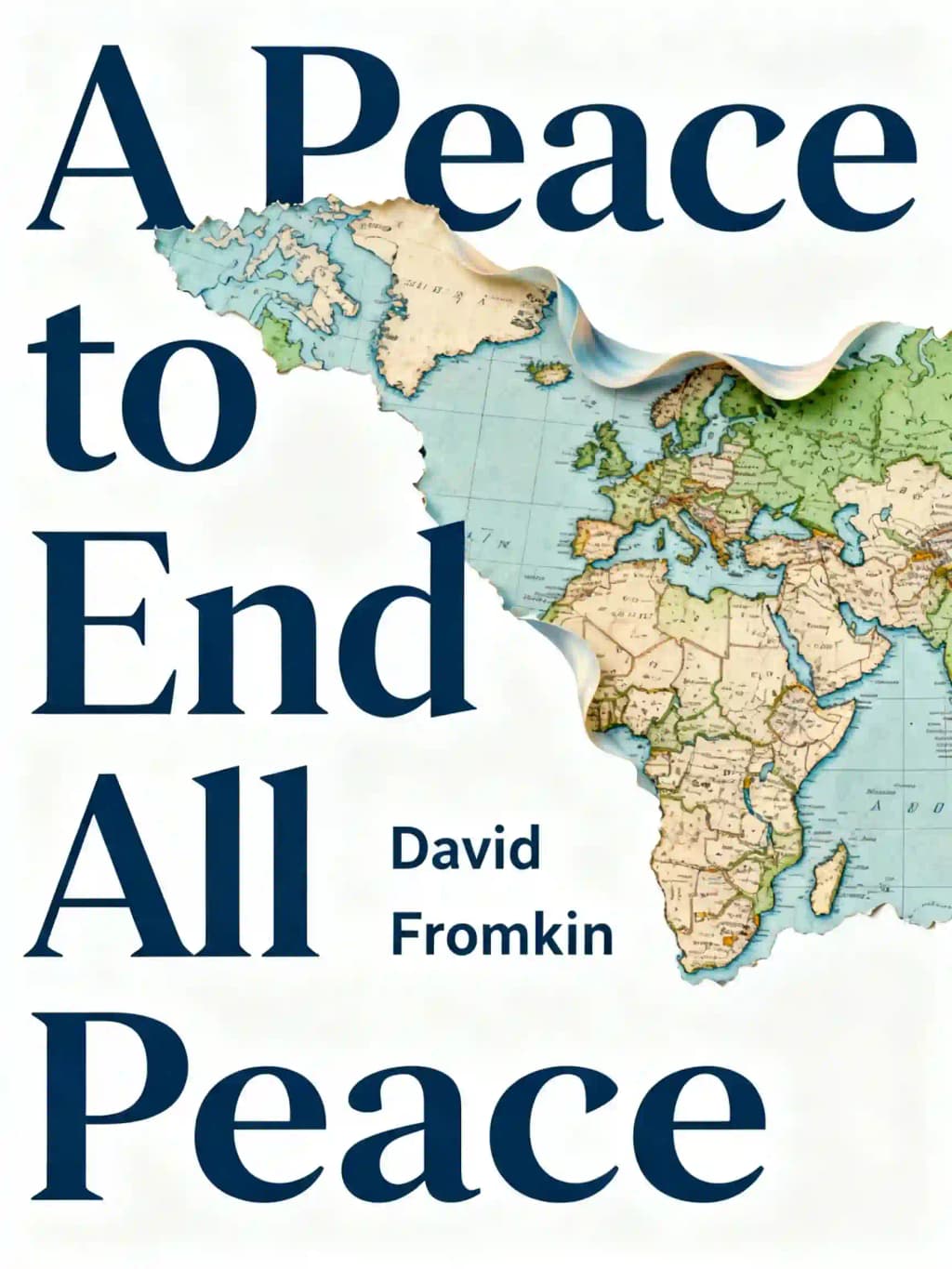
Fromkin's Pulitzer-finalist masterpiece reveals how post-WWI decisions by Allied powers created today's Middle East chaos. "Without this backstory, no policymaker will get the region right," diplomat Richard Holbrooke warned. How did arbitrary borders drawn a century ago ignite conflicts we still can't solve?
著者の声を通じて本を感じる
知識を魅力的で例が豊富な洞察に変換
キーアイデアを瞬時にキャプチャして素早く学習
楽しく魅力的な方法で本を楽しむ
Walk into any newsroom today and you'll find headlines about Iraq's sectarian violence, Syria's civil war, or the Israeli-Palestinian conflict. Turn back the clock a century, and you'd find none of these countries existed. Between 1914 and 1922, European politicians sitting in London and Paris drew lines on maps, creating nations from scratch in a region they barely understood. These weren't careful decisions born from deep knowledge-they were hasty improvisations made during wartime chaos. The borders they drew, the kings they installed, the promises they made and broke-all of it happened in less than a decade. Yet we're still living with the consequences. Picture a luxury yacht gliding through the Mediterranean in 1912. On board, British Prime Minister Herbert Asquith and a young Winston Churchill tour ancient ruins, marveling at vanished civilizations. Churchill complains jealously that the Greeks and Romans "only said everything first." The irony is thick-these men can't imagine their own empire might someday join those ruins. At this moment, the Middle East barely registers in European consciousness. The Ottoman Empire, which has ruled the region for centuries, seems like a sleepy backwater. The countries we know today-Israel, Jordan, Syria, Iraq, Saudi Arabia-don't exist. Most Europeans couldn't locate Damascus on a map and didn't care to try. Yet beneath this surface calm, everything is about to explode. Within two years, Europe will plunge into a catastrophic war that will destroy four empires, including the Ottoman one. That collapse will create a vacuum, and European powers will rush to fill it-not with careful planning, but with desperate improvisation.
『A Peace to End All Peace』の核心的なアイデアを分かりやすいポイントに分解し、革新的なチームがどのように創造、協力、成長するかを理解します。
『A Peace to End All Peace』を素早い記憶のヒントに凝縮し、率直さ、チームワーク、創造的な回復力の主要原則を強調します。

鮮やかなストーリーテリングを通じて『A Peace to End All Peace』を体験し、イノベーションのレッスンを記憶に残り、応用できる瞬間に変えます。
何でも質問し、声を選び、本当にあなたに響く洞察を一緒に作り出しましょう。

"Instead of endless scrolling, I just hit play on BeFreed. It saves me so much time."
"I never knew where to start with nonfiction—BeFreed’s book lists turned into podcasts gave me a clear path."
"Perfect balance between learning and entertainment. Finished ‘Thinking, Fast and Slow’ on my commute this week."
"Crazy how much I learned while walking the dog. BeFreed = small habits → big gains."
"Reading used to feel like a chore. Now it’s just part of my lifestyle."
"Feels effortless compared to reading. I’ve finished 6 books this month already."
"BeFreed turned my guilty doomscrolling into something that feels productive and inspiring."
"BeFreed turned my commute into learning time. 20-min podcasts are perfect for finishing books I never had time for."
"BeFreed replaced my podcast queue. Imagine Spotify for books — that’s it. 🙌"
"It is great for me to learn something from the book without reading it."
"The themed book list podcasts help me connect ideas across authors—like a guided audio journey."
"Makes me feel smarter every time before going to work"

A Peace to End All Peaceの要約をPDFまたはEPUBで無料でダウンロード。印刷やオフラインでいつでもお読みいただけます。