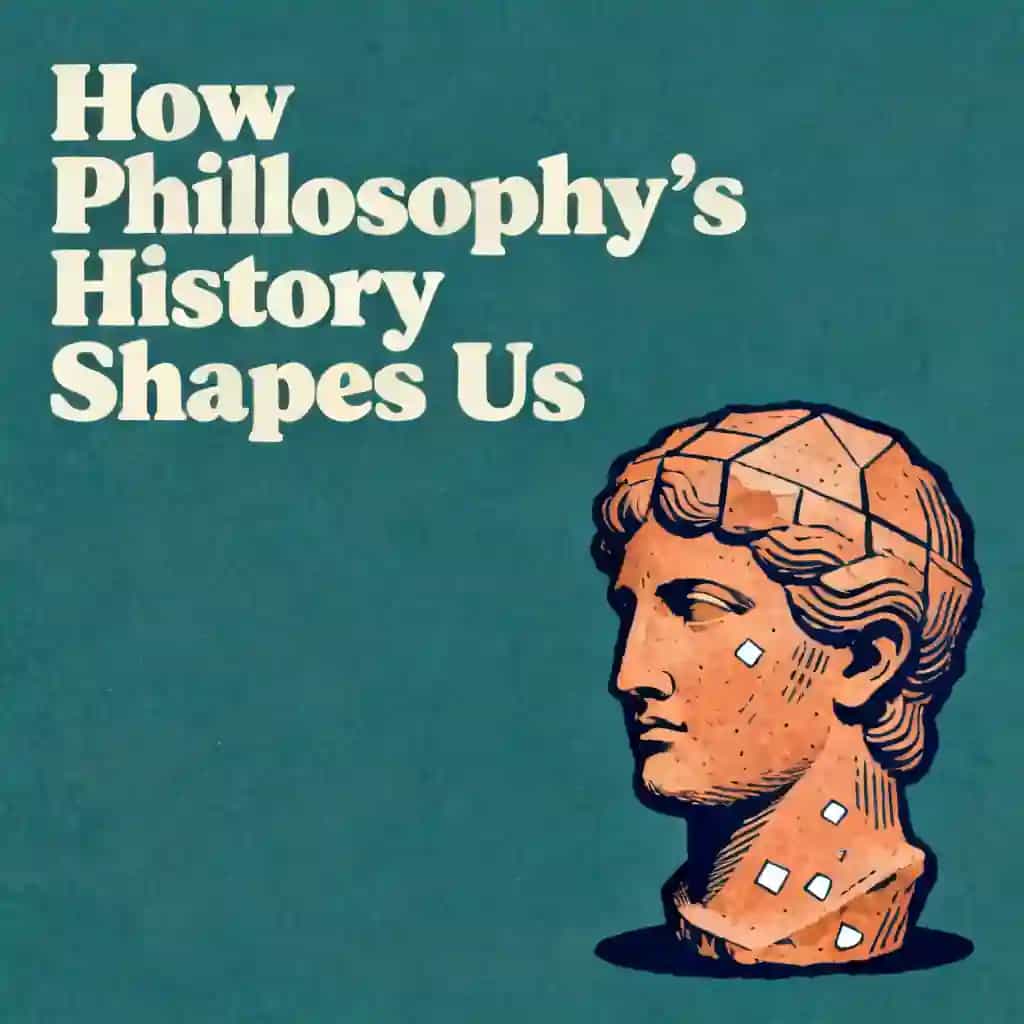
Why Philosophy Is a Practical Tool for Modern Business
Struggling with a crisis of meaning at work? Discover how ancient wisdom and history act as a mirror to help leaders navigate modern organizational chaos.

Meilleure citation de Why Philosophy Is a Practical Tool for Modern Business
By stepping outside our own time—by doing this 'hermeneutic dialogue' with the past—we can finally see our own assumptions for what they are. It moves us from being passive recipients of our culture to being 'active co-creators' of our meaning.
Generated by Ava
Philosophy, business, history, psychology and arts

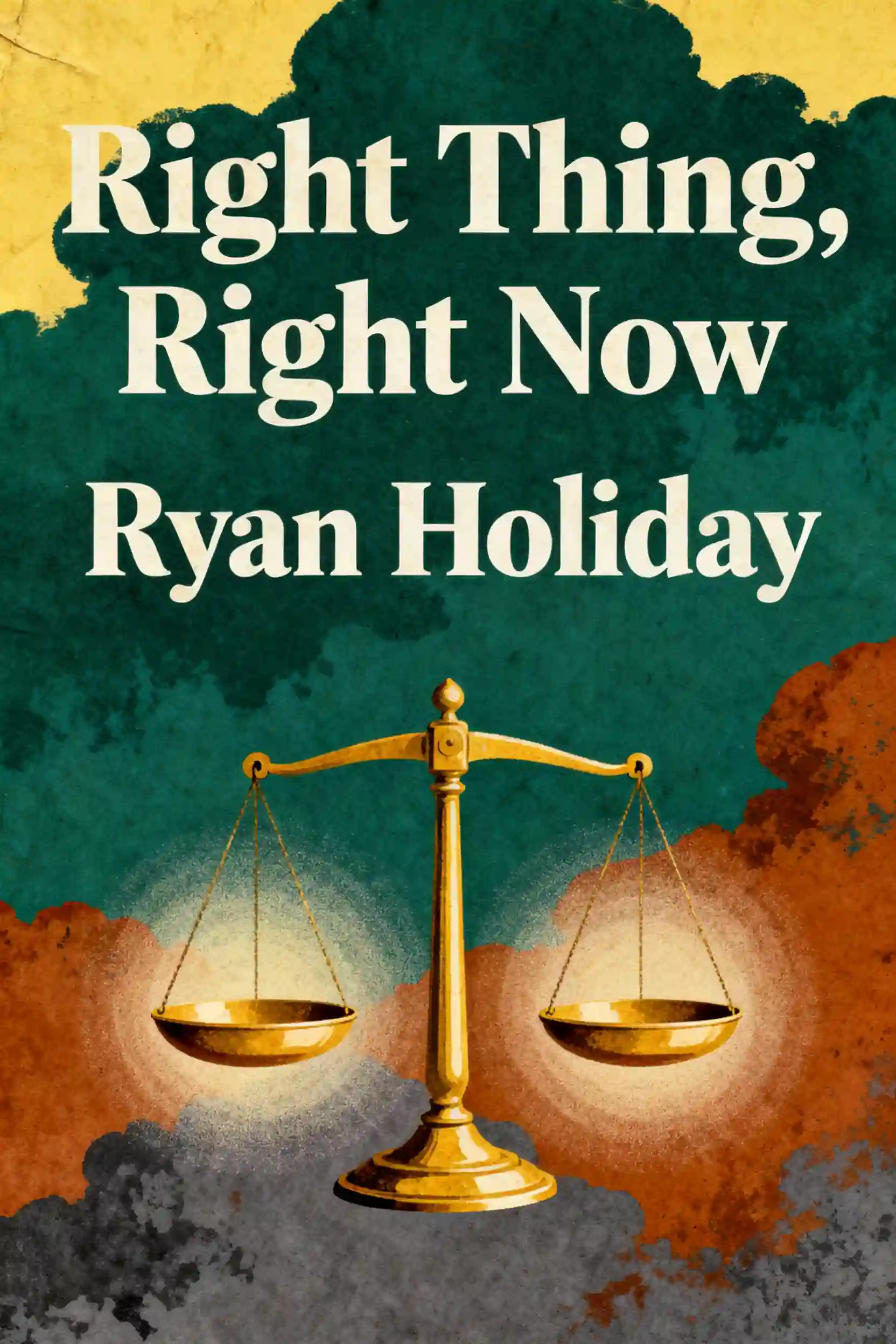
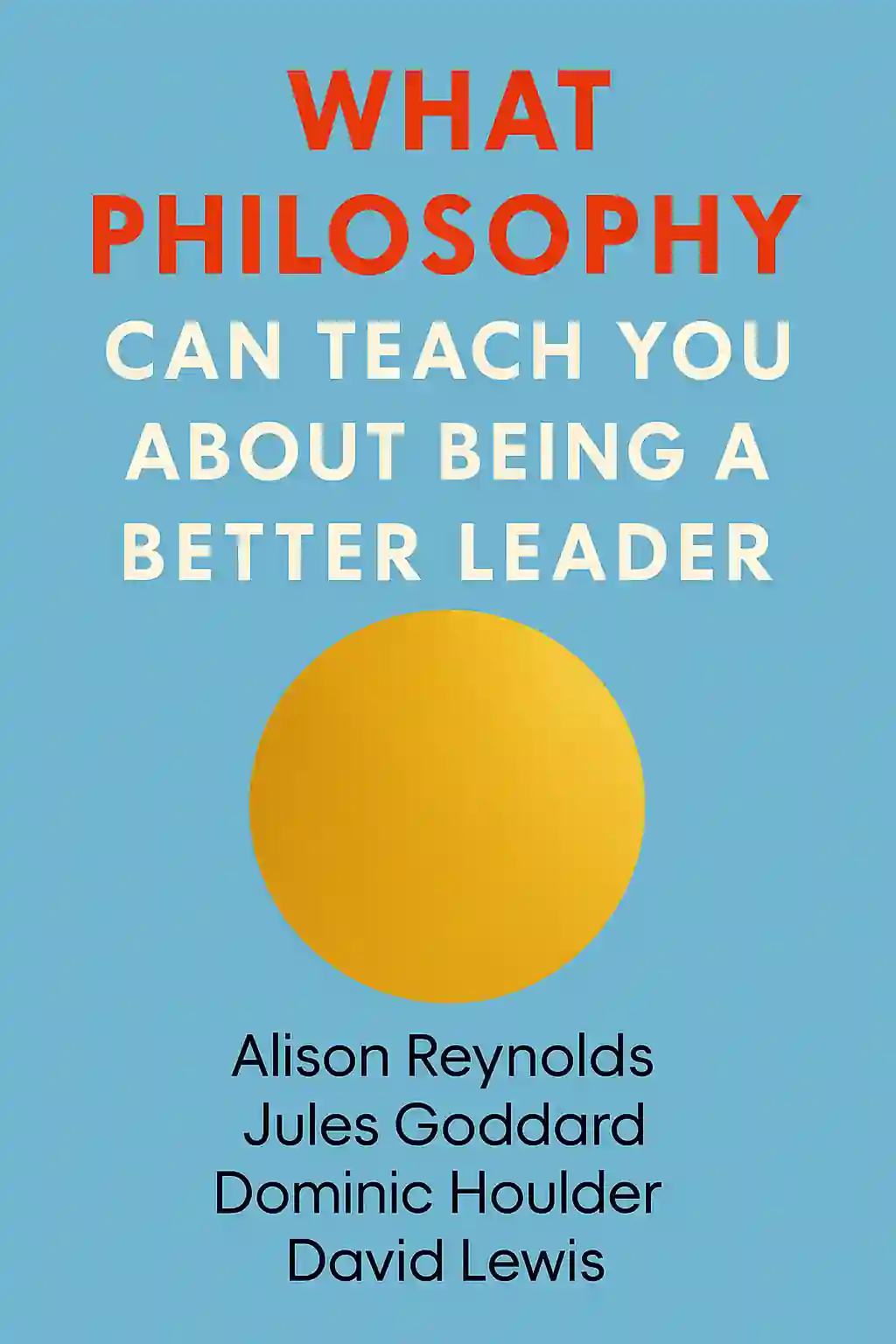
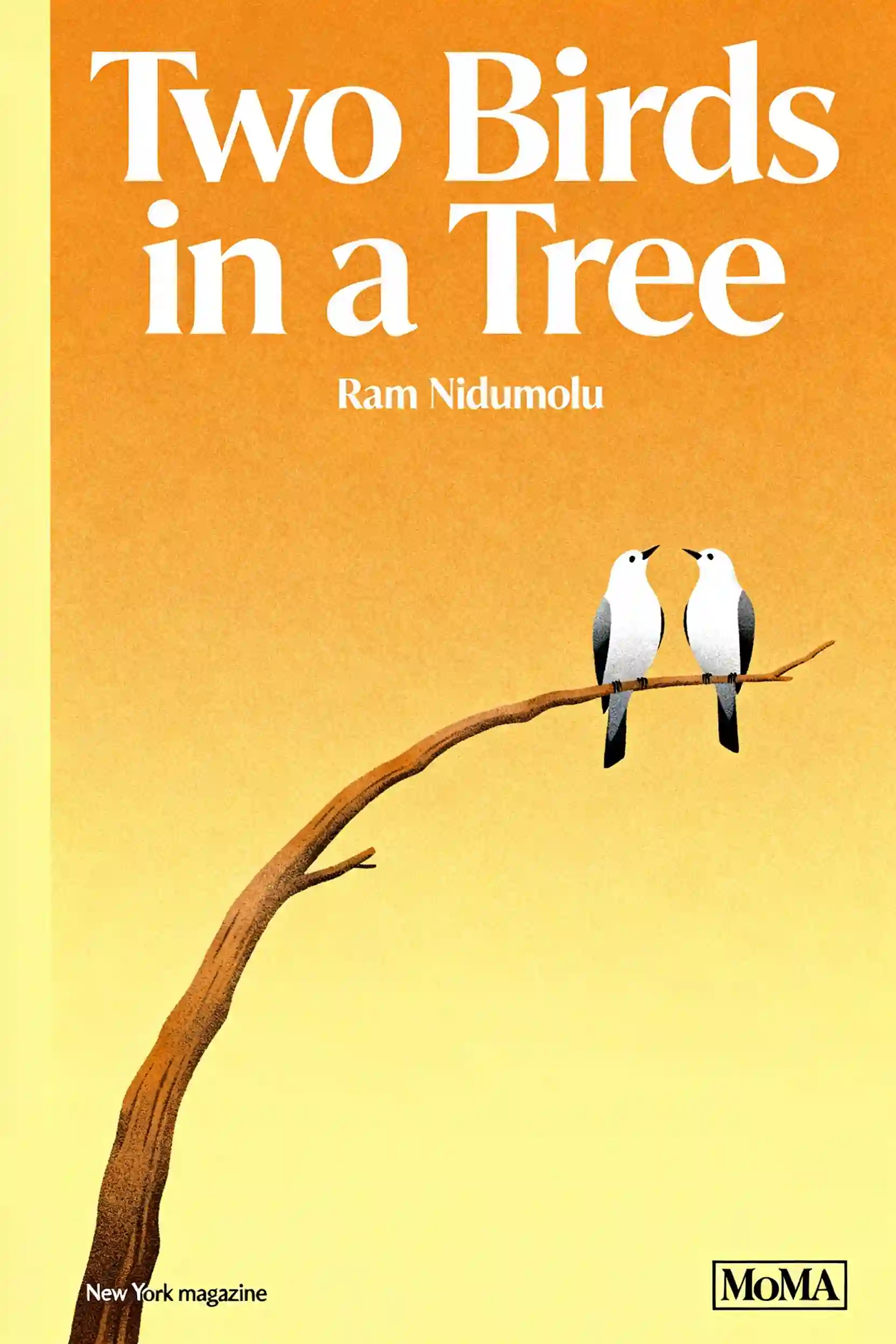

Foire aux questions
History Therapy is a psychological framework that uses a "hermeneutic dialogue" with the past to help individuals address a modern "crisis of meaning." Instead of just learning dates, participants engage with historical worldviews that are distinctively different from their own. This creates a point of comparison that allows people to see their own unconscious assumptions—their "internal icebergs"—as cultural constructs rather than absolute truths. By "trying on" different historical scripts, such as the Stoic view of virtue or the Athenian definition of happiness, individuals can externalize their problems and re-author their own life narratives.
This metaphor describes two different modes of organizational thinking. "Clocks" represent systematic, logical, and measurable operations focused on efficiency and optimization. "Clouds" represent the amorphous, creative, and unpredictable aspects of exploration and philosophy. The script argues that modern business is often obsessed with the "clock," leading to burnout and a lack of direction. Successful organizations act as a "nexus," balancing the two by protecting space for "cloud thinking"—ambiguity and artistic exploration—to ensure the "clock" is actually running in the right direction.
Innovation Hubs serve as structurally independent spaces where radical experimentation occurs through "cross-fertilization." By bringing in "cloud thinkers" like artists or historians, companies create "intellectual friction" that challenges the standard engineering or data-driven mindset. This engagement develops "dynamic capabilities," which include sensing new opportunities, seizing them through strategic sense-making, and transforming the organization’s culture. This process helps businesses differentiate themselves in the market by adding emotional resonance and agility that purely technical approaches cannot achieve.
The process of transformation moves through three specific stages: Collaborative Inquiry, Immersion, and Praxis. In the first phase, the individual identifies a specific existential concern or question to bring to the past. The second phase involves deep engagement with primary texts and artifacts to understand a different era's worldview. The final phase, "praxis," involves translating those historical insights into "behavioral experiments." This means taking an abstract concept, like the Roman practice of equanimity, and scheduling a specific action to habituate that new perspective into daily life.
Cree par des anciens de Columbia University a San Francisco
"Instead of endless scrolling, I just hit play on BeFreed. It saves me so much time."


"I never knew where to start with nonfiction—BeFreed’s book lists turned into podcasts gave me a clear path."


"Perfect balance between learning and entertainment. Finished ‘Thinking, Fast and Slow’ on my commute this week."
"Crazy how much I learned while walking the dog. BeFreed = small habits → big gains."
"Reading used to feel like a chore. Now it’s just part of my lifestyle."

"Feels effortless compared to reading. I’ve finished 6 books this month already."
"BeFreed turned my guilty doomscrolling into something that feels productive and inspiring."

"BeFreed turned my commute into learning time. 20-min podcasts are perfect for finishing books I never had time for."
"BeFreed replaced my podcast queue. Imagine Spotify for books — that’s it. 🙌"

"It is great for me to learn something from the book without reading it."
"The themed book list podcasts help me connect ideas across authors—like a guided audio journey."
"Makes me feel smarter every time before going to work"
 Ask ChatGPT
 Ask Claude
Cree par des anciens de Columbia University a San Francisco
"Instead of endless scrolling, I just hit play on BeFreed. It saves me so much time."
"I never knew where to start with nonfiction—BeFreed’s book lists turned into podcasts gave me a clear path."
"Perfect balance between learning and entertainment. Finished ‘Thinking, Fast and Slow’ on my commute this week."
"Crazy how much I learned while walking the dog. BeFreed = small habits → big gains."
"Reading used to feel like a chore. Now it’s just part of my lifestyle."
"Feels effortless compared to reading. I’ve finished 6 books this month already."
"BeFreed turned my guilty doomscrolling into something that feels productive and inspiring."
"BeFreed turned my commute into learning time. 20-min podcasts are perfect for finishing books I never had time for."
"BeFreed replaced my podcast queue. Imagine Spotify for books — that’s it. 🙌"
"It is great for me to learn something from the book without reading it."
"The themed book list podcasts help me connect ideas across authors—like a guided audio journey."
"Makes me feel smarter every time before going to work"
"Instead of endless scrolling, I just hit play on BeFreed. It saves me so much time."
"I never knew where to start with nonfiction—BeFreed’s book lists turned into podcasts gave me a clear path."
"Perfect balance between learning and entertainment. Finished ‘Thinking, Fast and Slow’ on my commute this week."
"Crazy how much I learned while walking the dog. BeFreed = small habits → big gains."
"Reading used to feel like a chore. Now it’s just part of my lifestyle."
"Feels effortless compared to reading. I’ve finished 6 books this month already."
"BeFreed turned my guilty doomscrolling into something that feels productive and inspiring."
"BeFreed turned my commute into learning time. 20-min podcasts are perfect for finishing books I never had time for."
"BeFreed replaced my podcast queue. Imagine Spotify for books — that’s it. 🙌"
"It is great for me to learn something from the book without reading it."
"The themed book list podcasts help me connect ideas across authors—like a guided audio journey."
"Makes me feel smarter every time before going to work"
"Instead of endless scrolling, I just hit play on BeFreed. It saves me so much time."
"I never knew where to start with nonfiction—BeFreed’s book lists turned into podcasts gave me a clear path."
"Perfect balance between learning and entertainment. Finished ‘Thinking, Fast and Slow’ on my commute this week."
"Crazy how much I learned while walking the dog. BeFreed = small habits → big gains."
"Reading used to feel like a chore. Now it’s just part of my lifestyle."
"Feels effortless compared to reading. I’ve finished 6 books this month already."
"BeFreed turned my guilty doomscrolling into something that feels productive and inspiring."
"BeFreed turned my commute into learning time. 20-min podcasts are perfect for finishing books I never had time for."
"BeFreed replaced my podcast queue. Imagine Spotify for books — that’s it. 🙌"
"It is great for me to learn something from the book without reading it."
"The themed book list podcasts help me connect ideas across authors—like a guided audio journey."
"Makes me feel smarter every time before going to work"




![A Brief Outline of the World's Philosophies [33+ Schools of Thought] - Philosophy Buzz](/_next/image?url=https%3A%2F%2Fd1y2du6z1jfm9e.cloudfront.net%2Fassets%2Fpodcast%2Fpurple.png&w=1024&q=50)