What Burnout Really Is and How to Recover | Podcast
Understand what burnout really is and how to recover. Learn about chronic workplace stress, the WHO definition of this occupational phenomenon, and recovery steps.

Meilleure citation de What Burnout Really Is and How to Recover | Podcast
Burnout isn't just a 'mindset' thing—it is a biological injury to your brain where your internal alarm system gets louder while the part of your brain that manages it literally thins out. You can’t just hustle your way out of this because you’re working against your own biology, and biology always wins.
Generated by YU
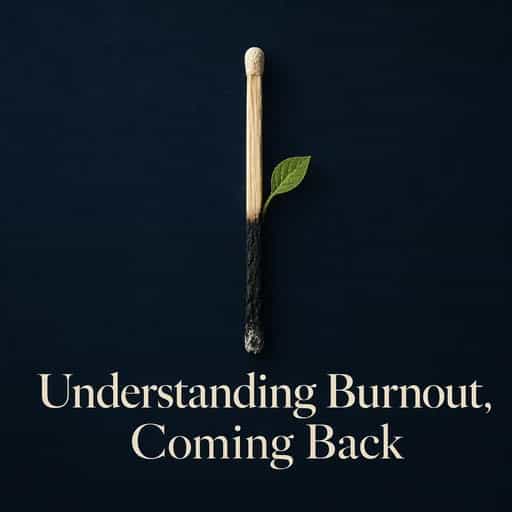
What burnout really is, and how to come back






Foire aux questions
According to the World Health Organization’s 11th Revision of the International Classification of Diseases, burnout is officially recognized as an occupational phenomenon. It is defined as a syndrome resulting from chronic workplace stress that has not been successfully managed. It is not simply being tired; it is a structural issue characterized by energy depletion, increased mental distance or cynicism toward one's job, and a reduced sense of professional efficacy.
Burnout is characterized by three very specific symptoms that distinguish it from general fatigue. First, an individual feels totally depleted of energy or exhausted. Second, there is a growing mental distance from the job, often manifesting as feelings of negativism or cynicism related to one's work. Finally, there is a significant sense of reduced professional efficacy, where the person feels they are no longer as good at their work as they once were.
Recent data suggests that burnout is a widespread issue affecting a vast majority of the workforce. Approximately 82% of employees are currently considered at risk of burnout. This high percentage highlights that burnout is an occupational phenomenon born from chronic workplace stress rather than an individual failing. Recognizing this gap between one's former energy levels and current state is the first step toward understanding the need for burnout recovery.
No, you cannot simply sleep off burnout because it is more than just being tired. Because burnout is a syndrome rooted in chronic workplace stress and recognized by the World Health Organization as a structural occupational phenomenon, recovery requires more than rest. It involves addressing the massive gap between your previous self and your current state of depletion, cynicism, and reduced professional performance through specific burnout recovery strategies.
Cree par des anciens de Columbia University a San Francisco
BeFreed rassemble une communauté mondiale d'esprits curieux


"Instead of endless scrolling, I just hit play on BeFreed. It saves me so much time."


"I never knew where to start with nonfiction—BeFreed’s book lists turned into podcasts gave me a clear path."


"Perfect balance between learning and entertainment. Finished ‘Thinking, Fast and Slow’ on my commute this week."
"Crazy how much I learned while walking the dog. BeFreed = small habits → big gains."
"Reading used to feel like a chore. Now it’s just part of my lifestyle."

"Feels effortless compared to reading. I’ve finished 6 books this month already."
"BeFreed turned my guilty doomscrolling into something that feels productive and inspiring."

"BeFreed turned my commute into learning time. 20-min podcasts are perfect for finishing books I never had time for."
"BeFreed replaced my podcast queue. Imagine Spotify for books — that’s it. 🙌"

"It is great for me to learn something from the book without reading it."
"The themed book list podcasts help me connect ideas across authors—like a guided audio journey."
"Makes me feel smarter every time before going to work"
Cree par des anciens de Columbia University a San Francisco
BeFreed rassemble une communauté mondiale d'esprits curieux
"Instead of endless scrolling, I just hit play on BeFreed. It saves me so much time."
"I never knew where to start with nonfiction—BeFreed’s book lists turned into podcasts gave me a clear path."
"Perfect balance between learning and entertainment. Finished ‘Thinking, Fast and Slow’ on my commute this week."
"Crazy how much I learned while walking the dog. BeFreed = small habits → big gains."
"Reading used to feel like a chore. Now it’s just part of my lifestyle."
"Feels effortless compared to reading. I’ve finished 6 books this month already."
"BeFreed turned my guilty doomscrolling into something that feels productive and inspiring."
"BeFreed turned my commute into learning time. 20-min podcasts are perfect for finishing books I never had time for."
"BeFreed replaced my podcast queue. Imagine Spotify for books — that’s it. 🙌"
"It is great for me to learn something from the book without reading it."
"The themed book list podcasts help me connect ideas across authors—like a guided audio journey."
"Makes me feel smarter every time before going to work"
"Instead of endless scrolling, I just hit play on BeFreed. It saves me so much time."
"I never knew where to start with nonfiction—BeFreed’s book lists turned into podcasts gave me a clear path."
"Perfect balance between learning and entertainment. Finished ‘Thinking, Fast and Slow’ on my commute this week."
"Crazy how much I learned while walking the dog. BeFreed = small habits → big gains."
"Reading used to feel like a chore. Now it’s just part of my lifestyle."
"Feels effortless compared to reading. I’ve finished 6 books this month already."
"BeFreed turned my guilty doomscrolling into something that feels productive and inspiring."
"BeFreed turned my commute into learning time. 20-min podcasts are perfect for finishing books I never had time for."
"BeFreed replaced my podcast queue. Imagine Spotify for books — that’s it. 🙌"
"It is great for me to learn something from the book without reading it."
"The themed book list podcasts help me connect ideas across authors—like a guided audio journey."
"Makes me feel smarter every time before going to work"
"Instead of endless scrolling, I just hit play on BeFreed. It saves me so much time."
"I never knew where to start with nonfiction—BeFreed’s book lists turned into podcasts gave me a clear path."
"Perfect balance between learning and entertainment. Finished ‘Thinking, Fast and Slow’ on my commute this week."
"Crazy how much I learned while walking the dog. BeFreed = small habits → big gains."
"Reading used to feel like a chore. Now it’s just part of my lifestyle."
"Feels effortless compared to reading. I’ve finished 6 books this month already."
"BeFreed turned my guilty doomscrolling into something that feels productive and inspiring."
"BeFreed turned my commute into learning time. 20-min podcasts are perfect for finishing books I never had time for."
"BeFreed replaced my podcast queue. Imagine Spotify for books — that’s it. 🙌"
"It is great for me to learn something from the book without reading it."
"The themed book list podcasts help me connect ideas across authors—like a guided audio journey."
"Makes me feel smarter every time before going to work"