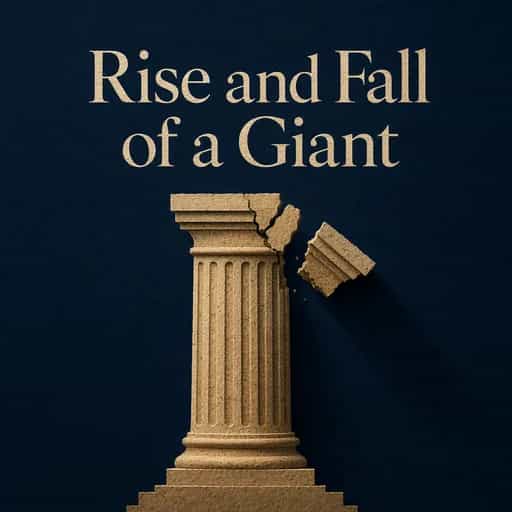
Under Armour was once the next Nike, but sales are sliding. We explore why the brand lost its cool and if a founder-led turnaround can save it.
Meilleure citation de Under Armour's Downfall and the Struggle to Reset
“
Under Armour’s downfall wasn't caused by a lack of good products; it was caused by a lack of integrity in their business model. They chased a 20% growth streak that was unsustainable, and they used increasingly desperate measures to keep it alive.
”
J
Generated by Jacob
Question posée
The downfall of under Armour
Voix des présentateurs
Eli
Nia
Sources de connaissances
Foire aux questions
The momentum trap refers to the immense pressure the company faced to maintain a streak of twenty-six consecutive quarters with at least 20% revenue growth. To keep this streak alive, the internal culture shifted from product excellence to hitting financial targets at any cost. This led to "pull-forward" sales, where executives convinced retailers to take merchandise early to count those sales in the current quarter, essentially mortgaging the company's future to save its present.
Under founder Kevin Plank’s "brand reset," the company is focusing on "quality over quantity" to restore its premium status. By reducing its total product styles (SKUs) by 25%, Under Armour aims to exit "promotional prisons" where excess inventory forced constant discounting. The goal is to sell fewer items at higher price points, focusing on core performance categories like football, training, and running rather than trying to be a lifestyle brand for everyone.
The massive $431 million GAAP loss includes significant "special items" and "accounting noise" related to the company’s restructuring. This includes nearly $100 million for litigation reserves to settle shareholder lawsuits, $95 million to spin off the Curry Brand, and various layoff and asset impairment costs. When these one-time "surgery" costs are stripped away, the core business actually achieved a positive adjusted operating result of $26 million.
Even as Under Armour tries to fix its internal issues, it faces significant external headwinds, most notably new tariffs that are expected to create a $100 million "sinkhole" in profits. Additionally, the brand faces a "trust deficit" in North America, where consumers have been trained to wait for sales. While international regions like EMEA are growing, the North American market—which accounts for over 50% of revenue—continues to struggle with declining wholesale orders and a loss of "brand heat" compared to newer competitors like Hoka and On.
Cree par des anciens de Columbia University | a San Francisco
BeFreed rassemble une communauté mondiale d'esprits curieux
4.7
note moyenne
Plus de 7,84 k notes sur l’app
Communauté BeFreed
Franchement, je n'ai pas encore exploré toute l'app, mais après quelques jours d'utilisation, je suis bluffée… BeFreed est à un tout autre niveau que toutes les autres apps d'apprentissage que j'ai essayées. C'est ultra captivant et ça améliore vraiment la concentration — parfait pour tous les accros au scroll !
@ladyInfinity
J'ai acheté BeFreed il y a exactement 23 jours et je l'ai utilisée chaque jour depuis. Elle s'est complètement intégrée à mon quotidien de travail et à mes habitudes d'apprentissage.
@jayallen
La vérité, c'est que l'app a dépassé toutes mes attentes. Je peux lui demander de générer de l'audio sur n'importe quel sujet, quel qu'il soit, et le résultat est impressionnant. Mon domaine professionnel est une spécialisation en psychothérapie, très pluridisciplinaire ; pourtant, les réponses sont très justes.
@Raguipa
Ce que j'apprécie le plus, c'est à quel point ça a réduit mon temps de scroll : je passe moins de temps à chercher et plus de temps à retenir. La combinaison des livres audio complets, des podcasts et des plans d'apprentissage est brillante.
@colonyofcreatorsNGO
Je suis instructeur en apprentissage accéléré PhotoReading depuis 24 ans… les livres, la lecture et l'apprentissage, c'est mon domaine, et BeFreed a fait un excellent travail en proposant une approche innovante pour transmettre l'information de façon facile à assimiler.
@BeFreed user
Ce n'est pas qu'une app de résumés de livres : j'ai utilisé l'option de lecture fun et c'est un bien meilleur résumé, une meilleure façon de saisir les idées qu'à la manière traditionnelle. Rien que ça vaut le coup.
@austinakon
J'adore cette app. Je l'utilise depuis plusieurs jours et je ne peux plus m'arrêter d'écouter. Une excellente façon de commencer.
@jcrules328
J'aime beaucoup ce programme ; je le teste depuis environ un mois et c'est une vraie pépite. Ça marche très bien parce que je peux utiliser BeFreed pour créer mes propres sujets, et la voix est excellente, avec un choix illimité de narrations.
@DanielCZ
Franchement, je n'ai pas encore exploré toute l'app, mais après quelques jours d'utilisation, je suis bluffée… BeFreed est à un tout autre niveau que toutes les autres apps d'apprentissage que j'ai essayées. C'est ultra captivant et ça améliore vraiment la concentration — parfait pour tous les accros au scroll !
@ladyInfinity
J'ai acheté BeFreed il y a exactement 23 jours et je l'ai utilisée chaque jour depuis. Elle s'est complètement intégrée à mon quotidien de travail et à mes habitudes d'apprentissage.
@jayallen
La vérité, c'est que l'app a dépassé toutes mes attentes. Je peux lui demander de générer de l'audio sur n'importe quel sujet, quel qu'il soit, et le résultat est impressionnant. Mon domaine professionnel est une spécialisation en psychothérapie, très pluridisciplinaire ; pourtant, les réponses sont très justes.
@Raguipa
Ce que j'apprécie le plus, c'est à quel point ça a réduit mon temps de scroll : je passe moins de temps à chercher et plus de temps à retenir. La combinaison des livres audio complets, des podcasts et des plans d'apprentissage est brillante.
@colonyofcreatorsNGO
Je suis instructeur en apprentissage accéléré PhotoReading depuis 24 ans… les livres, la lecture et l'apprentissage, c'est mon domaine, et BeFreed a fait un excellent travail en proposant une approche innovante pour transmettre l'information de façon facile à assimiler.
@BeFreed user
Ce n'est pas qu'une app de résumés de livres : j'ai utilisé l'option de lecture fun et c'est un bien meilleur résumé, une meilleure façon de saisir les idées qu'à la manière traditionnelle. Rien que ça vaut le coup.
@austinakon
J'adore cette app. Je l'utilise depuis plusieurs jours et je ne peux plus m'arrêter d'écouter. Une excellente façon de commencer.
@jcrules328
J'aime beaucoup ce programme ; je le teste depuis environ un mois et c'est une vraie pépite. Ça marche très bien parce que je peux utiliser BeFreed pour créer mes propres sujets, et la voix est excellente, avec un choix illimité de narrations.
@DanielCZ
J'adore pouvoir obtenir des informations et des idées utiles et condensées dans un audio façon podcast de 8 à 15 minutes. Je ne suis pas fan des podcasts à cause de tout le remplissage, mais là, on va droit à l'essentiel.
@BeFreed user
Je termine mon doctorat et je dois lire beaucoup de contenus que je ne connais pas… Avec BeFreed, il suffit d'entrer un prompt : l'app trouve les sources pour vous et génère un podcast audio. Je trouve le processus de BeFreed plus fluide que celui de NotebookLM.
@Brad
Je cherche souvent sur YouTube quelque chose à écouter en préparant le petit-déjeuner, en marchant ou dans les transports, et BeFreed offre une approche encore plus ciblée, sans pubs et sans remplissage !
@BeFreed user
Le meilleur atout de cette plateforme, c'est sa polyvalence. Il n'y a littéralement aucun sujet hors de portée. Elle gère tout ce qu'on lui donne… Il est rare de trouver un outil d'apprentissage sans aucune limite qui tient vraiment ses promesses.
@jayallen
BeFreed est fantastique. Son design intuitif me fait passer moins de temps à naviguer et plus de temps à apprendre. Le mélange de livres audio, de podcasts et de plans d'apprentissage est une combinaison géniale qui a complètement changé ma routine quotidienne.
@BeFreed user
Au début, il m'a fallu un moment pour comprendre comment créer des podcasts en italien, et boum ! C'est génial ! Je peux lui demander d'expliquer n'importe quel sujet et elle le fait super bien, avec beaucoup d'intelligence !
@matteo77
BeFreed est devenue mon app quotidienne pour les livres audio… Ce que je préfère, c'est de pouvoir déposer son texte et obtenir un audio à écouter en déplacement.
@kotanzu1
J'adore pouvoir obtenir des informations et des idées utiles et condensées dans un audio façon podcast de 8 à 15 minutes. Je ne suis pas fan des podcasts à cause de tout le remplissage, mais là, on va droit à l'essentiel.
@BeFreed user
Je termine mon doctorat et je dois lire beaucoup de contenus que je ne connais pas… Avec BeFreed, il suffit d'entrer un prompt : l'app trouve les sources pour vous et génère un podcast audio. Je trouve le processus de BeFreed plus fluide que celui de NotebookLM.
@Brad
Je cherche souvent sur YouTube quelque chose à écouter en préparant le petit-déjeuner, en marchant ou dans les transports, et BeFreed offre une approche encore plus ciblée, sans pubs et sans remplissage !
@BeFreed user
Le meilleur atout de cette plateforme, c'est sa polyvalence. Il n'y a littéralement aucun sujet hors de portée. Elle gère tout ce qu'on lui donne… Il est rare de trouver un outil d'apprentissage sans aucune limite qui tient vraiment ses promesses.
@jayallen
BeFreed est fantastique. Son design intuitif me fait passer moins de temps à naviguer et plus de temps à apprendre. Le mélange de livres audio, de podcasts et de plans d'apprentissage est une combinaison géniale qui a complètement changé ma routine quotidienne.
@BeFreed user
Au début, il m'a fallu un moment pour comprendre comment créer des podcasts en italien, et boum ! C'est génial ! Je peux lui demander d'expliquer n'importe quel sujet et elle le fait super bien, avec beaucoup d'intelligence !
@matteo77
BeFreed est devenue mon app quotidienne pour les livres audio… Ce que je préfère, c'est de pouvoir déposer son texte et obtenir un audio à écouter en déplacement.
Retail is changing fast as legacy brands disappear from our malls. Learn why big names are failing and what the future of shopping actually looks like.