The Relentless Mind: Founder Psychology and Ben Nowack's Luck Formula
Explore the psychology of exceptional founders like Ben Nowack. Learn about the formula for luck, cognitive aggression, and the mindset needed to beat the odds.
Meilleure citation de The Relentless Mind: Founder Psychology and Ben Nowack's Luck Formula
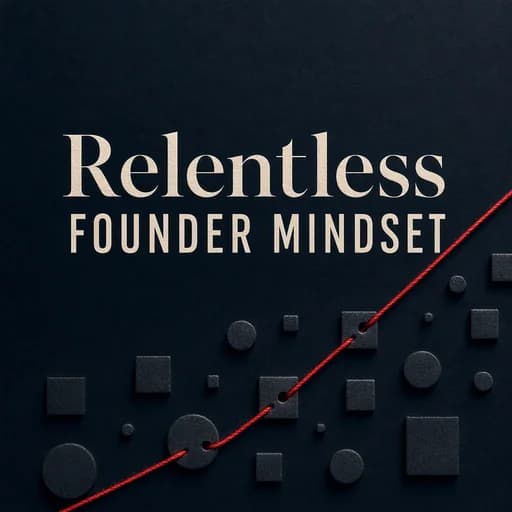
Relentlessness is actually an exercise in variance. If a project has only a 0.5% chance of succeeding, your job isn't to hope—it's to try it 400 times to make success a statistical certainty.
Generated by Aditya
TITLE: The Psychology of Relentless Founders — How Exceptional Builders Think, Decide, and Operate. Create a high-impact audio lesson based exclusively on the attached source 'Relentless Founder Psychology, Trajectory, and Operational Philosophy Analysis.md'. Follow an analytical standard (organizational psychologist/behavioral scientist) and Marc Andreessen-style discipline. Lead with the counter-intuitive conclusion that relentless behavior isn't just 'working harder.' Focus on psychological origins of risk (childhood, scarcity, obsession), internal drives (refusing to be average, intolerance for waste), and decision-making under uncertainty. Compare failure as information vs. failure as defeat. Explore talent density and operating philosophies (first principles, vertical integration). Include the critical counterweight: the dark traits and costs like burnout and isolation. Synthesize the difference between 'working hard' and operating relentlessly. Constraints: Absolute max 3,500 characters, conversational spoken language, no preamble. Source: Relentless Founder Psychology, Trajectory, and Operational Philosophy Analysis.md


Foire aux questions
The formula for luck, as utilized by Reflect Orbital CEO Ben Nowack, is a mathematical approach to overcoming low odds. Instead of relying on hope, this mindset views success as an exercise in variance. If a project has only a 0.5% chance of succeeding, the founder commits to trying it 400 times. This high-frequency assault ensures that the builder outlasts the odds through sheer repetition and persistence.
In the context of The Relentless Mind, being relentless is not just a synonym for working long hours or answering emails on weekends. It represents a completely different mental operating system characterized by cognitive aggression. While typical hard work is compared to running faster on a treadmill, true founder psychology involves a specific drive to dismantle technical bottlenecks and rethink what is considered an impossible task.
Cognitive aggression is a term used to describe the intense mental drive found in exceptional builders. It goes beyond standard startup grit by focusing on the specific way founders approach challenges. Rather than just increasing the volume of work, these individuals use a high-frequency assault on problems, treating the world as a series of technical bottlenecks that can be solved through a relentless and calculated commitment to success.
Cree par des anciens de Columbia University a San Francisco
BeFreed rassemble une communauté mondiale d'esprits curieux


"Instead of endless scrolling, I just hit play on BeFreed. It saves me so much time."


"I never knew where to start with nonfiction—BeFreed’s book lists turned into podcasts gave me a clear path."


"Perfect balance between learning and entertainment. Finished ‘Thinking, Fast and Slow’ on my commute this week."
"Crazy how much I learned while walking the dog. BeFreed = small habits → big gains."
"Reading used to feel like a chore. Now it’s just part of my lifestyle."

"Feels effortless compared to reading. I’ve finished 6 books this month already."
"BeFreed turned my guilty doomscrolling into something that feels productive and inspiring."

"BeFreed turned my commute into learning time. 20-min podcasts are perfect for finishing books I never had time for."
"BeFreed replaced my podcast queue. Imagine Spotify for books — that’s it. 🙌"

"It is great for me to learn something from the book without reading it."
"The themed book list podcasts help me connect ideas across authors—like a guided audio journey."
"Makes me feel smarter every time before going to work"
Cree par des anciens de Columbia University a San Francisco
BeFreed rassemble une communauté mondiale d'esprits curieux
"Instead of endless scrolling, I just hit play on BeFreed. It saves me so much time."
"I never knew where to start with nonfiction—BeFreed’s book lists turned into podcasts gave me a clear path."
"Perfect balance between learning and entertainment. Finished ‘Thinking, Fast and Slow’ on my commute this week."
"Crazy how much I learned while walking the dog. BeFreed = small habits → big gains."
"Reading used to feel like a chore. Now it’s just part of my lifestyle."
"Feels effortless compared to reading. I’ve finished 6 books this month already."
"BeFreed turned my guilty doomscrolling into something that feels productive and inspiring."
"BeFreed turned my commute into learning time. 20-min podcasts are perfect for finishing books I never had time for."
"BeFreed replaced my podcast queue. Imagine Spotify for books — that’s it. 🙌"
"It is great for me to learn something from the book without reading it."
"The themed book list podcasts help me connect ideas across authors—like a guided audio journey."
"Makes me feel smarter every time before going to work"
"Instead of endless scrolling, I just hit play on BeFreed. It saves me so much time."
"I never knew where to start with nonfiction—BeFreed’s book lists turned into podcasts gave me a clear path."
"Perfect balance between learning and entertainment. Finished ‘Thinking, Fast and Slow’ on my commute this week."
"Crazy how much I learned while walking the dog. BeFreed = small habits → big gains."
"Reading used to feel like a chore. Now it’s just part of my lifestyle."
"Feels effortless compared to reading. I’ve finished 6 books this month already."
"BeFreed turned my guilty doomscrolling into something that feels productive and inspiring."
"BeFreed turned my commute into learning time. 20-min podcasts are perfect for finishing books I never had time for."
"BeFreed replaced my podcast queue. Imagine Spotify for books — that’s it. 🙌"
"It is great for me to learn something from the book without reading it."
"The themed book list podcasts help me connect ideas across authors—like a guided audio journey."
"Makes me feel smarter every time before going to work"
"Instead of endless scrolling, I just hit play on BeFreed. It saves me so much time."
"I never knew where to start with nonfiction—BeFreed’s book lists turned into podcasts gave me a clear path."
"Perfect balance between learning and entertainment. Finished ‘Thinking, Fast and Slow’ on my commute this week."
"Crazy how much I learned while walking the dog. BeFreed = small habits → big gains."
"Reading used to feel like a chore. Now it’s just part of my lifestyle."
"Feels effortless compared to reading. I’ve finished 6 books this month already."
"BeFreed turned my guilty doomscrolling into something that feels productive and inspiring."
"BeFreed turned my commute into learning time. 20-min podcasts are perfect for finishing books I never had time for."
"BeFreed replaced my podcast queue. Imagine Spotify for books — that’s it. 🙌"
"It is great for me to learn something from the book without reading it."
"The themed book list podcasts help me connect ideas across authors—like a guided audio journey."
"Makes me feel smarter every time before going to work"