The Pocket Oracle and the art of social navigation
Modern productivity often fails in high-stakes social settings. Discover how Baltasar Gracián’s 17th-century aphorisms help you master professional optics.

Meilleure citation de The Pocket Oracle and the art of social navigation
Gratitude is a short-lived emotion, but hope and dependence have long memories. You don't just give them the map and walk away; you stay the navigator.
Generated by Ty
Tell me about the pocket oracle in the art of prudence



Foire aux questions
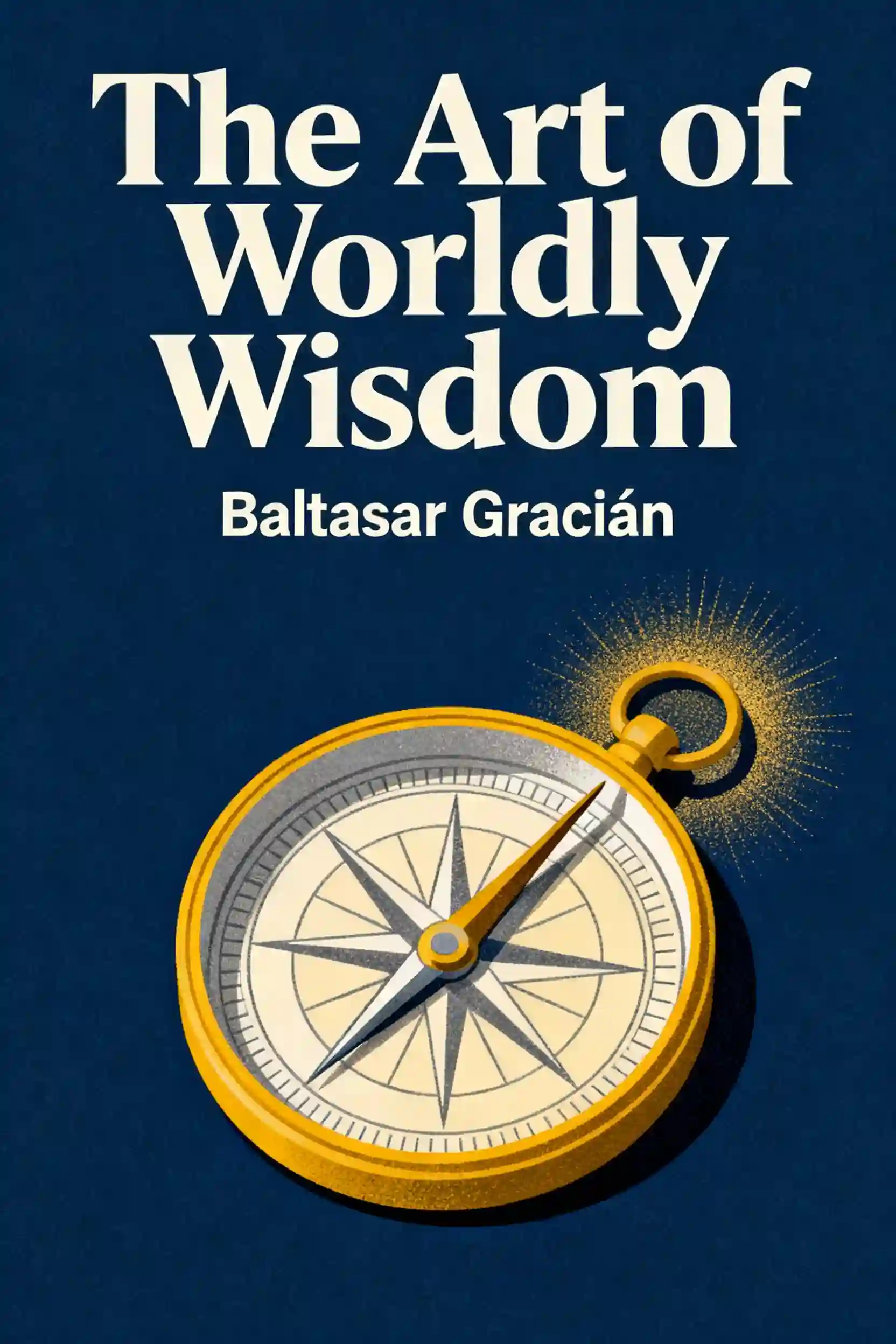
Gracián suggests "strategic invisibility" to avoid becoming a target and to ensure you have room to grow in the eyes of others. If you reveal your full brilliance on the first day, you have nowhere to go but down, and you risk "outshining the boss," which can create powerful enemies. By keeping twenty percent of your capability in reserve, you orchestrate a gradual discovery of your talents, keeping people intrigued and wondering what else you are capable of achieving.
The script explains that while gratitude is a short-lived emotion, hope and dependence have long memories. Gracián uses the metaphor of a squeezed orange to show that once a person's needs are fully satisfied, they often discard the source of that satisfaction. To maintain influence, you should position yourself as "connective tissue" or a "drawbridge" that others must cross to reach their goals, ensuring you remain the source of solutions rather than just providing a one-time map.
This concept involves surrounding yourself with "Ministering Spirits," or people who are experts in specific fields. By engaging in high-level discourse and engineering your social circle to include "champions of intellect," you can absorb years of their hard work and wisdom through simple conversation. This intellectual delegation allows you to speak with the authority of many voices and gain a reputation for wisdom without spending decades in a library.
Gracián believes that performance alone is insufficient if it is not perceived by others; he argues that reputation is the "shadow of power." Narrating your progress involves communicating your steps and successes to stakeholders so they feel validated in their decision to trust you. By mixing a bit of mystery and "measured obscurity" into this narration, you create anticipation and novelty, ensuring your hard work isn't overlooked like "furniture" in the background.
The script highlights that after 299 maxims of strategic and sometimes Machiavellian advice, the final maxim is "In one word, be a saint." This serves as a moral foundation and a safety valve. Gracián understood that tactical maneuvers like mystery and dependence will eventually self-destruct if there is no substance or character behind them. True high performance requires a blend of worldly wisdom for external navigation and a principled "saintly" nature to prevent strategies from turning into "poison."
Cree par des anciens de Columbia University a San Francisco
BeFreed rassemble une communauté mondiale d'esprits curieux


"Instead of endless scrolling, I just hit play on BeFreed. It saves me so much time."


"I never knew where to start with nonfiction—BeFreed’s book lists turned into podcasts gave me a clear path."


"Perfect balance between learning and entertainment. Finished ‘Thinking, Fast and Slow’ on my commute this week."
"Crazy how much I learned while walking the dog. BeFreed = small habits → big gains."
"Reading used to feel like a chore. Now it’s just part of my lifestyle."

"Feels effortless compared to reading. I’ve finished 6 books this month already."
"BeFreed turned my guilty doomscrolling into something that feels productive and inspiring."

"BeFreed turned my commute into learning time. 20-min podcasts are perfect for finishing books I never had time for."
"BeFreed replaced my podcast queue. Imagine Spotify for books — that’s it. 🙌"

"It is great for me to learn something from the book without reading it."
"The themed book list podcasts help me connect ideas across authors—like a guided audio journey."
"Makes me feel smarter every time before going to work"
Cree par des anciens de Columbia University a San Francisco
BeFreed rassemble une communauté mondiale d'esprits curieux
"Instead of endless scrolling, I just hit play on BeFreed. It saves me so much time."
"I never knew where to start with nonfiction—BeFreed’s book lists turned into podcasts gave me a clear path."
"Perfect balance between learning and entertainment. Finished ‘Thinking, Fast and Slow’ on my commute this week."
"Crazy how much I learned while walking the dog. BeFreed = small habits → big gains."
"Reading used to feel like a chore. Now it’s just part of my lifestyle."
"Feels effortless compared to reading. I’ve finished 6 books this month already."
"BeFreed turned my guilty doomscrolling into something that feels productive and inspiring."
"BeFreed turned my commute into learning time. 20-min podcasts are perfect for finishing books I never had time for."
"BeFreed replaced my podcast queue. Imagine Spotify for books — that’s it. 🙌"
"It is great for me to learn something from the book without reading it."
"The themed book list podcasts help me connect ideas across authors—like a guided audio journey."
"Makes me feel smarter every time before going to work"
"Instead of endless scrolling, I just hit play on BeFreed. It saves me so much time."
"I never knew where to start with nonfiction—BeFreed’s book lists turned into podcasts gave me a clear path."
"Perfect balance between learning and entertainment. Finished ‘Thinking, Fast and Slow’ on my commute this week."
"Crazy how much I learned while walking the dog. BeFreed = small habits → big gains."
"Reading used to feel like a chore. Now it’s just part of my lifestyle."
"Feels effortless compared to reading. I’ve finished 6 books this month already."
"BeFreed turned my guilty doomscrolling into something that feels productive and inspiring."
"BeFreed turned my commute into learning time. 20-min podcasts are perfect for finishing books I never had time for."
"BeFreed replaced my podcast queue. Imagine Spotify for books — that’s it. 🙌"
"It is great for me to learn something from the book without reading it."
"The themed book list podcasts help me connect ideas across authors—like a guided audio journey."
"Makes me feel smarter every time before going to work"
"Instead of endless scrolling, I just hit play on BeFreed. It saves me so much time."
"I never knew where to start with nonfiction—BeFreed’s book lists turned into podcasts gave me a clear path."
"Perfect balance between learning and entertainment. Finished ‘Thinking, Fast and Slow’ on my commute this week."
"Crazy how much I learned while walking the dog. BeFreed = small habits → big gains."
"Reading used to feel like a chore. Now it’s just part of my lifestyle."
"Feels effortless compared to reading. I’ve finished 6 books this month already."
"BeFreed turned my guilty doomscrolling into something that feels productive and inspiring."
"BeFreed turned my commute into learning time. 20-min podcasts are perfect for finishing books I never had time for."
"BeFreed replaced my podcast queue. Imagine Spotify for books — that’s it. 🙌"
"It is great for me to learn something from the book without reading it."
"The themed book list podcasts help me connect ideas across authors—like a guided audio journey."
"Makes me feel smarter every time before going to work"