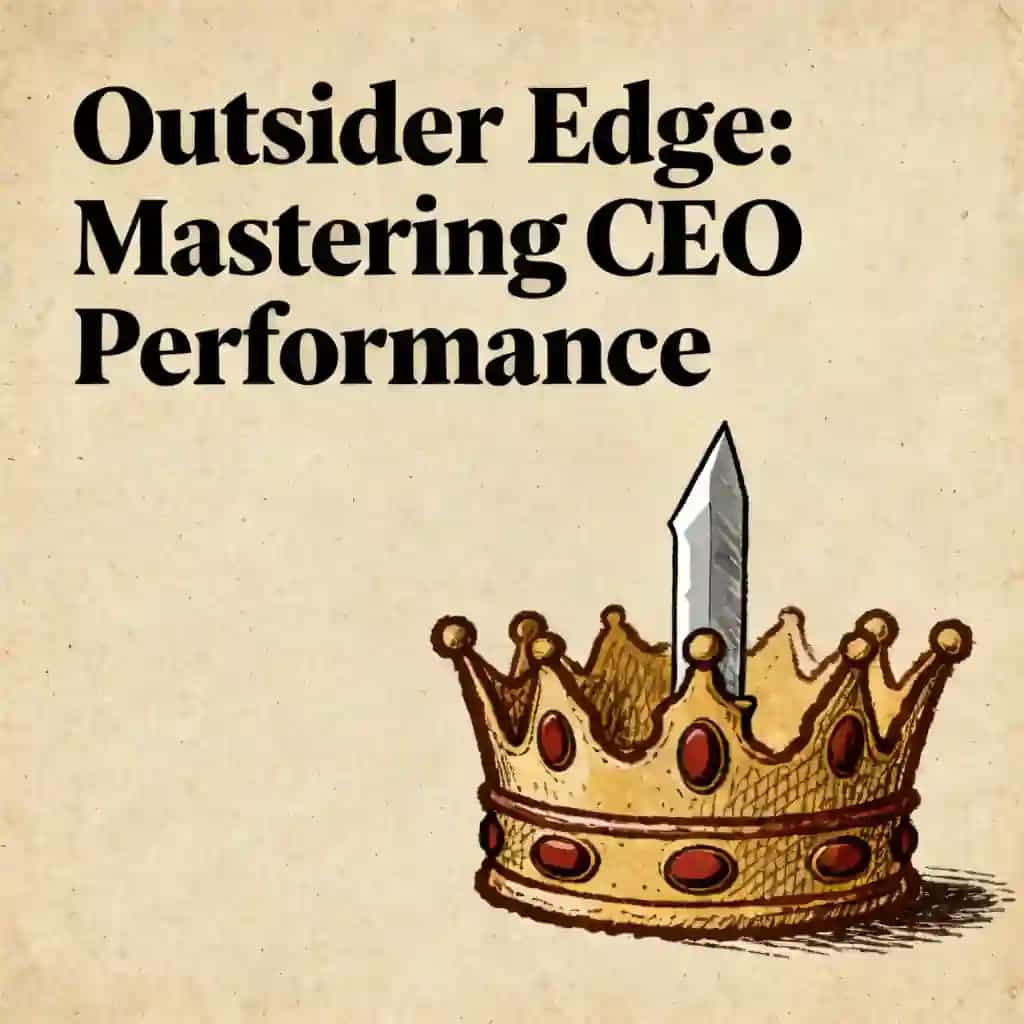
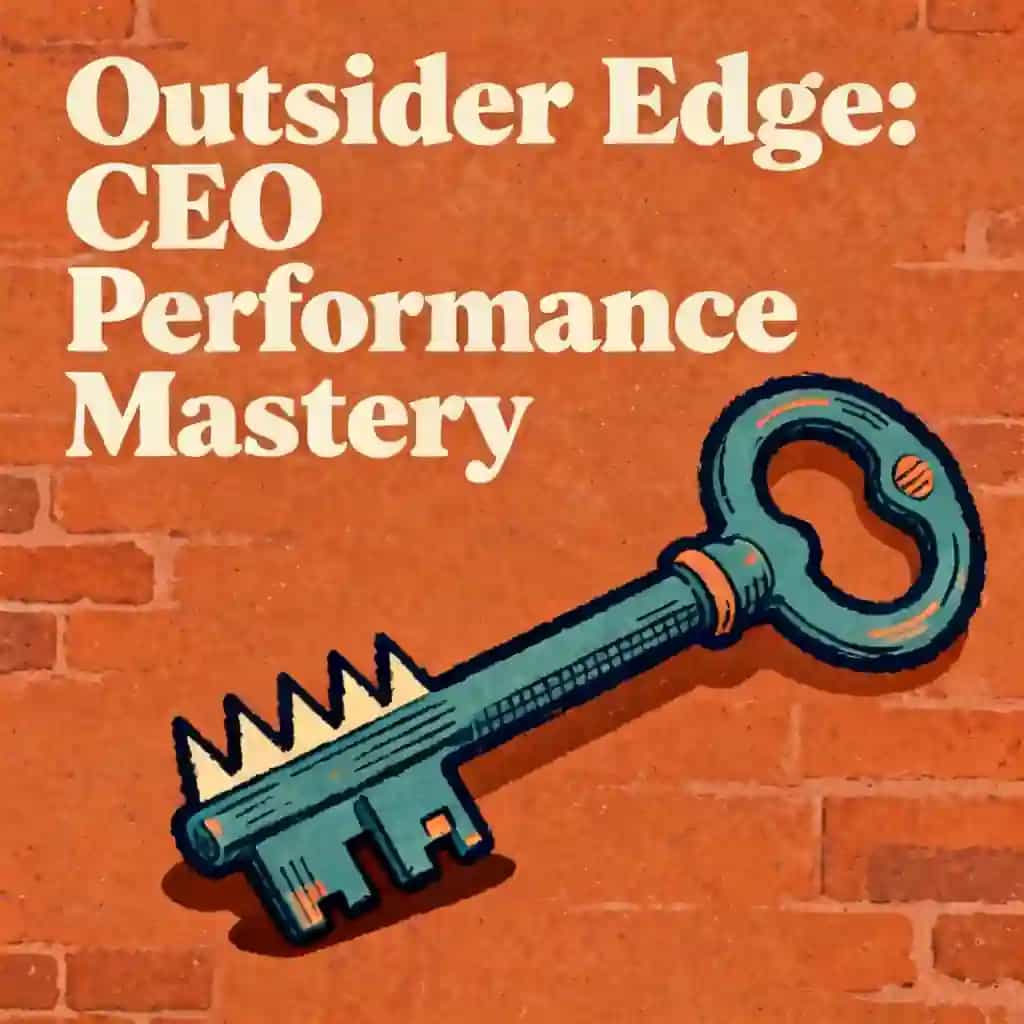
The Outsiders: Capital Allocation and the Quiet CEO
Most leaders focus on operations, but the real value is in the math. Discover how eight maverick CEOs ignored the crowd to outperform the market.

Meilleure citation de The Outsiders: Capital Allocation and the Quiet CEO
He wasn't interested in the performance of being a leader; he was interested in the math of being an owner. This story matters because it challenges everything we are usually told about what makes a great leader.
Generated with BeFreed
An audio lesson about the book The Outsiders, covering its key ideas and takeaways.


Foire aux questions
Capital allocation is the process of deciding how to spend the money a company earns—whether to reinvest it in operations, buy other companies, pay down debt, or buy back the company's own stock. The script explains that while most CEOs focus on "operations" (running the business day-to-day), the most successful "outsider" leaders viewed themselves as investors first. They treated capital as a precious resource and only deployed it where it would generate the highest mathematical return, rather than simply trying to make the company bigger.
Henry Singleton realized that when a company’s stock is trading for less than its actual value, buying back those shares is the highest-return investment a leader can make. By reducing the number of outstanding shares (the "denominator"), he made each remaining share significantly more valuable for the owners. While Wall Street initially thought this was a sign of having "run out of ideas," it was actually a calculated mathematical move that helped his stock outperform the broader market by twelve times.
Tom Murphy and his partner Dan Burke practiced extreme decentralization by hiring the best possible people, giving them a strict budget, and then leaving them alone to run their business units without interference. They maintained a skeletal staff at headquarters with no PR, legal, or human resources departments. This lean structure allowed them to avoid the "institutional imperative" of bloated corporate overhead and kept the organization focused on surgical cost control and efficiency.
John Malone realized that traditional "earnings" were a poor metric for the cable industry because they included non-cash expenses like depreciation that triggered higher taxes. By focusing on EBITDA (Earnings Before Interest, Taxes, Depreciation, and Amortization), he could maximize cash flow and use it to pay for more acquisitions. This strategy allowed him to grow TCI twenty-fold while shielding the company from significant corporate taxes, effectively using the government's tax code to help fund his expansion.
The institutional imperative is the invisible pressure on CEOs to imitate the behavior of their peers, even when that behavior is irrational or value-destroying. This includes things like making flashy acquisitions to get media attention, building expensive headquarters, or following industry trends just because everyone else is doing it. The "outsider" leaders were successful specifically because they ignored this pressure, choosing instead to be "radical rationalists" who made decisions based on math rather than social status.
Cree par des anciens de Columbia University a San Francisco
"Instead of endless scrolling, I just hit play on BeFreed. It saves me so much time."


"I never knew where to start with nonfiction—BeFreed’s book lists turned into podcasts gave me a clear path."


"Perfect balance between learning and entertainment. Finished ‘Thinking, Fast and Slow’ on my commute this week."
"Crazy how much I learned while walking the dog. BeFreed = small habits → big gains."
"Reading used to feel like a chore. Now it’s just part of my lifestyle."

"Feels effortless compared to reading. I’ve finished 6 books this month already."
"BeFreed turned my guilty doomscrolling into something that feels productive and inspiring."

"BeFreed turned my commute into learning time. 20-min podcasts are perfect for finishing books I never had time for."
"BeFreed replaced my podcast queue. Imagine Spotify for books — that’s it. 🙌"

"It is great for me to learn something from the book without reading it."
"The themed book list podcasts help me connect ideas across authors—like a guided audio journey."
"Makes me feel smarter every time before going to work"
Cree par des anciens de Columbia University a San Francisco
"Instead of endless scrolling, I just hit play on BeFreed. It saves me so much time."
"I never knew where to start with nonfiction—BeFreed’s book lists turned into podcasts gave me a clear path."
"Perfect balance between learning and entertainment. Finished ‘Thinking, Fast and Slow’ on my commute this week."
"Crazy how much I learned while walking the dog. BeFreed = small habits → big gains."
"Reading used to feel like a chore. Now it’s just part of my lifestyle."
"Feels effortless compared to reading. I’ve finished 6 books this month already."
"BeFreed turned my guilty doomscrolling into something that feels productive and inspiring."
"BeFreed turned my commute into learning time. 20-min podcasts are perfect for finishing books I never had time for."
"BeFreed replaced my podcast queue. Imagine Spotify for books — that’s it. 🙌"
"It is great for me to learn something from the book without reading it."
"The themed book list podcasts help me connect ideas across authors—like a guided audio journey."
"Makes me feel smarter every time before going to work"
"Instead of endless scrolling, I just hit play on BeFreed. It saves me so much time."
"I never knew where to start with nonfiction—BeFreed’s book lists turned into podcasts gave me a clear path."
"Perfect balance between learning and entertainment. Finished ‘Thinking, Fast and Slow’ on my commute this week."
"Crazy how much I learned while walking the dog. BeFreed = small habits → big gains."
"Reading used to feel like a chore. Now it’s just part of my lifestyle."
"Feels effortless compared to reading. I’ve finished 6 books this month already."
"BeFreed turned my guilty doomscrolling into something that feels productive and inspiring."
"BeFreed turned my commute into learning time. 20-min podcasts are perfect for finishing books I never had time for."
"BeFreed replaced my podcast queue. Imagine Spotify for books — that’s it. 🙌"
"It is great for me to learn something from the book without reading it."
"The themed book list podcasts help me connect ideas across authors—like a guided audio journey."
"Makes me feel smarter every time before going to work"
"Instead of endless scrolling, I just hit play on BeFreed. It saves me so much time."
"I never knew where to start with nonfiction—BeFreed’s book lists turned into podcasts gave me a clear path."
"Perfect balance between learning and entertainment. Finished ‘Thinking, Fast and Slow’ on my commute this week."
"Crazy how much I learned while walking the dog. BeFreed = small habits → big gains."
"Reading used to feel like a chore. Now it’s just part of my lifestyle."
"Feels effortless compared to reading. I’ve finished 6 books this month already."
"BeFreed turned my guilty doomscrolling into something that feels productive and inspiring."
"BeFreed turned my commute into learning time. 20-min podcasts are perfect for finishing books I never had time for."
"BeFreed replaced my podcast queue. Imagine Spotify for books — that’s it. 🙌"
"It is great for me to learn something from the book without reading it."
"The themed book list podcasts help me connect ideas across authors—like a guided audio journey."
"Makes me feel smarter every time before going to work"